


The Field of Nutrition

Help people and communities live healthier lives through better nutrition guidance, advocacy or policy.

Grow your nutrition expertise as you translate the science of nutrition into meaningful solutions for a healthier society.
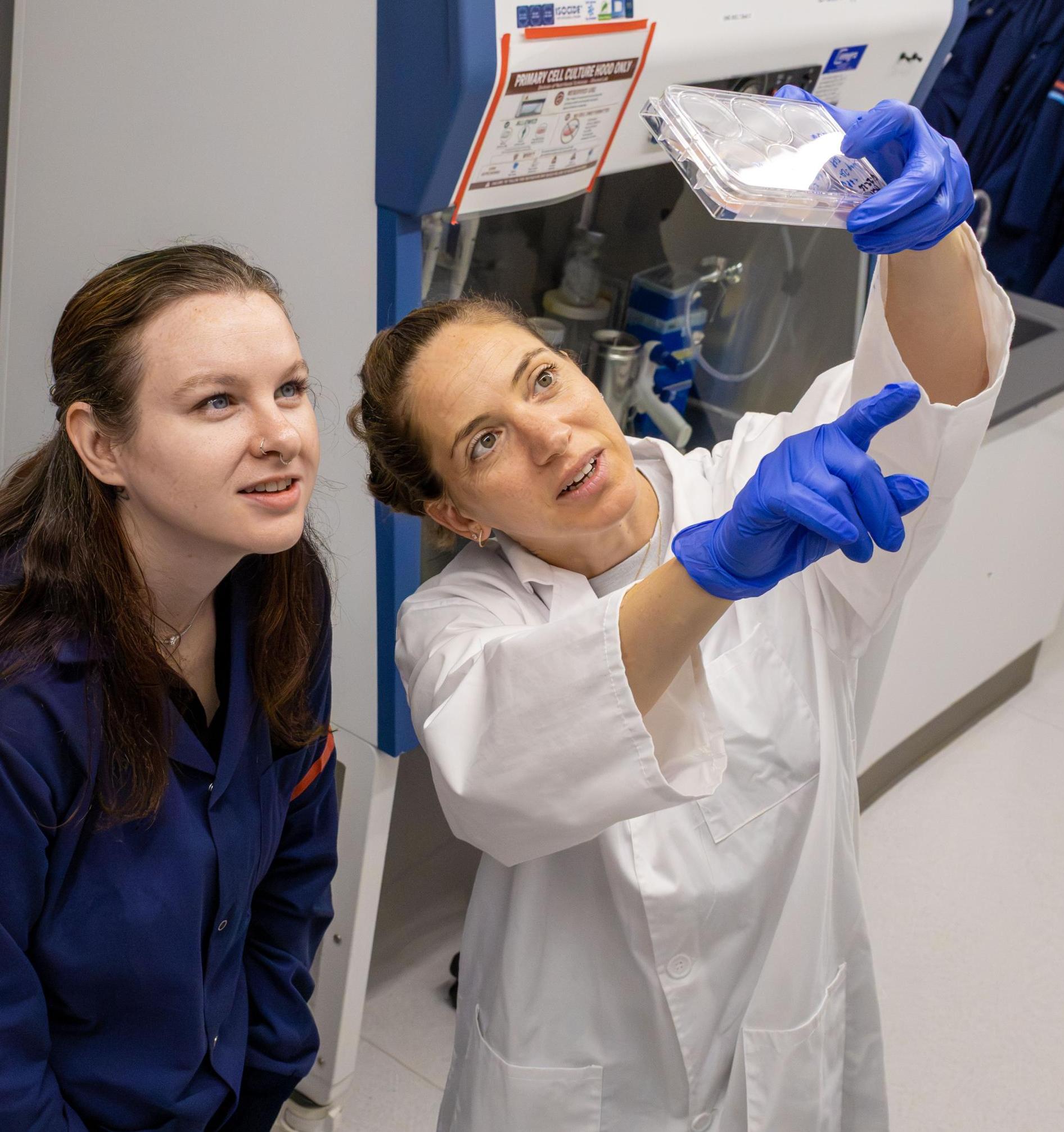
Accelerate a career in clinical, community, or population health in just one year.

Use data and collaborative research to quantify the relation between risk factors and disease to prevent illness.
Field concentrations


Director, Bronfenbrenner Center for Translational Research





Schleifer Family Professor

Associate Dean for CHE in NYC



No. At Cornell, the Graduate School is made up of a number of fields, each of which may include faculty from various departmental units. In contrast, undergraduate study is organized within traditional departments (for example, the Division of Nutritional Sciences). Most funding comes through the traditional departmental structure.
The Graduate Field of Nutrition is made up of faculty members who have been elected to this graduate field. Most of them are faculty within the Division of Nutritional Sciences, but faculty from other units across the university, such as animal sciences and molecular medicine, are also members.
Individual faculty within the Division of Nutritional Sciences belong to other graduate fields, including biochemistry, molecular biology, genetics, epidemiology, biomedical and biological sciences, economics and microbiology. Graduate students from these fields who work with these faculty members are housed in the Division of Nutritional Sciences buildings (Savage/Kinzelberg Hall, MVR Hall, Weill Hall and the Biotechnology Building) and may be your laboratory or office mates.
Each graduate student in the Ph.D. program is required to form a Special Committee. This committee is responsible for guiding your study and thesis work. The committee determines requirements, whether you are making satisfactory progress, and when you have completed your degree work.
The Special Committee includes your:
- major professor or chair;
- 1 (M.S.) or 2 (Ph.D.) minor members representing your minor subjects; and
- a field-appointed member representing the Field of Nutrition that is not in your major area of emphasis.
The Graduate Field of Nutrition has coursework for students in the Ph.D. and M.S. programs, but students can also choose from a wide variety of courses offered by the Division of Nutritional Sciences faculty and other units on campus.
Teaching assistantships and additional courses
If you are a teaching assistant, you must sign up for NS 6170 Teaching Seminar (required for your first semester as a TA) and NS 6180 Teaching Experience (each semester you are a TA — check with faculty supervisor about number of credits)
Seminar in Nutritional Sciences
All incoming graduate students are required to take NS7030 Seminar in Nutritional Sciences (attendance only, you do not present a seminar your first term). In addition to this first semester, M.S. students must complete one additional semester of NS 7030, during which they both attend all classes and make a presentation. Ph.D. students must attend four additional semesters of NS 7030 and make three presentations (total five semesters and three presentations).
Doctoral students have the option of replacing one presentation and one semester of attendance in NS 7030 with the successful completion of NS 7040, the Division of Nutritional Sciences’ grant writing course.
Other seminars
There are several seminar series which may attend or you may enroll in for credit:
- NS 6190 Field of Nutrition Seminar
- NS 6050 Nutritional Biochemistry Colloquium
- NS 6440 Community Nutrition Seminar
- NS 6980 International Nutrition Seminar
- NS 7020 Seminar in Nutritional Toxicology
Thesis research credits
It is also important that you sign up for thesis research credits. The number of credits to sign up for is described in the link above for your course credits and is variable.
- NS 8990 Master's Thesis
- NS 9990 Ph.D. Thesis
It is very important that you sign up for the required courses and take these for a grade as detailed in the course requirement link.
Course enrollment
During the first few weeks of the semester, you may attend classes without registering for them, unless permission of the instructor is required or space is limited (e.g., laboratory courses).
Enrolling in your classes is done electronically during announced pre-enrollment and beginning-of-term enrollment periods.
Credit hours
Typical enrollment is 12-15 credits, including seminars and research. We usually encourage students to use thesis research credits to bring the total number of credits up to ~15 once you have chosen your chair.
Choosing your research mentor or chair is an important step for a Ph.D. student. It should be done as soon as possible, before the end of your second semester. This is an important choice that should be made very carefully. We encourage you to consider doing rotations in several laboratories or programs, visit several research groups at their weekly meetings, talk with several faculty and current graduate students, and spend some time in individual research group environments before you make up your mind. Some students come to Cornell because they desire to work with a particular group, and these students may want to get involved quickly with that group. Please keep in mind that it is important to have a conversation with potential advisors to determine if they have any openings for graduate students when you are selecting rotations.
Cautions: Funding may be tied to a specific program (e.g., GRA on a professor's grant), or funding may not be committed for sufficient additional years if a change is made after the first year. If your funds come from DNS, you must work with a Field of Nutrition faculty member in DNS in order to continue to receive these funds. If you wish to work with a Field of Nutrition faculty member whose primary appointment is not in DNS, you must discuss funding possibilities with them.
When you first arrive, Ph.D. students are initially assigned a temporary advisor or chair who may help them choose additional elective courses for their first semester. The temporary chair is a temporaryassignment until you choose the chairperson of your Special Committee.
Once a Ph.D. student has chosen the major professor and research area, you will choose your minor subjects and additional committee members in conjunction with advice from your major professor. The Field of Nutrition encourages all students to have their complete committees chosen by the end of their second semester. The Graduate School requires that you establish your full permanent committee by the end of your third semester of study. You can make changes to your committee after it is established; it is important to establish your committee early because it is your Special Committee who guides your graduate work and makes decisions about its acceptability.
You will need to see the Director of Graduate Studies (DGS) when you have most of your committee selected to talk about the appointment of someone to serve as your field-appointed member to represent the Field of Nutrition. This faculty member should be someone who can take a broad view of the discipline of nutrition, not someone who has interests very close to those of other members of your committee. Typically, students come up with two or three faculty in the Field of Nutrition who are mutually acceptable to the student and the DGS, and then the DGS appoints one of them to serve in this capacity.