(More than) 100 years of helping humans thrive

This year’s celebrations mark our centennial as a college – in February 1925, the governor of New York signed the legislation creating the New York State College of Home Economics at Cornell University. But our history begins much earlier. Before we were a college, we were a department, and then a school, in the College of Agriculture. In fact, you can trace our history all the way back to the founding of Cornell as New York’s land-grant university, with the commitment to combine classic liberal education with practical training and to extend that knowledge to improve the lives of everyday people.

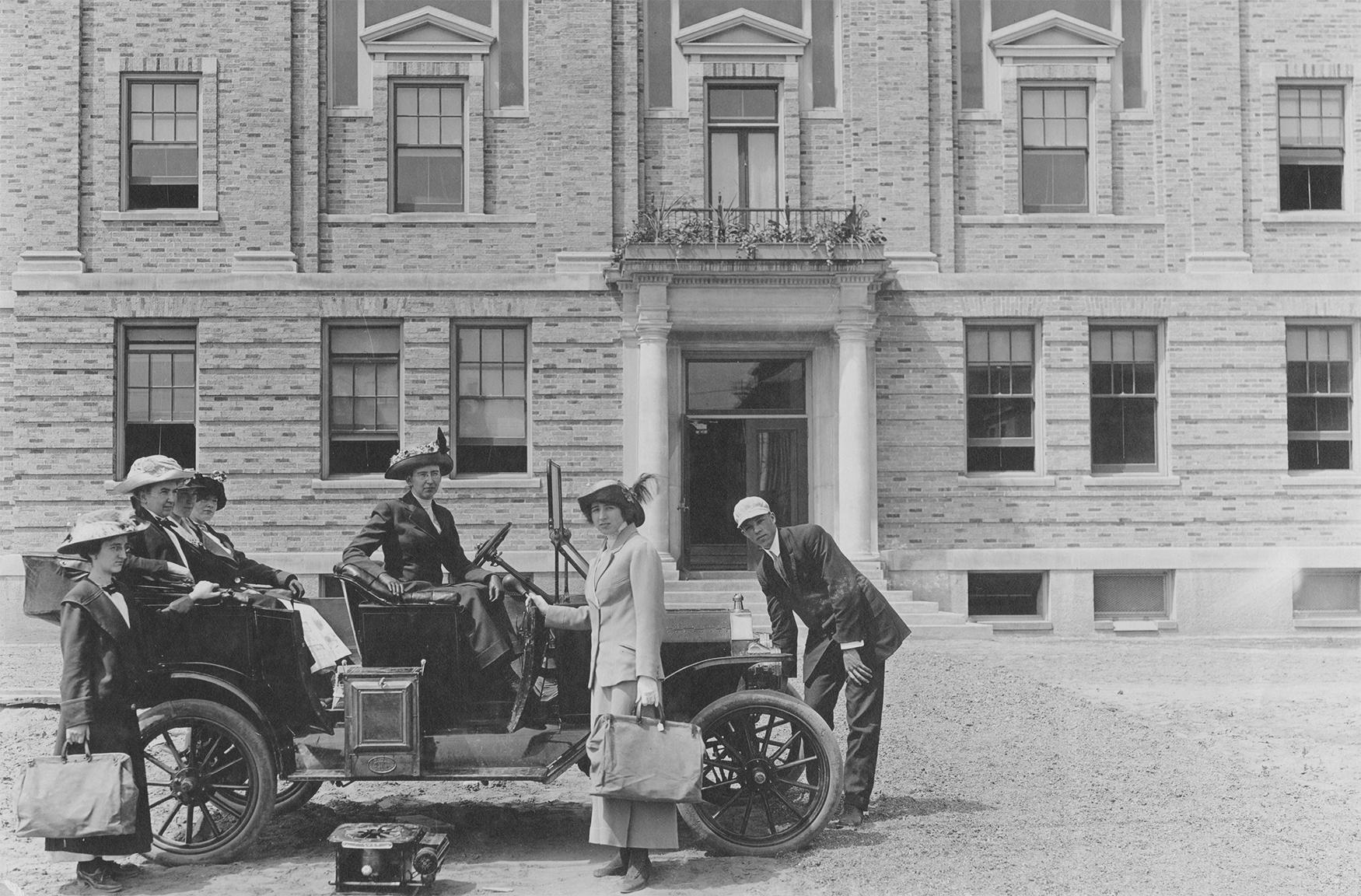
A group of women and a man prepare to drive in an open car in front of a brick building

The first extension car in 1913. Before the extension home bureaus, extension educators traveled around New York state by car to share the latest research in communities.

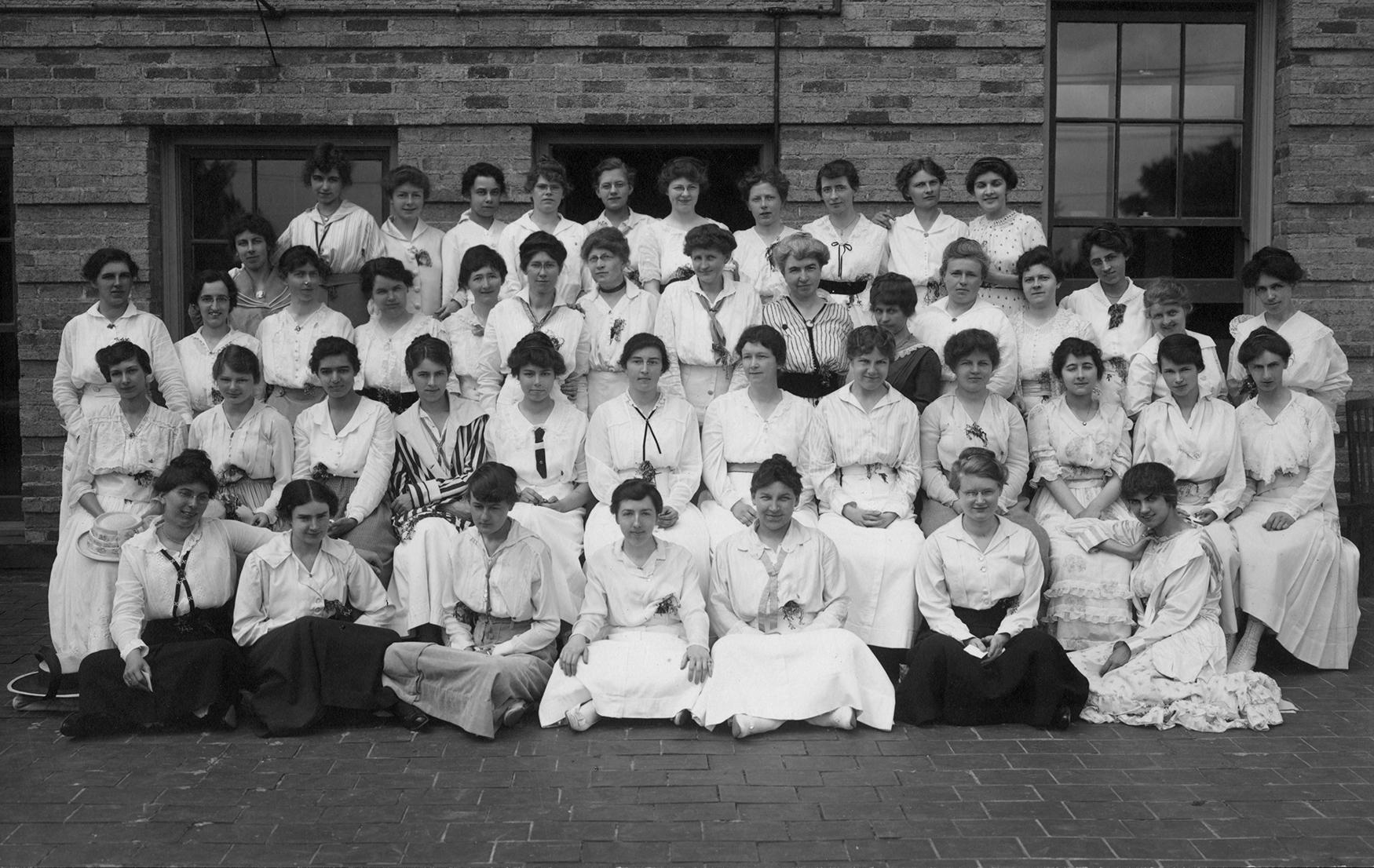
group of about 60 women in white outfits sitting in rows

The Class of 1916 with staff at second senior breakfast.

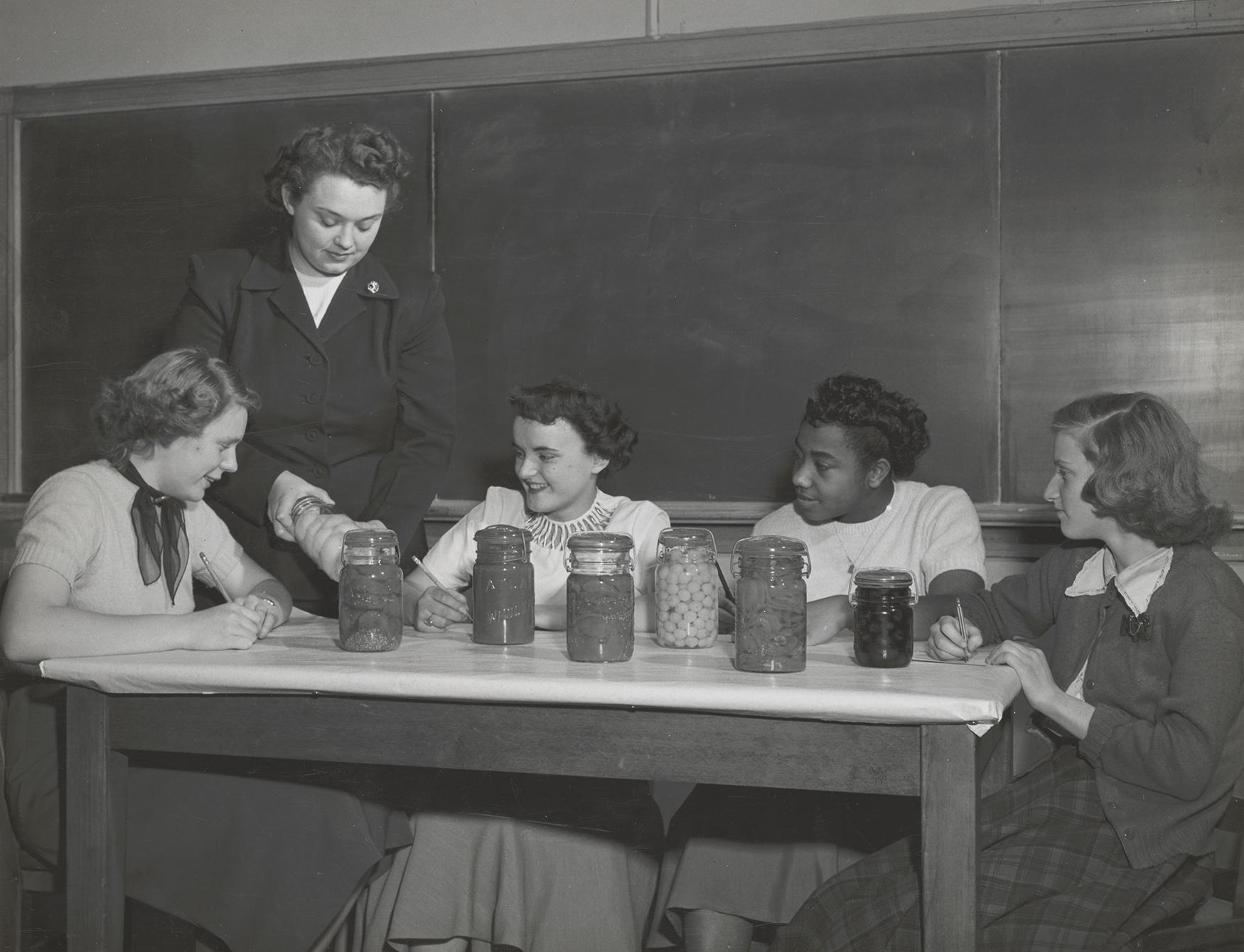
Women watching a canning demonstration in the 1940s

Canning instruction in the 1940s.

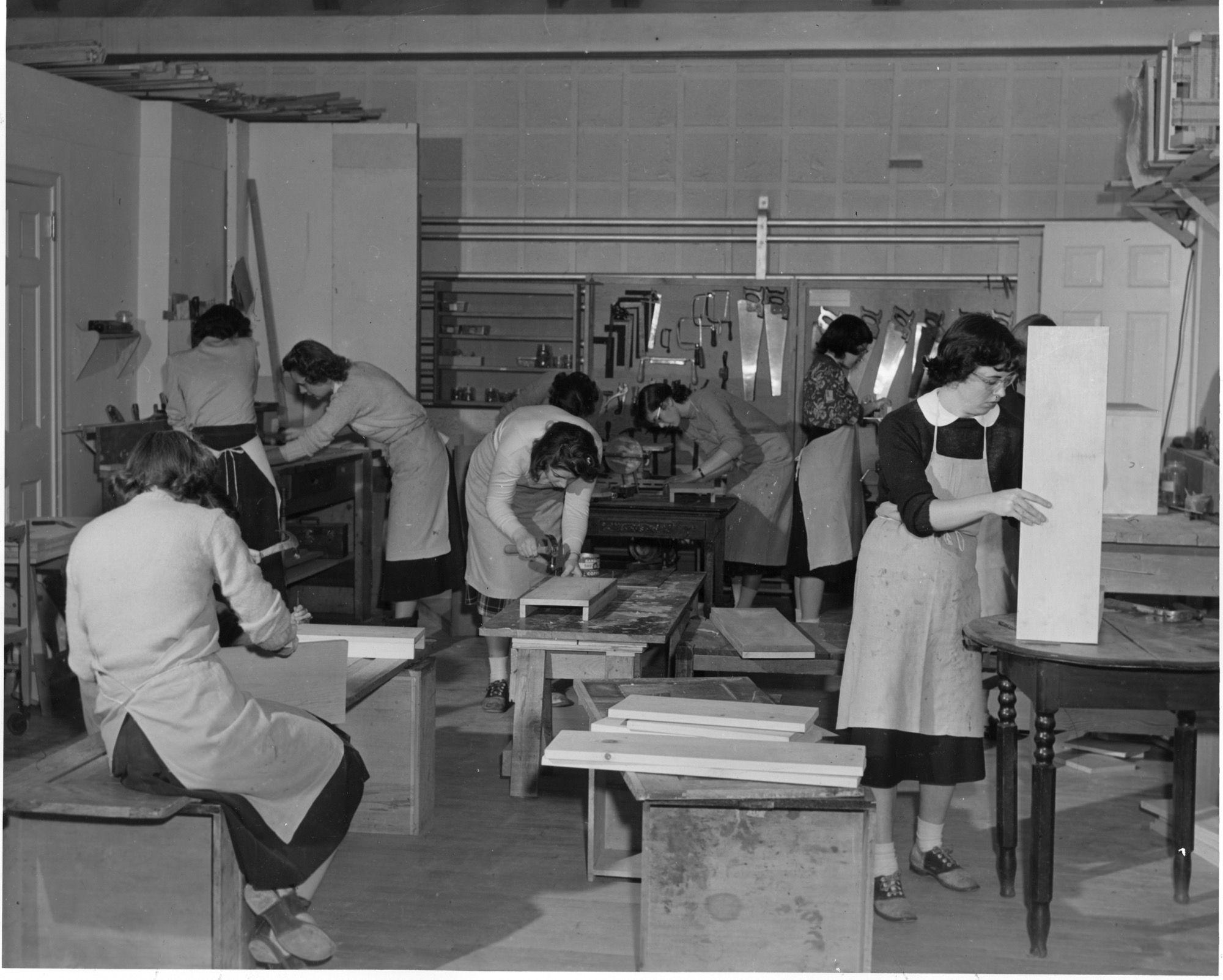
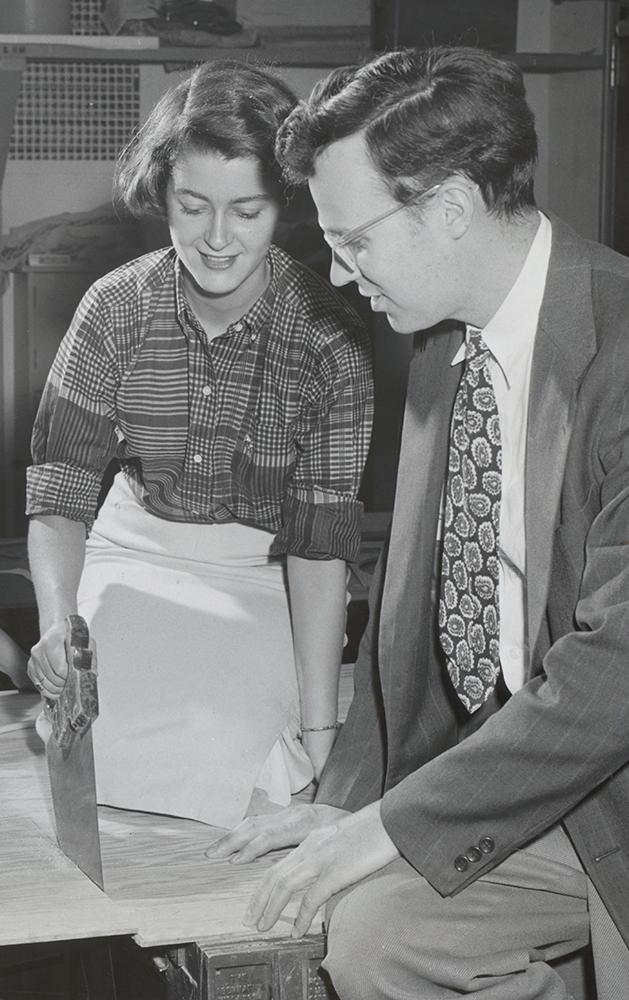
A class works in a woodworking shop

Students making furniture in the housing and design laboratory in the 1940s.

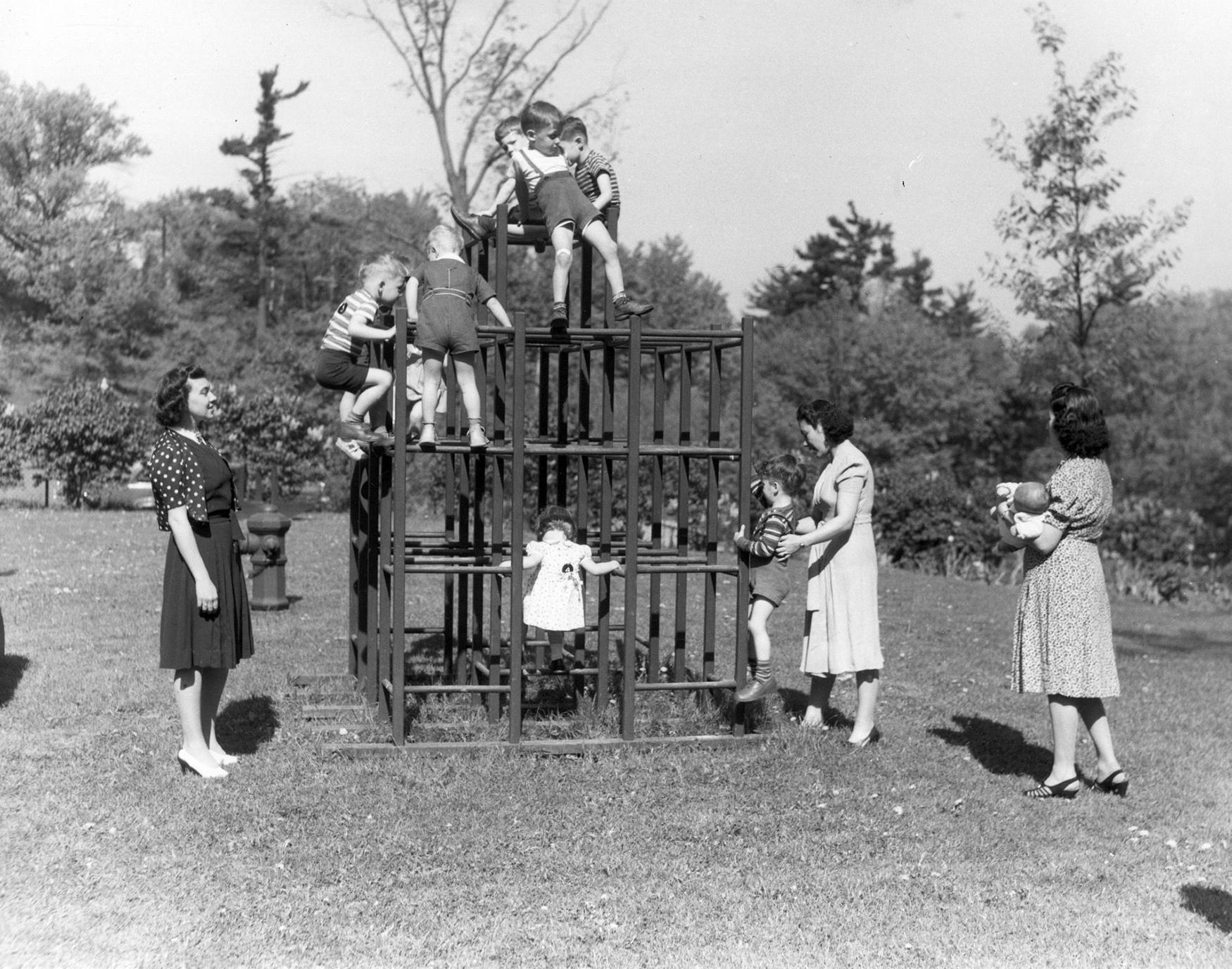
women with children on a jungle gym outside in spring

Home economics nursery school children at supervised outdoor play in 1941.

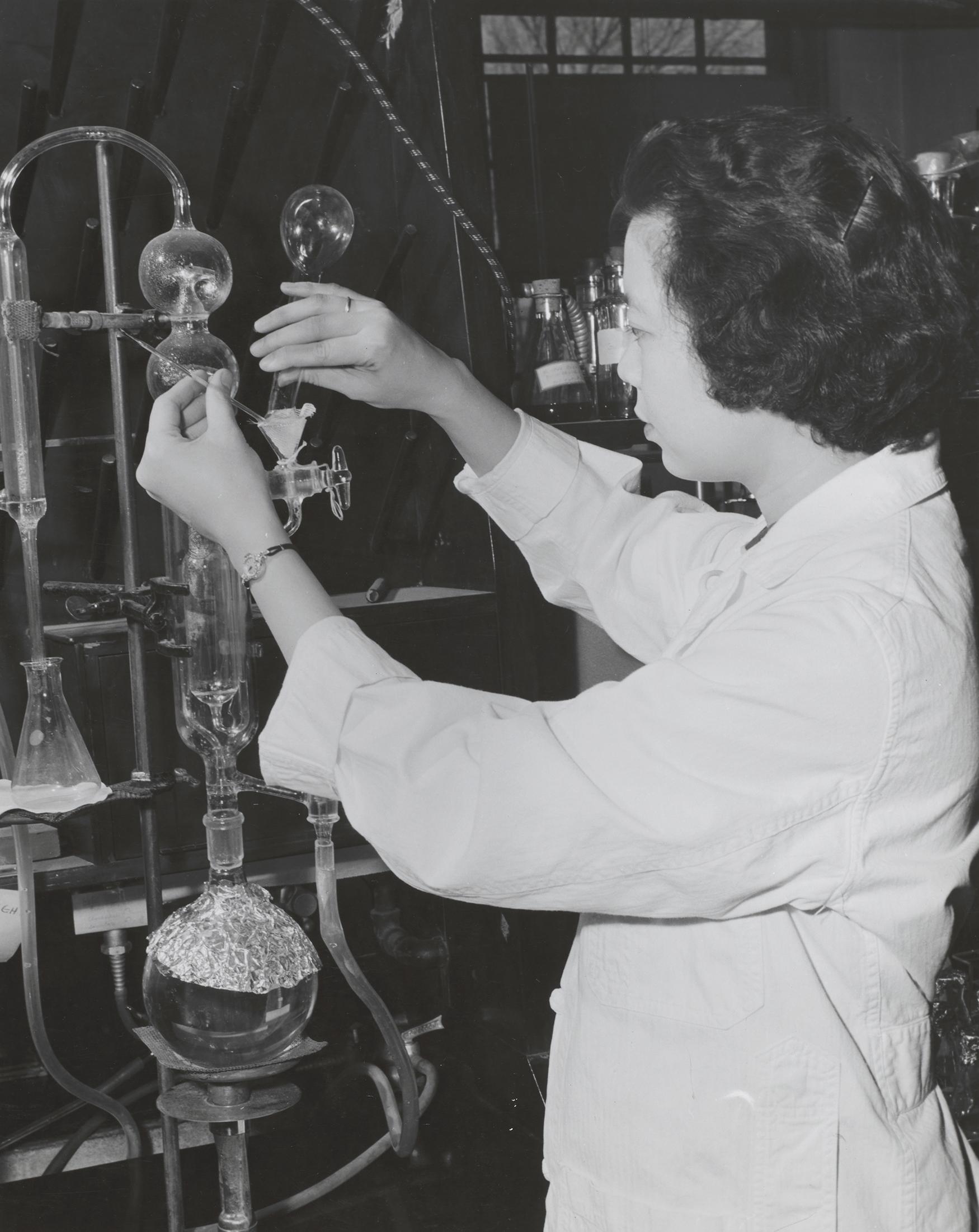
woman in a lab coat working with lab equipment

Sylvia de la Paz, Ph.D. '57, works in the lab.

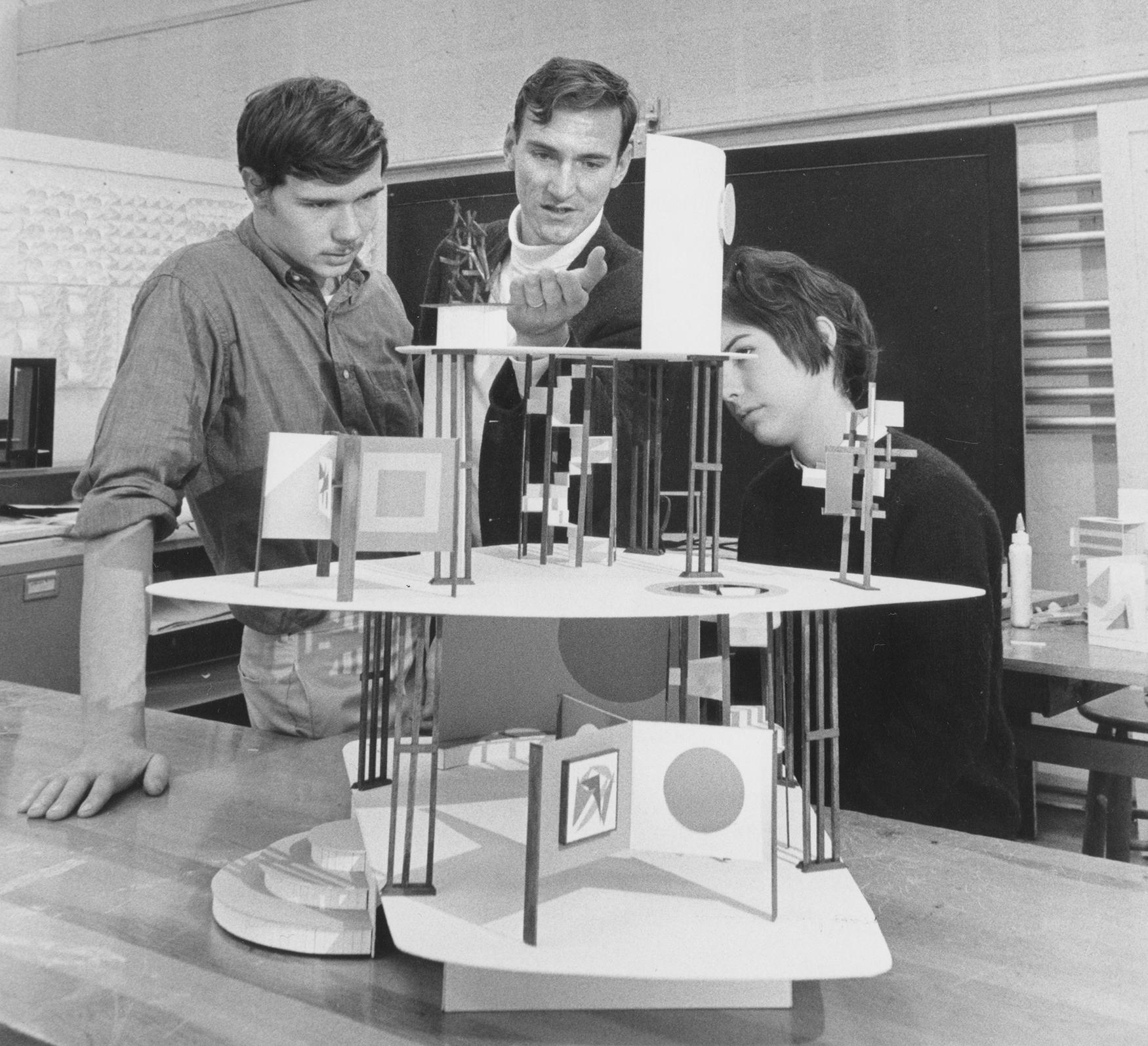
Three students examine a 3-D wooden model in a studio

Design class in 1968.

First steps

In 1900, Martha Van Rensselaer arrived at Cornell to develop a correspondence course for rural homemakers. She sent the first bulletin in the Cornell Reading Course for Farmers’ Wives, titled “Saving Steps,” the next year. It was an immediate success. Van Rensselaer was soon sending five bulletins a year to thousands of homes across the state, answering hundreds of letters that came in response and visiting farm homes and study clubs to share research-based information on topics such as health and sanitation, child rearing, nutrition and household management.

This outreach program quickly expanded into an influential educational program. In 1907, nutrition researcher Flora Rose joined Van Rensselaer at Cornell to launch a new department, which, in 1925, ultimately grew into its own college. It trained students in cutting-edge science and developed scholars who advanced our knowledge in areas such as nutrition, child development, textiles, policy and design. The college was ahead of its time, providing access to education to those typically left behind and with a commitment to not just generating knowledge but extending it to address real-world needs. As the college evolved, from Home Economics to Human Ecology, it continued its innovative path, training students and generating new knowledge directly applicable to the most pressing issues of the day.

A woman saws a board while the instructor and two fellow students hold the board
Wood grain with purple color wash

100 years of Human Ecology

A timeline of the college, from inception to today.

Explore the timeline
red chairs in an art gallery installation

Home Making: Artists and the Domestic

This collaboration between Cornell Human Ecology and the Johnson Museum of Art for the college’s centennial explores how artists redefine and reconceptualize home.