our work is grounded in the human experience

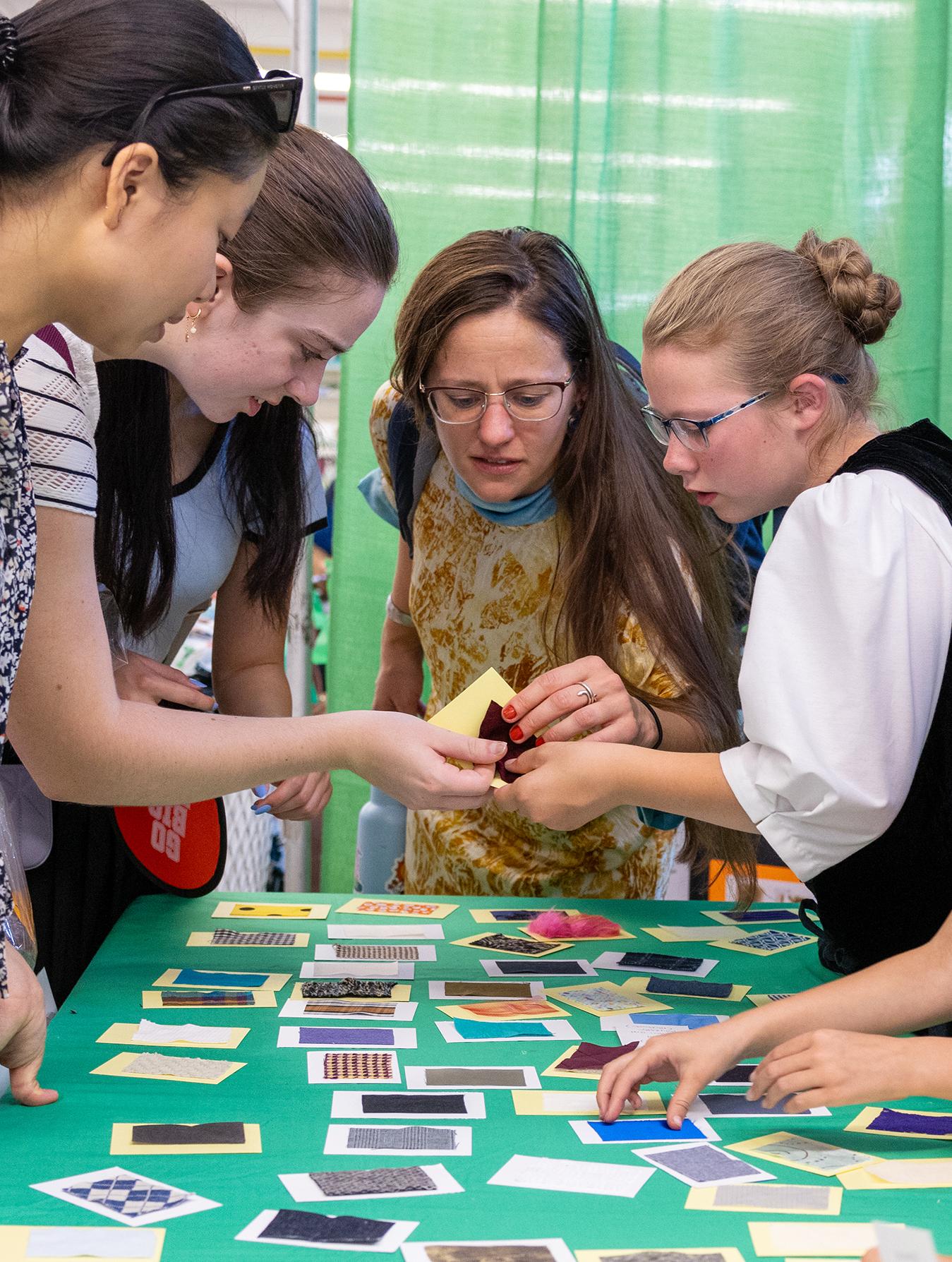
The Department of Human Centered Design collaborates with communities through research and service activities, exhibitions, studio and lectures, the Cornell Fashion + Textile Collection, and participation in the 4-H youth career exploration program. We also offer resources for consumers and youth educators on understanding, using and caring for textile fibers and clothing.

HCD offers courses during the summer that the general public can take. The courses are three weeks long and culminate in a final project. Courses are taught by faculty and Ph.D. candidates.

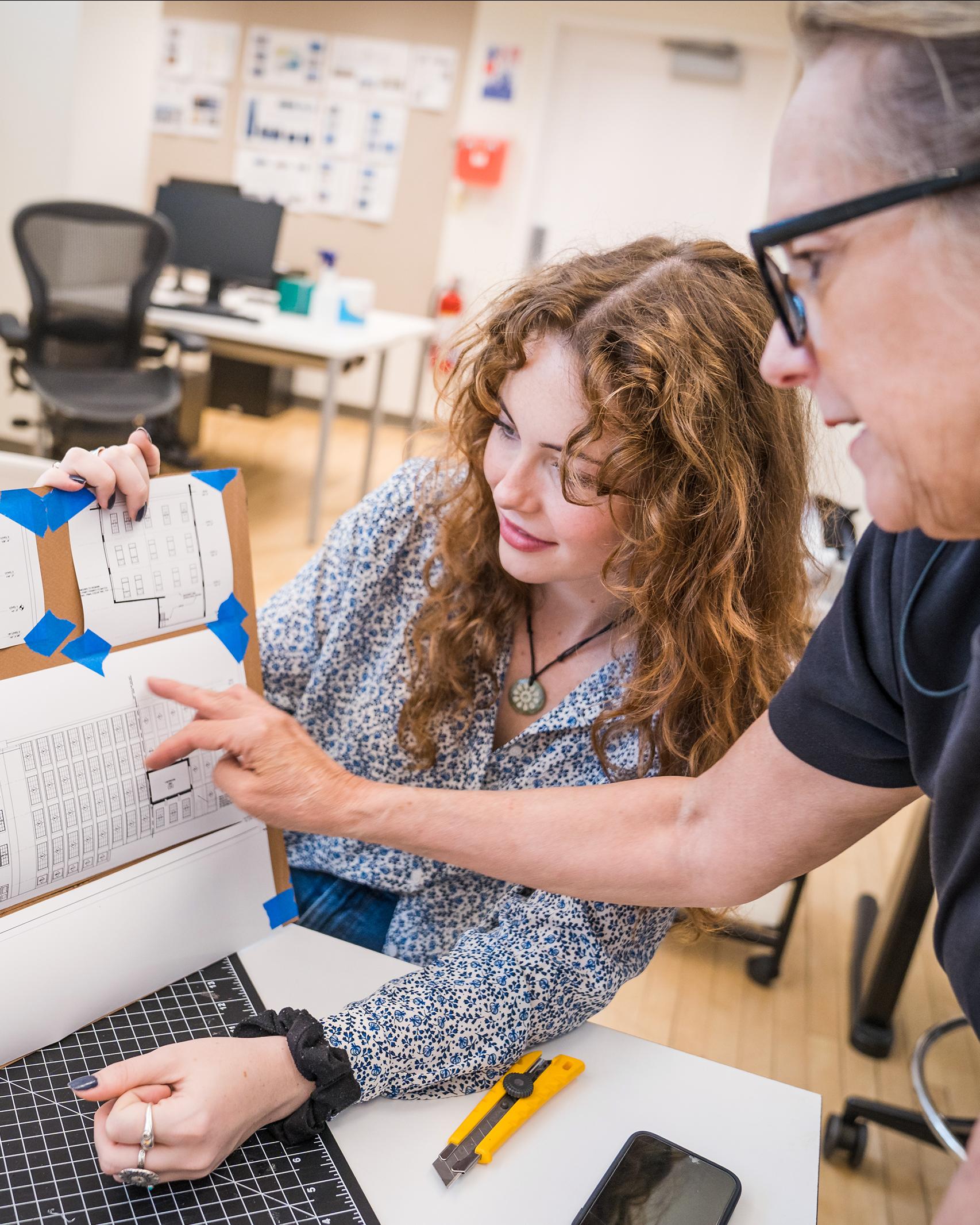
professor pointing at building blueprint as a student looks on

Engaged classroom

We engage with the external community in both design studio and lecture courses. Students benefit from the opportunity to support organizations and individuals in need of design and research services. Awareness of design as a social art is integral to the mission of Human Centered Design.


Students in Rhonda Gilmore’s sophomore studio partner with community and corporate contacts each year. Previous work has included a collaboration with the American Red Cross to design new mobile blood donation sites, a partnership with both Teknion and Knoll to design showroom spaces, and an on-campus project to create branding for the Cornell Marching Band and the new Fischell Band Center.

Led by Nancy Wells, DEA2700 students have conducted a variety of Health Impact Assessment (HIA) projects examining the potential effects of various proposed policies, programs and buildings on human health. These projects involve small teams of students partnering with community organizations to address a real-world proposal. Projects have examined a proposal to close the Meadow Street Community Garden, a plan to allow chickens within the City of Ithaca, the proposed expansion of the Tompkins County Jail, and the relocation of the Collegetown Fire Station, as well as various building proposals. 

In this course, both graduate students and undergraduates provide an architectural program for a nonprofit, off-campus community partner. In past years, students have developed programs for an expansion of the Cancer Resource Center of Ithaca, a “makerspace” implemented at Beverly J. Martin Elementary School, a library implemented at Caroline Elementary School, an office space at the Tompkins Child Development Council, and a new home through Habitat for Humanity, among many others.

In Rhonda Gilmore’s adaptive reuse studio, students apply interior design skills to existing, long-vacant historic buildings in New York State. Previous classes have partnered with the National Trust for Historic Preservation to identify at-risk sites; assess the existing structures; and generate programming, adaptive re-use solutions and construction documents. In 2016, students worked with the 1911 Beaux Arts Federal Building in Elmira, New York, and presented their work to Elmira City staff. This video highlights the students’ redesign of the historic Hickey Freeman building in Rochester, New York.

In spring 2017, Nancy Wells taught an undergraduate-graduate course focused on Health Impact Assessment. Students conducted HIA on the impending shutdown of the L Train linking Brooklyn to Manhattan. This project involved a partnership with the Van Alen Institute in New York City, a site visit to the city, attendance at an MTA workshop, and students’ leading their own stakeholder workshop to explore the health implications of the shutdown. A final report was delivered to Van Alen and shared with New York City stakeholders.

professor leans over a young student talking
pattern of concentric circles with red overlay color

Faculty engagement

Translational research and community engagement are core to our work as researchers and practitioners. Learn more about how our faculty connect with the broader public.

Explore faculty engagement