




- Reyna, V.F., Edelson, S.M., Garavito, D.M.N., Galindez, M.M., Singh, A., Fan, J., & Suh, J. (2025). A new look at vaccination behaviors and intentions: The case of influenza. Behavioral Sciences, 15(12), 1645.
- Reyna, V. F. (2025). Framing, fairness, and ambiguity in plea decisions and other risky choices: A unified approach. Journal of Behavioral Decision Making, 38(4), e70038. view abstract. This article is part of a special collection on plea bargaining consisting of the Reyna, Reed, Meschkow, Calderon, & Helm (2025) target article and commentaries.
- Reyna, V. F., Roue, J. E., Edelson, S. M., & Singh, A. (2025). High in numeracy, high in reflection, but still irrationally biased: How gist explains risky choices. Journal of Experimental Psychology: Learning, Memory, and Cognition, 51(9), 1457–1470. https://doi.org/10.1037/xlm0001441
- Reyna, V. F., Reed, K., Meschkow, A., Calderon, V., & Helm, R. K. (2025). Framing biases in plea bargaining decisions in those with and without criminal involvement: Tests of theoretical assumptions. Journal of Behavioral Decision Making, 38(2), e70008. view abstract. This article is part of a special collection on plea bargaining consisting of the Reyna, Reed, Meschkow, Calderon, & Helm (2025) target article and commentaries.
- Edelson, S. M, Reyna, V. F., & Singh, A. (2025). Milestone results pinpoint urgent need to explain mechanisms that refute conspiracy beliefs. Science eLetter.
- Edelson, S. M. & Reyna, V. F. (2024). Who makes the decision, how, and why: A fuzzy-trace theory approach. Medical Decision Making, 44(6), 614-616.
- Edelson. S. M., Reyna, V. F., Singh, A., & Roue, J. E. (2024). The psychology of misinformation across the lifespan. Annual Review of Developmental Psychology, 6.
- Ding, X., Carik, B., Gunturi, U., Reyna, V. F., & Rho, E. (2024). Leveraging prompt-based large language models: Predicting pandemic health decisions and outcomes through social media language. CHI'24: Proceedings of the 2024 CHI Conference on Human Factors in Computing Systems, Article 443, 1-20.
- Edelson, S. M., Reyna, V. F., Hayes. B. B., & Garavito, D. M. N. (2024). Dual-systems and fuzzy-trace theory predictions of COVID-19 risk taking in young adults. Decision, 11(3), 355-382.
- Hayes, B. B., Reyna, V. F., & Edelson, S. M. (2024). Making decisions one drink at a time and the “just one drink” effect: A fuzzy-trace theory model of harmful drinking. Alcohol: Clinical and Experimental Research, 48(5), 889–902.
- Reed, K., Hans, V. P., Rotenstein, V. N., Rodriguez, A., McKendall, P., Helm, R. K., & Reyna, V. F. (2024). The power of meaningful numbers: Attorney guidance and jury deliberation improve the reliability and gist validity of damage awards. Law and Human Behavior, 48(2), 83–103.
- Edelson, S. M., Roue, J. E., Singh, A., & Reyna, V. F. (2024). How decision making develops: Adolescents, irrational adults, and should AI be trusted with the car keys?. Policy Insights from the Behavioral and Brain Sciences, 11(1), 11-18. https://doi.org/10.1177/23727322231220423
- Edelson, S. M. & Reyna, V. F. (2023). Providing the gist of medical expertise in the context of laws, rules, and guidelines: Fuzzy-trace theory’s alternative approach to improve patient communication. Journal of Law, Medicine & Ethics, 51(3), 703-707.
- Prigerson, H. G., Russell, D., Kakarala, S. E., Derry‐Vick, H. M., Shah, M. A., Saxena, A., Reyna, V. F., Ocean, A., Scheff, R., Maciejewski, P. K., & Epstein, A. S. (2023). Giving information strategically and transparently: A pilot trial of the Oncolo‐GIST intervention to promote patients’ prognostic understanding. Cancer Medicine, 12(17), 18269–18280.
- Reyna, V. F. (2023). Social media: Why sharing interferes with telling true from false. Science Advances, 9(9).
- Reyna, V. F. (2023). Models of risky choice across ages, frames, and individuals: The fuzzy frontier. Decision, 10(3), 238–242.
- Reyna, V. F., & Brainerd, C. J. (2023). Numeracy, gist, literal thinking and the value of nothing in decision making. Nature Reviews Psychology, 2(7), 421–439.
- Reyna, V. F., Müller, S. M., & Edelson, S. M. (2023). Critical tests of fuzzy trace theory in brain and behavior: Uncertainty across time, probability, and development. Cognitive, Affective, & Behavioral Neuroscience 23, 746–772.
- Brust‐Renck, P. G., & Reyna, V. F. (2023). Individual differences in numerical representations of risk in health decision making: A fuzzy‐trace theory approach. Risk Analysis, 43(3), 548–557. https://doi.org/10.1111/risa.13914
- Wolfe, C. R., Eylem, A. A., Dandignac, M., Lowe, S. R., Weber, M. L., Scudiere, L., & Reyna, V. F. (2023). Understanding the landscape of web-based medical misinformation about vaccination. Behavior Research Methods, 55, 348-363.
- Brainerd, C. B. & Reyna, V. F. (2023). Theoretical explanations of developmental reversals in memory and reasoning. Developmental Review, 69,101087.
- Reyna, V. F., Edelson, S. M., Hayes, B., Garavito, D. M. N. (2022). Supporting health and medical decision-making: Findings and insights from fuzzy-trace theory. Medical Decision Making, 42(6), 741–754.
- Reed, K., Franz, A., Calderon, V., Meschkow, A., & Reyna, V. F. (2022). Reported experiences with plea bargaining: A theoretical analysis of the legal standard. West Virginia Law Review, 124(2), 421-448.
- Hans, V. P., Reed, K., Reyna, V. F., Garavito, D. & Helm, R. K. (2022). Guiding jurors' damage award decisions: Experimental investigations of approaches based on theory and practice. Psychology, Public Policy, and Law, 28(2), 188-212.
- Wolfe, C. R., Eylem, A. A., Dandignac, M., Lowe, S. R., Weber, M. L., Scudiere, L., & Reyna, V. F. (2022). Understanding the landscape of web-based medical misinformation about vaccination. Behavior Research Methods.
- Hurtado-de-Mendoza, A., Reyna, V. F., Wolfe, C. R., Gómez-Trillos, S., Sutton, A., Brennan, A., Sheppard, V. B. (2022). Adapting a theoretically-based intervention for underserved clinical populations at increased risk for hereditary cancer: Lessons learned from the BRCA-gist experience. Preventive Medicine Reports, 28, 101887.
- Wolfe, C. R., Eylem, A. A., Dandignac, M., Lowe, S. R., Weber, M. L., Scudiere, L., & Reyna, V. F. (2022). Understanding the landscape of web-based medical misinformation about vaccination. Behavior Research Methods, 55, 348-363.
- Brust-Renck, P. G., & Reyna, V. F. (2022). Individual differences in numerical representations of risk in health decision making: A fuzzy trace theory. Risk Analysis: An International Journal.
- Blalock, S. J., Solow, E. B., Reyna, V. F., Keebler, M., Carpenter, D., Hunt, C., Hickey, G., O’Neill, K., Curtis, J. R., & Chapman, S. B. (2022). Enhancing patient understanding of medication risks and benefits. Arthritis Care and Research, 74(1), 142-150.
- Nolte, J., Löckenhoff, C. E., & Reyna, V. F. (2022). The influence of verbatim versus gist formatting on younger and older adults’ information acquisition and decision making. Psychology and Aging, 37(2), 197–209.
- Reyna, V. F. (2021). A scientific theory of gist communication and misinformation resistance, with implications for health, education, and policy. Proceedings of the National Academy of Sciences of the United States of America, 118(15), e1912441117.
- Reyna, V. F., Brainerd, C. J., Chen, Z., & Bookbinder, S. (2021). Explaining risky choices with judgments: Framing, the zero effect, and the contextual relativity of gist. Journal of Experimental Psychology: Learning, Memory, and Cognition, 47(7), 1037–1053.
- Reyna, V. F., Broniatowski, D. A., & Edelson, S. M. (2021). Viruses, vaccines, and COVID-19: Explaining and improving risky decision-making. Journal of Applied Research in Memory and Cognition, 10(4), 491–509.
- Reyna, V. F., Edelson, S. M., & Broniatowski, D. B. (2021). Misconceptions, misinformation, and moving forward in theories of COVID-19 risky behaviors. Journal of Applied Research in Memory and Cognition, 10(4), 537-541.
- Ajayi, P., Garavito, D. M. N., & Reyna, V. F. (2021). Socioeconomic status and concussion reporting: The distinct and mediating roles of gist processing, knowledge, and attitudes. Journal of Behavioral Decision Making, 34(5), 639–656.
- Edelson, S. M., & Reyna, V. F. (2021). How fuzzy-trace theory predicts development of risky decision making, with novel extensions to culture and reward sensitivity. Developmental Review, 62, 100986.
- Epstein, A. S., Kakarala, S. E., Reyna, V. F., Saxena, A., Maciejewski, P. K., Shah, M. A., & Prigerson, H. G. (2021). Development of the oncolo-GIST (“giving information strategically & transparently”) intervention manual for oncologist skills training in advanced cancer prognostic information communication. Journal of Pain and Symptom Management, 62(1), 10-19.e4.
- Garavito, D. M. N., Reyna, V. F., DeTello, J. E., Landow, B. R., & Tarpinian, L. M. (2021). Intentions to report concussion symptoms in nonprofessional athletes: A fuzzy-trace theory approach. Applied Cognitive Psychology, 35(1), 26–38.
- Kellogg, E., & Reyna, V. F. (2021). What social sciences tell us about COVID-19’s true toll—and how they can help plan for the future. Issues in Science and Technology.
- Nolte, J., Hanoch, Y., Wood, S. A., & Reyna, V. F. (2021). Compliance with mass marketing solicitation: The role of verbatim and gist processing. Brain and Behavior, 1– 9.
- Reyna, V. F. (2020). Of viruses, vaccines, and variability: Qualitative meaning matters. Trends in Cognitive Sciences, 24(9), 672–675.
- Loeckenhoff, C. E., Rutt, J. L., Samanez-Larkin, G. R., Gallagher, C., O’Donoghue, T., & Reyna, V. F. (2020). Age effects in sequence-construction for a continuous cognitive task: Similar sequence-trends but fewer switch-points. The Journals of Gerontology: Psychological Sciences, 75(4), 762-771. https://doi.org/10.1093/geronb/gby090.
- Nolte, J., Löckenhoff, C. E., & Reyna, V. F. (2020, November). The influence of verbatim versus gist formatting on younger and older adults’ information acquisition. Innovation in Aging, 4(Supplement_1), 557–557.
- Reyna, V. F., & Broniatowski, D. (2020). Abstraction: An alternative neurocognitive account of recognition, prediction, and decision making. Behavioral and Brain Sciences, 43, E144. https://doi.org/10.1017/S0140525X19003017
- Reyna, V. F., & Brust-Renck, P. G. (2020). How representations of number and numeracy predict decision paradoxes: A fuzzy-trace theory approach. Journal of Behavioral Decision Making, 22(6), 606-628. https://doi.org/10.1002/bdm.2179
- Garavito, D. M. N., Reyna, V. F., DeTello, J. E., Landow, B. R., & Tarpinian, L. M. (2020). Intentions to report concussion symptoms in nonprofessional athletes: A fuzzy-trace theory approach. Applied Cognitive Psychology. Advance online publication. https://doi.org/10.1002/acp.3734
- George, L. S., Prigerson, H. G., Epstein, A. S., Richards, K. L., Shen, M. J., Derry, H. M., Reyna, V. F., Shah, M. A., & Maciejewski, P. K. (2020). Palliative chemotherapy or radiation and prognostic understanding among advanced cancer patients: The role of perceived treatment intent. Journal of Palliative Medicine, 23(1), 33-39. https://doi.org/10.1089/jpm.2018.0651
- Helm, R. K., Hans, V. P., Reyna, V. F., & Reed, K. (2020). Numeracy in the jury box: Numerical ability, meaningful anchors, and damage award decision making. Applied Cognitive Psychology, 34(2), 434-448. https://doi.org/10.1002/acp.3629
- Brainerd, C. J., & Reyna, V. F. (2019). Fuzzy-trace theory, false memory, and the law. Policy Insights from the Behavioral and Brain Sciences, 6, 79-86. https://doi.org/10.1177/2372732218797143
- Broniatowski, D. A., & Reyna, V. F. (2019). To illuminate and motivate: A fuzzy-trace model of the spread of information online. Computational and Mathematical Organization Theory. https://doi.org/10.1007/s10588-019-09297-2
- Derry, H. M., Maciejewski, P. K., Epstein, A. S., Shah, M. A., LeBlanc, T. W., Reyna, V. F., & Prigerson, H. G. (2019). Associations between anxiety, poor prognosis, and accurate understanding of scan results among advanced cancer patients. Journal of Palliative Medicine, 22(8), 961–965.
- Lockenhoff, C. E., Rutt, J. L., Samanez-Larkin, G. R., O’Donoghue, T., & Reyna, V. F. (2019). Preferences for temporal sequences of real outcomes differ across domains but do not vary by age. The Journals of Gerontology: Psychological Sciences (74, 3), 430-439. https://doi.org/10.1093/geronb/gbx094
- McCormick, M., Reyna, V. F., Ball, K., Katz, J., & Deshpande, G. (2019). Neural underpinnings of financial decision bias in older adults: Putative theoretical models and a way to reconcile them. Frontiers in Neuroscience, 13, 184. https://doi.org/10.3389/fnins.2019.00184
- Reed, K., Hans, V. P., & Reyna, V. F. (2019). Accounting for awards: An examination of juror reasoning behind pain and suffering damage award decisions. Denver Law Review, 96(4), 841-867. https://10.3758/s13428-019-01284-4
- Wolfe, C. R., Dandignac, M., & Reyna, V. F. (2019). A theoretically motivated method for automatically evaluating texts for gist inferences. Behavior Research Methods, 51(6), 2419-2437. https://doi.org/10.3758/s13428-019-01284-4
- Wolfe, C. R., Dandignac, M., Sullivan, R., Moleski, T., & Reyna, V. F. (2019). Automatic evaluation of cancer treatment texts for gist inferences and comprehension. Medical Decision Making, 39(8), 939-949. https://doi.org/10.1177/0272989X19874316
- Reyna, V. F., Helm, R. K., Weldon, R. B., Shah, P. D., Turpin, A. G., & Govindgari, S. (2018). Brain activation covaries with reported criminal behaviors when making risky choices: A fuzzy-trace theory approach. Journal of Experimental Psychology: General, 147(7), 1094–1109. https://doi.org/10.1037/xge0000434
- Wolfe, C. R., Reyna, V. F., Widmer, C. L., Cedillos, E., Weil, A. M., & Brust-Renck, P. G. (2018). Pumps and prompts for gist explanations in tutorial dialogues about breast cancer. Discourse Processes, 55(1), 72-91.
- Reyna, V. F. (2018). Neurobiological models of risky decision-making and adolescent substance use. Current Addiction Reports, 5(2), 128–133.
- Reyna, V. F. (2018). When irrational biases are smart: A fuzzy-trace theory of complex decision making. Journal of Intelligence, 6(2), 29. doi: 10.3390/jintelligence6020029
- Brainerd, C. J., & Reyna, V. F. (2018). Complementarity in false memory illusions Journal of Experimental Psychology: General, 147(3), 305-327. doi: 10.1037/xge0000381
- Broniatowski, D. A., Klein, E. Y., May, L., Martinez, E. M., Ware, C., & Reyna, V. F. (2018). Patients’ and clinicians’ perceptions of antibiotic prescribing for upper respiratory infections in the acute care setting Medical Decision Making, 38(5), 547-561. doi: 10.1177/0272989X18770664
- Broniatowski, D. A., & Reyna, V. F. (2018). A formal model of fuzzy-trace theory: Variations on framing effects and the Allais paradox. Decision, 5(4), 205-252. http://dx.doi.org/10.1037/dec0000083
- Helm, R. K., Reyna, V. F., Franz, A. A., & Novick, R. Z. (2018). Too young to plead? Risk, rationality, and plea bargaining’s innocence problem in adolescents Psychology, Public Policy, and Law, 24(2), 180-191. doi: 10.1037/law0000156
- Helm, R. K., Reyna, V. F., Franz, A. A., Novick, R. Z., Dincin, S., & Cort, A. E. (2018). Limitations on the ability to negotiate justice: Attorney perspectives on guilt, innocence, and legal advice in the current plea system. Psychology, Crime and Law, 24(9), 915–934.
- Poldrack, R. A., Monahan, J., Imrey, P. B., Reyna, V. F., Raichle, M., Faigman, D., & Buckholtz, J. W. (2018). Predicting violent behavior: What can neuroscience add? Trends in Cognitive Sciences, 22(2), 111-123. doi: 10.1016/j.tics.2017.11.003
- Wolfe, C. R., Reyna, V. F., & Smith, R. J. (2018). On judgments of approximately equal. Journal of Behavioral Decision Making, 31(1), 151-163. doi: 10.1002/bdm.2061
- Reyna, V. F. & Wilhelms, E. A. (2017). The gist of delay of gratification: Understanding and predicting problem behaviors. Journal of Behavioral Decision Making, 30(2), 610-625. doi: 10.1002/bdm.1977
- Helm, R. K., Hans, V. P., & Reyna, V. F. (2017). Trial by numbers. Cornell Journal of Law and Public Policy, 27(1), 107-133.
- Klein, E. Y., Martinez, E. M., May, L., Saheed, M., Reyna, V. F., & Broniatowski, D. A. (2017). Categorical risk perception drives variability in antibiotic prescribing in the emergency department: A mixed methods observational study. Journal of General Internal Medicine, 32(10), 1083-1089. doi: 10.1007/s11606-017-4099-6
- Lockenhoff, C. E., Rutt, J. L., Samanez-Larkin, G. R., O’Donoghue, T., & Reyna, V. F. (2017). Preferences for temporal sequences of real outcomes differ across domains but do not vary by age. Journal of Gerontology: Psychological Sciences. Advance online publication. doi: 10.1093/geronb/gbx094
- Rahimi-Golkhandan, S., Garavito, D. M. N., Reyna-Brainerd, B. B., and Reyna, V. F. (2017). A fuzzy trace theory of risk and time preferences in decision making: Integrating cognition and motivation. In J.R. Stevens (Ed.), Impulsivity: How risk and time influence decision making (pp. 115-144). New York: Springer.
- Brainerd, C. J., Nakamura, K., Reyna, V. F., & Holliday, R. E. (2017). Overdistribution illusions: Categorical judgments produce them, confidence ratings reduce them. Journal of Experimental Psychology: General, 146(1), 20-40. doi: 10.1037/xge0000242.
- Brust-Renck, P. G., Nolte, J., & Reyna, V. F. (2017). Numeracy in health and risk messaging. Oxford Research Encyclopedia of Communication. Advance online publication. doi: 10.1093/acrefore/978019028613.013.354.
- Brust-Renck, P. G., Reyna, V. F., Wilhelms, E. A., Wolfe, C. R., Widmer, C. L., Cedillos-Whynott, E. M., & Morant, A. K. (2017). Active engagement in a web-based tutorial to prevent obesity grounded in fuzzy-trace theory predicts higher knowledge and gist comprehension. Behavior Research Methods, 49, 1386-1398. doi: 10.3758/s13428-01600794-1.
- Helm, R. K., & Reyna, V. F. (2017). Logical but incompetent plea decisions: A new approach to plea bargaining grounded in cognitive theory. Psychology, Public Policy, and Law. Advance online publication. doi: 10.1037/law0000125.
- Ishikawa, T., Jiang, A., Brussoni, M., Reyna, V. F., Weldon, R. B., Bruce, B., & Pike, I. (2017). Perceptions of injury risk associated with booster seats and seatbelts: The ejection stereotype hypothesis. Hypothesis, 15(1), e1. doi: 10.5779/hypothesis.v14i1.455.
- Romer, D., Reyna, V. F., & Satterthwaite, T. D. (2017). Beyond stereotypes of adolescent risk taking: Placing the adolescent brain in developmental context. Developmental Cognitive Neuroscience, 27 (19-34). doi: 10.1016/j.dcn.2017.07.007.
- Blalock, S. J., & Reyna, V. F. (2016). Using fuzzy-trace theory to understand and improve health judgments, decisions, and behaviors: A literature review. Health Psychology, 35(8), 781-792. doi: 10.1037/hea0000384.
- Blalock, S. J., DeVellis, F. R., Chewning, B., Sleath, B. L., & Reyna, V. F. (2016). Gist and verbatim communication concerning medication risks/benefits. Patient Education and Counseling, 99(6), 988-994. doi: 10.1016/j.pec.2015.12.001.
- Furlan, S., Agnoli, F., & Reyna, V. F. (2016). Intuition and analytic processes in probabilistic reasoning: The role of time pressure.. Learning and Individual Differences, 45, 1-10. doi: 10.1016/j.lindif.2015.11.006.
- Neumann, C., Kaye, D., Jackson, G., Reyna, V. F., & Ranadive, A. (2016). Presenting qualitative information on forensic science evidence in the court room. CHANCE, 29(1), 37-43. doi: 10.1080/09332480.2016.1156365.
- Reyna, V. F. & Wilhelms, E. A. (2016). The gist of delay of gratification: Understanding and predicting problem behaviors. Journal of Behavioral Decision Making. Advance online publication. doi: 10.1002/bdm.1977.
- Reyna, V. F., Corbin, J. C., Weldon, R. B., & Brainerd, C. J. (2016). How fuzzy-trace theory predicts true and false memories for words, sentences, and narratives. Journal of Applied Research in Memory and Cognition, 5(1), 1-9. doi: 10.1016/j.jarmac.2015.12.003.
- Romer, A. L., Reyna, V. F., Pardo, S. T. (2016). Are rash impulsive and reward sensitive traits distinguishable? A test in young adults.. Personality and Individual Differences, 99, 308-312. doi: 10.1016/j.paid.2016.05.027.
- Wolfe, C. R., Reyna, V. F., Widmer, C. L., Cedillos-Whynott, E. M., Brust-Renck, P. G., Weil, A. M., & Hu, X. (2016). Understanding genetic breast cancer risk: Processing loci of the BRCA Gist Intelligent Tutoring System. Learning and Individual Differences, 49, 178-189. doi: 10.1016/j.lindif.2016.06.009.
- Brainerd, C. J., Wang, Z., Reyna, V. F., & Nakamura, K. (2015). Episodic memory does not add up: Verbatim-gist superposition predicts violations of the additive law of probability. Journal of Memory and Language, 84, 224-245. doi: 10.1015/j.jml.2015.06.006.
- Broniatowski, D. A., Klein, E. Y., & Reyna, V. F. (2015). Germs are germs, and why not take a risk?: Patients' expectations for prescribing antibiotics in an inner city emergency department. Medical Decision Making, 35, 60-67. doi: 10.1177/0272989X14553472.
- Chick, C. F., Reyna, V. F., & Corbin, J. C. (2016). Framing effects are robust to linguistic disambiguation: A critical test of contemporary theory. Journal of Experimental Psychology: Learning, Memory, and Cognition, 44(2), 238-256.
- Corbin, J. C., Reyna, V. F., Weldon, R. B., & Brainerd, C. J. (2015). How reasoning, judgment, and decision making are colored by gist-based intuition: A fuzzy-trace theory approach. Journal of Applied Research in Memory and Cognition, 4(4), 344-355. doi: 10.1016/j.jarmac.2015.09.001.
- Elstad, E. A., Sutkowi-Hemstreet, A., Vu, M., Sheridan, S. L., Harris, R., Reyna, V. F., … Brewer, N. T. (2015). Clinicians’ perceptions of the benefits and harms of prostate and colorectal cancer screening. Medical Decision Making, 35(4),467-476 . doi: 10.1177/0272989X15569780.
- Fraenkel, L., Lim, J., Garcia-Tsao, G., Reyna, V. F., & Monto, A. (2016). Examining hepatitis c virus treatment preference heterogeneity using segmentation analysis: Treat now or defer? . Journal of Clinical Gastroenterology, 50(3), 252–257.
- Fraenkel, L., Matzko, C. K., Webb, D. E., Oppermann, B., Charpentier, P., Peters, E., Reyna, V. F., & Newman, E. D. (2015). Use of decision support for improved knowledge, values clarification, and informed choice in patients with rheumatoid arthritis. Arthritis Care and Research, 67(11), 1496-1502. doi: 10.1002/acr.22659.
- Landa, Y., Mueser, K., Wyka, K., Shreck, E., Jespersen, R., Jacobs, M., Griffin, K., van der Gaag, M., Reyna, V. F., Beck, A., Silbersweig, D., & Walkup, J. (2016). Development of a group and family-based cognitive behavioral therapy program for youth at risk for psychosis. Early Intervention in Psychiatry, 10(6), 511–521.
- Reyna, V. F., & Landa, Y. (2015). Multiple traces or fuzzy traces?: Converging evidence for applications of modern cognitive theory to psychotherapy. Behavioral and Brain Sciences, 38, 39. doi: 10.1017/S0140525X14000399.
- Reyna, V. F., Hans, V. P., Corbin, J. C., Yeh, R., Lin, K., & Royer, C. (2015). The gist of juries: Testing a model of damage award decision making. Psychology, Public Policy, and Law, 21(3), 280-294. doi: 10.1037/law0000048.
- Reyna, V. F., Nelson, W. L., Han, P. K., & Pignone, M. P. (2015). Decision making and cancer. American Psychologist, 70(2), 105-118. doi: 10.1037/a0036834.
- Reyna, V. F., Weldon, R. B., & McCormick, M. J. (2015). Educating intuition: Reducing risky decisions using fuzzy-trace theory. Current Directions in Psychological Science, 24(4), 392-398. doi: 10.1177/0963721415588081.
- Reyna, V. F., Wilhelms, E. A., McCormick, M. J., & Weldon, R. B (2015). Development of risky decision making: Fuzzy-trace theory and neurobiological perspectives. Child Development Perspectives, 9(2), 122-127. doi: 10.1111/cdep.12117.
- Widmer, C. L., Wolfe, C. R., Reyna, V. F., Cedillos-Whynott, E. M., Brust-Renck, P. G., & Weil, A. M. (2015). Tutorial dialogues and gist explanations of genetic breast cancer risk. Behavior Research Methods, 47, 632-648. doi: 10.3758/s13428-015-0592-1.
- Brainerd, C. J., Holliday, R. E., Nakamura, K., & Reyna, V. F. (2014). Conjunction illusions and conjunction fallacies in episodic memory. Journal of Experimental Psychology: Learning, Memory, and Cognition, 40(6), 1610-1623. doi: 10.1037/xlm0000017.
- Reyna, V. F., & Brainerd, C. J. (2014). Fuzzy universality of probability judgment. Proceedings of the National Academy of Sciences, 111(48), 16984-16985. doi: 10.1073/pnas.1420118111.
- Reyna, V. F., & Mills, B. A. (2014). Theoretically motivated interventions for reducing sexual risk taking in adolescence: A randomized controlled experiment applying fuzzy-trace theory. Journal of Experimental Psychology: General, 143(4), 1627-1648. doi: 10.1037/a0036717.
- Reyna, V. F., Chick, C. F., Corbin, J. C., & Hsia, A. N. (2014). Developmental reversals in risky decision-making: Intelligence agents show larger decision biases than college students. Psychological Science, 25(1), 76-84. doi: 10.1177/0956797613497022.
- Wolfe, C. R., Reyna, V. F., Widmer, C. L., Cedillos, E. M., Fisher, C. R., Brust-Renck, P. G., & Weil, A. M. (2015). Efficacy of a web-based intelligent tutoring system for communicating genetic risk of breast cancer: A fuzzy-trace theory approach. Medical Decision Making, 35(1), 46–59.
- Brainerd, C. J., Reyna, V. F., Gomes, C. F. A., Kenney, A. E., Gross, C. J., Taub, E. S., Spreng, R. N., & Alzheimer’s Disease Neuroimaging Initiative (2014). Dual-retrieval models and neurocognitive impairment. Journal of Experimental Psychology: Learning, Memory, and Cognition, 40(1), 41–65.
- Brainerd, C. J., Reyna, V. F., Petersen, R. G., Smith, G. E., Kenney, A. E., Gross, C. J., Taub, E. S., Plassman, B. L., & Fisher, G. G. (2013). The apolipoprotein E genotype predicts longitudinal transitions to mild cognitive impairment but not to Alzheimer’s dementia: Findings from a nationally representative study. Neuropsychology, 27(1), 80-94.
- Brainerd, C. J., Wang, Z., & Reyna, V. F. (2013). Superposition of episodic memories: Overdistribution and quantum models. Topics in Cognitive Science, 5773-799. doi: 10.1111/tops.12039.
- Brust-Renck, P. G., Royer, C. E., & Reyna, V. F. (2013). Communicating numerical risk: Human factors that aid understanding in health care. Reviews of Human Factors and Ergonomics, 8(1), 235-276. doi: 10.1177/1557234X13492980.
- Fagerlin, A., Pignone, M., Abhyankar, P., Col, N., Feldman-Stewart, D., Gavaruzzi, T., Kryworuchko, J., Levin, C. A., Pieterse, A. H., Reyna, V. F., Stiggelbout, A., Scherer, L. D., Wills, C., & Witteman, H. O. (2013). Clarifying values: An updated review. BMC Medical Informatics and Decision Making, 13 (Suppl 2): S8.
- Fisher, C. R., Wolfe, C. R., Reyna, V. F., Widmer, C. L., Cedillos, E. M., & Brust-Renck, P. G. (2013). A signal detection analysis of gist-based discrimination of genetic breast cancer risk. Behavior Research Methods, 45(3), 613-622. doi:10.3758/s13428-013-0364-8.
- Wolfe, C. R., Fisher, C. R., & Reyna, V. F. (2013). Semantic coherence and inconsistency in estimating conditional probabilities. Journal of Behavioral Decision Making, 26(3), 237–246.
- Marchell, T. C., Lewis, D. D., Croom, K., Lesser, M. L., Murphy, S. H., Reyna, V. F., Frank, J., & Staiano-Coico, L. (2013). The slope of change: An environmental management approach to reduce drinking on a day of celebration at a U.S. college. Journal of American College Health, 61(6), 324-334. doi: 10.1080/07448481.2013.788008.
- Reyna, V. F., Chaudhry, S., Brust-Renck, P. G., Wilhelms, E. A., & Royer, C. E. (2013). Risk taking. Oxford Bibliographies Online Psychology. doi: 10.1093/obo/9780199828340-0007.
- Reyna, V. F., Croom, K., Staiano-Coico, L., Lesser, M. L., Lewis, D., Frank, J., & Marchell, T. (2013). Endorsement of a personal responsibility to adhere to the minimum drinking age law predicts consumption, risky behaviors, and alcohol-related harms. Psychology, Public Policy, and Law, 19(3), 380-394. doi: 10.1037/a0032538.
- Wilhelms, E. A. , & Reyna, V. F. (2013). Fuzzy trace theory and medical decisions by minors: Differences in reasoning between adolescents and adults. Journal of Medicine and Philosophy,.
- Wilhelms, E. A., & Reyna, V. F. (2013). Effective Ways to Communicate Risk and Benefit. Virtual Mentor, 15(1), 34-41.
- Wolfe, C. R., Widmer, C. L., Reyna, V. F., Hu, X., Cedillos, E. M., Fisher, C. R., Brust-Renck, P. G., Williams, T. C., Damas, I., & Weil, A. M. (2013). The development and analysis of tutorial dialogues in AutoTutor Lite. Behavior Research Methods, 45(3), 623-636. doi:10.3758/s13428-013-0352-z.
- Betsch, C., Brewer, N. T., Brocard, P., Davies, P., Gaissmaier, W., Haase, N., Leask, J., Renkewitz, F., Renner, B., Reyna, V. F., Rossmann, C., Sachse, K., Schachinger, A., Siegrist, M., Stryk, M. (2012). Opportunities and challenges of web 2.0 for vaccination decisions. Vaccine, 30(25), 3727-3733. doi:10.1016/j.vaccine.2012.02.025 .
- Furlan S., Agnoli, F., & Reyna, V. F. (2013). Children's competence or adults' incompetence? Different developmental trajectories in different tasks.. Developmental Psychology, 49(8), 1466–1480.
- Brainerd, C. J., & Reyna, V. F. (2012). Reliability of children's testimony in the era of developmental reversals. Developmental Review, 32, 224-267. doi:10.1016/j.dr.2012.06.008.
- Brainerd, C. J., Aydin, C., Reyna, V. F. (2012). Development of dual-retrieval processes in recall: Learning, forgetting, and reminiscence.. Journal of Memory and Language, 66(4), 763-788. doi:10.1016/j.jml.2011.12.002.
- Brainerd, C. J., Reyna, V. F., Holliday, R. E., & Nakamura, K. (2012). Overdistribution in source memory. Journal of Experimental Psychology: Learning, Memory, and Cognition, 38(2), 413-439. doi:10.1037/a0025645.
- Brewer, N. T., Richman, A. R., DeFrank, J. T., Reyna, V. F. & Carey, L. A (2012). Improving communication of breast cancer recurrence risk. Breast Cancer Research and Treatment, 133 553-561. doi:10.1007/s10549-011-1791-9.
- DeFrank, J., Richman, A., Carey, L., Reyna, V. F., & Brewer, N. T. (2012). Improving communication of genomic test results for breast cancer recurrence risk.[abstract]. Annals of Behavioral Medicine, 43, S7.
- Fraenkel, L., Peters, E., Charpentier, P., Olson, B., Errante, L., Schoen, R., & Reyna, V.F. (2012). A decision tool to improve the quality of care in Rheumatoid Arthritis. Arthritis Care & Research 64(7), 977-985. doi: 10.1002/acr.21657.
- Furlan S., Agnoli, F., & Reyna, V. F. (2012). Children's competence or adults' incompetence? Different developmental trajectories in different tasks. Developmental Psychology. Advance online publication. doi: 10.1037/a0030509.
- Liberali, J. M., Reyna, V. F., Furlan, S., Stein, L. M., Pardo, S. T. (2012). Individual differences in numeracy and cognitive reflection, with implications for biases and fallacies in probability judgment.. Journal of Behavioral Decision Making, 25, 361-381. doi:10.1002/bdm.752.
- Reyna, V. F. (2012). Risk perception and communication in vaccination decisions: A fuzzy-trace theory approach. Vaccine, 30, 3790-3797. doi:10.1016/j.vaccine.2011.11.070.
- Reyna, V. F. (2012). A new intuitionism: Meaning, memory, and development in fuzzy-trace theory [Presidential Address].. Judgment and Decision Making, 7(3), 332-359..
- Reyna, V. F. (2012). Book Review: Foundations for tracing intuition: Challenges and methods by A. Glöckner & C Witteman (Eds.). Journal of Behavioral Decision Making, 25(2), 212. doi: 10.1002/bdm.733.
- Wolfe, C. R., Fisher, C. R., & Reyna, V. F. (2012). Semantic coherence and inconsistency in estimating conditional probabilities. Journal of Behavioral Decision Making. Advance online publication. doi:10.1002/bdm.1756.
- Wolfe, C. R., Fisher, C. R., Reyna, V. F., & Hu, X. (2012). Improving internal consistency in conditional probability estimation with an Intelligent Tutoring System and web-based tutorials. International Journal of Internet Science, 7, 38-54.
- Brainerd, C.J., Reyna, V.F., & Zember, E. (2011). Theoretical and forensic implications of developmental studies of the DRM illusion. Memory & Cognition, 39, 365-380. doi:10.3758/s13421-010-0043-2.
- Brainerd, C.J., Reyna, V.F., Petersen, R.C., Smith, G.E. & Taub, E.S. (2011). Is the Apolipoprotein E genotype a biomarker for mild cognitive impairment? Findings from a nationally representative study. Neuropsychology, 25(6), 679-689. doi:10.1037/a0024483.
- Hans, V.P. & Reyna, V.F. (2011). To dollars from sense: Qualitative to quantitative translation in jury damage awards.. Journal of Empirical Legal Studies, 8(S1) 120-147. doi:10.1111/j.1740-1461.2011.01233.x.
- Hans, V.P., & Reyna, V.F. (2011). To dollars from sense: Qualitative to quantitative translation in jury damage awards. Cornell legal studies research paper No. 11-25. Retrieved July 12, 2011 from SSRN http://ssrn.com/abstract=1876667.
- Holliday, R.E., Brainerd, C.J., & Reyna, V.F. (2011). Developmental reversals in false memory: Now you see them, now you don't!. Developmental Psychology, 47(2), 442-449. doi:10.1037/a0021058 .
- Reyna, V. F. (2011). The paradoxes of Maurice Allais in economics and psychology. Medical Decision Making, 31, 221-222. doi:10.1177/0272989X11399338.
- Reyna, V.F., Brainerd, C.J. (2011). Dual processes in decision making and developmental neuroscience: A fuzzy-trace model. Developmental Review, 31, 180-206. doi:10.1016/j.dr.2011.07.004 .
- Reyna, V.F., Estrada, S.M., DeMarinis, J.A., Myers, R.M., Stanisz, J.M., Mills, B.A. (2011). Neurobiological and memory models of risky decision making in adolescents versus young adults. Journal of Experimental Psychology: Learning, Memory, and Cognition, 37(5), 1125-1142. doi:10.1037/a0023943.
- Brainerd, C. J. & Reyna, V.F. (2010). Recollective and Nonrecollective Recall. Journal of Memory and Language, 63(3), 425-445. doi:10.1016/j.jml.2010.05.002.
- Brainerd, C. J., & Reyna, V. F., Aydin, C. (2010). Remembering in contradictory minds: Disjunction fallacies in episodic memory.. Journal of Experimental Psychology: Learning, Memory, and Cognition,36(3), 711-735. doi:10.1037/a0018995.
- Brainerd, C. J., Holliday, R. E., Reyna, V. F., Yang, Y., & Toglia, M. P. (2010). Developmental reversals in false memory: Effects of emotional valence and arousal.. Journal of Experimental Child Psychology, 107(2), 137-154. doi:10.1016/j.jecp.2010.04.013.
- Marche, T.A., Brainerd, C.J., & Reyna, V.F. (2010). Distinguishing True From False Memories in Forensic Contexts: Can Phenomenology Tell Us What is Real?. Applied Cognitive Psychology, 24(8), 1168-1182. doi:10.1002/acp.1629 .
- Wolfe, C. R. & Reyna, V. F. (2010). Semantic coherence and fallacies in estimating joint probabilities. Journal of Behavioral Decision Making, 23(2), 203-223. doi:10.1002/bdm.650.
- Wolfe, C.R., & Reyna, V. F. (2010). Assessing semantic coherence and logical fallacies in joint probability estimates.. Behavior Research Methods, 42(2), 366-372. doi:10.3758/BRM.42.2.373.
- Brainerd, C. J., Reyna, V. F., & Howe, M. L. (2009). Trichotomous processes in early memory development, aging, and cognitive impairment: A Unified Theory. Psychological Review, 116, 783-832. doi:10.1037/a0016963.
- Croom, K., Lewis, D., Marchell, T., Lesser, M.L., Reyna, V. F., Kubicki-Bedford, L., Feffer, M., & Staiano-Coico, L. (2009). Impact of an Online Alcohol Education Course on Behavior and Harm for Incoming First-Year College Students: Short-Term Evaluation of a Randomized Trial. Journal of American College Health, 57(4), 445-454. doi:10.3200/JACH.57.4.445-454.
- Lloyd, F. J., & Reyna, V. F. (2009). Clinical gist and medical education: Connecting the dots. . The Journal of the American Medical Association, 302(12):1332-1333. doi:10.1001/jama.2009.1383.
- Odegard, T. N., Cooper, C. M., Lampinen, J. M., Reyna, V. F., & Brainerd, C. J. (2009). Children’s eyewitness memory for multiple real-life events.. Child Development, 80(6), 1877-1890. doi:10.1111/j.1467-8624.2009.01373.x.
- Reyna, V. F., Nelson, W., Han, P., & Dieckmann, N. F. (2009). How numeracy influences risk comprehension and medical decision making.. Psychological Bulletin, 135, 943-973. doi:10.1037/a0017327.
- Brainerd, C. J., & Reyna, V. F. (2008). Episodic over-distribution: A signature effect of recollection without familiarity. Journal of Memory and Language, 58, 765-786. doi:10.1016/j.jml.2007.08.006.
- Brainerd, C. J., Reyna, V. F., & Ceci, S. J. (2008). Developmental reversals in false memory: A review of data and theory. Psychological Bulletin, 134(3), 343- 382. doi:10.1037/0033-2909.134.3.343.
- Brainerd, C. J., Reyna, V. F., Ceci, S.J., & Holliday, R.E. (2008). Understanding developmental reversals in false memory: Reply to Ghetti (2008) and Howe (2008). Psychological Bulletin, 134(5), 773-777. doi:10.1037/0033-2909.134.3.343.
- Brainerd, C. J., Stein, L. M., Silveira, R. A., Rohenkohl, G., & Reyna, V. F (2008). How does negative emotion cause false memories?. Psychological Science, 19, 919-925. doi:10.1111/j.1467-9280.2008.02177.x.
- Brainerd, C.J., Yang, Y., Reyna, V.F., Howe, M.L., & Mills, B.A. (2008). Semantic processing in "associative" false memory. Psychonomic Bulletin & Review, 15(6), 1035-1053. doi:10.3758/PBR.15.6.1035.
- Holliday, R. E., Brainerd, C. J., & Reyna, V. F. (2008). Recall of details never experienced: Effects of age, repetition, and semantic cues. Cognitive Development, 23, 67-78. doi:10.1016/j.cogdev.2007.05.002.
- Mills, B., Reyna, V.F., & Estrada, S (2008). Explaining Contradictory Relations Between Risk Perception and Risk Taking. Psychological Science, 19, 429-33. doi:10.1111/j.1467-9280.2008.02104.x .
- Nelson, W., Reyna, V. F., Fagerlin, A., Lipkus, I., & Peters, E. (2008). Clinical Implications of Numeracy: Theory and Practice. Annals of Behavioral Medicine, 35(3), 261-274. doi:10.1007/s12160-008-9037-8.
- Odegard, T. N., Brainerd, C. J., & Reyna, V. F. (2008). Attention to global-gist processing eliminates age effects in false memories. Journal of Experimental Child Psychology, 99, 96-113. doi:10.1016/j.jecp.2007.08.007.
- Reyna, V. F., & Brainerd, C. J. (2008). Numeracy, ratio bias, and denominator neglect in judgments of risk and probability. Learning and Individual Differences, 18(1), 89-107. doi:10.1016/j.lindif.2007.03.011.
- Reyna, V. F., & Rivers, S. E. (2008). Current theories of risk and rational decision making. [Editorial] Developmental Review, 28(1), 1-11. doi:10.1016/j.dr.2008.01.002.
- Reyna, V.F. (2008). A Theory of Medical Decision Making and Health: Fuzzy Trace Theory. Medical Decision Making, 28(6), 850-865. doi:10.1177/0272989X08327066.
- Reyna, V.F. (2008). Theories of Medical Decision Making and Health: An Evidence-Based Approach. Medical Decision Making, 28(6), 829-833. doi:10.1177/0272989X08327069.
- Rivers, S. E., Reyna, V. F., & Mills, B. A. (2008). Risk taking under the influence: A fuzzy-trace theory of emotion in adolescence. Developmental Review, 28, 107-144. doi:10.1016/j.dr.2007.11.002.
- Brainerd, C. J., & Reyna, V. F. (2007). Explaining developmental reversals in false memory. Psychological Science, 18(5), 442-448. doi:10.1111/j.1467-9280.2007.01919.x .
- Reyna, V. F., & Brainerd, C. J. (2007). The importance of mathematics in health and human judgment: Numeracy, risk communication, and medical decision making. Learning and Individual Differences, 17(2), 147-159. doi:10.1016/j.lindif.2007.03.010.
- Reyna, V. F., & Mills, B. A. (2007). Converging evidence supports fuzzy-trace theory’s nested sets hypothesis (but not the frequency hypothesis). Behavioral and Brain Sciences, 30, 278-280. doi:10.1017/S0140525X07001872.
- Brainerd, C. J., Forrest, T. J., Karibian, D., & Reyna, V. F. (2006). Development of the false-memory illusion. Developmental Psychology, 42, 962-979. doi:10.1037/0012-1649.42.5.962.
- Brainerd, C. J., Reyna, V. F., & Estrada, S. (2006). Recollection rejection of false narrative statements. Memory, 14(6), 672-691. doi:10.1080/09658210600648449.
- Reyna, V. F., & Farley, F. (2006). Risk and rationality in adolescent decision-making: Implications for theory, practice, and public policy. Psychological Science in the Public Interest, 7(1), 1-44. doi:10.1111/j.1529-1006.2006.00026.x.
- Reyna, V. F., & Lloyd, F. J. (2006). Physician decision-making and cardiac risk: Effects of knowledge, risk perception, risk tolerance, and fuzzy processing. Journal of Experimental Psychology: Applied, 12, 179-195. doi:10.1037/1076-898X.12.3.179.
- Adam, M. B., & Reyna, V. F. (2005). Coherence and correspondence criteria for rationality: Experts’ estimation of risks of sexually transmitted infections. Journal of Behavioral Decision Making, 18(3), 169-186. doi:10.1002/bdm.493.
- Brainerd, C. J., & Reyna, V. F. (2004). Fuzzy-trace theory and memory development. Developmental Review, 24, 396-439. doi:10.1016/j.dr.2004.08.005.
- Brainerd, C. J., Holliday, R. E., & Reyna, V. F. (2004). Behavioral measurement of remembering phenomenologies: So simple a child can do it. Child Development, 75, 505-522. doi:10.1111/j.1467-8624.2004.00689.x.
- Reyna, V. F. (2004). How people make decisions that involve risk: A dual process approach. Current Directions in Psychological Science, 13, 60-66. doi:10.1111/j.0963-7214.2004.00275.x.
- Reyna, V. F. (2004). Language: The best acts of mind. PsycCRITIQUES. [Originally published in Contemporary Psychology: APA Review of Books, (1996), 41(6), 566-567.] Review.
- Brainerd, C. J., Payne, D. G., Wright, R., & Reyna, V. F. (2003). Phantom recall. Journal of Memory and Language, 48, 445-467. doi:10.1016/S0749-596X(02)00501-6.
- Brainerd, C. J., Reyna, V. F., Wright, R., & Mojardin, A. H. (2003). Recollection rejection: False-memory editing in children and adults. Psychological Review, 110, 762-784. doi:10.1037/0033-295X.110.4.762.
- Reyna, V. F., & Adam, M. B. (2003). Fuzzy-trace theory, risk communication, and product labeling in sexually transmitted diseases. Risk Analysis, 23, 325-342. doi:10.1111/1539-6924.00332.
- Wright, A. L., Schwindt, L., Bassford, T., Reyna, V. F., Shisslak, C. M., St. Germain, P. A., & Reed, K.L. (2003). Gender differences in academic advancement: Patterns, causes, and potential solutions in one U.S. college of medicine. Academic Medicine, 78, 500-508.
- Brainerd, C. J., & Reyna, V. F. (2002). Recollection rejection: How children edit their false memories. Developmental Psychology, 38, 156-172. doi:10.1037/0012-1649.38.1.156.
- Brainerd, C. J., & Reyna, V. F. (2002). Fuzzy-trace theory and false memory - reprint. Current Directions in Psychological Science, 11, 164-168. doi:10.1111/1467-8721.00192.
- Brainerd, C. J., Reyna, V. F., & Forrest, T. J. (2002). Are young children susceptible to the false-memory illusion?. Child Development, 73, 1363-1377. doi:10.1111/1467-8624.00477.
- Brainerd, C. J., Wright, R., Reyna, V. F., & Payne, D. G. (2002). Dual retrieval processes in free and associative recall. Journal of Memory and Language, 46, 120-152. doi:10.1006/jmla.2001.2796.
- Holliday, R. E., Reyna, V. F., & Hayes, B. K. (2002). Memory processes underlying misinformation effects in child witnesses. Developmental Review, 22, 37-77. doi: 10.1006/drev.2001.0534.
- Reyna, V. F., Holliday, R. E., & Marche, T. (2002). Explaining the development of false memories. (Invited article on developmental forensics for a special issue) . Developmental Review, 22, 436-489. doi:10.1016/S0273-2297(02)00003-5.
- Wolfe, C. J., & Reyna, V. F. (2002). Using net cloak to develop server-side web-based experiments without writing CGI programs. Behavior Research Methods Instruments and Computers, 34, 204-207. doi:10.3758/BF03195444.
- Brainerd, C. J., & Reyna, V. F. (2001). Fuzzy-trace theory: Dual processes in memory, reasoning, and cognitive neuroscience. Advances in Child Development and Behavior, 28, 49-100. doi:10.1016/S0065-2407(02)80062-3.
- Brainerd, C. J., Wright, R., Reyna, V. F., & Mojardin, A.H. (2001). Conjoint recognition and phantom recollection. Journal of Experimental Psychology: Learning, Memory, and Cognition, 27, 341-361. doi:10.1037/0278-7393.27.2.307.
- Lenert, L. A., Sherbourne, C. D., & Reyna, V. F. (2001). Utility elicitation using single item questions compared with a computerized interview. Medical Decision Making, 21, 97-104. doi:10.1177/0272989X0102100202.
- Lloyd, F. J., & Reyna, V. F. (2001). A web exercise in evidence-based medicine using cognitive theory. Journal of General Internal Medicine, 16(2), 94-99. doi:10.1111/j.1525-1497.2001.00214.x.
- Reyna, V. F., & Hamilton, A. J. (2001). The importance of memory in informed consent for surgical risk. Medical Decision Making, 21, 152-155. doi:10.1177/0272989X0102100209.
- Reyna, V. F., Lloyd, F., & Whalen, P. (2001). Genetic testing and medical decision making. Archives of Internal Medicine, 161(20), 2406-2408. doi:10.1001/archinte.161.20.2406.
- Reyna, V. F. (2000b). Fuzzy-trace theory and source monitoring: An evaluation of theory and false memory data. Learning and Individual Differences, 12, 163-175. doi:10.1016/S1041-6080(01)00034-6.
- Reyna, V.F. (2000a). Data, development, and dual processes in rationality. Behavioral and Brain Sciences, 23, 694-695.
- Brainerd, C. J., Reyna, V. F., & Mojardin, A. H. (1999). Conjoint Recognition. Psychological Review, 106(1), 160-179. doi:10.1037/0033-295X.106.1.160.
- Brainerd, C. J., & Reyna, V. F. (1998). When things that were never experienced are easier to “remember” than things that were. Psychological Science, 9, 484-489. doi:10.1111/1467-9280.00089.
- Brainerd, C. J., & Reyna, V. F. (1998). Fuzzy-trace theory and children's false memories. Journal of Experimental Child Psychology, 71, 81-129. doi:10.1006/jecp.1998.2464.
- Brainerd, C. J., Stein, L., & Reyna, V. F. (1998). On the development of conscious and unconscious memory. Developmental Psychology, 34, 342-357. doi:10.1037/0012-1649.34.2.342.
- Lloyd, F. J., & Reyna, V. F. (1998). Physicians’ decisions and agency for health care policy and research guidelines predict medical outcomes for patients with chest pain [abstract]. Medical Decision Making, 18, 489.
- Reyna, V. F., & Brainerd, C. J. (1998). Fuzzy-trace theory and false memory: New frontiers. Journal of Experimental Child Psychology, 71, 194-209. doi:10.1006/jecp.1998.2472.
- Lloyd, F. J., Reyna, V. F., Liebowitz, R., & Valenzuela, T. (1997). The AHCPR unstable angina algorithm in practice. The Journal of the American Medical Association, 277(12), 961. doi:10.1001/jama.1997.03540360029014.
- Reyna, V. F., & Brainerd, C. J. (1997). Fuzzy-trace theory applied to the theory and practice of law: Commentary on law’s memory by Paul C. Wohlmuth. Journal of Contemporary Issues, 8, 287-298.
- Reyna, V. F., & Lloyd, F. J. (1997). Theories of false memory in children and adults. Learning and Individual Differences, 9(2), 95-123. doi:10.1016/S1041-6080(97)90002-9.
- Reyna, V. F., Lloyd, F. J., & Woodard, R. (1997). Deviations from practice guidelines for unstable angina [abstract]. Medical Decision Making, 17, 538.
- Brainerd, C. J., & Reyna, V. F. (1996). Mere memory testing creates false memories in children. Developmental Psychology, 32, 467-478. doi:10.1037/0012-1649.32.3.467.
- Reyna, V. F. (1996). Conceptions of memory development, with implications for reasoning and decision making. Annual Review of Child Development, 12, 87-118.
- Brainerd, C. J., & Reyna, V. F. (1995). Autosuggestibility in memory development. Cognitive Psychology, 28, 65-101. doi:10.1006/cogp.1995.1003.
- Brainerd, C. J., & Reyna, V. F. (1995). Learning rate, learning opportunities and the development of forgetting. Developmental Psychology, 31, 251-262. doi:10.1037/0012-1649.31.2.251.
- Brainerd, C. J., Reyna, V. F., & Brandse, E. (1995). Are children's false memories more persistent than their true memories?. Psychological Science, 6, 359-364. doi:10.1111/j.1467-9280.1995.tb00526.x.
- Brainerd, C. J., Reyna, V. F., & Kneer, R. (1995). False-recognition reversal: When is similarity distinctive?. Journal of Memory and Language, 34, 157-185. doi:10.1006/jmla.1995.1008.
- Reyna, V. F., & Brainerd, C. J. (1995). Fuzzy-trace theory: An interim synthesis [The first issue of 1995 was devoted to this invited target article on a theory developed by my colleagues and me]. Learning and Individual Differences, 7, 1-75. doi:10.1016/1041-6080(95)90031-4.
- Reyna, V. F., & Kiernan, B. (1995). Children's memory and metaphorical interpretation. Metaphor and Symbolic Activity, 10, 309-331.
- Reyna, V.F., Brainerd, C.J. (1995). Fuzzy-trace theory: Some foundational issues. Learning and Individual Differences, 7(2), 145-162. doi:10.1016/1041-6080(95)90028-4.
- Reyna, V. F., & Ellis, S. C. (1994). Fuzzy-trace theory and framing effects in children's risky decision making. Psychological Science, 5, 275-279. doi:10.1111/j.1467-9280.1994.tb00625.x.
- Reyna, V. F., & Kiernan, B. (1994). The development of gist versus verbatim memory in sentence recognition: Effects of lexical familiarity, semantic content, encoding instruction, and retention interval. Developmental Psychology, 30, 178-191. doi:10.1037/0012-1649.30.2.178.
- Brainerd, C. J., Reyna, V.F., Harnishfeger, K.K., & Howe, M.L (1993). Is retrievability grouping good for recall?. Journal of Experimental Psychology: General, 122, 249-268. doi:10.1037/0096-3445.122.2.249.
- Brainerd, C. J., & Reyna, V. F. (1993). Memory independence and memory interference in cognitive development. Psychological Review, 100, 42-67. doi:10.1037/0033-295X.100.1.42.
- Brainerd, C. J., Olney, C. A., & Reyna, V. F. (1993). Optimization versus effortful processing in children's cognitive triage: Criticisms, reanalyzes, and new data. Journal of Experimental Child Psychology, 55, 353-373.
- Reyna, V. F. (1993). Theory and reality in psycholinguistics. Psychological Science, 4, 19-23. doi: 10.1111/j.1467-9280.1993.tb00550.x.
- Smith, K. J., Reyna, V. F., & Brainerd, C. J. (1993). The debate continues [Editorial]. Phi Delta Kappa, 74, 407-410.
- Brainerd, C. J., & Reyna, V. F. (1992). Explaining “memory-free” reasoning. Psychological Science, 3, 332-339. doi:10.1111/j.1467-9280.1992.tb00042.x.
- Brainerd, C. J., & Reyna, V. F. (1992). The memory independence effect: What do the data show? What do the theories claim?. Developmental Review, 12, 164-186. doi:10.1016/0273-2297(92)90007-O.
- Brainerd, C. J., Reyna, V. F., Howe, M.L., & Kevershan, J. (1991). Fuzzy-trace theory and cognitive triage in memory development. Developmental Psychology, 27, 351-369. doi:10.1037/0012-1649.27.3.351.
- Reyna, V. F. (1991). Class inclusion, the conjunction fallacy, and other cognitive illusions. Developmental Review, 11, 317-336. doi:10.1016/0273-2297(91)90017-I.
- Reyna, V. F., & Brainerd, C. J. (1991). Fuzzy-trace theory and children’s acquisition of scientific and mathematical concepts. Learning and Individual Differences, 3, 27-60. doi:10.1016/1041-6080(91)90003-J.
- Reyna, V. F., & Brainerd, C.J. (1991). Fuzzy-trace Theory and Framing Effects in Choice: Gist Extraction, Truncation, and Conversion . Journal of Behavioral Decision Making, 4, 249-262. doi:10.1002/bdm.3960040403.
- Brainerd, C .J., Reyna, V. F., & Howe, M. L. (1990). Children’s cognitive triage: Optimal retrieval or effortful processing?. Journal of Experimental Child Psychology, 49, 428-447. doi:10.1016/0022-0965(90)90068-J.
- Brainerd, C. J., & Reyna, V. F. (1990). Can age x learnability interactions explain the development of forgetting?. Developmental Psychology, 26, 194-203. doi:10.1037/0012-1649.26.2.194 .
- Brainerd, C. J., & Reyna, V. F. (1990). Inclusion illusions: Fuzzy-trace theory and perceptual salience effects in cognitive development. Developmental Review, 10, 365-403. doi:10.1016/0273-2297(90)90020-5.
- Brainerd, C. J., & Reyna, V. F. (1990). Gist is the grist: Fuzzy-trace theory and the new intuitionism. Developmental Review, 10, 3-47. doi:10.1016/0273-2297(90)90003-M.
- Brainerd, C. J., Reyna, V. F., Howe, & M. L., Kevershan, J. (1990). The last shall be first: How memory strength affects children’s retrieval. Psychological Science, 1, 247-252. doi:10.1111/j.1467-9280.1990.tb00208.x.
- Brainerd, C.J., Reyna, V.F., Howe, M.L., & Kingma, J. (1990). The Development of Forgetting and Reminiscence. With Commentary by Robert E. Gutentag and a Reply by C.J. Brainerd. Monographs of the Society for Research in Child Development, 55(3-4, Serial No. 222). doi:10.2307/1166106.
- Perkins, W. S., & Reyna, V. F. (1990). The effects of expertise on preference and typicality in investment decision making. Advances in Consumer Research, 17, 1-6.
- Reyna, V. F. (1990). Decisions and revisions. Review of Decision making: Descriptive, normative, and prescriptive interactions. Contemporary Psychology, 35, 952-953.
- Reyna, V. F., & Brainerd, C. J. (1990). Fuzzy processing in transitivity development. Annals of Operations Research, 23, 37-63.
- Reyna, V. F., Brainerd, C. J., & Bjorklund, D.F. (1990). Editorial. Developmental Review, 10, 1-2. doi:10.1016/0273-2297(90)90002-L.
- Brainerd, C. J., & Reyna, V. F. (1989). Output-interference theory of dual task deficits in memory development. Journal of Experimental Child Psychology, 47, 1-18. doi:10.1016/0022-0965(89)90056-8.
- Reyna, V. F. (1989). I think, therefore it is. Review of experience, memory, and reasoning. Contemporary Psychology, 34, 917-918.
- Reyna, V. F., & Brainerd, C. J. (1989). Output interference, generic resources, and cognitive development. Journal Experimental Child Psychology, 47, 42-46. doi:10.1016/0022-0965(89)90061-1.
- Brainerd, C. J., & Reyna, V. F. (1988). Memory loci of suggestibility development. Journal of Experimental Psychology: General, 117, 197-200. doi:10.1037/0096-3445.117.2.197.
- Brainerd, C. J., & Reyna, V. F. (1988). Generic resources, reconstructive processing, and children’s mental arithmetic. Developmental Psychology, 24, 324-334. doi:10.1037/0012-1649.24.3.324.
- Reyna, V. F. (1988). Review of Piaget’s construction of the child’s reality. Child Development Abstracts and Bibliography, 62(3), 334.
- Reyna, V. F., & Brainerd, C. J. (1988). Piaget under scrutiny. Review of Piaget’s construction of the child’s reality. Science, 241, 733.
- Reyna, V.F. (1986). Metaphor and associated phenomena: Specifying the boundaries of psychological inquiry. Metaphor and Symbolic Activity, 1, 271-290.
- Reyna, V.F. (1984). To have and have not: Children's metaphor in the resolution of semantic inconsistency. Western Humor and Irony Membership Serial Yearbook, 2, 211-212.
- Reyna, V.F. (1982). The animated word: Modification of meaning by context [University Microfilms number 82-03153]. Dissertation Abstracts International, 42, 3852B.
- Reyna, V.F. (1981). The language of possibility and probability: Effects of negation on meaning. Memory and Cognition, 9,642-650.
- Reyna, V.F. (1980). Review. Statistics for linguistics. International Journal of American Linguistics, 46, 150-151.
- Reyna, V.F. (1978). The semantics of modal adjectives: The effects of context and negation on meaning. CUNY Forum, Papers in Linguistics, 6, 158-167 .
Neuroeconomics, Judgment, and Decision Making
Edited by E.A Wilhelms and V.F. Reyna, Psychology Press, 2015
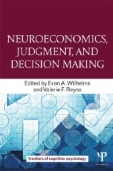
Drawing on perspectives from the early roots of psychology through the latest neuroscience, "Neuroeconomics, Judgment and Decision Making" (Psychology Press) introduces what we know about how and why people make decisions with economic consequences (e.g., saving money, donating to charity, choosing medical treatment). The volume edited by Valerie Reyna and graduate student Evan Wilhelms and authored by leading neuroeconomists, neuroscientists and social scientists, answers broad questions about the ways developmental, neurological and individual differences influence our choices; whether deciding quickly is good or bad; whether emotional reactions lead us astray or help; how decision processes change over the lifespan; and the nature of expertise.
Neuroeconomics, Judgment, and Decision Making - Cornell Chronicle Story
Routledge Taylor & Francis Group - Publisher's Book Page
The Neuroscience of Risky Decision Making
Edited by V.F. Reyna and V. Zayas, American Psychological Association, 2014
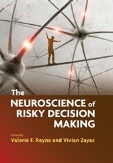
Risky choices - about sex, drugs and drinking, as well as diet, exercise, money and health care - pervade our lives and can have dire consequences. Now, a new book aims to help us understand the neural roots of bad decisions. "The Neuroscience of Risky Decision Making" (APA Books) synthesizes the research in this relatively young field for the first time, and introduces new models of brain function to explain and predict risky behavior. In the book, leading neuroeconomists, neuroscientists and social scientists discuss recent findings on why people take risks and how risky choices shift in different circumstances and across the life span.
The Neuroscience of Risky Decision Making - Cornell Chronicle Story
***Reviews
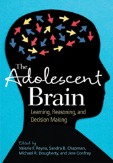
Teenage brains undergo big changes, and they won't look or function like adult brains until well into one's 20s. In this first book on the adolescent brain and development of higher cognition, Valerie Reyna helps highlight recent neuroscience discoveries about how the brain develops and their implications for real-world problems and how we teach young people and prepare them to make healthy life choices. "The Adolescent Brain" (APA Books) addresses the major changes in memory, learning and decision making experienced by adolescents as they mature, beginning with a review of the changes in brain anatomy and physiology based on extensive neuroimaging studies.
The Adolescent Brain: Learning, Reasoning and Decision Making - Cornell Chronicle Story
***Reviews
American Psychological Association - Publisher's Book Page
The Science of False Memory
by C.J. Brainerd and V.F. Reyna, Oxford University Press, 2005

Children and adolescents - even adults for that matter - may report with all sincerity that they had been sexually abused in the past or witnessed a murder or other crimes. But sometimes the person,though earnest, is wrong: The memory is a false one. Having false memories - "recalling" events that did not happen - is a real phenomenon that is vitally important to law and medicine. Since it has only been readily recognized since the early 1990s, the science of false memory is a complex and burgeoning field. In "The Science of False Memory" (Oxford University Press), professors Charles Brainerd and Valerie Reyna bring together and makes accessible to the general reader the decade or so of intensive research on false memory.
The Science of False Memory - Cornell Chronicle Story
- Howe, M.L., Brainerd, C.J., & Reyna, V.F. (1992). Development of Long-Term Retention. New York: Springer-Verlag.
- Edelson, S. M. & Reyna, V. F. (2023). Decision-making in adolescence and early adulthood. In L. Crockett, G. Carlo, and J. E. Schulenberg (Eds.), APA handbook of adolescent and young adult development (pp. 107-122). American Psychological Association.
- Edelson, S. M., & Reyna, V. F. (2023). Dual and multi‐process models of adolescent decision making. In B. Halpern‐Fisher (Ed.), Encyclopedia of child and adolescent health (1st ed., pp. 284-293). Elsevier. view abstract.
- Helm, R. K., & Reyna, V. F. (2023). Fuzzy trace theory: Memory and decision-making in law, medicine, and public health. In Logie, R.H., Wen, Z., Gathercole, S., Cowan, N., & Engle, R. (Eds.), Memory in science for society: There is nothing as practical as a good theory. (1st ed., pp. 93-C5P197). Oxford University Press.
- Garavito, D. M. N., Reyna, V. F., DeTello, J. E., Landow, B. R., & Tarpinian, L. M. (2021). Intentions to report concussion symptoms in nonprofessional athletes: A fuzzy-trace theory approach. Applied Cognitive Psychology, 35(1), 26–38.
- Brust-Renck, P. G., Weldon, R. B., & Reyna, V. F. (2021). Judgment and decision making. Oxford research encyclopedia of psychology. Oxford University Press.
- Bialer, D. M., Reyna, V. F., & Brainerd, C. J. (2021). False memory: What are the effects, how does fuzzy-trace theory predict them, and how does this matter for eyewitness testimony? . In A. M. Smith, M. P. Toglia, & J. M. Lampinen (Eds.), Methods, measures, and theories in eyewitness identification tasks (pp. 325-352). New York, NY: Taylor and Francis.
- Reyna, V. F., & Panagiotopoulos, C. (2020). Morals, money, and risk taking from childhood to adulthood: The neurodevelopmental framework of fuzzy trace theory. In J. Decety (Ed.), The social brain – A developmental perspective (pp. 385-406). Cambridge, MA: The MIT Press.
- Lockenhoff, C. E., Rutt, J. L., Samanez-Larkin, G. R., O’Donoghue, T., & Reyna, V. F. (2019). Preferences for temporal sequences of real outcomes differ across domains but do not vary by age. The Journals of Gerontology: Psychological Sciences, 74(3), 430-439.
- Erez, Y., & Reyna, V. F. (2019). Decision making. In R. J. Sternberg & W. E. Pickren (Eds.), The Cambridge handbook of the intellectual history of psychology (pp. 216-249). New York, NY: Cambridge University Press.
- Nolte, J., Garavito, D., & Reyna, V. F. (2019). Decision making. In R. J. Sternberg & J. Funke (Eds.), Introduction to the psychology of human thought (pp.177-198). Heidelberg: Heidelberg University Publishing.
- Reyna, V. F. (2018). When irrational biases are smart: A fuzzy-trace theory of complex decision making. Journal of Intelligence, 6(2), 29. doi: 10.3390/jintelligence6020029.
- Helm, R. K., & Reyna, V. F. (2018). Cognitive, developmental, and neurobiological aspects of risk judgments. In M. Raue, E. Lermer, & B. Streicher (Eds.), Psychological perspectives on risk and risk analysis: Theory, models, and applications (pp. 83-108). New York, NY: Springer.
- Miller, H. L., Odegard, T. N., & Reyna, V. F. (2018). Autobiographical memory in Autism Spectrum Disorder through the lens of fuzzy trace theory. In G. Goodman & P. Mundy (Eds.), Wiley handbook of autobiographical memory, autism spectrum disorder, and the law (pp. 27-52). West Sussex, UK: John Wiley & Sons Ltd
- Helm, R. K., McCormick, M., & Reyna, V. F. (2018). Expert decision-making: A fuzzy-trace theory perspective. In L. J. Ball & V. A. Thompson (Eds.), The International Handbook of Thinking and Reasoning (pp. 289-303). New York, NY: Routledge.
- Meschkow, A. M., Nolte, J., Garavito, D. M. N., Helm, R. K., Weldon, R. B., & Reyna, V. F. (2018). Risk-taking. In M. E. Arterberry, M. H. Bornstein, K. L. Fingerman, & J. E. Lansford (Eds.), The SAGE Encyclopedia of Lifespan Human Development (pp. 1861-1865). Thousand Oaks, CA: SAGE Publications.
- Reyna, V. F., Rahimi-Golkhandan, S., Garavito, D. M., & Helm, R. K. (2017). The fuzzy-trace dual-process model. In W. De Neys (Ed.), Dual process theory 2.0 (pp. 82-99). London: Taylor & Francis.
- Garavito, D. M. N., Weldon, R. B., & Reyna, V. F. (2017). Fuzzy-trace theory: Judgments, decisions, and neuro-economics. In A. Lewis (Ed.), The Cambridge handbook of psychology and economic behavior (2nd ed., pp. 713-740). Cambridge University Press.
- Rahimi-Golkhandan, S., Garavito, D. M. N., Reyna-Brainerd, B. B., and Reyna, V. F. (2017). A fuzzy trace theory of risk and time preferences in decision making: Integrating cognition and motivation. In J.R. Stevens (Ed.), Impulsivity: How risk and time influence decision making (pp. 115-144). New York: Springer
- Brust-Renck, P. G., Nolte, J., & Reyna, V. F. (2017). Numeracy in health and risk messaging. Oxford research encyclopedia of communication. Oxford University Press.
- Broniatowski, D. A., & Reyna, V. F. (2016). Process Modeling of Qualitative Decision Under Uncertainty. In A. Papafragou, D. Grodner, D. Mirman, & J. Trueswell (Eds.), Proceedings of the 38th Annual Conference of the Cognitive Science Society (pp. 1667-1672). Austin, TX: Cognitive Science Society.
- Chick, C. F., Pardo, S. T., Reyna, V. F., & Goldman, D. G. (2017). Decision Making (Individuals). In Reference Module in Neuroscience and Biobehavioral Psychology (pp. 1-10). Elsevier. doi: 10.1016/B978-0-12-809324-5.06393-8 .
- Weldon, R. B., Corbin, J. C., Garavito, D. M. N., & Reyna, V. F. (2017). The gist is sophisticated yet simple: Fuzzy-trace theory’s developmental approach to individual differences in judgment and decision making. In M. Toplak & J. Weller (Eds.), Individual Differences in Judgment and Decision Making from a Developmental Context (pp. 67-84). New York, NY: Routledge..
- Broniatowski, D. A., & Reyna, V. F. (2016). Process modeling of qualitative decision under uncertainty. In A. Papafragou, D. Grodner, D. Mirman, & J. Trueswell (Eds.), Proceedings of the 38th annual conference of the cognitive science society (pp. 1667-1672). Austin, TX: Cognitive Science Society.
- Brust-Renck, P. G., Reyna, V. F., Wilhelms, E. A., & Lazar, A. N. (2016). A fuzzy-trace theory of judgment and decision making in healthcare: Explanation, prediction, and application. In M. A. Diefenbach, S. M. Miller, & D. J. Bowen (Eds.), Handbook of health and decision science. New York: Springer..
- Ferrer, R., Klein, W., Lerner, J. S., Reyna, V. F., & Keltner, D. (2016). ). Emotions and health decision-making: Extending the Appraisal Tendency Framework to improve health and healthcare. In C. Roberto & I. Kawachi (Eds.), Behavioral economics and public health (pp.101-132). New York, NY: Oxford University Press. .
- Brainerd, C. J., & Reyna, V. F. (2015). Memory and knowledge in theories of episodic memory. In C. Roberto & I. Kawachi (Eds.), Behavioral economics and public health (pp.101-132). New York, NY: Oxford University Press.
- Broniatowski, D. A., & Reyna, V. F. (2015). Formalizing risky choice with a logistic model of Fuzzy Trace Theory. In D. C. Noelle, R. Dale, A. S. Warlaumont, J. Yoshimi, T. Matlock, C. D. Jennings, & P. P. Maglio (Eds.), Proceedings of the 37th Annual Meeting of the Cognitive Science Society (pp. 291-296). Austin, TX: Cognitive Science Society.
- Corbin, J. C., Liberali, J. F. M., Reyna, V. F., & Brust-Renck, P. G. (2015). Intuition, interference, inhibition, and individual differences in Fuzzy Trace Theory. In E. A. Wilhelms & V. F. Reyna (Eds.), Neuroeconomics, judgment, and decision making (pp. 77-90). New York, NY: Psychology Press.
- Wilhelms, E. A. & Reyna, V. F. (2015). Introduction: Neuroeconomics, judgment and decision making. In E. A. Wilhelms & V. F. Reyna (Eds.), Neuroeconomics, Judgment, and Decision Making (pp. xiii-xviii). New York, NY: Psychology Press.
- Wilhelms, E. A., Helm, R. K., Setton, R. A., & Reyna, V. F. (2015). Fuzzy trace theory explains paradoxical dissociations in affective forecasting. In E.A. Wilhelms & V. F. Reyna (Eds.), Neuroeconomics, Judgment, and Decision Making (pp. 49-73). New York, NY: Psychology Press.
- Broniatowski, D. A., & Reyna, V. F. (2014). A mathematical formalization of fuzzy trace theory. In P. Bello, M. Guarini, M. McShane & B. Scassellati (Eds.), Proceedings of the 36th annual conference of the cognitive science society (pp. 266-271). Austin, TX: Cognitive Science Society.
- Brust-Renck, P. G., Reyna, V. F., Corbin, J. C., Royer, C. E., & Weldon, R. B. (2014). The role of numeracy in risk communication.. In H. Cho, T. Reimer, & K. A. McComas (Eds.), The SAGE handbook of risk communication (pp. 134-145). Thousand Oaks: Sage Publications.
- Reyna, V. F., & Huettel, S. A. (2014). Reward, representation, and impulsivity: A theoretical framework for the neuroscience of risky decision making. In V. F. Reyna & V. Zayas (Eds.), The neuroscience of risky decision making (pp. 11-42). Washington, DC: American Psychological Association.
- Reyna, V. F., & Zayas, V. (2014). Introduction to the neuroscience of risky decision making. In V. F. Reyna & V. Zayas (Eds.), The neuroscience of risky decision making (pp. 3-8). Washington, DC: American Psychological Association..
- Reyna, V. R., & Brust-Renck, P. G. (2014). A review of theories of numeracy: Psychological mechanisms and implications for medical decision making. In Anderson, B. L., & Schulkin, J. Numerical reasoning in judgments and decision making about health (pp. 215-251). Cambridge, UK: Cambridge University Press.
- Broniatowski, D. A., & Reyna, V. F. (2013). Gist and verbatim in narrative memory. In M. A. Finlayson, B. Fisseni, B. Löwe & J. C. Meister (Eds.), 2013 workshop on computational models of narrative (vol. 32, pp. 43-51). Dagstuhl, Germany: Schloss Dagstuhl--Leibniz-Zentrum fuer Informatik.
- Brainerd, C. J., & Reyna, V. F. (2013). Dual processes in memory development: Fuzzy-trace theory. In P. J. Bauer & R. Fivush (Eds.), The Wiley handbook on the development of children's memory (pp. 480-512). New York: Wiley & Sons..
- Corbin, J.C., Wilhelms, E.A., Reyna, V.F., & Brainerd, C.J. (2013). Theory and Processes in Memory Development: Childhood to Adolescence. In R. Holliday & T. Marche (Eds.), Child Forensic Psychology (pp. 65-94). Basingstroke, UK: Palgrave Macmillin.
- Reyna, V. F. (2013). Intuition, reasoning, and development: A fuzzy-trace theory approach. In P. Barrouillet & C. Gauffroy (Eds.), The Development of Thinking and Reasoning (pp.193-220). Hove, UK: Psychology Press.
- Weldon, R. B., Corbin, J. C., & Reyna, V. F. (2013). Gist processing in judgment and decision making: Developmental reversals predicted by fuzzy-trace theory. In H. Markovits (Ed.), The Developmental Psychology of Reasoning and Decision-Making (pp. 36-62). New York: Psychology Press.
- Brainerd, C.B., Reyna, V.F., & Holliday, R.E. (2012). Development of recollection: A fuzzy-trace theory perspective. In S. Ghetti & P.J. Bauer (Eds.), Origins and development of recollection (pp. 101-143). New York: Oxford University Press.
- Chick, C.F. & Reyna, V.F (2012). A fuzzy-trace theory of adolescent risk-taking: Beyond self-control and sensation seeking. In V.F. Reyna, S. Chapman, M. Dougherty, & J. Confrey (Eds.), The adolescent brain: learning, reasoning, and decision making (pp.379-428). Washington DC: American Psychological Association.
- Holliday, R.E., Humphries, J.E., Brainerd, C.J., & Reyna, V.R. (2012). Interviewing vulnerable witnesses. In G. Davies & A. Beech, Forensic psychology: Crime, justice, law, interventions, 2nd Ed. (pp. 115-133). Chichester, West Sussex ; Hoboken, N.J. : John Wiley & Sons.
- Reyna, V.F. (2012). Preface. In V.F. Reyna, S. Chapman, M. Dougherty, & J. Confrey (Eds.),The adolescent brain: Learning, reasoning, and decision making (pp. xv-xviii). Washington DC: American Psychological Association.
- Reyna, V.F. (2012). Across the lifespan. In Fischhoff, B., Brewer, N.T., Downs, J.S. (Eds.), Communicating risks and benefits: An evidence-based user's guide (pp. 111-119). U.S. Department of Health and Human Services, Food and Drug Administration. Retrieved from http://www.fda.gov/ScienceResearch/SpecialTopics/RiskCommunication/defa….
- Reyna, V.F. & Dougherty, M. (2012). Epilogue: Paradoxes of the adolescent brain in cognition, emotion, and rationality.. In V.F. Reyna, S. Chapman, M. Dougherty, & J. Confrey (Eds.), The adolescent brain: Learning, reasoning, and decision making (pp.431-435). Washington DC: American Psychological Association.
- Reyna, V.F., & Casillas, W. (2009). Development and Dual Processes in Moral Reasoning: A Fuzzy-trace Theory Approach. In Bartels, D. M., Bauman, C. W., Skitka, L. J., & Medin, D. L., Eds. Moral Judgment and Decision Making: The Psychology of Learning and Motivation, Volume 50 ( pp. 207-236). San Diego: Elsevier Academic Press..
- Brainerd, C. J., & Reyna, V. F. (2008). Developmental trends in spontaneous false memory, with implications for the law. In M. L. Howe, G. Goodman, & D. Cicchetti (Eds.), Stress, trauma, and children’s memory development: Neurobiological, cognitive, clinical, and legal perspectives (pp. 302-362). New York: Oxford University Press.
- Reyna, V. F., & Mills, B. A. (2007). Interference processes in fuzzy-trace theory: Aging, Alzheimer's disease, and development. In C. MacLeod & D. Gorfein (Eds.), Inhibition in cognition (pp. 185-210). Washington: APA Press..
- Reyna, V. F., Mills, B. A., Estrada, S. M., & Brainerd, C. J. (2006). False memory in children: Data, theory, and legal implications. In M. P. Toglia, J. D. Read, D. F. Ross, & R. C. L. Lindsay (Eds.), The handbook of eyewitness psychology: Memory for events (pp. 473-510). Mahwah, NJ: Erlbaum.
- Reyna, V. F. (2005). Fuzzy-trace theory, judgment, and decision-making: A dual-processes approach. In C. Izawa & N. Ohta (Eds.), Human Learning and Memory: Advances in theory and application: The 4th Tsukuba International Conference on Memory (pp. 239-256). Mahwah, NJ: Lawrence Erlbaum Associates, Publishers.
- Reyna, V. F. (2005). The no child left behind act and scientific research: A view from Washington, DC. In J. S. Carlson, & J. R. Levin (Eds.), The no child left behind legislation: Educational research and federal funding (pp. 1-25). Greenwich, CT: Information Age Publishing.
- Reyna, V. F. (2005). Federal policy and scientific research. In J. S. Carlson, & J. R. Levin (Eds.), The no child left behind legislation: Educational research and federal funding (pp. 135-150). Greenwich, CT: Information Age Publishing.
- Reyna, V. F., Adam, M. B., Poirier, K., LeCroy, C. W., & Brainerd, C. J. (2005). Risky decision-making in childhood and adolescence: A fuzzy-trace theory approach. In J. Jacobs & P. Klaczynski (Eds.), The development of children's and adolescents' judgment and decision-making (pp. 77-106) Mahwah, NJ: Erlbaum.
- Wolfe C. R., Reyna, V. F., & Brainerd, C. J. (2005). Fuzzy-trace theory: Implications for transfer in teaching and learning. In J. P. Mestre (Ed.), Transfer of learning from a modern multidisciplinary perspective (pp. 53-88). Greenwich,CT: Information Age Publishing.
- Reyna, V. F. (2004). Why scientific research? The importance of evidence in changing educational practice. In P. McCardle & V. Chhabra (Eds.), The voice of evidence: Bringing research to classroom educators [A festschrift for a scientific advisor to the President on research], (pp. 47-58). Baltimore,MD: Brookes Publishing.
- Reyna, V. F., Lloyd, F. J., & Brainerd, C. J. (2003). Memory, development, and rationality: An integrative theory of judgment and decision-making. In S. Schneider & J. Shanteau (Eds.), Emerging perspectives on judgment and decision research (pp. 201-245). New York: Cambridge University Press.
- Effken, J, Loeb, R., Johnson, K., Johnson, S., & Reyna, V. (2001). Using cognitive work analysis to design clinical display [Proceedings of MedInfo, 2001]. In V. L. Patel, R. Rogers, & R. Haux (Eds.), (pp. 27-31) London, IOS Press.
- Lloyd, F. J., & Reyna, V. F. (2001). Clinical decision making and information management in the era of managed care. In R. C. Becker & J. S. Alpert (Eds.), Cardiovascular medicine: Practice and management (pp. 719-732). New York, NY:Arnold Publishing.
- Reyna, V. F., Brainerd, C. J., Effken, J., Bootzin, R., & Lloyd, F. J. (2001). The psychology of human computer mismatches. In C. Wolfe (Ed.), Learning and teaching on the world wide web (pp. 23-44). San Diego, CA: Academic Press.
- Brainerd, C.J., Reyna, V. F., & Poole, D. A (2000). Fuzzy-trace theory and false memory: Memory theory in the courtroom. In D. F. Bjorklund (Ed.), False memory creation in children and adults (pp. 93-127). Mahwah, NJ: Erlbaum.
- Reyna, V. F. (1998). Fuzzy-trace theory and false memory. In M. Intons-Peterson & D. Best (Eds.), Memory distortions and their prevention (pp. 15-27). Mahwah, NJ: Erlbaum.
- Reyna, V. F., & Titcomb, A. L. (1997). Constraints on the suggestibility of eyewitness testimony: A fuzzy-trace theory analysis. In D. G. Payne & F. G. Conrad (Eds.), A synthesis of basic and applied approaches to human memory (pp. 157-174). Hillsdale, NJ: Erlbaum.
- Reyna, V. F. (1996). Meaning, memory and the interpretation of metaphors. In J. Mio & A. Katz (Eds.), Metaphor: Implications and applications (pp. 39-57). Hillsdale, NJ: Erlbaum.
- Reyna,V. F. (1995). Interference effects in memory and reasoning: A fuzzy-trace theory analysis. In F. N. Dempster & C. J. Brainerd (Eds.), Interference and inhibition in cognition (pp. 29-59). San Diego, CA: Academic Press.
- Titcomb, A. L., & Reyna, V. F. (1995). Memory interference and misinformation effects. In F. N. Dempster & C. J. Brainerd (Eds.), Interference and inhibition in cognition (pp. 263-294). San Diego, CA: Academic Press.
- Reyna, V. F., & Brainerd, C. J. (1994). The origins of probability judgment: A review of data and theories. In G. Wright & P. Ayton (Eds.), Subjective probability (pp.239-272). New York, NY: Wiley.
- Brainerd, C. J., & Reyna, V. F. (1993). Domains of fuzzy-trace theory. In M. L. Howe & R. Pasnak (Eds.), Emerging themes in cognitive development: Theoretical foundation Vol. 1. (pp. 50-93). New York, NY: Springer-Verlag.
- Reyna, V. F., & Brainerd, C.J. (1993). Fuzzy memory and mathematics in the classroom. In G. M. Davies & R. H. Logie (Eds.), Memory in everyday life (pp. 91-119). Amsterdam: North Holland Press.
- Reyna, V. F. (1992). Reasoning, remembering, and their relationship: Social, cognitive, and developmental issues. In M. L. Howe, C. J. Brainerd, & V. F. Reyna (Eds.), Development of long-term retention (pp. 103-127). New York, NY: Springer-Verlag.
- Reyna, V. F., & Brainerd, C. J. (1992). A fuzzy-trace theory of reasoning and remembering: Paradoxes, patterns, and parallelism. In A. Healy, S. Kosslyn, & R. Shiffrin (Eds.), From learning processes to cognitive processes: Essays in honor of William K. Estes (pp. 2:235-259). Hillsdale, NJ: Erlbaum.
- Brainerd, C. J., & Reyna, V. F. (1991). Acquisition and forgetting in normal and learning-disabled children: A disintegration-redintegration theory. In J. E. Obrzut & G. W. Hynd (Eds.), Neuropsychological foundations of learning disabilities (pp.147-178). New York: Academic Press.
- Reyna, V.F. (1987). Understanding verbs: Easy extension, hard comprehension. In A. Ellis (Ed.). Progress in the psychology of language (pp. 3:301-315). London: Erlbaum.
- Reyna, V.F. (1985). Shaping opinion: Pragmatics of topic and source. In F. Denmark (Ed.), Social/ecological psychology and the psychology of women. (pp.35-50) Amsterdam: North Holland.
- Reyna, V.F. (1985). Figure and fantasy in children's language. In M. Pressley., & C.J. Brainerd (Eds.), Cognitive learning and memory in children: Progress in cognitive development research. New York, NY:Springer-Verlag.
- Newswise. (2020). COVID-19 Causes, Consequences, and Solutions: Exploring the Unanswered Questions https://www.newswise.com/articles/covid-19-exploring-the-unanswered-questions-with-newswise-live-expert-panel
- Reyna, V. The Risks of E-Cigarettes to Adolescent Health https://www.youtube.com/watch?v=NH56vbisMKY&list=PLf6VUxhJp0JnGW60ShIuwwB9rYItxxfHj&index=70
- Reyna, V. (2019). Communicating the Gist: Misinformation, Memory, and Meaning https://www.youtube.com/watch?v=6D-3UZMvHuU&t=3s
- Reyna, V. (2017). NAM Annual Meeting: Child Brain Development & Its Influence on Risky Decision-Making https://www.youtube.com/watch?v=bKqego3aDWY
- Bronfenbrenner Center for Translational Research (2020). The Pandemic May Be Affecting Your Memory. Psychology Today. Retrieved from https://www.psychologytoday.com/us/blog/evidence-based-living/202009/the-pandemic-may-be-affecting-your-memory
- Baildon, K. (2019). 5 Questions with Valerie Reyna, Department for Human Development Professor and Extension Leader. CCE News. Retrieved from http://hdtoday.human.cornell.edu/2019/04/30/an-interview-with-valerie-reyna-by-cce-news/
- Cornell University (2018, September 5). Does neuroscience hold the key to understanding the criminal mind?. ScienceDaily. Retrieved from www.sciencedaily.com/releases/2018/09/180905140235.htm
- Damour, L. (2017). Teenagers do dumb things, but there are ways to limit recklessness. The New York Times. Retrieved from https://www.nytimes.com/2017/03/08/well/family/teenagers-do-dumb-things-but-there-are-ways-to-limit-recklessness.html.
- Rozansky, M. (2017). Why teens take risks: It’s not a deficit in brain development. Retrieved from https://www.annenbergpublicpolicycenter.org/why-teens-take-risks-its-not-a-deficit-in-brain-development/
- Damour, L (2017). Teenagers do dumb things, but there are ways to limit recklessness. The New York Times. Retrieved from https://www.nytimes.com/2017/03/08/well/family/teenagers-do-dumb-things-but-there-are-ways-to-limit-recklessness.html.
Edelson, S. M., Roue, J., Singh, A., & Reyna, V. F. (2023). How decision making develops: Adolescents, irrational adults, and should AI be trusted with the car keys? Policy Insights from the Behavioral and Brain Sciences, 0(0). First published online December 28, 2023. https://doi.org/10.1177/23727322231220423
This paper reviews the developmental literature on decision making, discussing how increased reliance on gist thinking explains the surprising finding that important cognitive biases increase from childhood to adulthood. This developmental trend can be induced experimentally by encouraging verbatim (younger) versus gist (older) ways of thinking. We then build on this developmental literature to assess the developmental stage of artificial intelligence (AI) and how its decision making compares with humans, finding that popular models are not only irrational but they sometimes resemble immature adolescents. To protect public safety and avoid risk, we propose that AI models build on policy frameworks already established to regulate other immature decision makers such as adolescents.
Reyna, V. F. (2023).Social media: Why sharing interferes with telling true from false.Science Advances, 9(9), eadg8333. https://doi.org/10.1126/sciadv.adg8333
Risk-reduction behaviors are the first line of defense in viral epidemics. Choosing to not engage in risk-reduction behaviors produced millions of preventable deaths from COVID-19. Understanding why this happens and how to predict it is important for theory development and public policy. We took four approaches to this problem: experimentally varying theory-driven predictors (social rewards, transmission risk, and mandatory/voluntary regulations) in choice scenarios, further probing choices in specific scenarios predicted to elicit risk taking, conducting hierarchical regressions with demographic and theory-driven predictors for both scenario types, and conducting corresponding regressions for self-reported protective behaviors. The sample consisted of 247 young adults to test highly publicized predictions about how the virus would spread and who would take risks. Results showed that risky choices for scenarios correlated with self-reported behavior and varied with transmission risk and whether regulations were mandatory. Experimentally varying social reward did not elicit greater risk taking as expected by dual-systems theory but risk taking in specific social scenarios was predicted by individual differences in sensation seeking as predicted by dual-systems theory. Sensation seeking predicted social distancing and impulsivity predicted mask wearing. Fuzzy-trace theory’s predictors of categorical thinking about risk and endorsement of simple gist principles of social responsibility (to not hurt other people) consistently predicted choices and behaviors, accounting for significant variance beyond dual-systems predictors. Both controlled experiments and real-world self-reported behaviors converged on similar conclusions, identifying a major gap in influential theories (the omission of gist-based thinking) and challenging pessimistic predictions about motivations and mandates in public health.
Reyna, V. F. (2021). A scientific theory of gist communication and misinformation resistance, with implications for health, education, and policy. Proceedings of the National Academy of Sciences, 118(15), 1-6. https://doi.org/10.1073/pnas.1912441117
A framework is presented for understanding how misinformation shapes decision-making, which has cognitive representations of gist at its core. I discuss how the framework goes beyond prior work, and how it can be implemented so that valid scientific messages are more likely to be effective, remembered, and shared through social media, while misinformation is resisted. The distinction between mental representations of the rote facts of a message—its verbatim representation—and its gist explains several paradoxes, including the frequent disconnect between knowing facts and, yet, making decisions that seem contrary to those facts. Decision makers can falsely remember the gist as seen or heard even when they remember verbatim facts. Indeed, misinformation can be more compelling than information when it provides an interpretation of reality that makes better sense than the facts. Consequently, for many issues, scientific information and misinformation are in a battle for the gist. A fuzzy-processing preference for simple gist explains expectations for antibiotics, the spread of misinformation about vaccination, and responses to messages about global warming, nuclear proliferation, and natural disasters. The gist, which reflects knowledge and experience, induces emotions and brings to mind social values. However, changing mental representations is not sufficient by itself; gist representations must be connected to values. The policy choice is not simply between constraining behavior or persuasion—there is another option. Science communication needs to shift from an emphasis on disseminating rote facts to achieving insight, retaining its integrity but without shying away from emotions and values.
Reyna, V. F., Broniatowski, D. A., & Edelson, S. M. (2021). Viruses, vaccines, and COVID-19: Explaining and improving risky decision-making. Journal of Applied Research in Memory and Cognition, 10(4), 491–509. https://doi.org/10.1016/j.jarmac.2021.08.004
Risky decision-making lies at the center of the COVID-19 pandemic and will determine future viral outbreaks. Therefore, a critical evaluation of major explanations of such decision-making is of acute practical importance. We review the underlying mechanisms and predictions offered by expectancy-value and dual-process theories. We then highlight how fuzzy-trace theory builds on these approaches and provides further insight into how knowledge, emotions, values, and metacognitive inhibition influence risky decision-making through its unique mental representational architecture (i.e., parallel verbatim and gist representations of information). We discuss how social values relate to decision-making according to fuzzy-trace theory, including how categorical gist representations cue core values. Although gist often supports health-promoting behaviors such as vaccination, social distancing, and mask-wearing, why this is not always the case as with status-quo gist is explained, and suggestions are offered for how to overcome the “battle for the gist” as it plays out in social media.
Reyna, V. F., Edelson, S. M., & Broniatowski, D. B. (2021). Misconceptions, misinformation, and moving forward in theories of COVID-19 risky behaviors. Journal of Applied Research in Memory and Cognition, 10(4), 537-541. https://doi.org/10.1016/j.jarmac.2021.11.003
Reply by the current authors to the comments made by Baruch Fischhoff (see record 2022-15515-002), Stephen B. Broomell and Gretchen B. Chapman (see record 2022-15515-003), Kathleen Hall Jamieson (see record 2022-15515-004), Dietram A. Scheufele et al. (see record 2022-15515-005), Christopher R. Wolfe (see record 2022-15515-006) and Valerie A. Thompson et al. (see record 2022-15515-007) on the original article (see record 2022-15515-001). Imagine gathering together the most thoughtful scholars spanning the behavioral sciences to address the conceptual frontier as it pertains to human behavior and COVID-19, including risk communication, prevention, and vaccination. Imagine that this group had vast experience in understanding the mechanisms underlying behavior and in applying this understanding in policy and practice. Collectively, they summarize key concepts that can be applied in programs to combat COVID-19 and provide a blueprint for future research. A theme of these articles is that integrative interdisciplinary work is required to address this massive public health problem. Many highlight how fuzzy-trace theory (FTT) accomplishes this goal by weaving together cognitive, social, emotional, and neuroscientific constructs to explain multiply determined decisions that involve risk, applying falsifiable models. Others encourage looking beyond cognition, and they raise questions about the efficacy of current behavioral theories, including FTT, and whether FTT should be combined with dual-process approaches to achieve greater explanatory and predictive power.
Edelson, S. M., & Reyna, V. F. (2021). How fuzzy-trace theory predicts development of risky decision making, with novel extensions to culture and reward sensitivity. Developmental Review, 62, 100986.
Comprehensive meta-analyses of risky decision making in children, adolescents, and adults have revealed that age trends in disambiguated laboratory tasks confirmed fuzzy-trace theory’s prediction that preference for risk decreases monotonically from childhood to adulthood. These findings are contrary to predictions of dual systems or neurobiological imbalance models. Assumptions about increasing developmental reliance on mental representations of the gist of risky options are essential to account for this developmental trend. However, dual systems theory appropriately emphasizes how cultural context changes behavioral manifestation of risk preferences across age and neurobiological imbalance models appropriately emphasize developmental changes in reward sensitivity. All of the major theories include the assumption of increasing behavioral inhibition. Here, we integrate these theoretical constructs—representation, cultural context, reward sensitivity, and behavioral inhibition—to provide a novel framework for understanding and improving risky decision making in youth. We also discuss the roles of critical tests, scientific falsification, disambiguating assessments of psychological and neurological processes, and the misuse of such concepts as ecological validity and reverse inference. We illustrate these concepts by extending fuzzy-trace theory to explain why youth are a major conduit of viral infections, including the virus that causes COVID-19. We conclude by encouraging behavioral scientists to embrace new ways of thinking about risky decision making that go beyond traditional stereotypes about adolescents and that go beyond conceptualizing ideal decision making as trading off degrees of risk and reward.
Reyna, V. F. & Wilhelms, E. A. (2017). The gist of delay of gratification: Understanding and predicting problem behaviors. Journal of Behavioral Decision Making, 30(2), 610-625. doi: 10.1002/bdm.1977
Delay of gratification captures elements of temptation and self-denial that characterize real-life problems with money and other problem behaviors such as unhealthy risk taking. According to fuzzy-trace theory, decision makers mentally represent social values such as delay of gratification in a coarse but meaningful form of memory called “gist.” Applying this theory, we developed a gist measure of delay of gratification that does not involve quantitative trade-offs (as delay discounting does) and hypothesize that this construct explains unique variance beyond sensation seeking and inhibition in accounting for problem behaviors. Across four studies, we examine this Delay-of-gratification Gist Scale by using principal components analyses and evaluating convergent and divergent validity with other potentially related scales such as Future Orientation, Propensity to Plan, Time Perspectives Inventory, Spendthrift-Tightwad, Sensation Seeking, Cognitive Reflection, Barratt Impulsiveness, and the Monetary Choice Questionnaire (delay discounting). The new 12-item measure captured a single dimension of delay of gratification, correlated as predicted with other scales, but accounted for unique variance in predicting such outcomes as overdrawing bank accounts, substance abuse, and overall subjective well-being. Results support a theoretical distinction between reward-related approach motivation, including sensation seeking, and inhibitory faculties, including cognitive reflection. However, individuals' agreement with the qualitative gist of delay of gratification, as expressed in many cultural traditions, could not be reduced to such dualist distinctions nor to quantitative conceptions of delay discounting, shedding light on mechanisms of self-control and risk taking.
Reyna, V. F., Chick, C. F., Corbin, J. C., & Hsia, A. N. (2014). Developmental reversals in risky decision-making: Intelligence agents show larger decision biases than college students. Psychological Science, 25(1), 76-84. doi: 10.1177/0956797613497022.
Intelligence agents make risky decisions routinely, with serious consequences for national security. Although common sense and most theories imply that experienced intelligence professionals should be less prone to irrational inconsistencies than college students, we show the opposite. Moreover, the growth of experience-based intuition predicts this developmental reversal. We presented intelligence agents, college students, and postcollege adults with 30 risky-choice problems in gain and loss frames and then compared the three groups’ decisions. The agents not only exhibited larger framing biases than the students, but also were more confident in their decisions. The postcollege adults (who were selected to be similar to the students) occupied an interesting middle ground, being generally as biased as the students (sometimes more biased) but less biased than the agents. An experimental manipulation testing an explanation for these effects, derived from fuzzy-trace theory, made the students look as biased as the agents. These results show that, although framing biases are irrational (because equivalent outcomes are treated differently), they are the ironical output of cognitively advanced mechanisms of meaning making.
Reyna, V. F., & Mills, B. A. (2014). Theoretically motivated interventions for reducing sexual risk taking in adolescence: A randomized controlled experiment applying fuzzy-trace theory. Journal of Experimental Psychology: General, 143(4), 1627-1648. doi: 10.1037/a0036717.
Fuzzy-trace theory is a theory of memory, judgment, and decision making, and their development. We applied advances in this theory to increase the efficacy and durability of a multicomponent intervention to promote risk reduction and avoidance of premature pregnancy and sexually transmitted infections. Seven hundred and thirty-four adolescents from high schools and youth programs in 3 states (Arizona, Texas, and New York) were randomly assigned to 1 of 3 curriculum groups: RTR (Reducing the Risk), RTR+ (a modified version of RTR using fuzzy-trace theory), and a control group. We report effects of curriculum on self-reported behaviors and behavioral intentions plus psychosocial mediators of those effects: namely, attitudes and norms, motives to have sex or get pregnant, self-efficacy and behavioral control, and gist/verbatim constructs. Among 26 outcomes, 19 showed an effect of at least 1 curriculum relative to the control group: RTR+ produced improvements for 17 outcomes and RTR produced improvements for 12 outcomes. For RTR+, 2 differences (for perceived parental norms and global benefit perception) were confined to age, gender, or racial/ethnic subgroups. Effects of RTR+ on sexual initiation emerged 6 months after the intervention, when many adolescents became sexually active. Effects of RTR+ were greater than RTR for 9 outcomes, and remained significantly greater than controls at 1-year follow-up for 12 outcomes. Consistent with fuzzy-trace theory, results suggest that by emphasizing gist representations, which are preserved over long periods and are key memories used in decision making, the enhanced intervention produced larger and more sustained effects on behavioral outcomes and psychosocial mediators of adolescent risk taking.
Reyna, V. F., Edelson, S. M., Hayes, B., & Garavito, D. M. N. (2022). Supporting health and medical decision-making: Findings and insights from fuzzy-trace theory. Medical Decision Making: An International Journal of the Society for Medical Decision Making, 42(6), 741-754. https://doi.org/10.1177/0272989X221105473
Theory—understanding mental processes that drive decisions—is important to help patients and providers make decisions that reflect medical advances and personal values. Building on a 2008 review, we summarize current tenets of fuzzy-trace theory (FTT) in light of new evidence that provides insight regarding mental representations of options and how such representations connect to values and evoke emotions. We discuss implications for communicating risks, preventing risky behaviors, discouraging misinformation, and choosing appropriate treatments. Findings suggest that simple, fuzzy but meaningful gist representations of information often determine decisions. Within minutes of conversing with their doctor, reading a health-related web post, or processing other health information, patients rely on gist memories of that information rather than verbatim details. This fuzzy-processing preference explains puzzles and paradoxes in how patients (and sometimes providers) think about probabilities (e.g., “50-50” chance), outcomes of treatment (e.g., with antibiotics), experiences of pain, end-of-life decisions, memories for medication instructions, symptoms of concussion, and transmission of viruses (e.g., in AIDS and COVID-19). As examples, participation in clinical trials or seeking treatments with low probabilities of success (e.g., with antibiotics or at the end of life) may indicate a defensibly different categorical gist perspective on risk as opposed to simply misunderstanding probabilities or failing to make prescribed tradeoffs. Thus, FTT explains why people avoid precise tradeoffs despite computing them. Facilitating gist representations of information offers an alternative approach that goes beyond providing uninterpreted “neutral” facts versus persuading or shifting the balance between fast versus slow thinking (or emotion vs. cognition). In contrast to either taking mental shortcuts or deliberating about details, gist processing facilitates application of advanced knowledge and deeply held values to choices.
Reyna, V. F. (2021). A scientific theory of gist communication and misinformation resistance, with implications for health, education, and policy. Proceedings of the National Academy of Sciences of the United States of America, 118(15), e1912441117.
A framework is presented for understanding how misinformation shapes decision-making, which has cognitive representations of gist at its core. I discuss how the framework goes beyond prior work, and how it can be implemented so that valid scientific messages are more likely to be effective, remembered, and shared through social media, while misinformation is resisted. The distinction between mental representations of the rote facts of a message—its verbatim representation—and its gist explains several paradoxes, including the frequent disconnect between knowing facts and, yet, making decisions that seem contrary to those facts. Decision makers can falsely remember the gist as seen or heard even when they remember verbatim facts. Indeed, misinformation can be more compelling than information when it provides an interpretation of reality that makes better sense than the facts. Consequently, for many issues, scientific information and misinformation are in a battle for the gist. A fuzzy-processing preference for simple gist explains expectations for antibiotics, the spread of misinformation about vaccination, and responses to messages about global warming, nuclear proliferation, and natural disasters. The gist, which reflects knowledge and experience, induces emotions and brings to mind social values. However, changing mental representations is not sufficient by itself; gist representations must be connected to values. The policy choice is not simply between constraining behavior or persuasion—there is another option. Science communication needs to shift from an emphasis on disseminating rote facts to achieving insight, retaining its integrity but without shying away from emotions and values.
Reyna, V. F., Broniatowski, D. A., & Edelson, S. M. (2021). Viruses, vaccines, and COVID-19: Explaining and improving risky decision-making. Journal of Applied Research in Memory and Cognition, 10(4), 491–509. https://doi.org/10.1016/j.jarmac.2021.08.004
Risky decision-making lies at the center of the COVID-19 pandemic and will determine future viral outbreaks. Therefore, a critical evaluation of major explanations of such decision-making is of acute practical importance. We review the underlying mechanisms and predictions offered by expectancy-value and dual-process theories. We then highlight how fuzzy-trace theory builds on these approaches and provides further insight into how knowledge, emotions, values, and metacognitive inhibition influence risky decision-making through its unique mental representational architecture (i.e., parallel verbatim and gist representations of information). We discuss how social values relate to decision-making according to fuzzy-trace theory, including how categorical gist representations cue core values. Although gist often supports health-promoting behaviors such as vaccination, social distancing, and mask-wearing, why this is not always the case as with status-quo gist is explained, and suggestions are offered for how to overcome the “battle for the gist” as it plays out in social media.
Reyna, V. F. (2020). Of viruses, vaccines, and variability: Qualitative meaning matters. Trends in Cognitive Sciences, 24(9), 672–675.
Deaths from COVID-19 depend on millions of people understanding risk and translating this understanding into risk-reduction behaviors. Although numerical information about risk is helpful, numbers are surprisingly ambiguous, and there are predictable mismatches in risk perception between laypeople and experts. Hence, risk communication should convey the qualitative, contextualized meaning of risk.
Reyna, V. F., Nelson, W. L., Han, P. K., & Pignone, M. P. (2015). Decision making and cancer. American Psychologist, 70(2), 105-118. doi: 10.1037/a0036834.
We review decision-making along the cancer continuum in the contemporary context of informed and shared decision making, in which patients are encouraged to take a more active role in their health care. We discuss challenges to achieving informed and shared decision making, including cognitive limitations and emotional factors, but argue that understanding the mechanisms of decision making offers hope for improving decision support. Theoretical approaches to decision making that explain cognition, emotion, and their interaction are described, including classical psychophysical approaches, dual-process approaches that focus on conflicts between emotion versus cognition (or reason), and modern integrative approaches such as fuzzy-trace theory. In contrast to the earlier emphasis on rote use of numerical detail, modern approaches emphasize understanding the bottom-line gist of options (which encompasses emotion and other influences on meaning) and retrieving relevant social and moral values to apply to those gist representations. Finally, research on interventions to support better decision making in clinical settings is reviewed, drawing out implications for future research on decision making and cancer.
Reyna, V. F., Nelson, W., Han, P., & Dieckmann, N. F. (2009). How numeracy influences risk comprehension and medical decision making. Psychological Bulletin, 135, 943-973. doi:10.1037/a0017327.
We review the growing literature on health numeracy, the ability to understand and use numerical information, and its relation to cognition, health behaviors, and medical outcomes. Despite the surfeit of health information from commercial and noncommercial sources, national and international surveys show that many people lack basic numerical skills that are essential to maintain their health and make informed medical decisions. Low numeracy distorts perceptions of risks and benefits of screening, reduces medication compliance, impedes access to treatments, impairs risk communication (limiting prevention efforts among the most vulnerable), and, based on the scant research conducted on outcomes, appears to adversely affect medical outcomes. Low numeracy is also associated with greater susceptibility to extraneous factors (i.e., factors that do not change the objective numerical information). That is, low numeracy increases susceptibility to effects of mood or how information is presented (e.g., as frequencies vs. percentages) and to biases in judgment and decision making (e.g., framing and ratio bias effects). Much of this research is not grounded in empirically supported theories of numeracy or mathematical cognition, which are crucial for designing evidence-based policies and interventions that are effective in reducing risk and improving medical decision making. To address this gap, we outline four theoretical approaches (psychophysical, computational, standard dual-process, and fuzzy trace theory), review their implications for numeracy, and point to avenues for future research.
Reyna, V.F. (2008). A Theory of Medical Decision Making and Health: Fuzzy Trace Theory. Medical Decision Making, 28(6), 850-865. doi:10.1177/0272989X08327066.
The tenets of fuzzy trace theory are summarized with respect to their relevance to health and medical decision making. Illustrations are given for HIV prevention, cardiovascular disease, surgical risk, genetic risk, and cancer prevention and control. A core idea of fuzzy trace theory is that people rely on the gist of information, its bottom-line meaning, as opposed to verbatim details in judgment and decision making. This idea explains why precise information (e.g., about risk) is not necessarily effective in encouraging prevention behaviors or in supporting medical decision making. People can get the facts right, and still not derive the proper meaning, which is key to informed decision making. Getting the gist is not sufficient, however. Retrieval (e.g., of health-related values) and processing interference brought on by thinking about nested or overlapping classes (e.g., in ratio concepts, such as probability) are also important. Theory-based interventions that work (and why they work) are presented, ranging from specific techniques aimed at enhancing representation, retrieval, and processing to a comprehensive intervention that integrates these components.
Reyna, V. F., Müller, S., & Edelson, S. M. (2023). Critical tests of fuzzy trace theory in brain and behavior: Uncertainty across time, probability, and development. Cognitive, Affective, and Behavioral Neuroscience, 23(3), 746-772. https://doi.org/10.3758/s13415-022-01058-0
Uncertainty permeates decisions from the trivial to the profound. Integrating brain and behavioral evidence, we discuss how probabilistic (varied outcomes) and temporal (delayed outcomes) uncertainty differ across age and individuals; how critical tests adjudicate between theories of uncertainty (prospect theory and fuzzy-trace theory); and how these mechanisms might be represented in the brain. The same categorical gist representations of gains and losses account for choices and eye-tracking data in both value-allocation (add money to gambles) and risky-choice tasks, disconfirming prospect theory and confirming predictions of fuzzy-trace theory. The analysis is extended to delay discounting and disambiguated choices, explaining hidden-zero effects that similarly turn on categorical distinctions between some gain and no gain, certain gain and uncertain gain, gain and loss, and now and later. Bold activation implicates dorsolateral prefrontal and posterior parietal cortices in gist strategies that are not just one tool in a grab-bag of cognitive options but rather are general strategies that systematically predict behaviors across many different tasks involving probabilistic and temporal uncertainty. High valuation (e.g., ventral striatum; ventromedial prefrontal cortex) and low executive control (e.g., lateral prefrontal cortex) contribute to risky and impatient choices, especially in youth. However, valuation in ventral striatum supports reward-maximizing and gist strategies in adulthood. Indeed, processing becomes less “rational” in the sense of maximizing gains and more noncompensatory (eye movements indicate fewer tradeoffs) as development progresses from adolescence to adulthood, as predicted. Implications for theoretically predicted “public-health paradoxes” are discussed, including gist versus verbatim thinking in drug experimentation and addiction.
McCormick, M., Reyna, V. F., Ball, K., Katz, J., & Deshpande, G. (2019). Neural underpinnings of financial decision bias in older adults: Putative theoretical models and a way to reconcile them. Frontiers in Neuroscience, 13, 184. https://doi.org/10.3389/fnins.2019.00184
Older adults face many growing challenges to their economic well-being that directly affect their autonomy and happiness. Increased medical expenses coupled with reduced mobility, impaired eyesight and hearing, and other external factors often lead older adults to retire and accept a fixed income that effectively decreases as they continue to age. This leaves less room for error and a reduced opportunity to recover from poor financial choices, such as those arising from scams and fraud of which older adults are often the target. Biological changes also challenge the decision-making processes of older adults, in particular, an older person's ability to manage personal finances (Lachs and Han, 2015). Age-related declines in the structural volume and functioning of the prefrontal cortex (PFC), altered emotion/reward processing (E-RP), and altered connectivity involving the default mode network (DMN) all play a role in decision making, but compensatory mechanisms also exist (e.g., conserved gist memory; Reyna and Brainerd, 2011). In addition, recent evidence involving the DMN has been interpreted as challenging the traditional view that biased decision making stems from E-RP (Smith et al., 2015; Li et al., 2017). These and other findings suggest an alternative framework for understanding the neural network underpinnings financial decision bias in older adults. In this review, we contrast (a) an interactive relationship such that: DMN activation/connectivity reduces resources dedicated to the cognitive control system to regulate the reward system, increasing the influence of emotion/reward sensitivity on choices and subsequently increasing decision bias with (b) an alternative account of DMN activity that adds to traditional dual-process factors by linking subjective, internal representations to the DMN and to gist-based biases. We briefly review the literature in these areas and describe PFC decline, altered E-RP, and altered DMN in aging. These processes may together affect financial decision making in older adults. We begin, however, with a brief description of decision bias and how traditional dual-process theory is used to explain such bias.
Reyna, V. F. (2018). Neurobiological models of risky decision-making and adolescent substance use. Current Addiction Reports, 5(2), 128–133. https://doi.org/10.1007/s40429-018-0193-z
This article provides an overview of evidence-based neurobiological models of risky decision-making, noting their implications for adolescent substance use. Drawing on brain and behavioral research, neural imbalance and fuzzy-trace theory are reviewed to explain developmental differences in preferences for risk (tolerating the possibility of bad outcomes to achieve larger rewards), time (waiting for larger but delayed rewards), and ambiguity (willingness to explore the unknown to achieve rewards).
Reyna, V. F., Helm, R. K., Weldon, R. B., Shah, P. D., Turpin, A. G., & Govindgari, S. (2018). Brain activation covaries with reported criminal behaviors when making risky choices: A fuzzy-trace theory approach. Journal of Experimental Psychology: General, 147(7), 1094-1109. http://dx.doi.org/10.1037/xge0000434
Criminal behavior has been associated with abnormal neural activity when people experience risks and rewards or exercise inhibition. However, neural substrates of mental representations that underlie criminal and noncriminal risk-taking in adulthood have received scant attention. We take a new approach, applying fuzzy-trace theory, to examine neural substrates of risk preferences and criminality. We extend ideas about gist (simple meaning) and verbatim (precise risk-reward tradeoffs) representations used to explain adolescent risk-taking to uncover neural correlates of developmentally inappropriate adult risk-taking. We tested predictions using a risky-choice framing task completed in the MRI scanner, and examined neural covariation with self-reported criminal and noncriminal risk-taking. As predicted, risk-taking was correlated with a behavioral pattern of risk preferences called “reverse framing” (preferring sure losses over a risky option and a risky option over sure gains, the opposite of typical framing biases) that has been linked to risky behavior in adolescents and is rarely observed in nondisordered adults. Experimental manipulations confirmed processing interpretations of typical framing (gist-based) and reverse-framing (verbatim-based) risk preferences. In the brain, covariation with criminal and noncriminal risk-taking was observed predominantly when subjects made reverse-framing choices. Noncriminal risk-taking behavior was associated with emotional reactivity (amygdala) and reward motivation (striatal) areas, whereas criminal behavior was associated with greater activation in temporal and parietal cortices, their junction, and insula. When subjects made more developmentally typical framing choices, reflecting non-preferred gist processing, activation in dorsolateral prefrontal cortex covaried with criminal risk-taking, which may reflect cognitive effort to process gist while inhibiting preferred verbatim processing.
Reyna, V. F., Wilhelms, E. A., McCormick, M. J., & Weldon, R. B. (2015). Development of Risky Decision Making: Fuzzy-Trace Theory and Neurobiological Perspectives. Child development perspectives, 9(2), 122–127. https://doi.org/10.1111/cdep.12117
Developmental differences in mental representations of choices, reward sensitivity, and behavioral inhibition (self-control) explain greater susceptibility to risk taking. Ironically, relying on precise representations in reasoning promotes greater risk taking, but this reliance declines as adolescents mature. This phenomenon is known as a developmental reversal; it is called a reversal because it violates traditional developmental expectations of greater cognitive complexity with maturation. Fuzzy-trace theory (FTT) predicts reversals by proposing two types of mental representation (gist and verbatim), and that risk takers rely more on verbatim processing when making decisions. In this article, we describe the main tenets of FTT and explain how it can account for risky decision making. We also explore the neural underpinnings of development and decision making in the context of distinctions from FTT. FTT's predictions elucidate unanswered questions about risk taking, providing directions for research.
Reyna, V. F., & Huettel, S. A. (2014). Reward, representation, and impulsivity: A theoretical framework for the neuroscience of risky decision making. In V. F. Reyna & V. Zayas (Eds.), The neuroscience of risky decision making (pp. 11-42). Washington, DC: American Psychological Association.
We provide an overview of neuroscience research on risky decision making, organizing findings in an integrative theoretical framework aimed at elucidating mechanisms that drive behavior. The concept of risk has been used to describe a variety of influences on decisions—including both the variance of outcomes and the potential for a negative outcome—each of which may have a distinct influence on neural processing. Armed with these distinctions, we examine neural substrates of reward and valuation, reviewing evidence that the ventromedial prefrontal cortex (vmPFC) computes a common currency signal that allows comparison of rewards across domains (e.g., food and money). This common currency signal is modulated by the variables that shape decision making, such as gains, losses, and their probabilities. We review evidence that subjective feelings about the uncertainty and valence of outcomes (e.g., risk and loss aversion) follow from signals in the insula and that signals associated with uncertainty can be distinguished from signals of emotional salience in the amygdala. Representations of options in vmPFC/medial orbitofrontal cortex serve as inputs to a comparison process in anterior cingulate cortex (ACC)/ dorsomedial prefrontal cortex (dmPFC), which reflects decisional conflict. Activation in ACC/dmPFC is greater when choices conflict with otherwise dominant strategies, such as gist-based simplification versus verbatim-based trading off, triggering cognitive control mechanisms in dorsolateral PFC. When value signals are translated into actions, prefrontal signals influence processing of neurons in the posterior parietal cortex whose activity is consistent with drift-accumulator models of choice. This tentative process model differentiates several independent contributors to risk-taking behavior and identifies levers of behavioral change that could be used to prevent unhealthy decisions. (PsycINFO Database Record (c) 2019 APA, all rights reserved)
Hans, V. P., Reed, K., Reyna, V. F., Garavito, D., & Helm, R. K. (2022). Guiding jurors’ damage award decisions: Experimental investigations of approaches based on theory and practice. Psychology, Public Policy, and Law, 28(2), 188-212. https://doi.org/10.1037/law0000342
Theory and practitioner 'scaling' advice informed hypotheses that guidance to mock jurors should (a) increase validity (vertical equity), decrease variability (reliability), and improve coherence in awards; (b) improve subjective experience of jurors’ decision-making (rated helpfulness, confidence, and difficulty); and (c) have the greatest impact when it includes both verbal and numerical benchmarks. Three mock juror experiments (N = 197 students, N = 476 Amazon Mechanical Turk workers, and N = 391 students) tested novel scaling approaches and predictions from the Hans-Reyna model of damage award decision-making. Jurors reviewed a legal case and provided a dollar award to compensate plaintiffs for pain and suffering following concussions. Experiments varied injury severity (low vs. high) and the plaintiff attorney’s guidance (no guidance, verbal guidance, numerical guidance, and verbal-plus-numerical guidance) between subjects. Results support predictions that, even without guidance, mock jurors appropriately categorize the gist of injuries as low or high severity, and dollar awards reflect that gist. Participants gave a higher award for more severe injuries, indicating that they extracted the qualitative gist of damages. Also, as expected, guidance, particularly verbal-plus-numerical guidance, had beneficial effects on jurors’ subjective experience, with participants reporting that it was a helpful aid in decision-making. Numerical guidance, both with and without verbal guidance, reduced award variability in severe injury cases in all three experiments. Scaling guidance did not improve the already strong gist-verbatim correspondence or award validity. Both grasping the gist of damages and mapping that gist onto numbers are important, but jurors appear to benefit from assistance with numerical mapping.
Reyna, V. F., Hans, V. P., Corbin, J. C., Yeh, R., Lin, K., & Royer, C. (2015). The gist of juries: Testing a model of damage award decision making. Psychology, Public Policy, and Law, 21(3), 280-294. doi: 10.1037/law0000048.
Despite the importance of damage awards, juries are often at sea about the amounts that should be awarded, with widely differing awards for cases that seem comparable. We tested a new model of damage award decision making by systematically varying the size, context, and meaningfulness of numerical comparisons or anchors. As a result, we were able to elicit large differences in award amounts that replicated for 2 different cases. Although even arbitrary dollar amounts (unrelated to the cases) influenced the size of award judgments, the most consistent effects of numerical anchors were achieved when the amounts were meaningful in the sense that they conveyed the gist of numbers as small or large. Consistent with the model, the ordinal gist of the severity of plaintiff's damages and defendant's liability predicted damage awards, controlling for other factors such as motivation for the award-judgment task and perceived economic damages. Contrary to traditional dual-process approaches, numeracy and cognitive style (e.g., need for cognition and cognitive reflection) were not significant predictors of these numerical judgments, but they were associated with lower levels of variability once the gist of the judgments was taken into account. Implications for theory and policy are discussed.
Reyna, V. F., Croom, K., Staiano-Coico, L., Lesser, M. L., Lewis, D., Frank, J., & Marchell, T. (2013). Endorsement of a personal responsibility to adhere to the minimum drinking age law predicts consumption, risky behaviors, and alcohol-related harms. Psychology, Public Policy, and Law,19(3), 380-394. doi: 10.1037/a0032538.Despite minimum drinking age laws, underage college students engage in high levels of risky drinking and reach peak lifetime levels of alcohol dependence. A group of presidents of universities and colleges has argued that these laws promote disrespect for laws in general, and do not prevent drinking or related negative consequences. However, no study has investigated the policy-relevant question of whether students who endorse a personal responsibility to obey drinking laws, regardless of their opinions about the laws, are less likely to drink or to experience negative consequences. Therefore, we compared endorsers to non-endorsers, controlling for race, gender, and baseline outcomes, at two universities (Ns = 2007 and 2027). Neither sample yielded a majority (49% and 38% endorsement), but for both universities, all 17 outcome measures were significantly associated with endorsement across all types of analyses. Endorsers were less likely to drink, drank less, engaged in less high-risk behavior (e.g., heavy/binge drinking), and experienced fewer harms (e.g., physical injury), even when controlling for covariates. Racial/ethnic minority groups were more likely to endorse, compared to White students. By isolating a small window of time between high school and college that produces large changes in drinking behavior, and controlling for covariates, we can begin to hone in on factors that might explain relations among laws, risky behaviors, and harms. Internalization of a social norm to adhere to drinking laws could offer benefits to students and society, but subsequent research is needed to pin down causation and causal mechanisms.
Reyna, V. F., Brainerd, C. J., Chen, Z., & Bookbinder, S. (2021). Explaining risky choices with judgments: Framing, the zero effect, and the contextual relativity of gist. Journal of Experimental Psychology: Learning, Memory, and Cognition, 47(7), 1037–1053.
Contemporary theories of decision-making are compared with respect to their predictions about the judgments that are hypothesized to underlie risky choice framing effects. Specifically, we compare predictions of psychophysical models, such as prospect theory, to the cognitive representational approach of fuzzy-trace theory in which the presence or absence of zero is key to framing effects. Three experiments implemented a high-power design in which many framing problems were administered to participants, who rated the attractiveness of either the certain or risky options. Experiments also varied whether truncation manipulations were within-subjects or between-subjects and whether both options were present. Violations of both strong and weak rationality were clearly observed in attractiveness ratings of options. However, truncation effects showed that these violations were conditional on the form of the decision problem. Truncation effects that involved adding or subtracting zero—that should not matter in almost all decision theories—showed that such rationality violations were attenuated when zero was deleted, but were amplified when zero was emphasized, per predictions of fuzzy-trace theory. This is the first such demonstration using attractiveness ratings of certain and risky options. Ratings also revealed that framing effects are inherently comparative: The attractiveness of a given option is a function of zero versus nonzero contrasts both within and between options. Indeed, we observed a losing-nothing-is-better effect that violates attribute framing and prospect theory such that a probability of losing nothing was rated as substantially better than a probability of gaining nothing, in accord with fuzzy-trace theory. (PsycInfo Database Record (c) 2021 APA, all rights reserved)
Reyna, V. F., & Brust-Renck, P. G. (2020). How representations of number and numeracy predict decision paradoxes: A fuzzy-trace theory approach. Journal of Behavioral Decision Making, 33(5), 606-628. https://doi.org/10.1002/bdm.2179
Higher numeracy has been associated with decision biases in some numerical judgment-and-decision problems. According to fuzzy-trace theory, understanding such paradoxes involves broadening the concept of numeracy to include processing the gist of numbers—their categorical and ordinal relations—in addition to objective (verbatim) knowledge about numbers. We assess multiple representations of gist, as well as numeracy, and use them to better understand and predict systematic paradoxes in judgment and decision-making. In two samples (Ns = 978 and 957), we assessed categorical (some vs. none) and ordinal gist representations of numbers (higher vs. lower, as in relative magnitude judgment, estimation, approximation, and simple ratio comparison), objective numeracy, and a nonverbal, nonnumeric measure of fluid intelligence in predicting: (a) decision preferences exhibiting the Allais paradox and (b) attractiveness ratings of bets with and without a small loss in which the loss bet is rated higher than the objectively superior no-loss bet. Categorical and ordinal gist tasks predicted unique variance in paradoxical decisions and judgments, beyond objective numeracy and intelligence. Whereas objective numeracy predicted choosing or rating according to literal numerical superiority, appreciating the categorical and ordinal gist of numbers was pivotal in predicting paradoxes. These results bring important paradoxes under the same explanatory umbrella, which assumes three types of representations of numbers—categorical gist, ordinal gist, and objective (verbatim)—that vary in their strength across individuals.
AI Tool Predicts Whether Online Health Misinformation Will Cause Real-World Harm
The Mystery of the Teenage Brain – Dr. Sanjay Gupta interviews Dr. Valerie Reyna
Why We Can’t Think Logically About the COVID-19 Vaccines
Uncertainty colors pandemic workplace decisions
https://news.cornell.edu/stories/2021/08/uncertainty-colors-pandemic-workplace-decisions
Teenagers Do Dumb Things, but There Are Ways to Limit Recklessness
Researchers explore the ‘gist’ of doctor-patient communication
https://news.cornell.edu/stories/2019/11/researchers-explore-gist-doctor-patient-communication
Using Neuroscience to Understand the Criminal Mind
Using Neuroscience to Understand the Criminal Mind – Journal of Science and Technology Law (syr.edu)
When juries get the gist, their awards grow consistent
https://news.cornell.edu/stories/2015/07/when-juries-get-gist-their-awards-grow-consistent
Online avatar helps demystify breast cancer risk
Online avatar helps demystify breast cancer risk | Cornell Chronicle
Book debuts brain models of risky decision-making
https://news.cornell.edu/stories/2013/12/book-debuts-brain-models-risky-decision-making