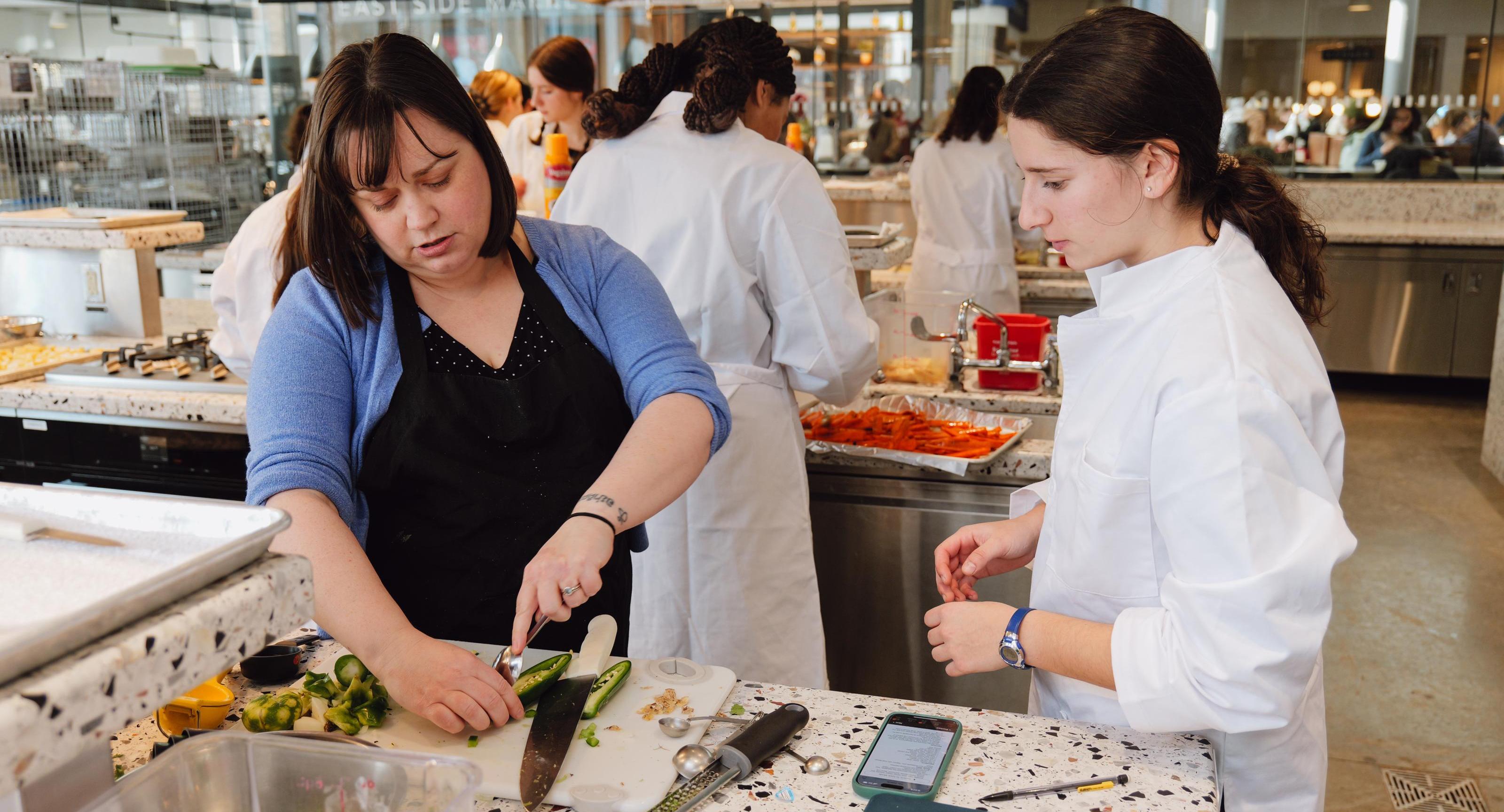
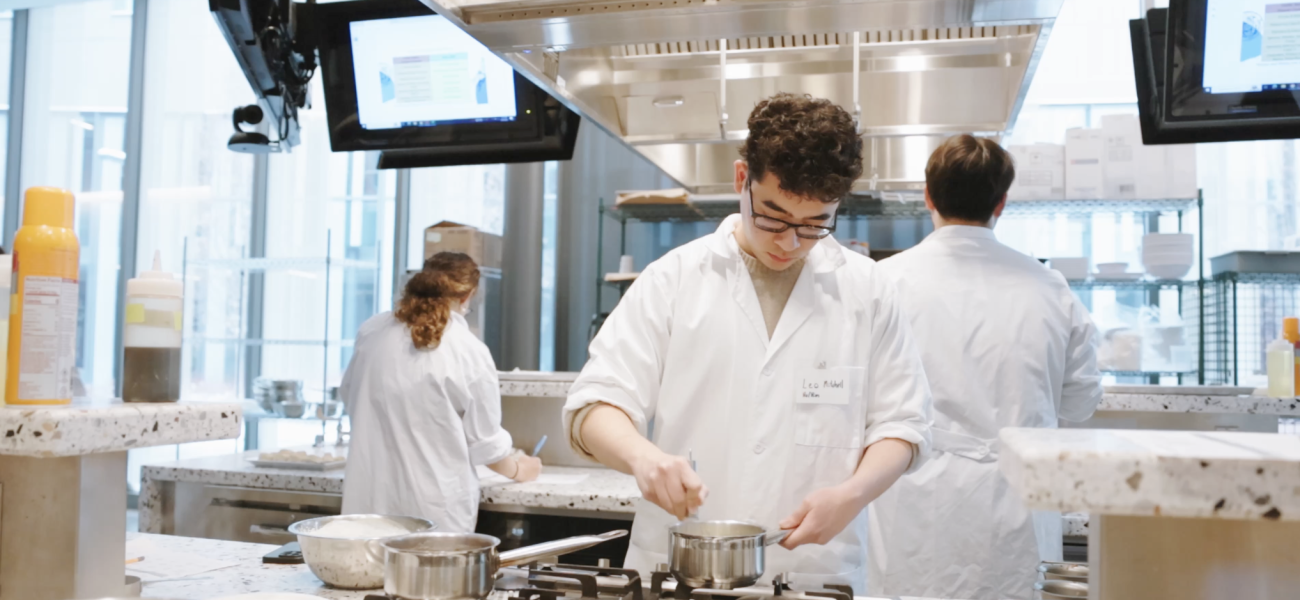
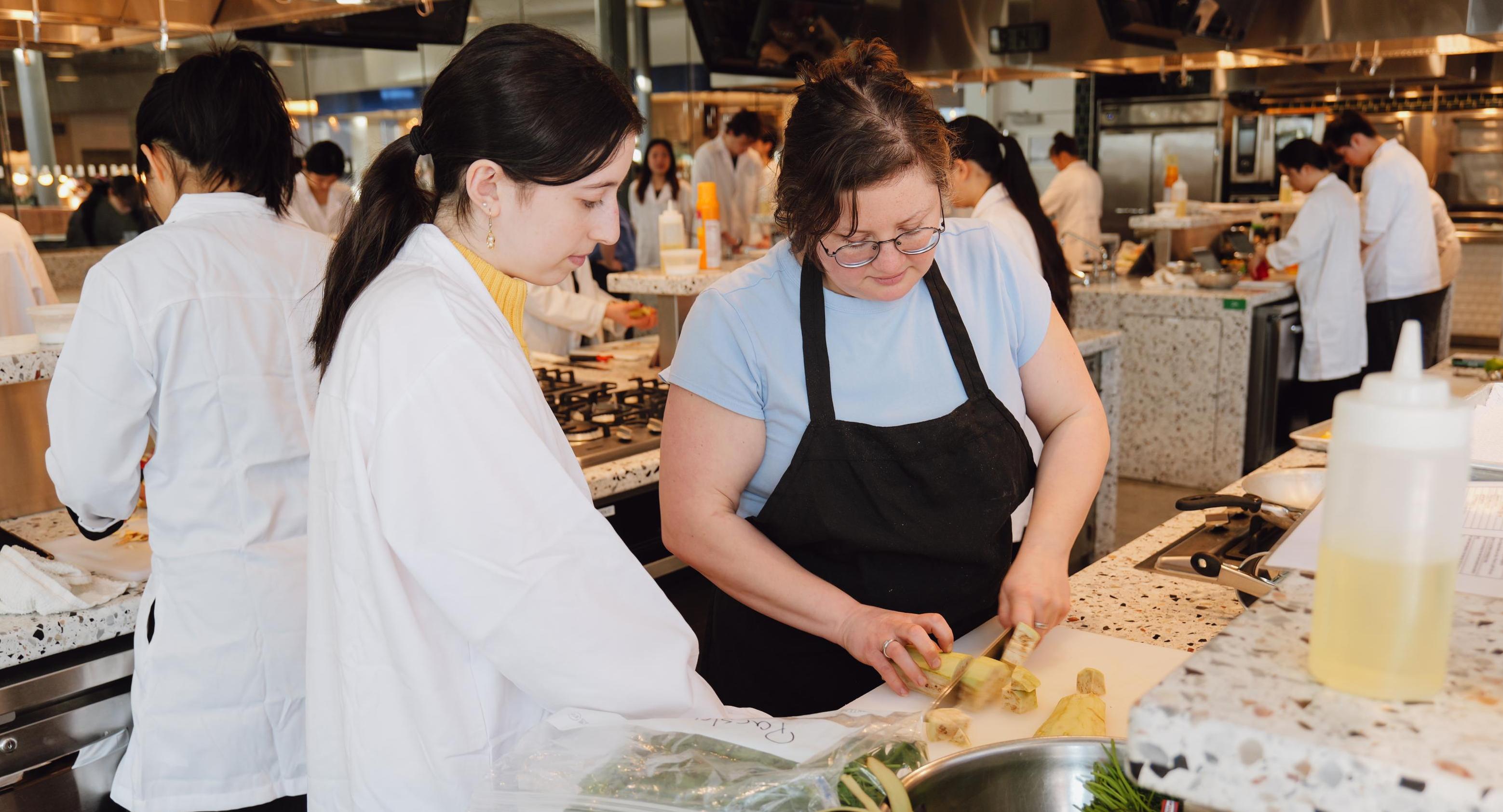
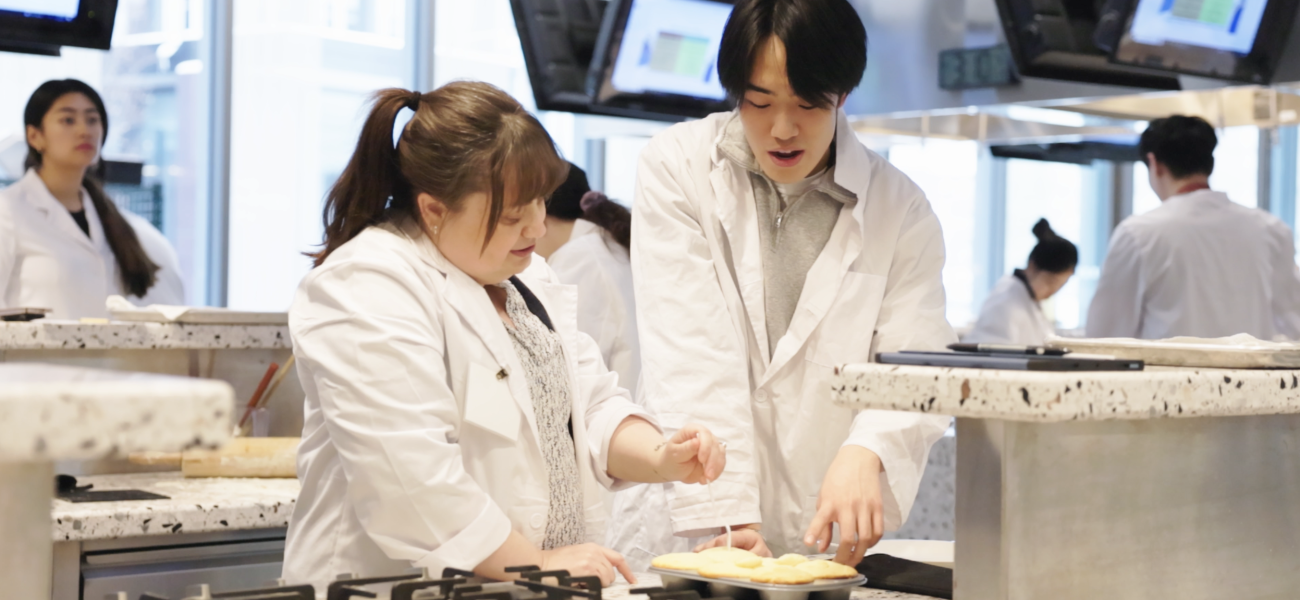
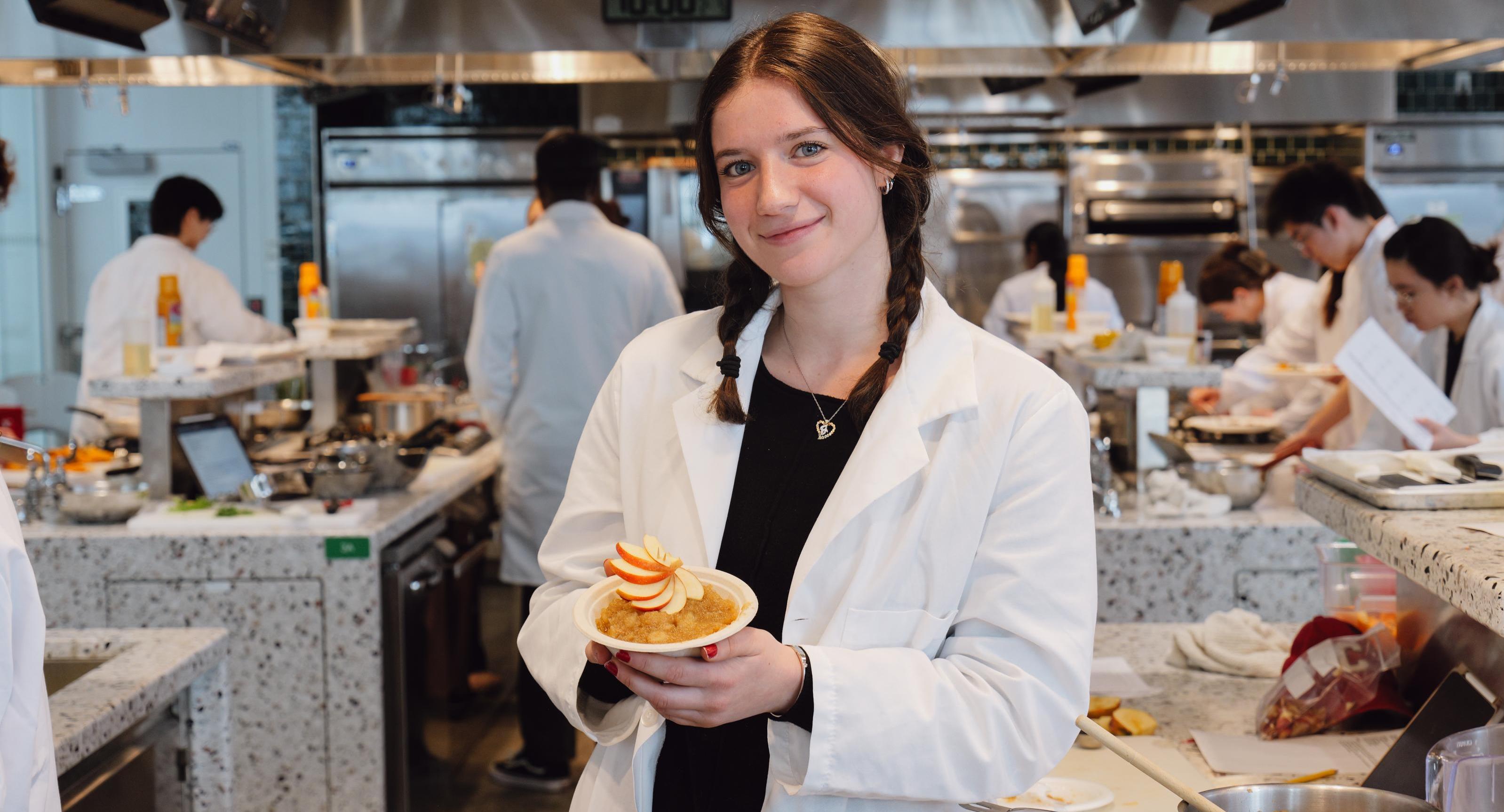
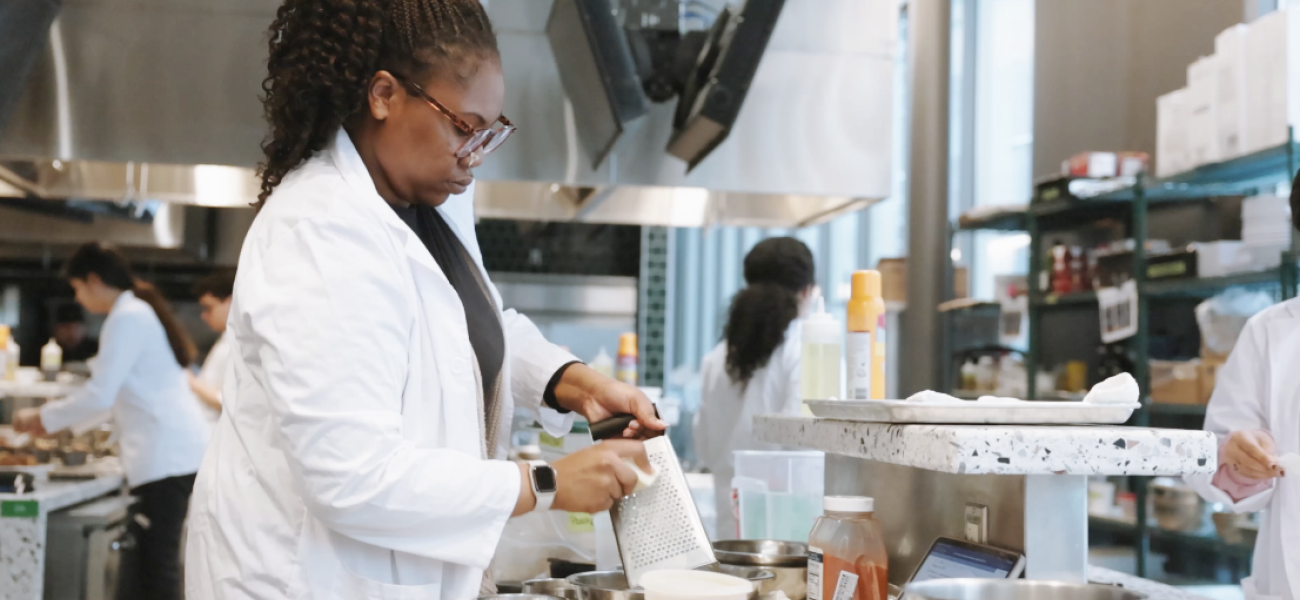
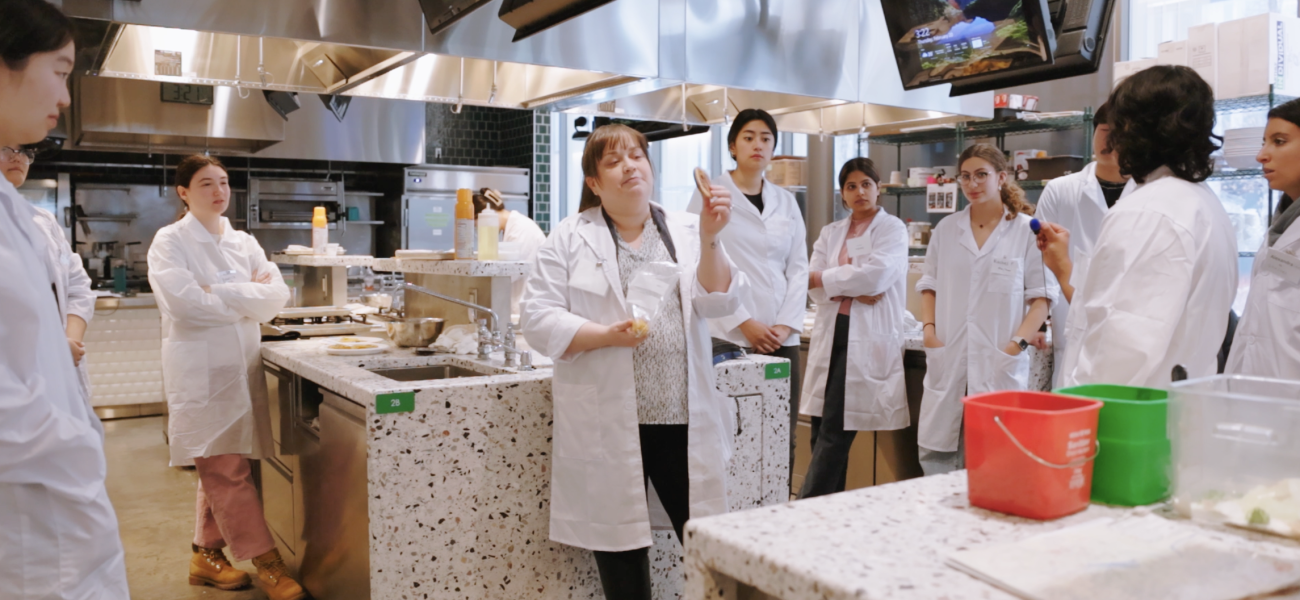
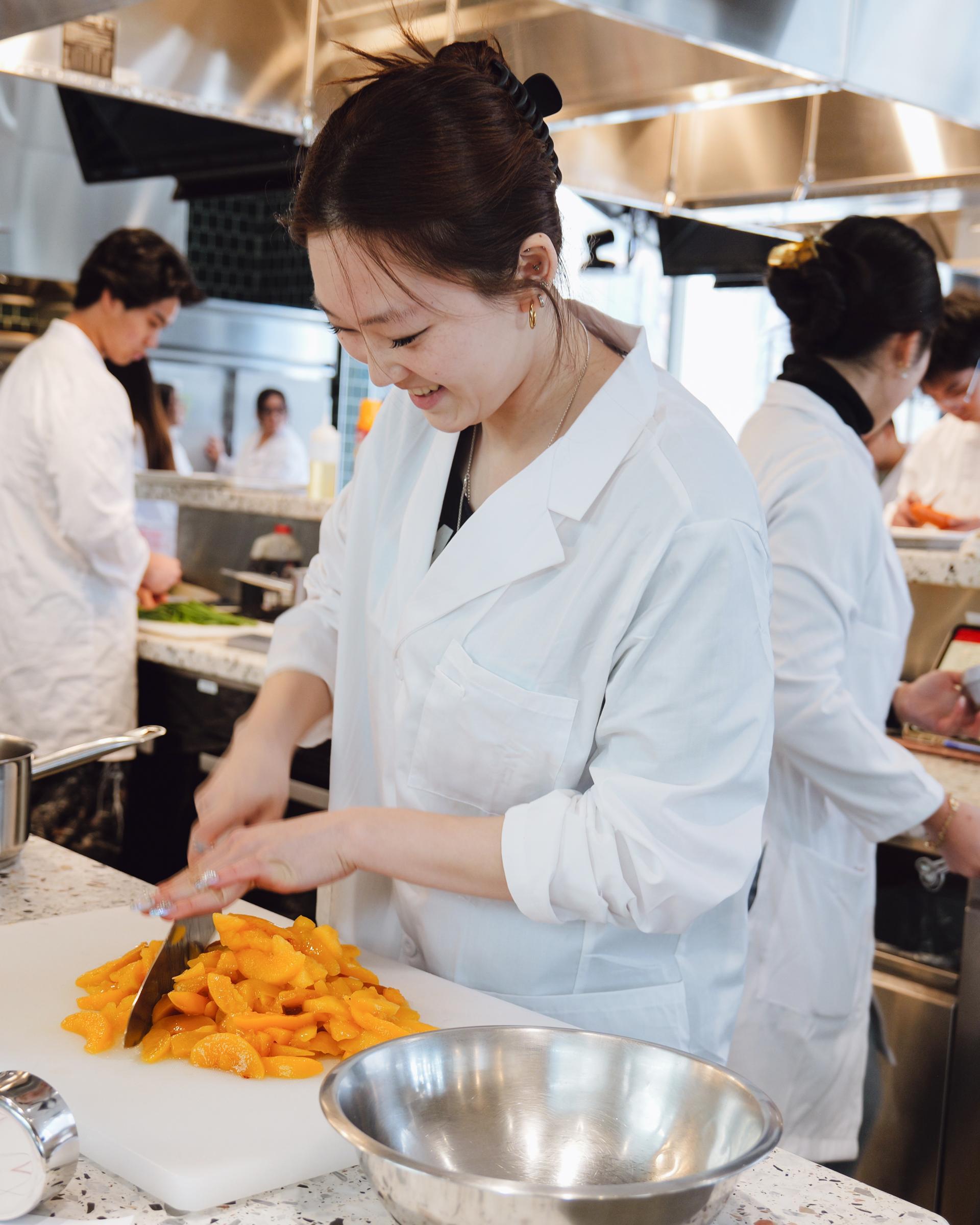
Erin Green (left) works with a student on knife skills in the Discovery Ktichen. Photo by Margaret Tsai.
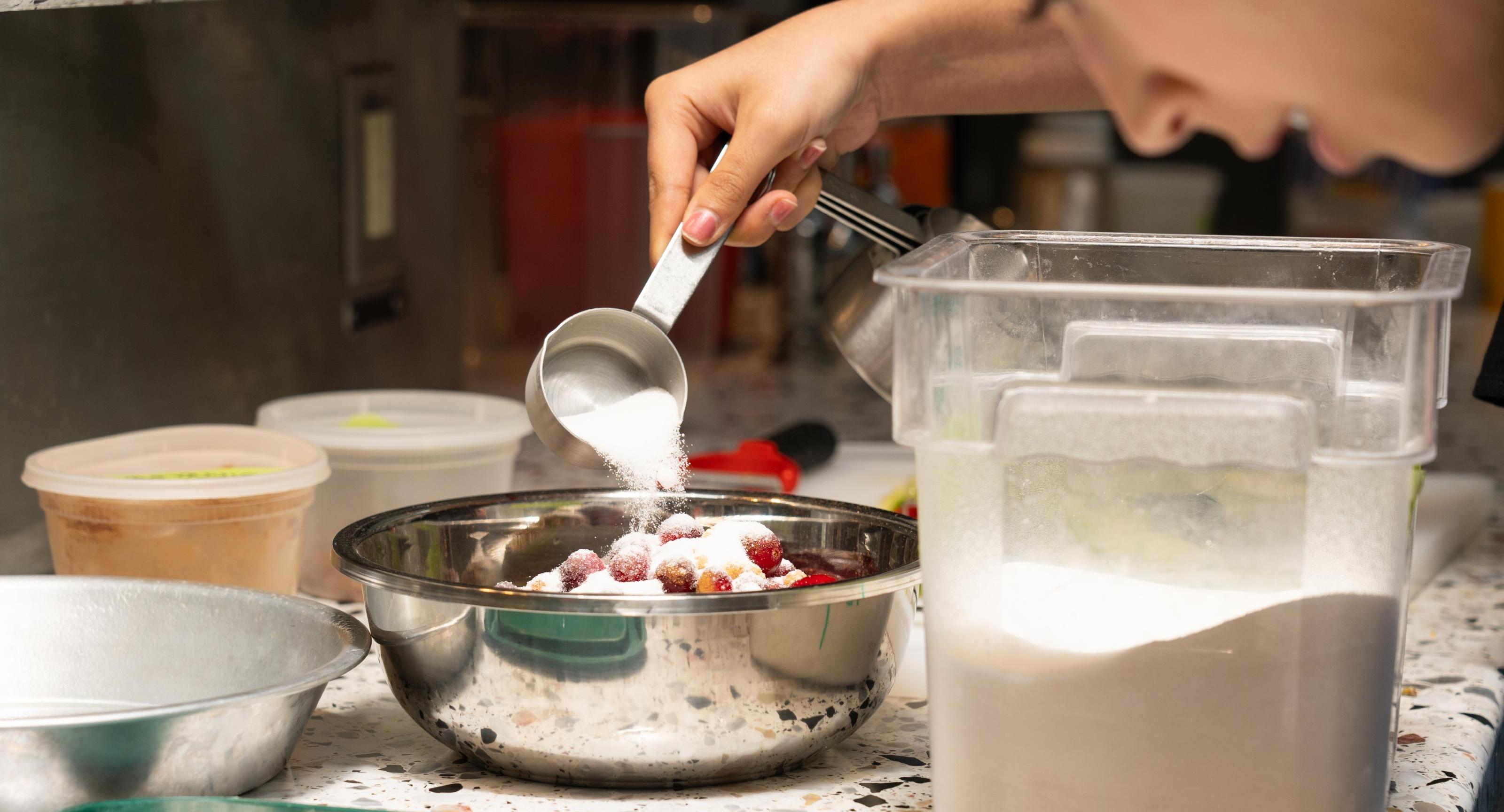
A student measuring flour into a bowl during a baking lab. Photo by Ryan Issa.
Mandy Bates (right) works with a student to chop vegetables. Photo by Margaret Tsai.
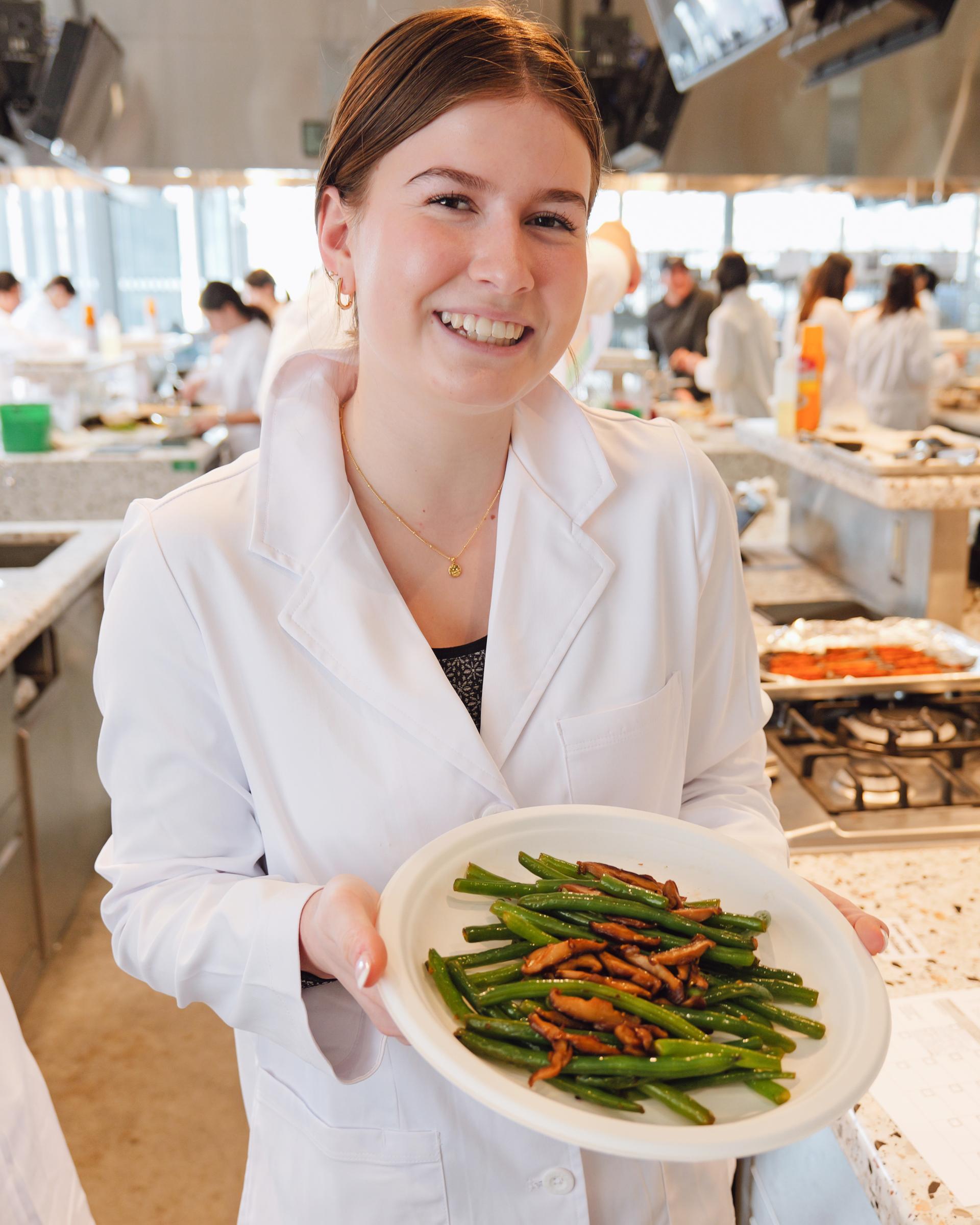
A student poses with the applesauce dish she created. Photo by Margaret Tsai.
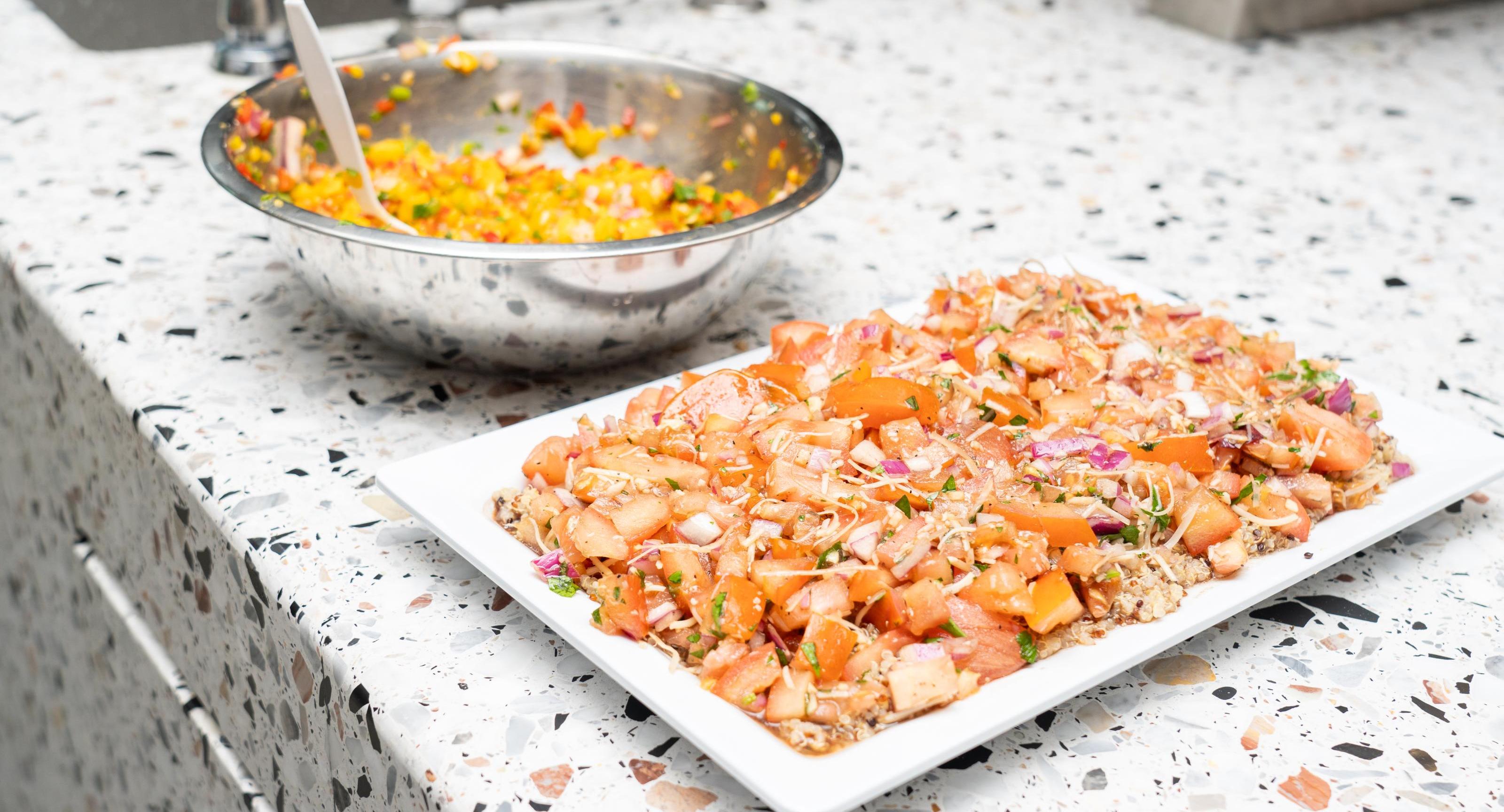
Dishes created by students in NS 2470. Photo by Ryan Issa.
Developing culinary and clinical skills
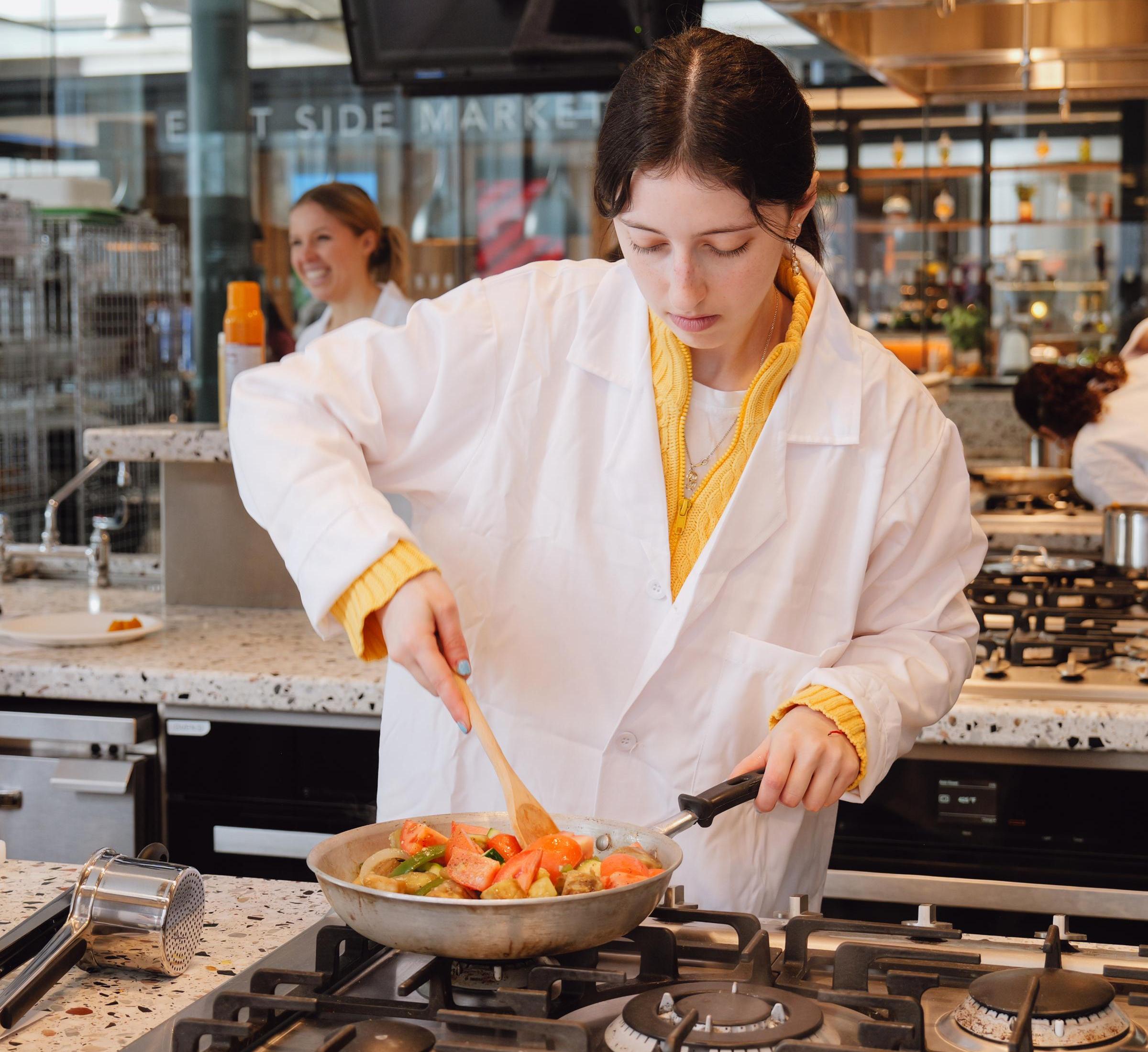
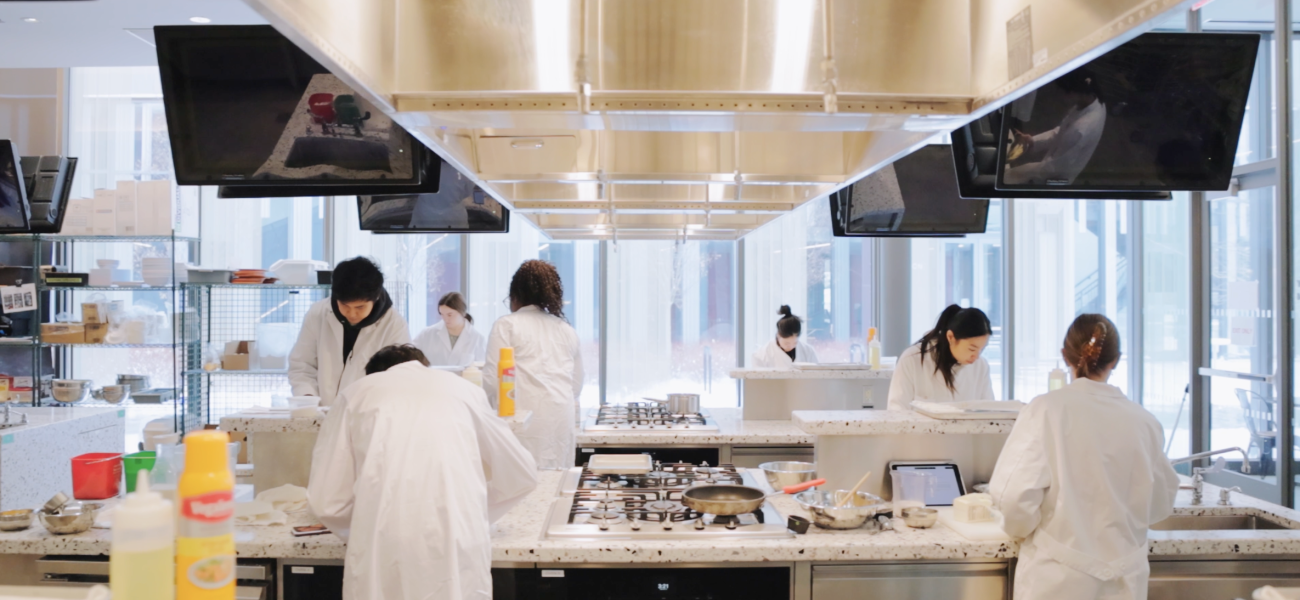
Each weekly three-hour cooking lab centers on a different nutrition topic or food type, beginning with knife skills and simple grains and vegetable dishes. Labs become progressively more complex, challenging students to build dishes from diverse cultures and swap ingredients to adjust food cost or nutrient density.
One of the most memorable labs is about whole grains. It focuses on alternative whole grains such as millet, buckwheat, and kasha that are affordable, nutritionally rich, and often unfamiliar to students more accustomed to just consuming and purchasing rice and bread products.
“I love this lab because I think it’s accessible,” said Green. “It teaches them how to go beyond the common foods they maybe grew up with, in a safe and affordable way.”
Sensory evaluation is used in the course to help students move beyond simple descriptions like “sweet” or “yuck” to describe the physical and chemical properties of ingredients, an essential skill for future dietitians.
In addition to building technical skills, the course gives students practical experiences applying the concepts they will one day teach to patients and clients. “Most of our nutrition students go into some type of patient care,” said Green. “Having experience doing the things you might be telling people to do is really valuable experience at the undergraduate level."
Building nutrient-rich recipes on a budget
In addition to weekly labs, students complete several assignments. For example, a meal planning project based on the Thrifty meal plan used by the Supplemental Nutrition Assistance Program (SNAP) requires them to create three meals with a limited budget. Students conduct cost-per-serving calculations based on current food prices, ensuring they stay under budget while meeting nutrient requirements such as sodium, fiber and caloric requirements. At the end of the semester they also cook a portion of their projects and reflect on the experience.
“We had to divide ingredients per serving… seven cents of corn. That’s where we learn to use every cent,” said Mike Vu ’26, who took the course last year and is now a teaching assistant.
The activity is especially helpful for college students, who are among the most food insecure populations. Roughly 23% of undergraduates experience inadequate access to food, more than twice the rate of the general U.S. population, according to the National Postsecondary Student Aid Study.
“It’s hard to meet nutritional needs as a college student because you’re not financially stable,” says Gwen Harmon ’26, who’s studying food science. “This course teaches you how to balance cost with nutrition.”
Preparing registered dietitians to be culturally responsive
Another highlight of the course is the cultural food lab, the final cooking activity of the semester. Teaching assistants select a country or region, research cuisines and prepare a feast together with the students.
“This lab exposes our future dietitians and all our students to other countries and cultures they might see when they go and practice after graduation,” said Green.
"It’s hard to meet nutritional needs as a college student because you’re not financially stable. This course teaches you how to balance cost with nutrition."
Last year, they cooked Vietnamese dishes, including pho and bánh mi. The experience was especially meaningful for Vu, who is Vietnamese. “Being able to cook dishes from my culture and show them to other students… it was really exciting,” he said.
The activity helped him consider how different regions may have better access to seafood or a certain grain, and how expensive these ingredients are in another local economy.
By the final week of the semester, students who once avoided the stove are now cooking confidently and know how to source ingredients to meet any budget. For Mandy Bates, lab manager in the Discovery Kitchen and a chef and graduate of the Culinary Institute of America, connecting with the students outside of a lecture setting is one of the most rewarding aspects of NS 2470.
“You get to sit there while they're learning to chop an onion and have a conversation with them and be human with each other,” said Bates. “And then you get an email a year later from a former student, with photos of the steak they properly cooked, and you see how excited they are.”