Navika Gangrade
Navika Gangrade, Ph.D., RDN, is a lecturer at the Bronfenbrenner Center for Translational Research. In addition to teaching various classes, she is responsible for overseeing the Cornell Human Ecology in New York City summer internship program.
Prior to joining Cornell, Dr. Gangrade was a visiting assistant professor in the Nutrition Program at New York University, Department of Nutrition and Food Studies. She earned her Ph.D. in nutrition and registered dietitian credentials (RDN) from Cornell University
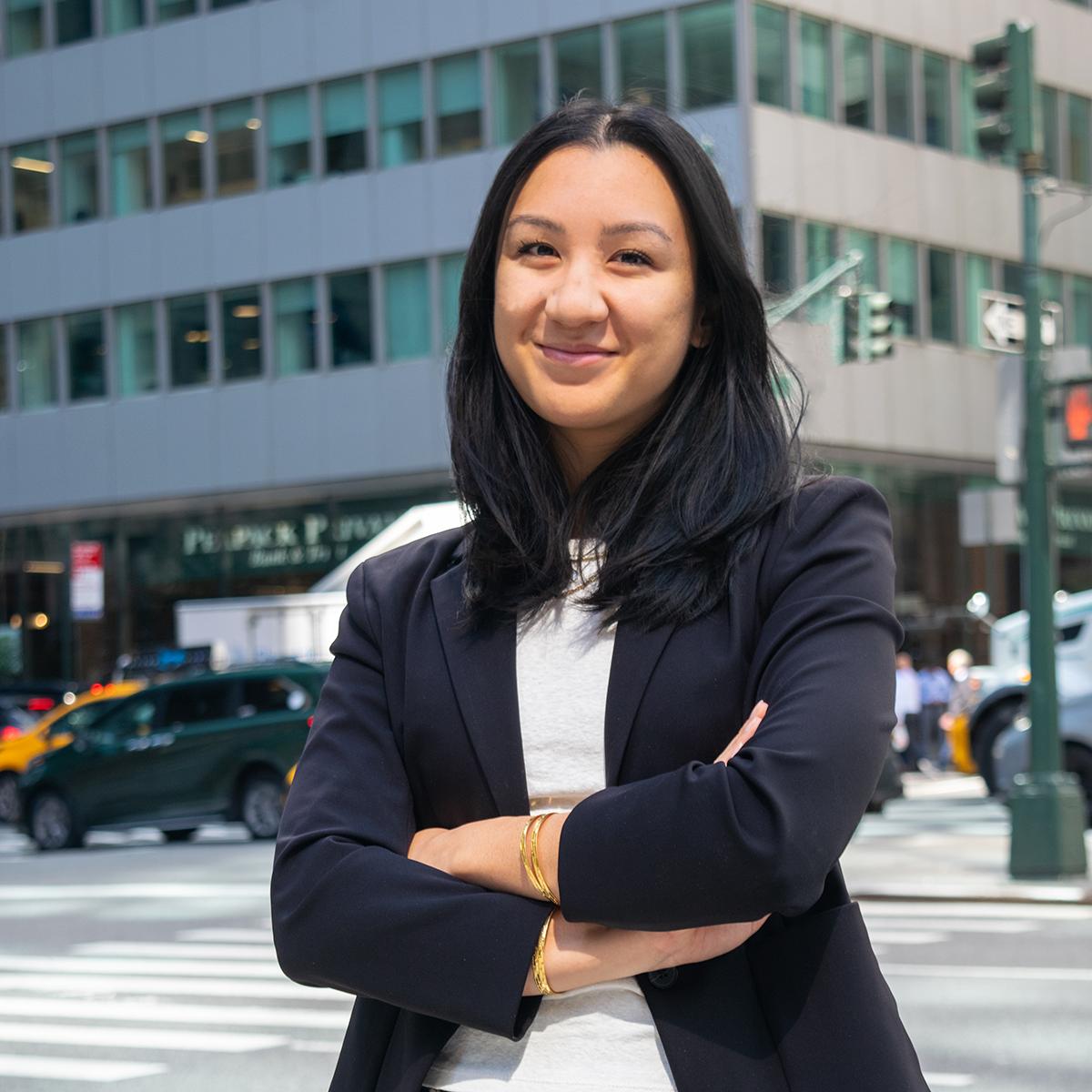
Olga Malysheva

Robin Roger
Robin Roger is a seasoned communications professional with nearly 20 years of experience in higher education marketing and communications. At Cornell University, she has led transformative initiatives for the College of Human Ecology, including a complete website redesign, the launch of a new college brand, and the college's Centennial celebration.
Before joining Cornell, Robin served as Director of News and Publications at Ithaca College, where she oversaw news, storytelling, alumni and prospective student publications, and

Jessica Salerno
Jessica Salerno, PhD is an Associate Professor in the Department of Psychology and an Associate Member of the Law Faculty at Cornell University. She received her bachelor's degree in psychology and film from Middlebury College in 2003 and her doctorate in social psychology from the University of Illinois at Chicago in 2012.
Dr. Salerno’s research sits at the intersection of social psychology and the legal system, investigating how cognitive, emotional, and social processes affect the

Charlotte Liu
Charlotte Liu is an M.S. student in Nutrition at Cornell University, working with Dr. Joeva Barrow. She earned her undergraduate degree in Chemistry from The Chinese University of Hong Kong, Shenzhen, where she developed an interdisciplinary interest in nutritional biochemistry and metabolic disease. Her research interests focus on the molecular regulation of energy metabolism, particularly how mitochondrial function, lipid metabolism, and brown adipose tissue thermogenesis influence whole-body metabolic health. Charlotte hopes to combine molecular and

Aadya Singh
Aadya (she/her) is a PhD Psychology (Human Development) student at the Laboratory for Rational Decision Making. Aadya is the graduate team leader for the Health and Medical Decision Making research team. Her interests range across a variety of fields applicable to decision making and science literacy, such as belief-updating, learning, memory, and numeracy. Her theoretical research interest is in testing Bayesian updating principles against the Fuzzy Trace Theory.
Nayeon Jeon
Nayeon is a third-year Ph.D. student in Cornell University’s Division of Nutritional Sciences, working with Dr. Sander Kersten. She earned her B.A. in Nutritional Biochemistry and Metabolism from Case Western Reserve University. Her research interests center on lipid metabolism and women’s biology. She investigates how fasting alters gene expression in the liver, adipose tissue, and placenta across different reproductive stages. In particular, she seeks to understand the molecular mechanisms how fasting may disrupt maternal physiology