- Sep 26 ,2025
- Human Centered Design
- T01 Human Ecology Building
Engineering Hybrid Nanostructures: Novel Aqueous Routes to Integrate Electrochemically Active Metal Clusters into Carbon Nanomaterial or Polymeric Matrices for Functional Energy Storage and Conversion Materials
Electronic conductivity of porous electrodes by Faradaic and non-Faradaic charge transfer processes impacts the energy and power densities and overall performance of electrochemical energy storage and conversion devices. Carbon nanomaterials constitute an ideal material composite platform for integration with other solid-state electrode materials in power devices. Self-assembly has been recognized as an effective strategy for the bottom–up synthesis of 3D macrostructures using graphene and carbon nanotube as building blocks. The need for chemical precursor vaporization

- Nov 19 ,2025
- by Roberta Militello
- Human Centered Design
- Martha Van Rensselaer G151
The New Urbanism Movement, Past, Present, and Future
The movement known as New Urbanism in the United States seeks to address and promote development that positively affects the health of individuals through the incorporation of safe, easily accessible walking in everyday life. This is in contrast to a typical suburban environment, where most activities are dependent on vehicular transport for everyday activities. The New Urbanism environments also promote social connections to neighbors and visitors with zoning that promotes front doors close to the

- Nov 10 ,2025
- by Adam Hoffman
- Psychology
- MVR 1250 Gallery
Our People, Our Stories Exhibit Opening
Come and celebrate and enjoy an interactive community youth and young adult art exhibit centered on LGBTQ+ chosen family.
Research conducted here at Cornell University and lived experience alike show that affirmation and connection are essential to well-being. Chosen families provide safe spaces to be fully seen and accepted, nurturing resilience, joy and self-worth. They help buffer against discrimination and loneliness, while fostering creativity, community and pride. For many queer and trans people, chosen family
- Nov 14 ,2025
- by Karen Steffy
- Human Centered Design
- Human Ecology Building T01
Humanist and Integrated Learning and Being: Reflections on Being an Anthropologist among Engineers
Drawing from research and teaching collaborations with colleagues in engineering, robotics, computer science, materials science, as well as community and industry partners, Caitrin Lynch reflects on how and why to question disciplinary silos, reach across to people from vastly different perspectives inside and outside academia, and authentically foreground questions of the impact of work in engineering and design. Caitrin will bring in examples from her projects in design and disability (such as the Engineering at

- Nov 14 ,2025
- by Catherine Kueffer Blumenkamp
- Human Centered Design, Cornell Human Ecology
- Martha Van Rensselaer Hall G151
Fit for Duty Speaker Event: Service, Scholarship, and Design
Wearing the cloth of your nation, how does your uniform impact cultural identity and connection?
Join us for an afternoon of insight and dialogue connecting lived military experience with service, education, and design. The program features student veteran perspectives and leadership across ROTC units.
Immediately following the program, light refreshments and self-guided viewing of Fit for Duty: Form and Function of Military Dress.
Hosted by the office of the Vice Provost for Engagement and Land

- Nov 21 ,2025
- by Jaleesa Reed
- Human Centered Design
- https://cornell.zoom.us/j/98748114006?pwd=wcoM3kcQyxwkuSbxfGsWKuTbA1hqwa.1Meeting ID: 987 4811 4006 Passcode: 059471
Designing a Systems Architecture for Biobased Manufacturing with Industrial Hemp
Industrial hemp is standing at a threshold between legacy and innovation. Oregon State University’s (OSU) Global Hemp Innovation Center (GHIC) is advancing a model for how plant-based systems can transform the future of materials, design, and advanced manufacturing. This presentation introduces a “gene-to-plant-to-field-to-factory-to-fashion” framework that uses a systems approach linking molecular genetics, agronomy, processing technology, and apparel design into an integrated biobased manufacturing ecosystem with the research, engagement, and educational components needed to support it

- Mar 20 ,2026
- by Karen Steffy
- Human Centered Design
- Human Ecology Building T01
Understanding the chemical principles underpinning the fundamental features of life beyond biochemistry within the origins of life context
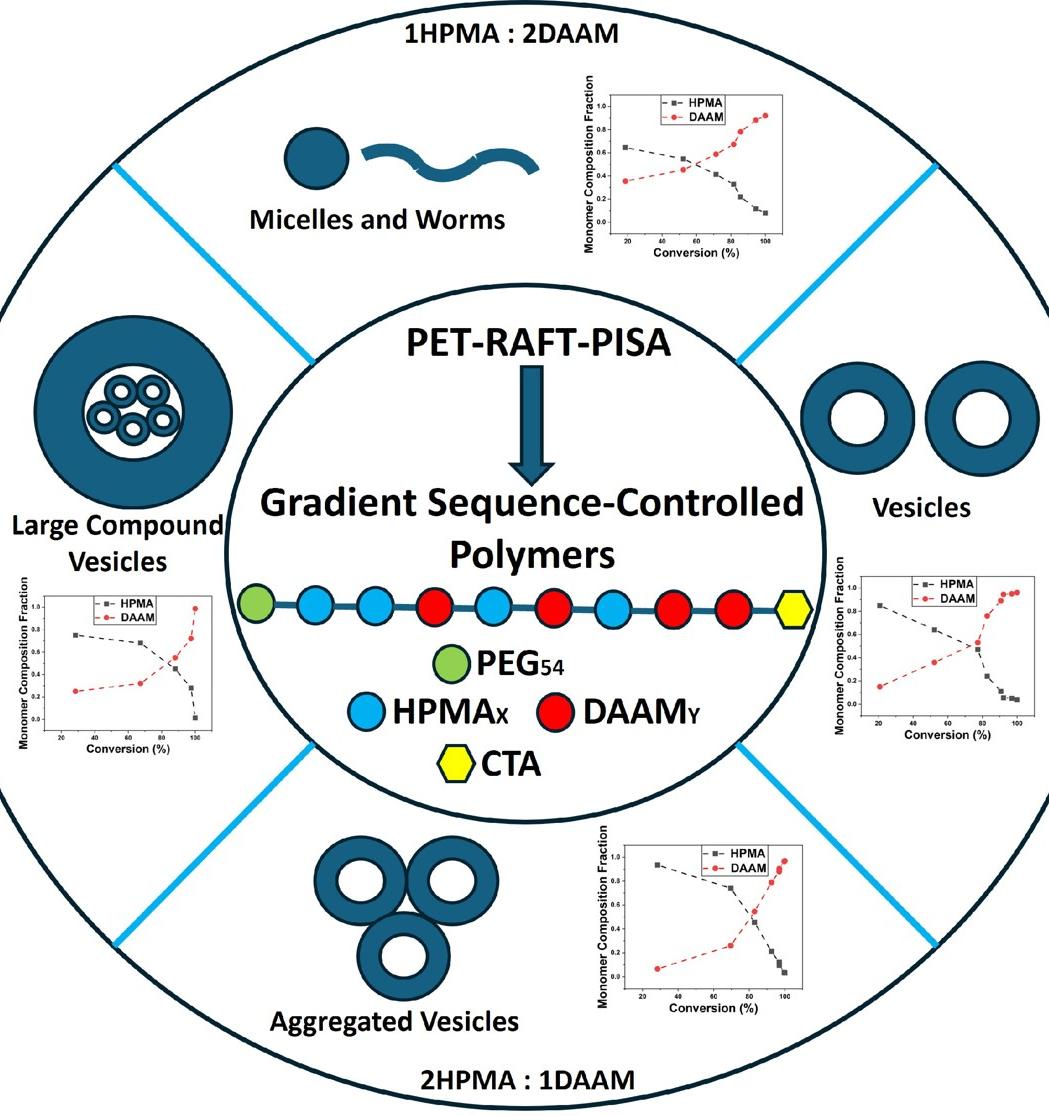
Investigating prebiotic chemistry and the fundamental features of life like metabolism, information, self-reproduction, natural selection and computation, is significant within the origins of life research. In this context, one of the key elements constitutes the synthesis of chemistry-based natural-life-mimicking artificial or synthetic living systems, starting from a homogeneous aqueous blend of a few strictly non-biochemical compounds, using a technique called polymerization-induced self-assembly (PISA). In one of the studies, gradient sequence-controlled polymers were generated through PET-RAFT-PISA