Each year, five Human Centered Design students get to pursue a design project of their choice from concept to execution, thanks to scholarships from the Barbara L. Kuhlman Foundation, a nonprofit that supports the fiber arts and related fields. 

The current cohort of students are selected by a faculty committee and worked under the mentorship of Fatma Baytar, associate professor, and Melissa Conroy, senior lecturer, focusing on the stories they wish to tell and the techniques that they aim to explore and conducting related research. Their year-long projects culminate in an exhibit the following fall.

This fall's exhibit is titled "Re-formation." The theme reflects a shared interest in the transformative potential of fabric and fashion: from the physical reformation of fabric, shifting from one state to another, to cultural reformation passed from one generation to the next. 

“It was a pleasure to work with this group of students,” said Conroy, faculty co-advisor. “The common thread was honoring the material, from surface design to draping, which is especially fitting because Kuhlman is a fiber art foundation.”

"Re-formation" is on display in the Jill Stuart Gallery, Human Ecology Building, through October 27.

Here’s a closer look at the 2025 designers.

Posted on
09/22/2025
Author
Marisa LaFalce
Tags
Student Life
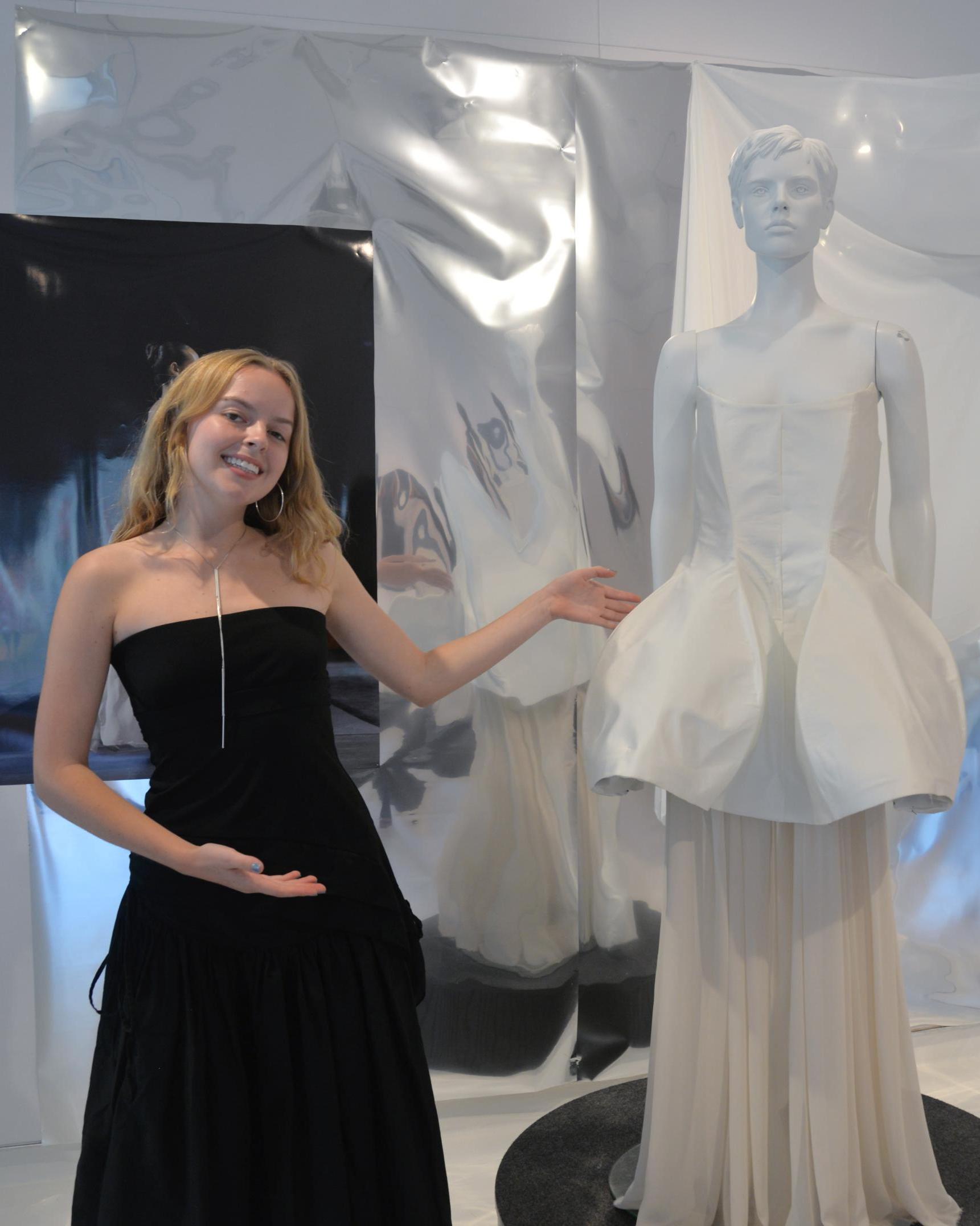
Roan Harvey poses with the white gown she designed

Light Comes Through

Roan Harvey ’27, fashion design major, law and society minor

Inspired by the Buddhist idea that light does not oppose emptiness but instead emerges through it, Harvey explores form and fluidity in both the dress and the accompanying mylar-draped fabric installation.
 

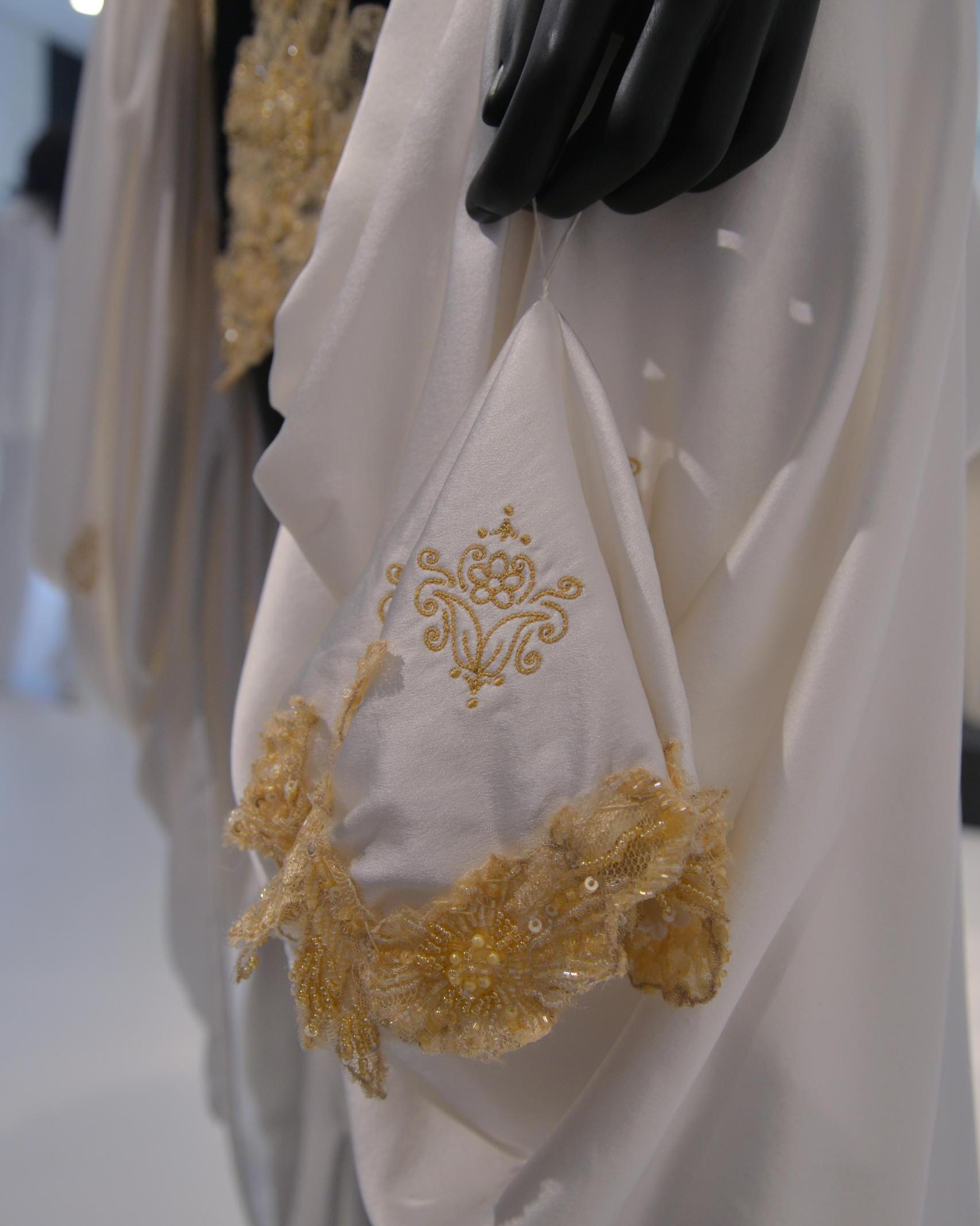
Albanian Stitches

Liriana Nezaj ’27, fashion design major, anthropology minor

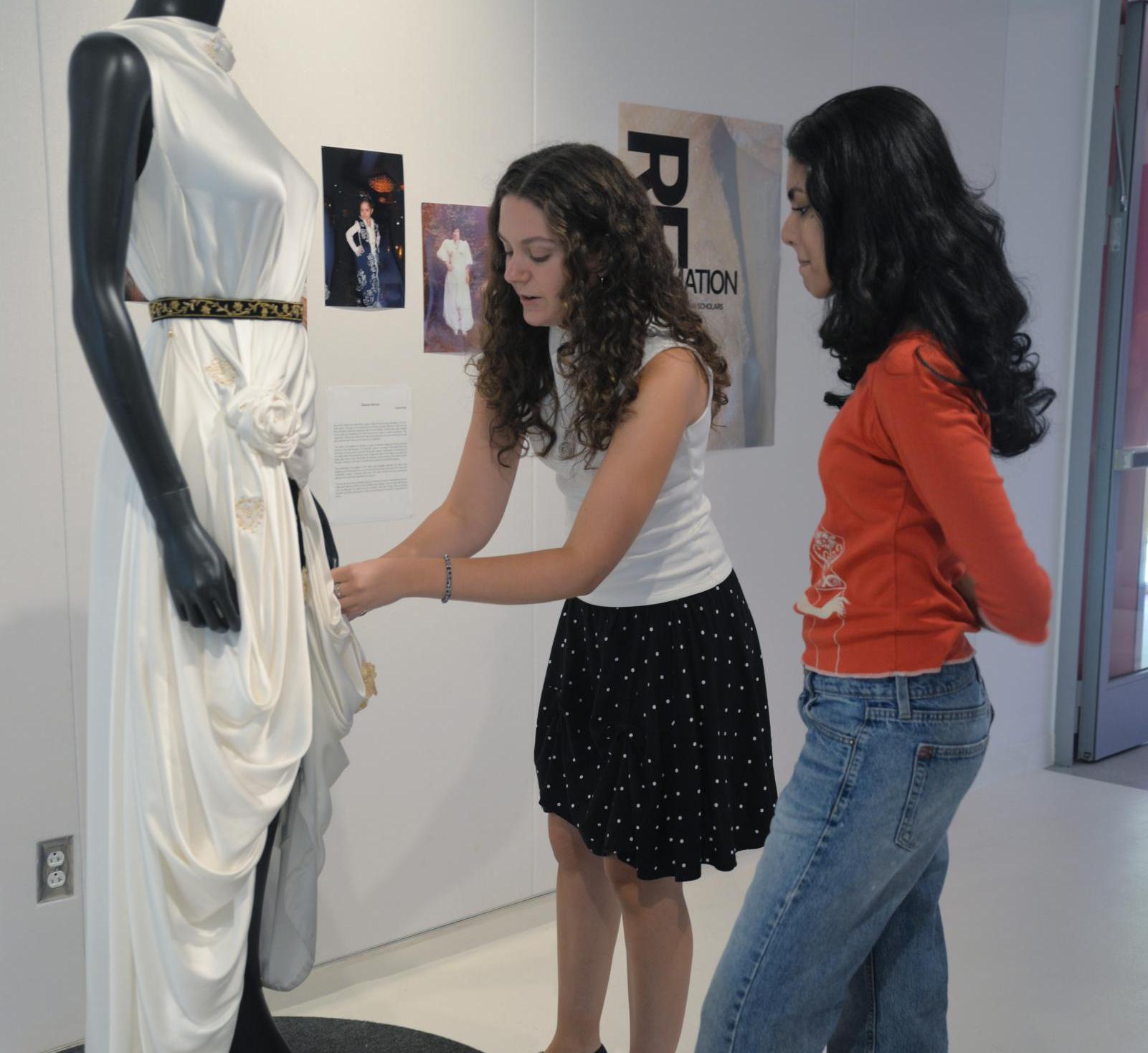
Drawing on the tradition of Dimijes, Albanian bridal attire, Nezaj designed the white, black and gold dress, including its embroidery. 

“I knew I wanted to create something inspired by my heritage,” said Nezaj. “This summer, I interned at the New York Embroidery Studio, and during the final week of my internship, I was allowed to work on a personal project. It was perfect. I made test samples and was able to use their machines, which are infinitely more efficient and precise than hand embroidery.”

close up of a handkerchief with custom embroidery
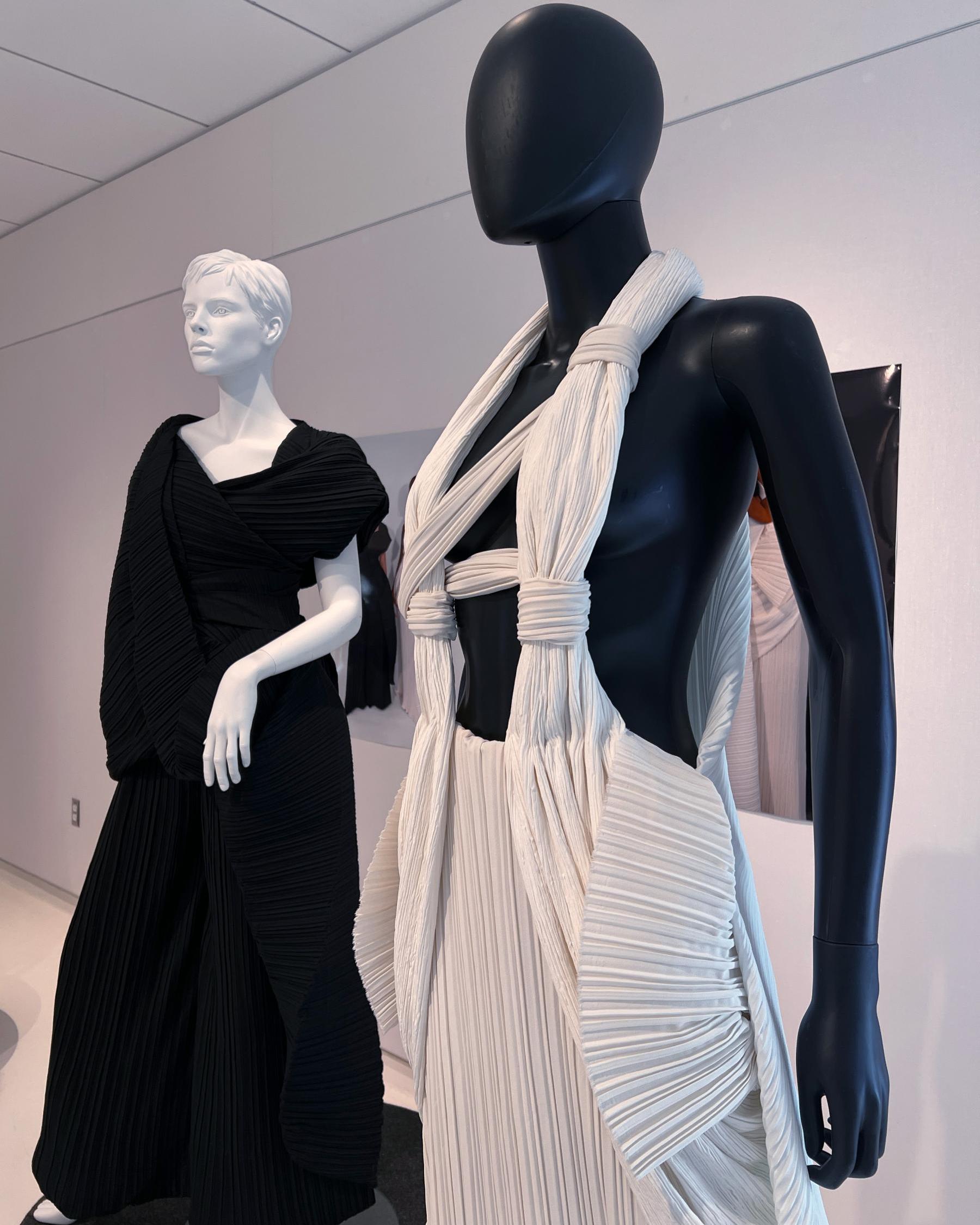
Two pleated zero waste gaments one in black and one in white

ReForming the Design Process

Kate Stiens ’27, fashion design major

The fashion industry creates approximately 92 million tons of textile waste annually. A significant portion of this waste occurs during the cut-and-sew process, where 10–15% of fabric is typically discarded as offcuts. Stein’s garments employ a zero-waste draping technique, repurposing excess fabric to add both dimension and elegance.
 

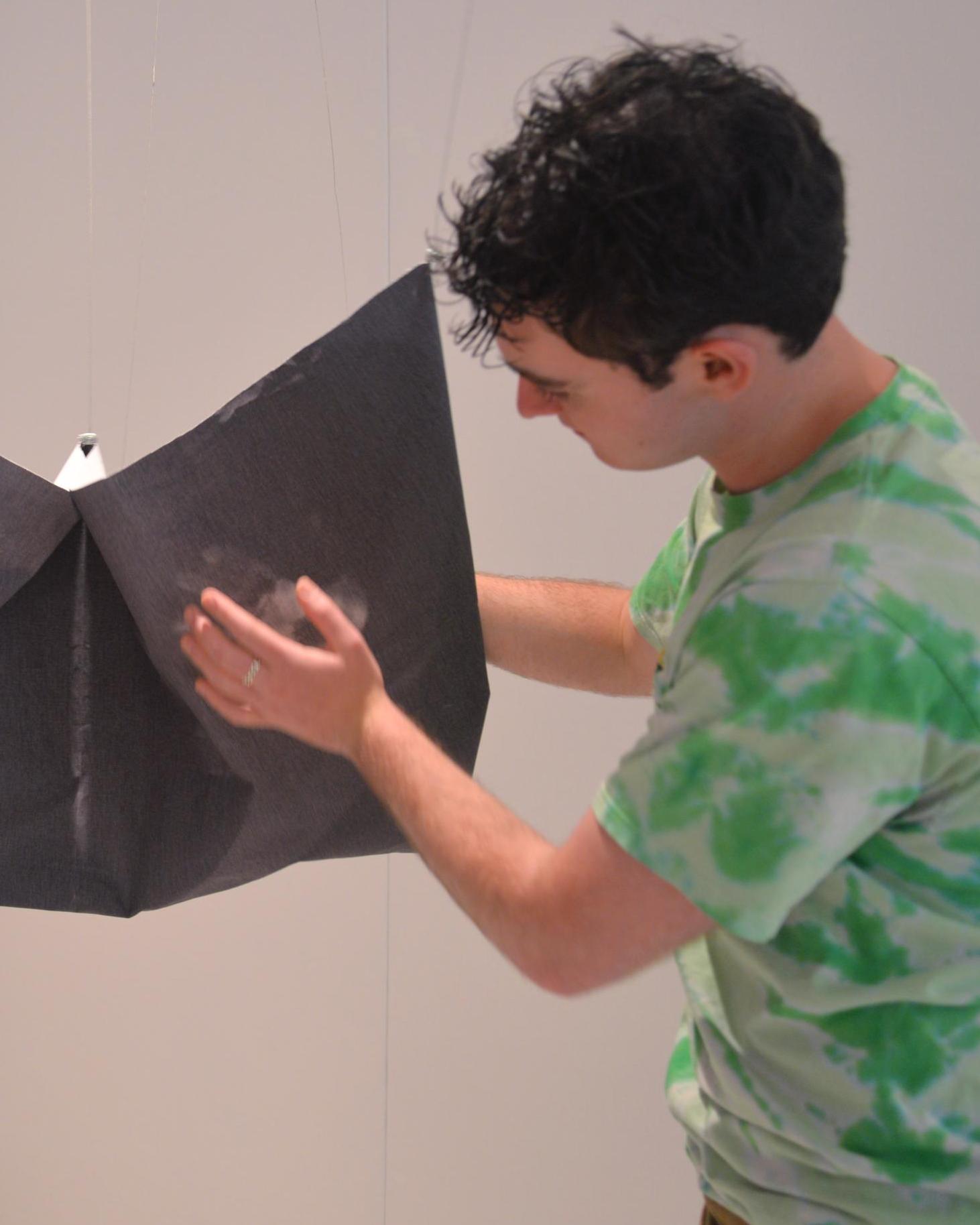
THERMO/CHROMIC 

Margaret Tsai ’27, design + environmental analysis major, fashion studies + architecture minor

Tsai blends art and science by creating fabrics that shift color in response to heat, designing them into figure skating costumes that transform with the skaters to become interactive canvases that respond to motion and intensity.
 

A student demonstrates how the thermochromic fabric works
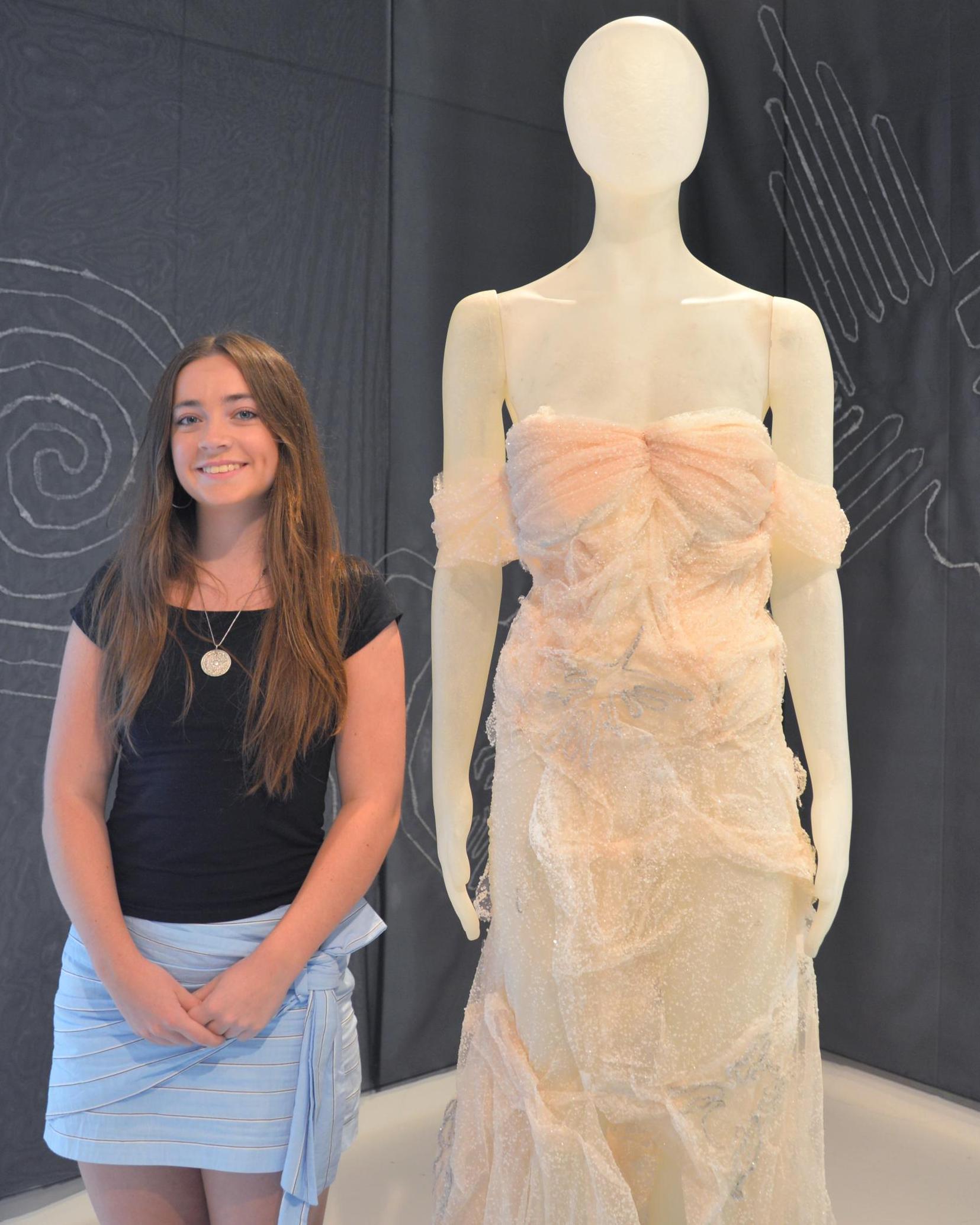
Margaret Watkins poses next to her dress which she hand crystallized

Ancient Signs, New Eyes
Signos Antiguos, Ojos Nuevos 
Echos of Nazca

Margaret Watkins ’27, fashion design major

Drawing on her Peruvian heritage and a passion for cultural storytelling, Watkins designed a dress inspired by the Nazca Lines, geoglyphs created by a pre-Incan civilization. The garment is constructed from tulle, which Watkins crystallized using a borax solution to create a rigid surface reminiscent of sand crystals. Nazca-inspired lines are accentuated through a combination of crystals and embroidery.