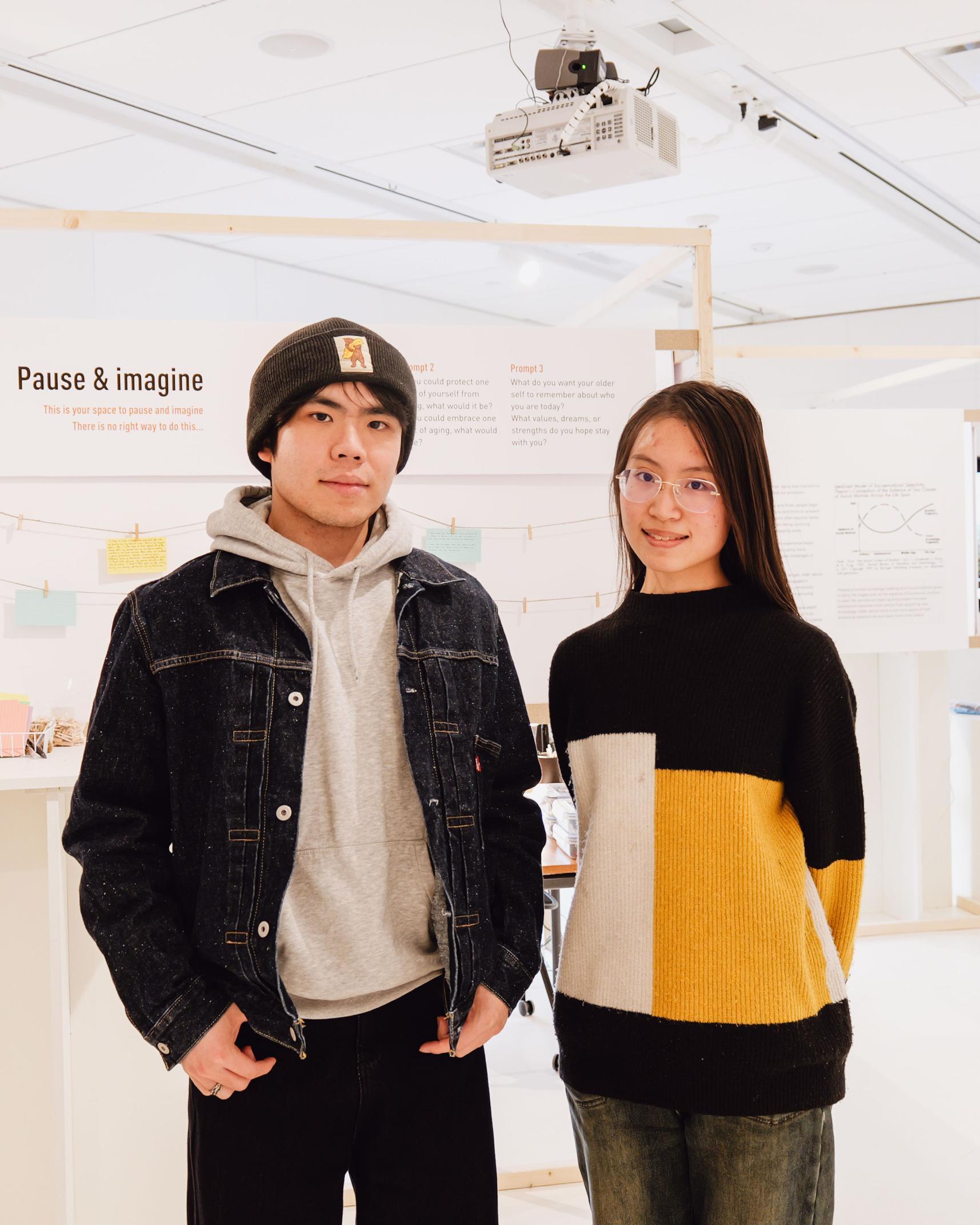
It started with a phone call between friends. They had an idea: What if younger adults could feel the experience of aging?

Ruizeng Wang ’26 and Jiayi Guo ’26, who attended the same high school before pursuing different majors in Cornell Human Ecology, were classmates in DEA 5700 Designing Age-Friendly Environments, where they studied how humans experience the environment. Combining their expertise in design and psychology, they spent the past year creating “Feel the Years,” an exhibition that immerses visitors in the lived realities many older adults face. It’s on display in the Jill Stuart Gallery in the Human Ecology Building through Friday, March 13, 2026.

“We’re always tired of looking at all the statistics,” said Wang, a human development major and gerontology minor. “I wanted people, especially young adults, to experience aging in an immersive way, to put on a suit and try to feel it instead of just looking at the literature.”

Posted on
03/09/2026
Author
Galib Braschler
Tags
Holistic Human Health
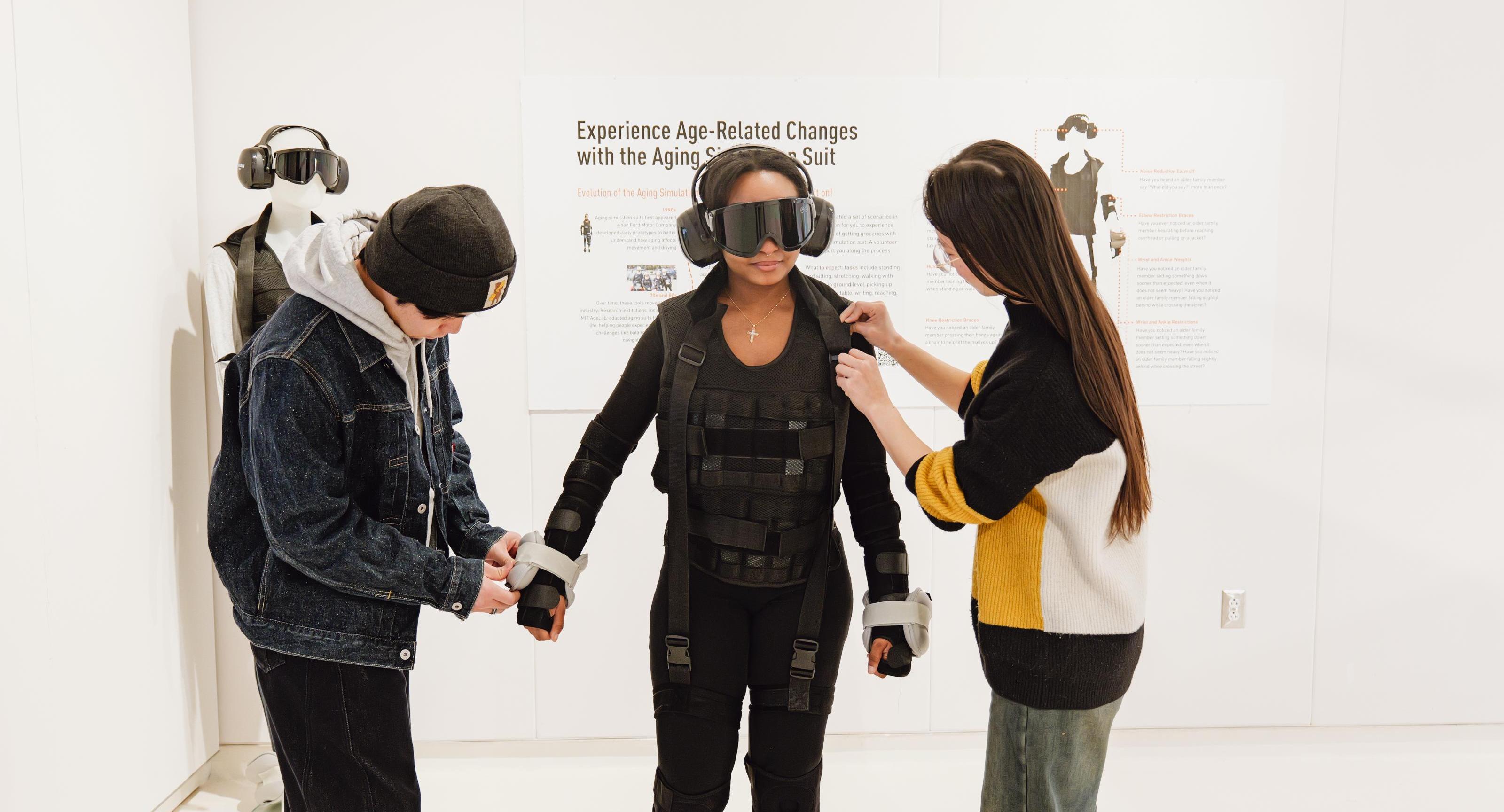
Students help put a simulation suit on a participant

Ruizeng Wang ’26 (left) and Jiayi Guo ’26 (right) help put the simulation suit on a participant. Photo by Margaret Tsai. 

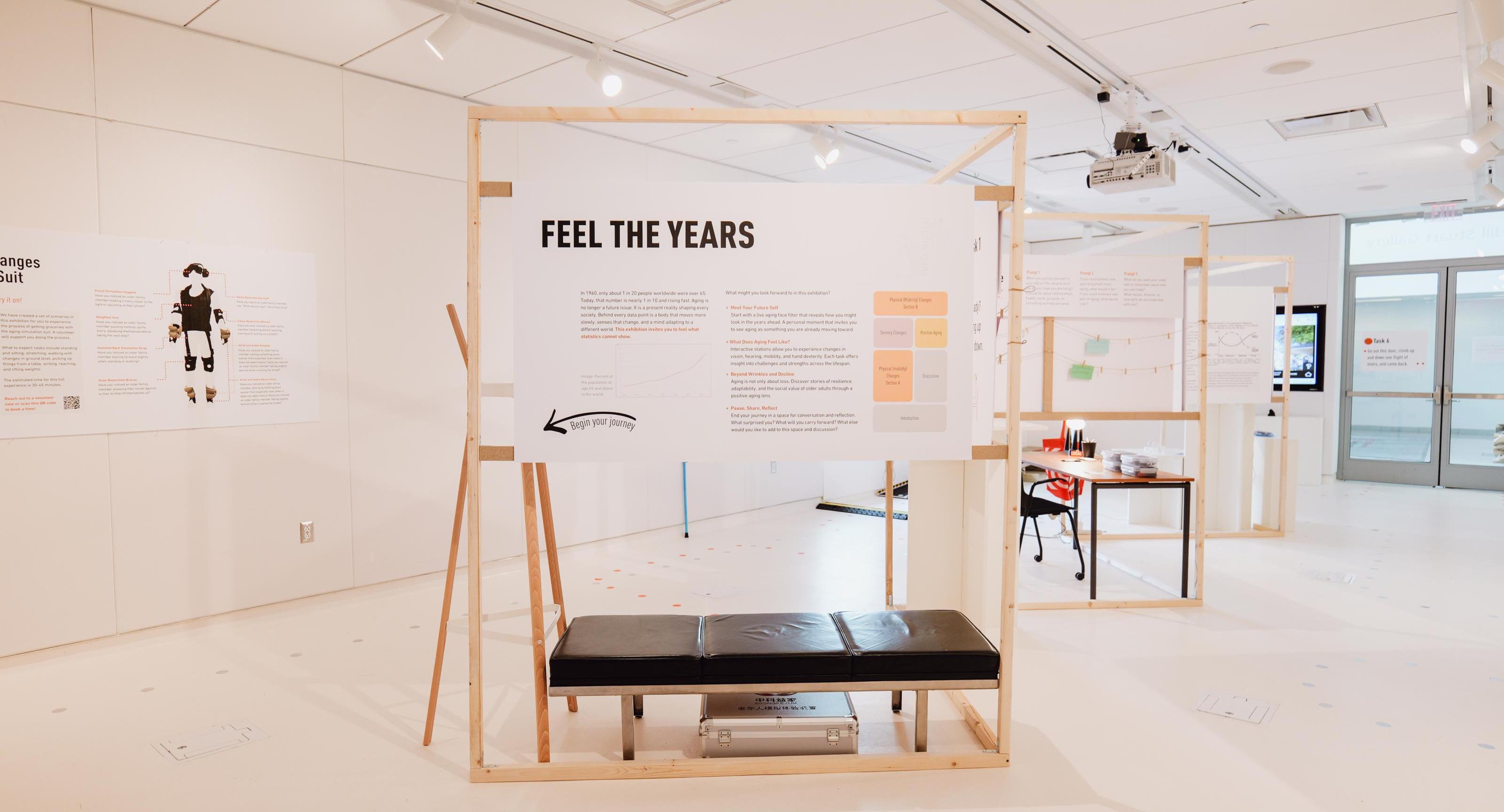
Feel the Years Exhibition space

The "Feel the Years" exhibition space. Photo by Margaret Tsai. 

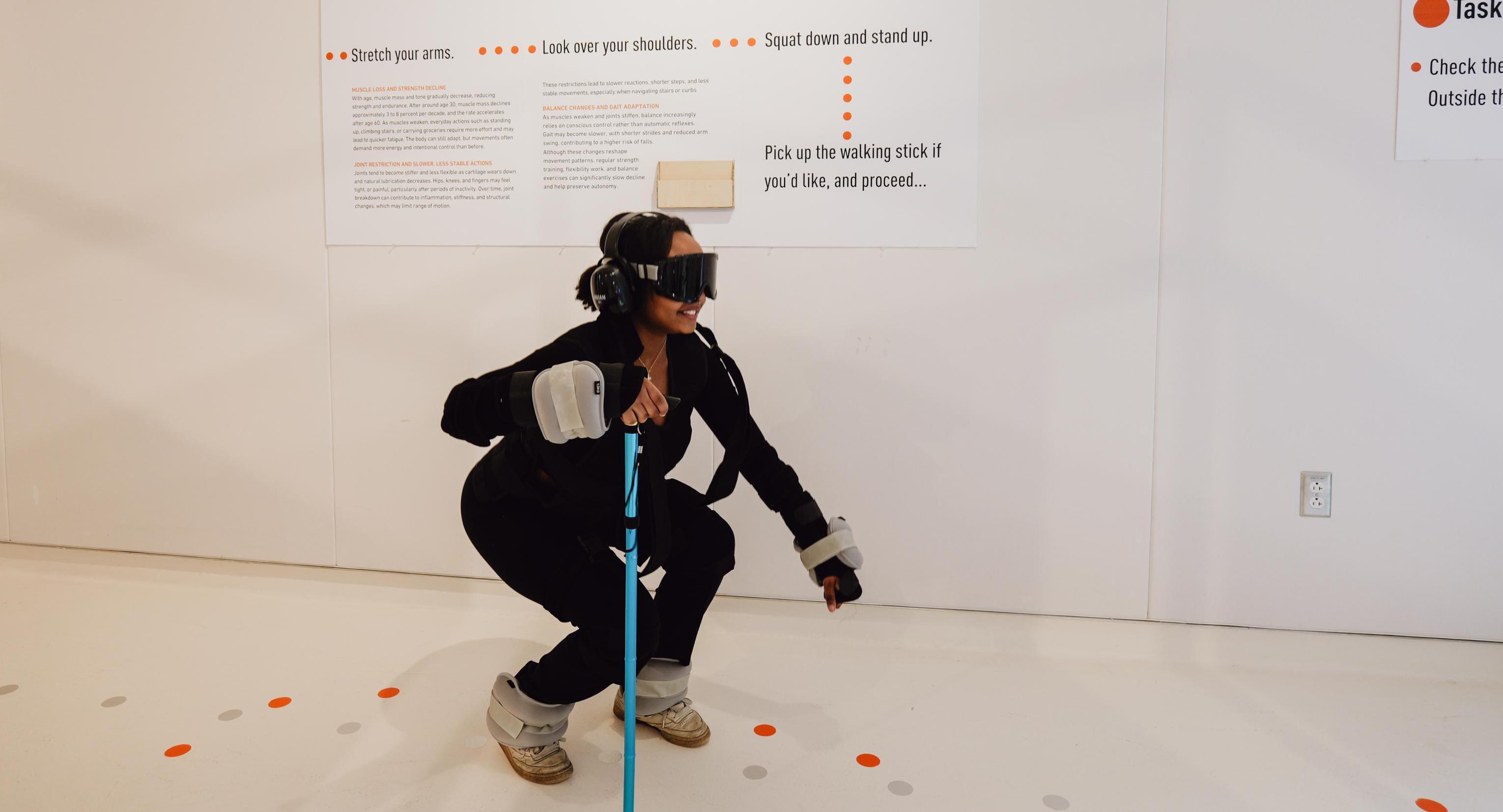
A participant bending down in a simulation suit and holding a walking stick

A participant familiarizing herself in the simulation suit and using a walking stick. Photo by Margaret Tsai. 

A participant on a walking ramp

A participant walking on a ramp as part of the simulation exercise. Photo by Margaret Tsai. 

A participant lifting up a jug of water

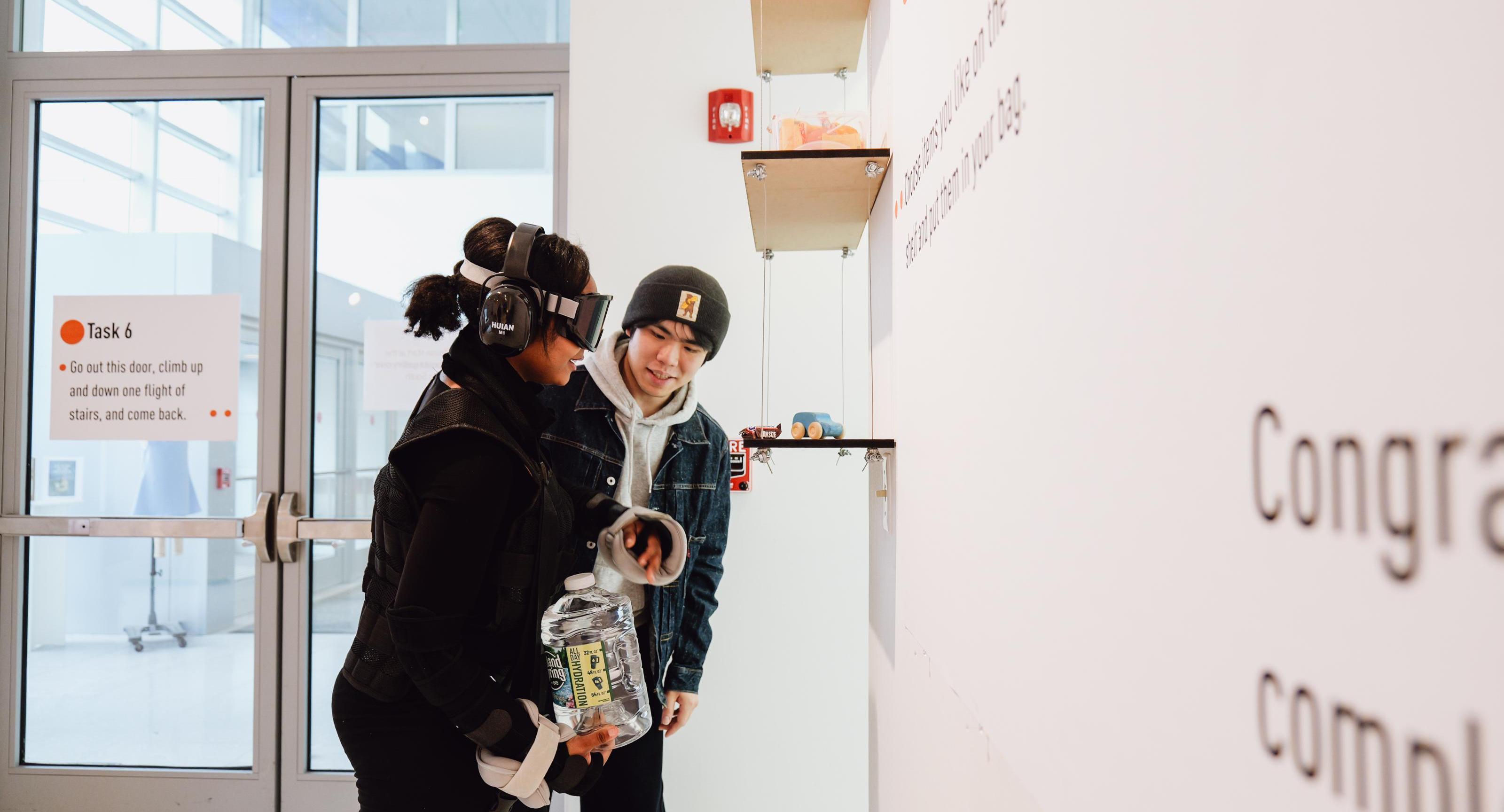
A participant lifting a jug of water as part of the simulation exercise, aided by Ruizeng Wang ’26 (right). Photo by Margaret Tsai. 

Stepping into the shoes of older adults

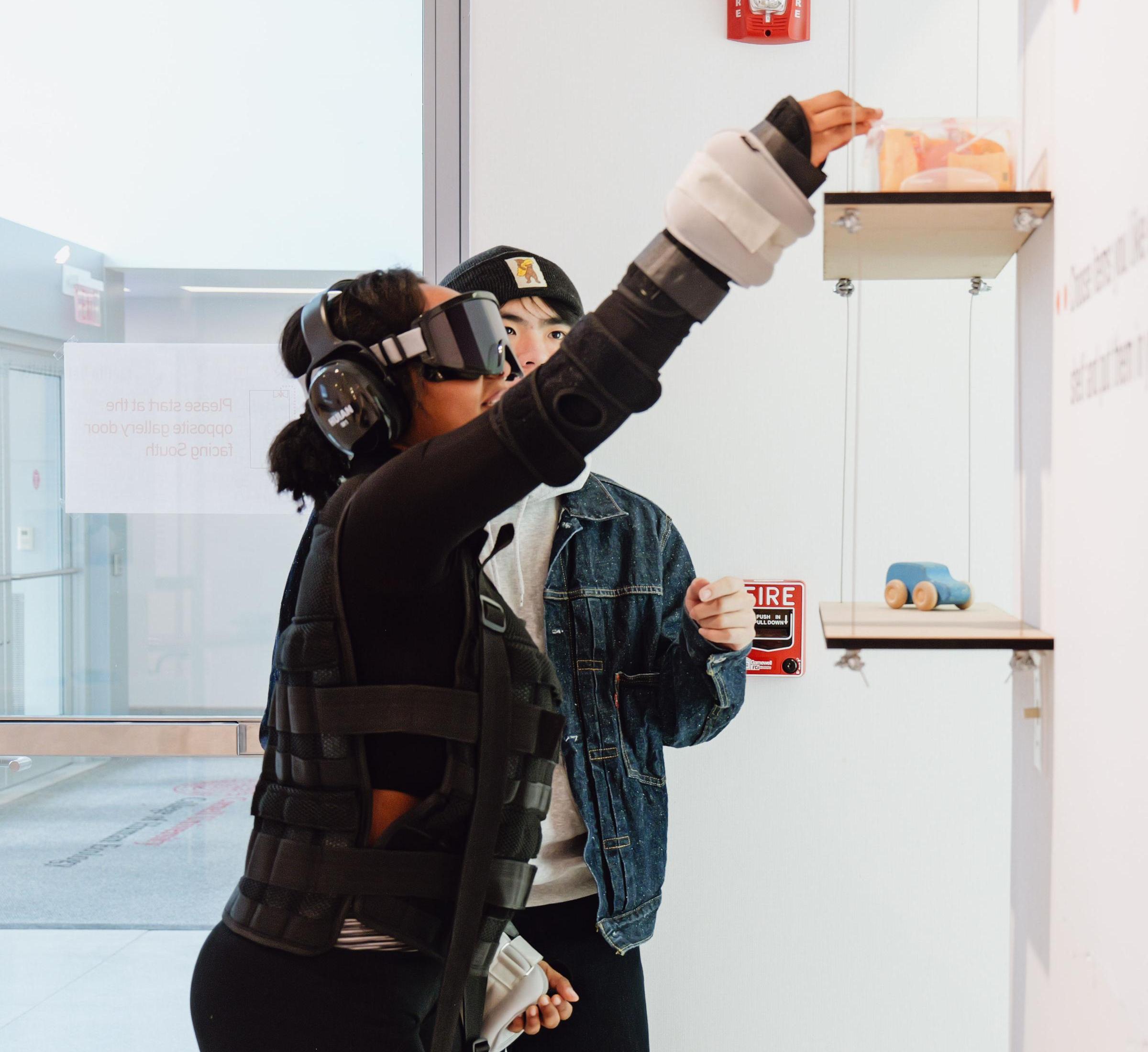
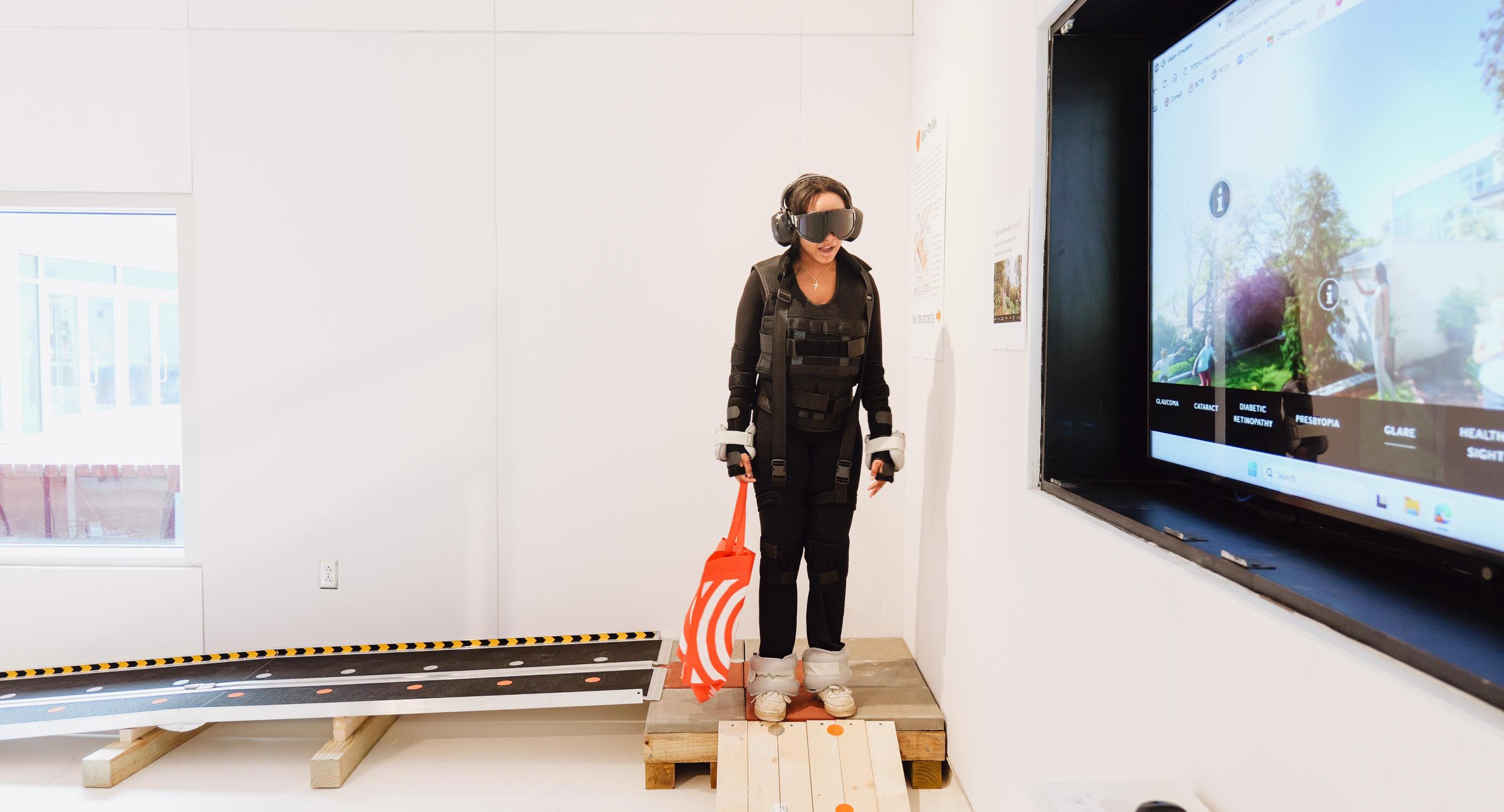
That idea took physical form in an aging simulation suit: a weighted vest secured across the torso, braces fastened at the knees and elbows, goggles that soften the edges of the room, and earmuffs that blur sound into a low hum. Together these devices mimic common physical and sensory changes associated with later life. 

Visitors don the suit and move through a sequence of everyday tasks — standing, stretching, writing a grocery list, navigating a ramp, climbing stairs and reaching for items on a shelf. The experience is intentionally challenging, beginning with physical tasks that allow visitors to feel the fatigue of movement before shifting to sensory changes that mimic aspects of older adults’ daily routines.

For Kassidy Nolan Scott ’25, a human development major and gerontology minor, the simulation reshaped how she understands the lived experience of older adults. 

“Something as simple as getting an item off of a shelf… everything is a lot slower and just takes a lot more time,” she said. “Everyone sounded muffled, almost like I was in an airplane.” 

Beyond the physical strain, Scott said she also felt the emotional weight of it. “That definitely takes a toll on you when you’re experiencing it every single day for years on end.”

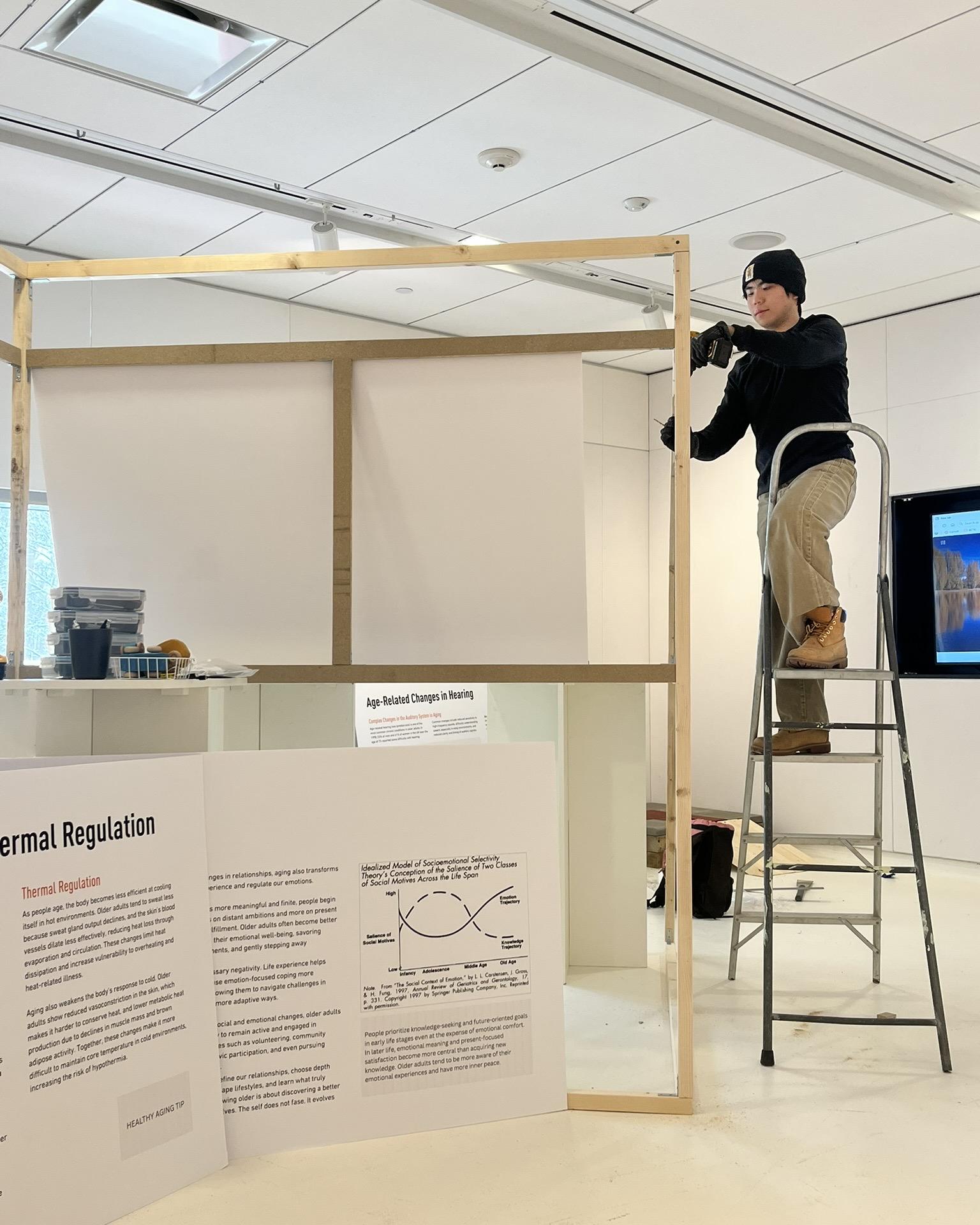
Ruizen Wang on a ladder building the exhibit

Understanding aging through a positive lens 

The exhibition does not portray aging as decline. Instead, it invites visitors to question how environments, policies and attitudes shape the experience of growing older. In highlighting physical barriers, Wang and Guo hope to spark empathetic conversations about independence, dignity and the kinds of communities that allow people to age with strength and purpose. 

“We don’t want people to leave thinking aging is only about limitation,” said Guo, a major in design and environmental analysis. “It’s also about adaptation, resilience and the environments we create to support people throughout their lives.”

Research in gerontology shows that while aging brings physical changes, the body remains capable of growth and adaptation. Older adults continue to learn new skills, often moving more strategically, with experience and awareness. The mind also evolves, drawing on decades of accumulated knowledge and expertise. And while social circles may grow smaller, relationships often become more intentional and deeply meaningful. 

“We don’t want people to leave thinking aging is only about limitation. It’s also about adaptation, resilience and the environments we create to support people throughout their lives.”

Jiayi Guo ’26
Jiayi Guo ’26
Design and environmental analysis

A Human Ecology approach to aging 

Both student curators credit their education with bringing the exhibition to life. 

“Human Ecology’s interdisciplinary environment and tradition of translational research inspired us to seek expertise across departments for this exhibition,” they said, citing support from Jay Yoon, associate professor in the Department of Human Centered Design, and Corinna Loeckenhoff, the Janet and Gordon Lankton Professor of Developmental Psychology in the Department of Psychology, as well as funding from the Alan D. Mathios Research and Service Grant

For Wang and Guo, “Feel the Years” reflects what they see as the heart of Human Ecology: understanding people in context and designing environments that support well-being across the lifespan. 

“We want this exhibition to be a conversation starter so people can better understand each other and recognize that aging looks different for everyone,” Guo said. 

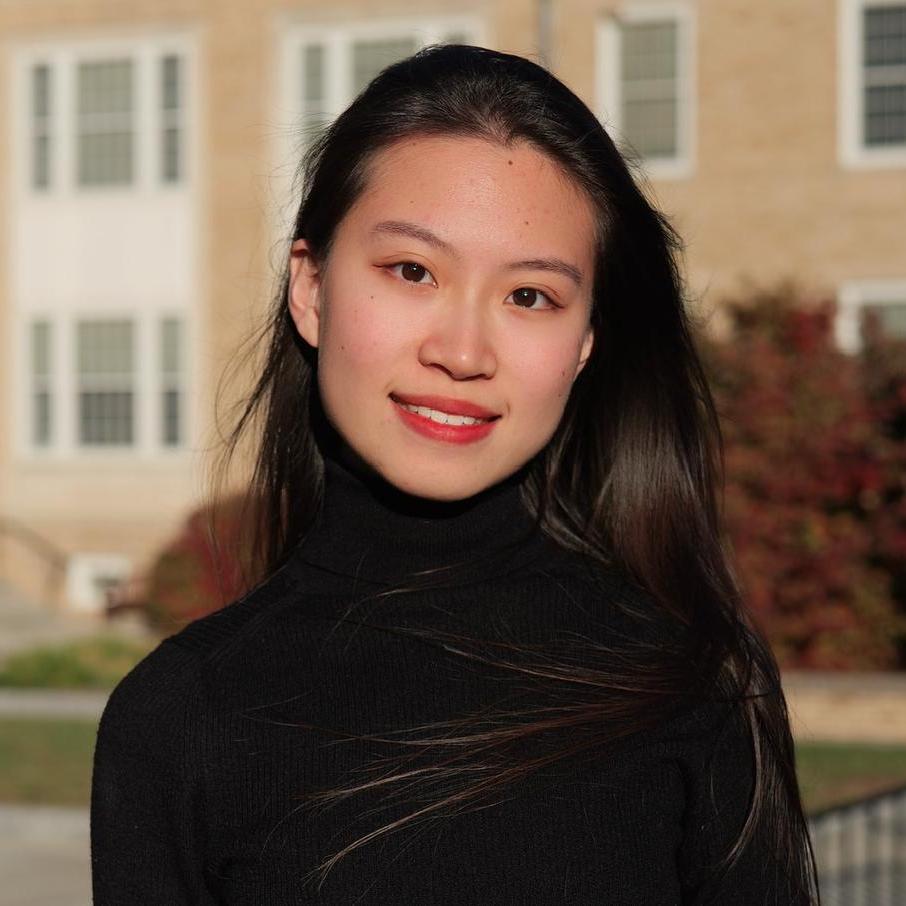
Ruizeng Wang and Jiayi Guo in the exhibition space