
When Joeva Barrow began her career training to become a registered dietitian (RD), working at Orlando Health Winnie Palmer Hospital for Women and Babies, she saw firsthand how nutrition could change lives. Her curiosity led her to explore molecular nutrition and understand how evidence-based nutrition recommendations worked.

“We found a lot of really powerful relationships between diet and health, but many of the fundamental mechanisms still needed to be explored in order to maximize those benefits,” said Barrow. “I realized that it was my passion to understand nutrition at the molecular level and figure out how to leverage those relationships into better practice for nutritional care.”

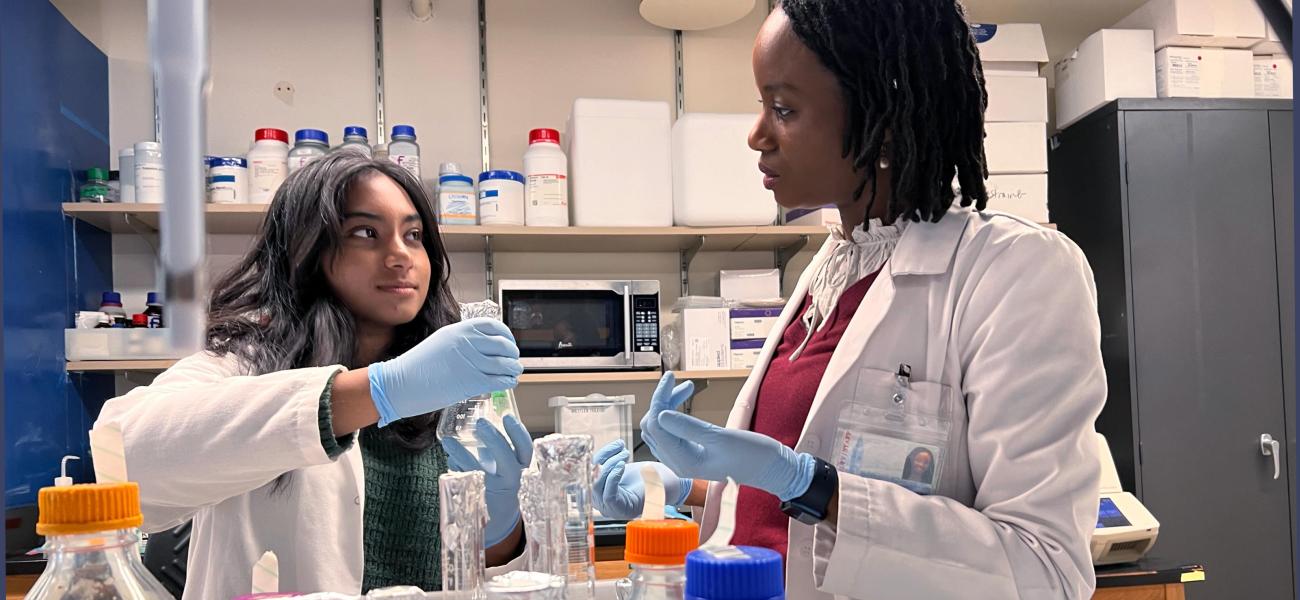
Today, as an assistant professor of molecular nutrition in Cornell’s Division of Nutritional Sciences, Barrow and her team are uncovering links between human nutrition and biochemistry to determine molecular approaches to combat mitochondrial and metabolic diseases.

Exploring the power of brown fat

Brown adipose tissue — commonly known as brown fat — burns calories to generate heat and maintain body temperature, especially in cold temperatures. It is highly active during infancy but becomes less active with age. People with more brown fat tend to have better metabolic profiles and are at less risk for diseases like type 2 diabetes. Barrow’s team investigates how brown fat functions, what regulates it, and how it might be harnessed to combat metabolic disease.

Posted on
02/02/2026
Author
Marisa LaFalce
Tags
Holistic Human Health
Joeva Barrow speaks with a student in her lab

An old drug offers exciting potential

Another focus of the Barrow Lab is the role of the mitochondria in cellular metabolism. In mitochondrial disease, the mitochondria are damaged and can no longer produce sufficient energy. This dysfunction leads to energy failure, which affects cells and tissues, and can ultimately be fatal. 

Barrow’s research shows promising potential against these devastating diseases. She received an award to support this work from the Hartwell Foundation, which funds scientists pursuing early stage biomedical research to advance children’s health. Among the early findings, she and her team discovered that oxybutynin, a common drug used to improve muscle function, may also combat mitochondrial disease.

Research from cells to society

Barrow thrives at Cornell, where she can move seamlessly from molecular studies in the lab to clinical research with patients, and even to societal perspectives if necessary.

“I really wanted an institution with the resources that would allow me to go from cells to society,” said Barrow. “Being able to do that all within the Division of Nutritional Sciences has taken our research program and accelerated it in new directions.”

Her lab’s discoveries are complemented by her work in the Human Metabolic Research Unit, a state-of-the-art facility that supports precision nutrition and metabolic research. Together, these environments allow Barrow to unlock better understanding of the human body’s fundamental mechanisms.