Per Pinstrup-Andersen
Per Pinstrup-Andersen, currently Professor Emeritus and Professor of the Graduate School, was most recently the H. E. Babcock Professor of Food, Nutrition and Public Policy, the J. Thomas Clark Professor of Entrepreneurship, and Professor of Applied Economics at Cornell University and Adjunct Professor, Copenhagen University. He is past Chairman of the Science Council of the Consultative Group on International Agricultural Research (CGIAR) and Past President of the American Agricultural Economics Association (AAEA). He has a B.S. from
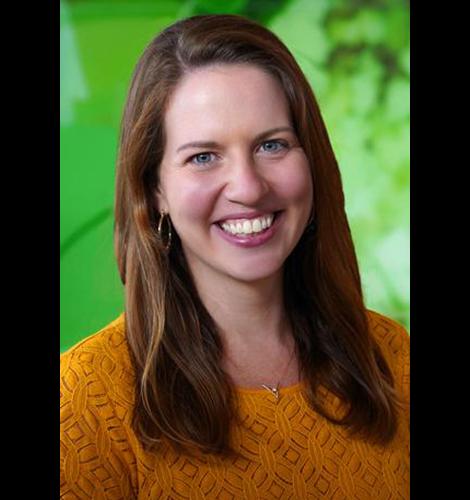
Victoria Simon
I am Manager of the Human Nutritional Chemistry Service Laboratory (HNCSL) located in room 251 in the Human Ecology Building. This lab includes an IMMULITE 2000 Immunoassay system, a Magpix Multiplex Analyzer System, Dimension Xpand Plus Integrated Chemistry System, Synergy II Plate Reader and Plate Washer. Hematology equipment includes a Beckman Coulter AcTDiff2 hematology analyzer. Chromatographic equipment includes an Acquity UPC2 convergence chromatographic system with photodiode array detector, a Thermo LC/MS/MS with a TSQ Quantum Ultra mass
- Apr 2, 2025
- by Juan Vazquez-Leddon
- Holistic Human Health, Social Impact + Justice
Loeckenhoff named Lankton Professor of Developmental Psychology
Corinna Loeckenhoff has been named the Janet and Gordon Lankton Professor of Developmental Psychology in the College of Human Ecology (CHE). Loeckenhoff’s research focuses on adult development and aging, studying how factors like one’s motivations, emotions, life events, cognition and social relationships affect health-related decisions.
A fellow of the Gerontological Society of America and the Association for Psychological Science, Loeckenhoff has also received two SUNY Chancellor Awards for Teaching Excellence and Faculty Service.
“Being named
- Dec 9, 2025
- by Juan Vazquez-Leddon
- Community Engagement, Student Life
Six CHE students named 2026 BCTR Scholars
The Bronfenbrenner Center for Translational Research (BCTR) is pleased to welcome the third cohort of BCTR Scholars who will spend the next year learning the fundamentals of translational research and applying their knowledge to enhance the community.
The BCTR Scholars program introduces undergraduates to translational research through specialized coursework during the spring 2026 semester, networking with faculty mentors, and a hands-on experience with local organizations over the summer. Students learn how translational research can inform
Cindy Hazan
Dr. Hazan’s general area of interest is human mating and pair bonding. Most of her research has been conducted within the framework of ethological attachment theory, which focuses on the predisposition of people of all ages to form strong interpersonal bonds. Her initial work helped establish the theory’s usefulness for understanding and explaining individual differences in the way adults think, feel, and behave in their closest relationships. More recently, she has been investigating the processes