- Mar 19, 2026
- Student Life
Materials, machines, mentorship shape student spring runway show
The annual Cornell Fashion Collective Spring Runway Show, on March 21, will feature the work of fashion design majors as well as students from across the university who are looking to broaden their Cornell experience.
- Aug 28 ,2026
- by Larissa Shepherd
- Human Centered Design
- Human Ecology Building T01
Biomass to Biomaterials: Engineering Regenerated Cellulosic Materials from Agricultural Feedstocks—and Why So Few Reach Market
Agricultural biomass represents one of the world’s largest underutilized renewable resources, yet only a small fraction is transformed into high-value materials. Advances in regenerated cellulosic fibers have created new opportunities to diversify feedstocks beyond conventional wood pulp. Despite significant progress, however, relatively few next-generation biomaterials successfully transition from lab to commercial adoption.
This seminar explores the journey from agricultural biomass to regenerated cellulosic materials through the lens of both materials science and commercialization. Using CocoaFiber’s

Lorraine Maxwell
I joined the Design and Environmental Analysis faculty in 1993 as my first full time academic appointment. My first graduate degree was a masters in city and regional planning. I worked as city planner for a large city in New Jersey and as a facility planner and programmer for an architectural firm in New York City. My PhD is in psychology, specifically environmental psychology. My research interests have always been, and continue to be, related
- May 19 — Sep 30 ,2026
- by Catherine Kueffer Blumenkamp
- Human Centered Design
- Human Ecology Building T45
Who Owns What?
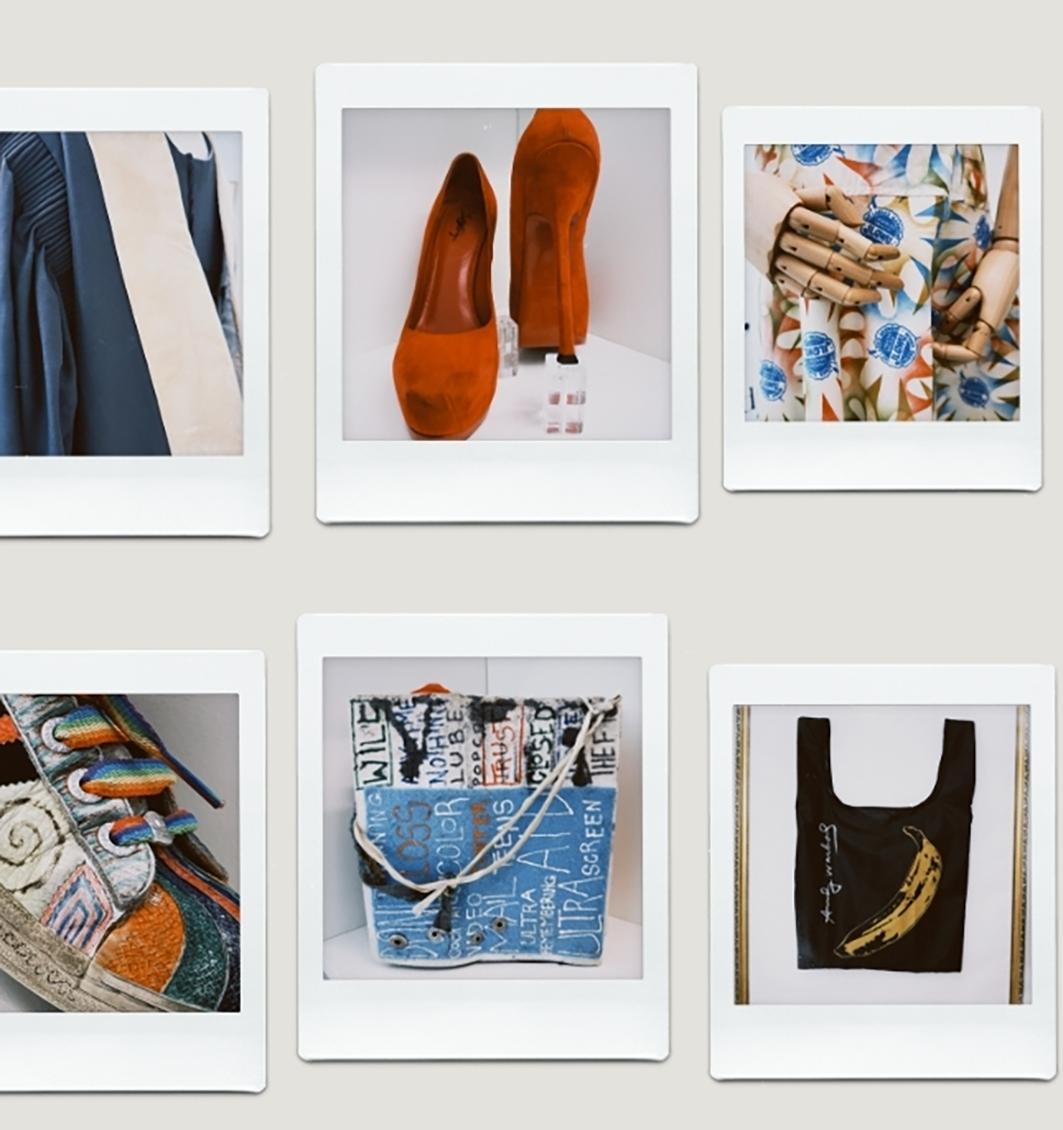
“Who Owns What?” investigates fashion’s relationship with identity through the various perspectives of those who may refer to themselves as “The Owner.” The exhibit is divided into three sections: “The Creator,” “The Wearer,” and “The Steward.” “The Creator” explores design process, brand identity, labor, and consumerism. “The Wearer,” reveals how clothing can become intimately personalized. “The Steward,” raises questions about the slipperiness of meanings over time. Through a series of vignettes, identity becomes something owned
- Sep 16, 2026
Ralph Rucci archive at Cornell reveals art and labor of couture
For the first time in over a decade, garments from Rucci’s haute couture and ready-to-wear collections have been brought together under one roof as part of the Cornell Fashion + Textile Collection in the College of Human Ecology. Documentary materials, including thousands of original sketches, patterns and swatches, are housed by the Kheel Center for Labor-Management Documentation and Archives at Cornell University Library. The archive is now accessible to students, researchers and the public, ensuring
- Sep 11 ,2026
- by Larissa Shepherd
- Human Centered Design
- Human Ecology Building T01
Carbon Nanotube Fibers: from science fiction to specialty applications and potential large-scale
In the 1990s, Carbon Nanotubes (CNTs) were touted as a revolutionary material: stronger and lighter than steel and more conductive than copper and aluminum. Implicitly, this excitement relied on the assumption that CNTs could be assembled into macroscopic fibers whose properties would match nanoscale measurements. By 2000, the prospect of macroscopic CNT fibers was labeled science fiction. I will briefly summarize how two decades of scientific and engineering advances have resulted in the development of CNT

Larissa Shepherd
Larissa Shepherd, PhD., is an Assistant Professor in the Department of Fiber Science & Apparel Design.
Dr. Shepherd earned her B.S. in Materials Science & Engineering at Alfred University. While earning her M.S. and Ph.D. from Cornell University, she breifly worked in industry as a Market Development Intern for Invista™, in addition to taking part in a Liquid Crystalline and Responsive Fibers International Research Experience for Students in Germany.