


In the 1990s, Carbon Nanotubes (CNTs) were touted as a revolutionary material: stronger and lighter than steel and more conductive than copper and aluminum. Implicitly, this excitement relied on the assumption that CNTs could be assembled into macroscopic fibers whose properties would match nanoscale measurements. By 2000, the prospect of macroscopic CNT fibers was labeled science fiction. I will briefly summarize how two decades of scientific and engineering advances have resulted in the development of CNT fibers that now surpass all other materials in almost all engineering properties. Unlike incumbent materials (Carbon Fibers, metals), CNT fibers are flexible and behave as textile fibers—yet, with electrical and thermal conductivities that rival those of copper and aluminum. This combination of properties and small-scale industrial production are now propelling product development in many specialty applications, from neuromodulation, to wearables, data cables, high frequency electronics, and a completely new class of fabrics.
Hurdles remain in understanding and scaling manufacturing. Recent lab-scale advances indicate that CNT fibers could be made via very efficient processes, providing a potential alternative to metals and engineered fibers in large-scale uses. For this to happen, entire supply and manufacturing chains will need to evolve, and end-use products will need to be redesigned to take advantage of the behavior of these new materials. To coordinate and accelerate these efforts, we have started the Carbon Hub, an open-innovation, non-profit entity where universities, corporations, government, and philanthropic organizations can collaborate towards a common goal.
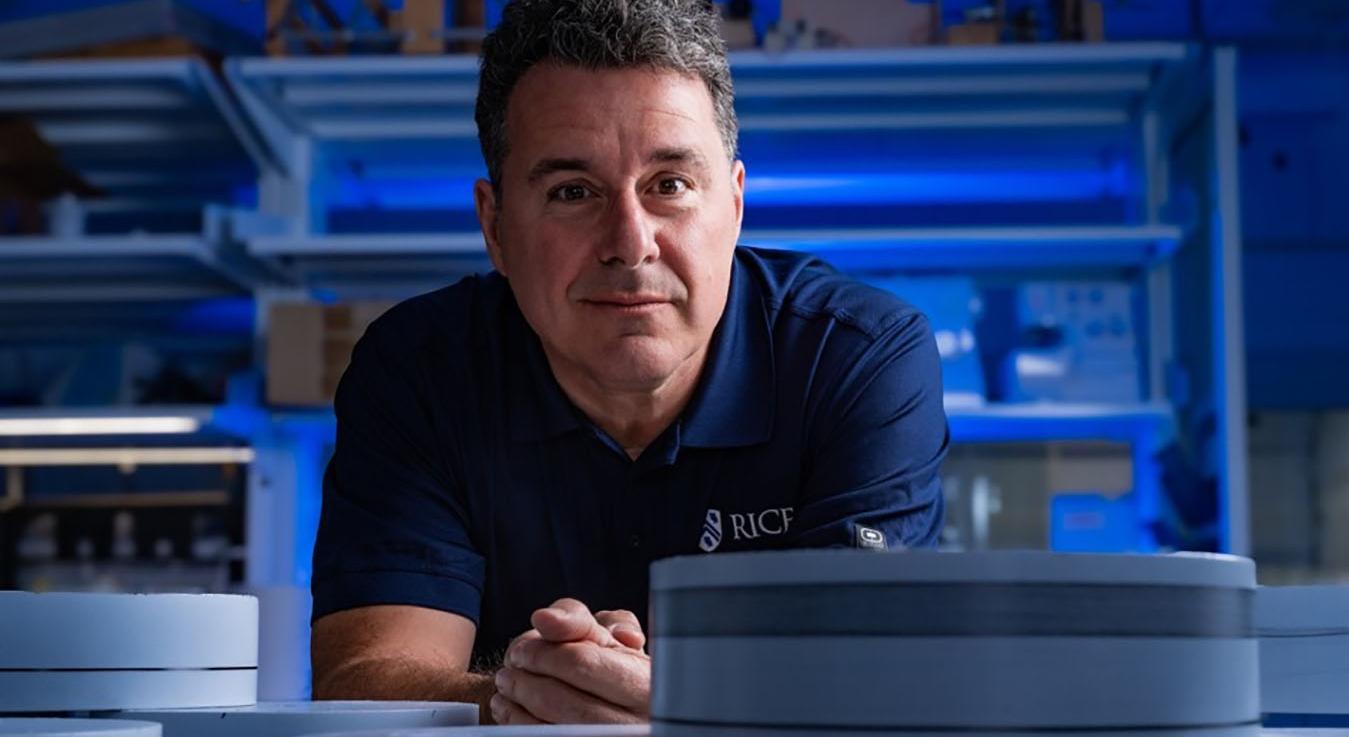
Matteo Pasquali is the A. J. Hartsook Professor of Chemical & Biomolecular Engineering, Chemistry, and Materials Science & NanoEngineering and the Director of the Carbon Hub at Rice University in Houston, TX.
Dates Held
Friday, September 11, 2026
11:15am
-
12:15pm
Contact Name
Location
Human Ecology Building T01
Share


Event Details
Event Type
Lecture
Departments
Human Centered Design