- Mar 25 ,2026
- by Lynandrea Mejia
- Bronfenbrenner Center for Translational Research
- MVR 1102 and Zoom
Relational Stability and Social Support of Children in Out-of-Home Care
This is part of the Talks at Twelve series from the Bronfenbrenner Center for Translational Research.
This talk will will focus on how relationships for children in out-of-home care can be supported and sustained beyond placement endings, recognizing the importance for young people and their carers to have an ongoing relationship, even if they are no longer living together, along with the importance of facilitating relationships with birth family.
A particular focus will be on

- Apr 9 ,2026
- by Lynandrea Mejia
- Bronfenbrenner Center for Translational Research
- MVR 1102 and Zoom
Data-Driven Policy Change – A Rigorous Approach to System Analysis and Transformation
This is part of the Talks at Twelve series from the Bronfenbrenner Center for Translational Research.
Systems transformation efforts grounded in deep engagement with stakeholders, rigorous analysis of data, and a nuanced understanding of the complexity of policy and practice can maximize the impact of changes and improve outcomes among youth and families involved with public human service systems. Using examples from her work in Illinois and across the country, Dana Weiner ’92 will describe

- Mar 19 ,2026
- by Lynandrea Mejia
- Bronfenbrenner Center for Translational Research
- MVR 1102 and Zoom
Decision-Making Across the Life Span
This is part of the Talks at Twelve series from the Bronfenbrenner Center for Translational Research.
Decisions – small and large – are an inherent part of life and can shape people’s well-being for better or worse. As we move through the life span, there are changes in the types of decisions we are facing, the strategies we draw on to make good decisions, and the resources available to recover from poor decisions. Corinna Loeckenhoff

- Apr 24 ,2026
- by Deborah Surine
- Nutritional Sciences, Cornell Human Ecology
- The Statler Hotel - 130 Statler Drive, Ithaca, NY 14853
Speaking Truth to Power About Weight Symposium
Join us for a dynamic, interdisciplinary symposium exploring the impact and intersections of weight stigma and weight-based discrimination across healthcare, policy, education and beyond. Leave equipped with research-grounded strategies, collaborative connections, and actionable tools to advance weight justice and drive meaningful systems change.
Sessions throughout the day with expert speakers from Cornell, across the country and the globe.
Online or in-person @ The Statler Hotel

- Feb 20 ,2026
- by Karen Steffy
- Human Centered Design
- Human Ecology Building T01
What Roles Will Humans Play in the Future of Data Annotation?
Talk Abstract:
Large language models (LLMs) have rapidly and impressively taken over many tasks once handled by human annotators in constructing text datasets. But does this mean we no longer need humans in the annotation loop? What roles should humans play in future data annotation pipelines? In this talk, I will present two recent studies that explore the evolving role of humans in the landscape of text data annotation. First, we ask whether a well-designed

- Feb 24 ,2026Feb 25 ,2026Feb 26 ,2026Feb 27 ,2026Mar 2 ,2026Mar 3 ,2026Mar 4 ,2026Mar 5 ,2026Mar 6 ,2026Mar 9 ,2026Mar 10 ,2026Mar 11 ,2026Mar 12 ,2026Mar 13 ,2026
- Human Centered Design
- Jill Stuart Gallery, Human Ecology Building
Feel the Years: An Interactive Exhibition on Aging Simulation
The Exhibition
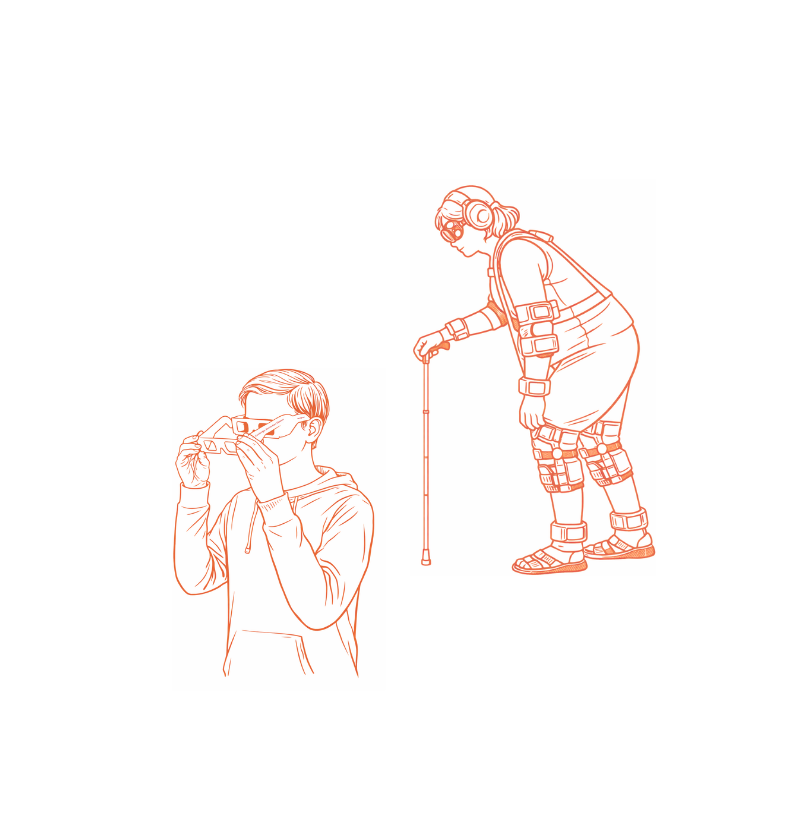
Feel the Years is an interactive exhibition designed to help students and community members better understand the experience of growing older. Through immersive, research-informed activities, the project invites participants to reflect on aging not as a decline, but as a natural and meaningful stage of life.
The Experience
You will have the chance to wear aging simulation suits or other simulation devices and complete everyday tasks that mimic common physical and sensory changes
- Apr 14 ,2026
- by Denise N. Green
- Human Centered Design, Cornell Human Ecology
- Martha Van Rensselaer Hall, G155
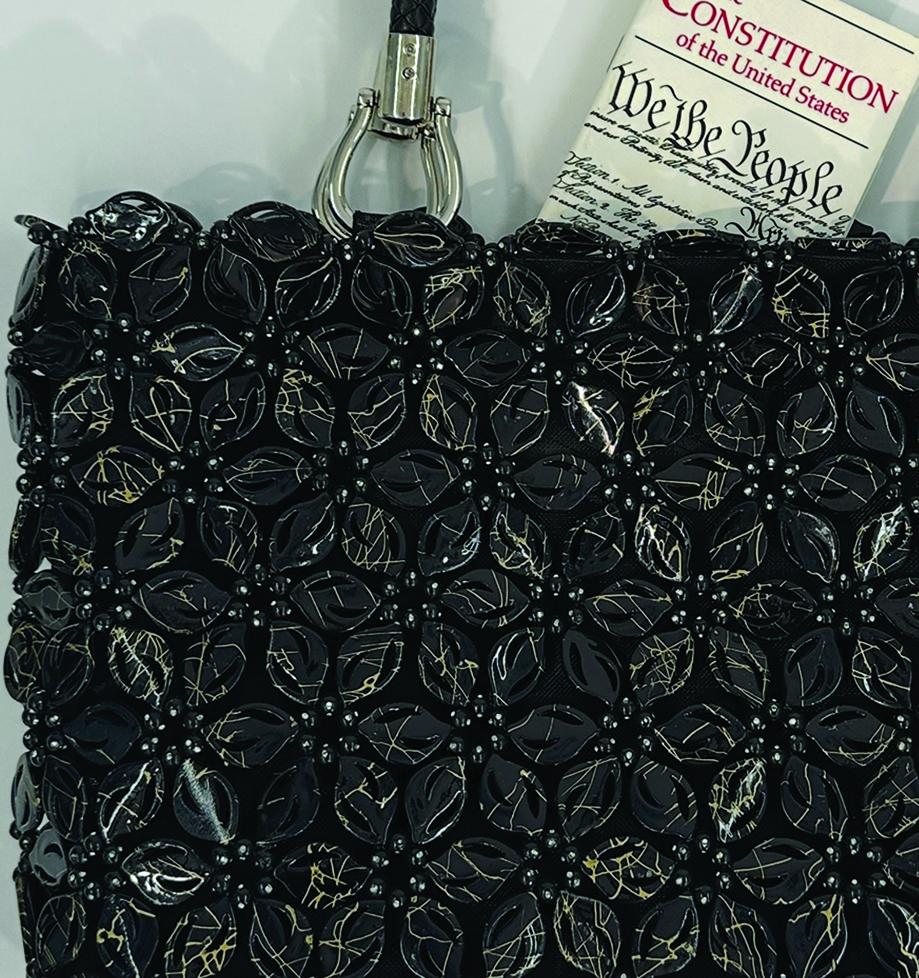
Celebrating Fashioning Justice: Ruth Bader Ginsburg '54 and the Power of Presence
Please join us for an event celebrating “Fashioning Justice: Ruth Bader Ginsburg '54 and the Power of Presence.” Curated by the Cornell Fashion + Textile Collection, the exhibition explores Justice Ginsburg’s legacy by situating her iconic judicial collars and personal objects within broader histories of law, policy, work, and society and is on view from March 16 to May 1.
The event features remarks from Justice Ginsburg’s granddaughter, Clara Spera, and a screening of the