
What
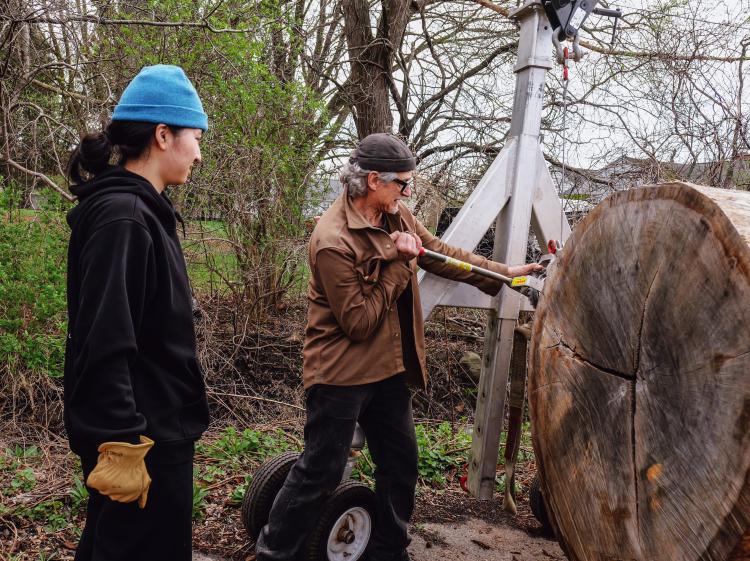
On a brisk April afternoon outside his studio, student research assistants who are all design and environmental analysis majors, hand-strip bark from a two-ton oak tree that fell during a windstorm.
“I get to know the piece through the process of cleaning and debarking it,” Elliott said. “That way, I've been over every square inch of the tree. By then, ideas just start coming while I'm working, and they tend to coalesce into some kind of intervention.”
Elliott’s process is completely subtractive. He uses 3D cuts and positionings to reveal the form within each arborwork. Sometimes he imports photos of the tree into 3D modeling software before deciding how to intervene.
He brings a similar ecological approach to his teaching. In Visual Literacy and Design Studio, students explore form through a series of projects that introduce principles of visual literacy across two-and three-dimensional design at all scales. From the first day of class, students make sustainability choices as part of every assignment, from sourcing materials to eliminating waste.
“Decisions we make every day have environmental impacts including materials in the studio,” Elliott said. “Are they toxic? What do you do with them at the end of life? Can they decompose? Foam core is the worst.”
Elliott’s research also focuses on ecological design. He has created two sustainable building materials: Triakonta System and a carbon-neutral concrete.
Why
Over the past decade, sculpture has returned to the center of Elliott’s practice, and his arborworks have been exhibited across the Northeast.
“I'm trying to get people to go beyond themselves and have a more biocentric view,” said Elliott. “Then maybe they can start appreciating the world they live in a little more deeply. You don't see the tree's roots, but they're amazing, and when you do see them and appreciate them, you realize that this is an amazing thing that you're looking at.”
Elliott points out a rust spot on an ancient maple where a Union farmer leaving to fight in the Civil War once hung a scythe. When the farmer didn’t return, the tree grew around the tool.
After teaching Ecological Literacy and Design for more than three decades, Elliot has seen the conversation shift. Students are more aware of climate urgency now, but their anxiety has increased and enrollment has decreased. He believes that reconnecting to the natural environment is essential to combatting climate change and fostering activism, especially amidst climate-related angst.
“It's really about engagement. Go out there and find some little thing, some issue that you find important locally, and get involved with that,” Elliott said. “Volunteer a little time, clean up a roadway, you'll feel better when you are part of the solution.”
Elliott has shown his work at galleries throughout the Northeastern United States and Canada; permanent installations are on display in Atkinson Hall and the Human Ecology Building in Ithaca, New York.
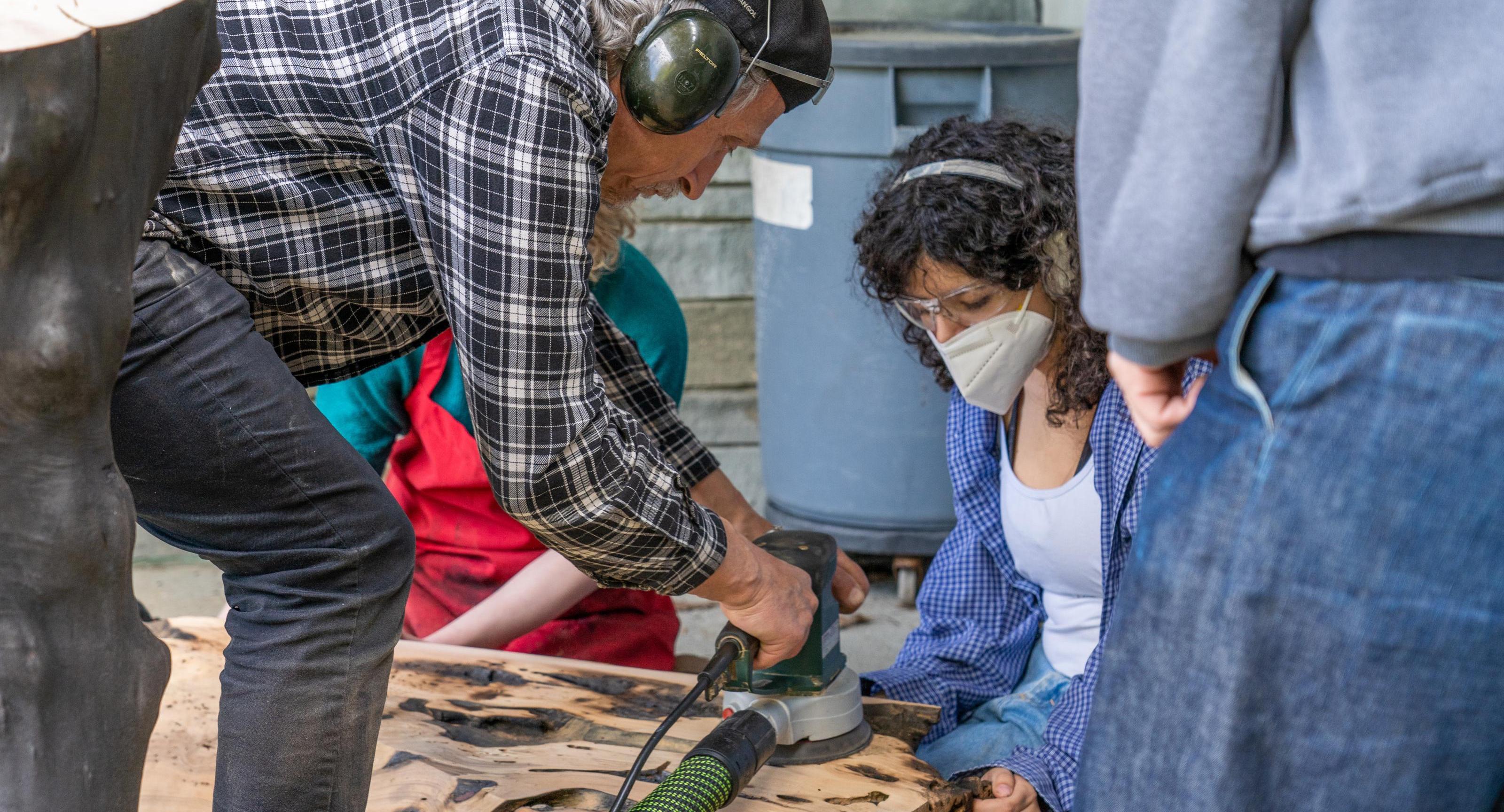
Elliott teaches student research assistants proper sanding technique. Many students appreciate that the work is often outdoors. Photo by Ryan Issa.
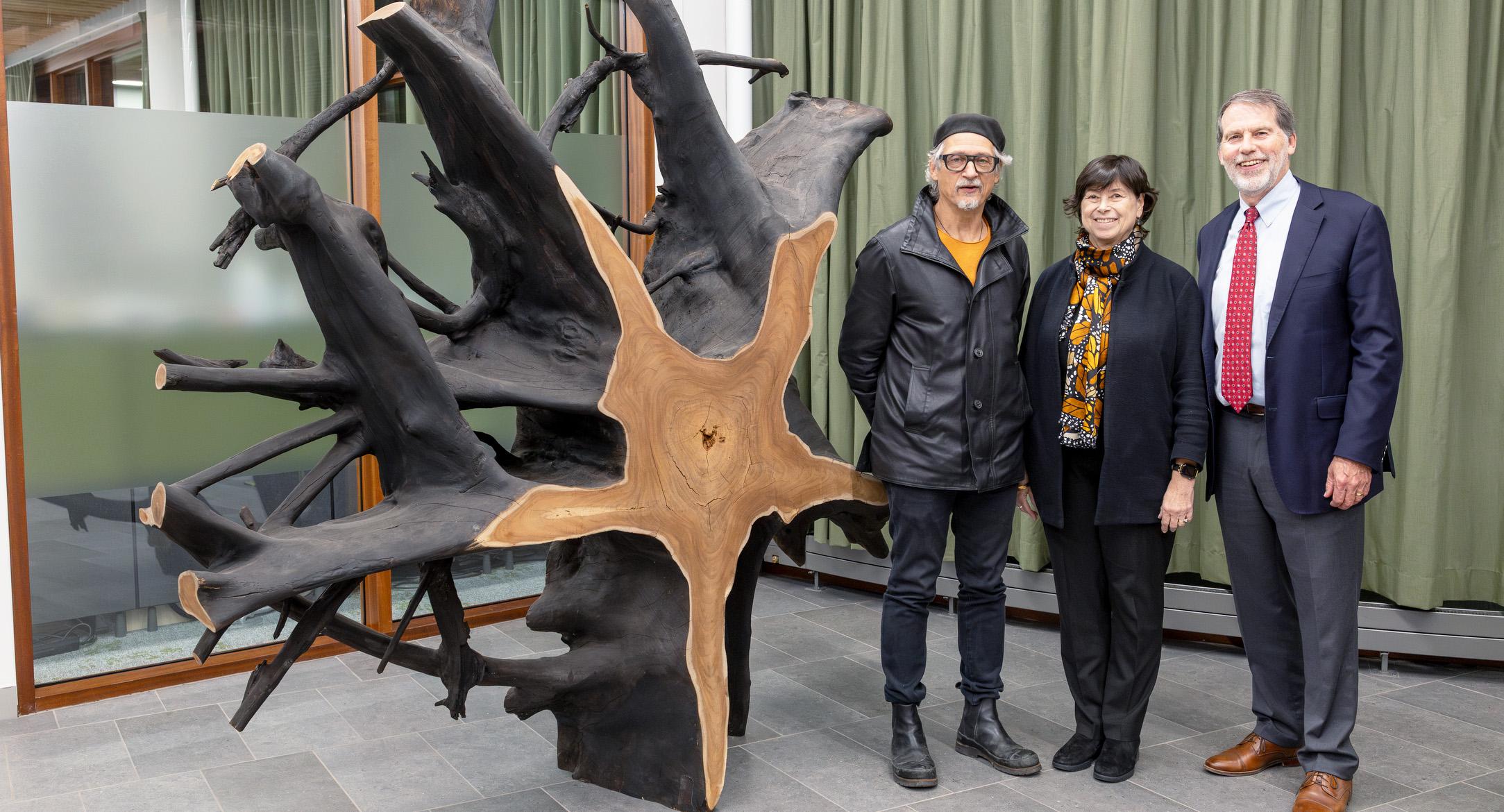
Stella, a permanent sculpture installation in Atkinson Hall, with Jack Elliott (left); Jill Lerner ’76, Atkinson Advisory Council member and sculpture patron; and David Lodge, former director of Cornell Atkinson. Provided.
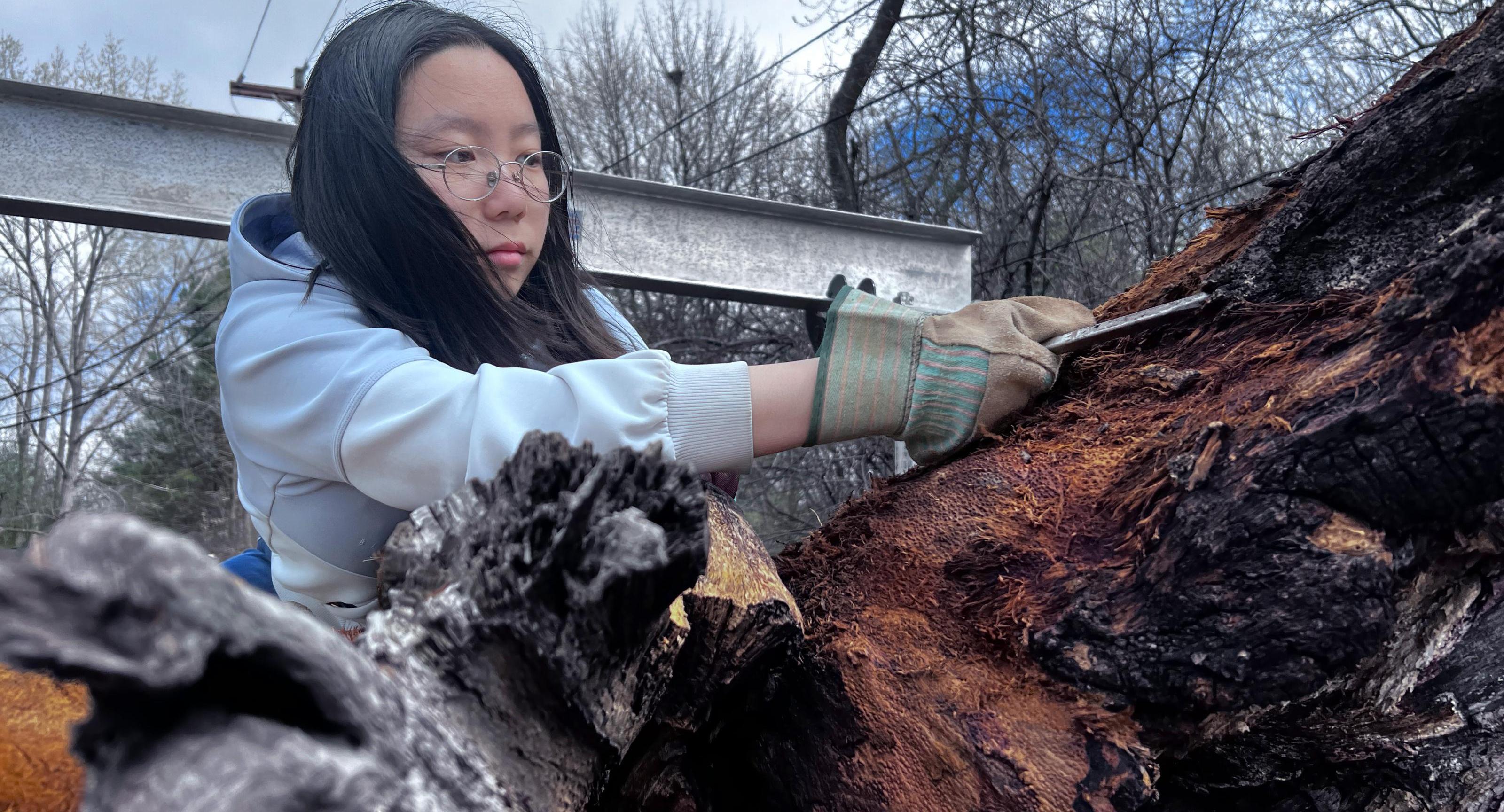
Xiang Meng '28, a design and environmental analysis major and research assistant helps Elliott to remove bark from a tree. Photo by Margaret Tsai.
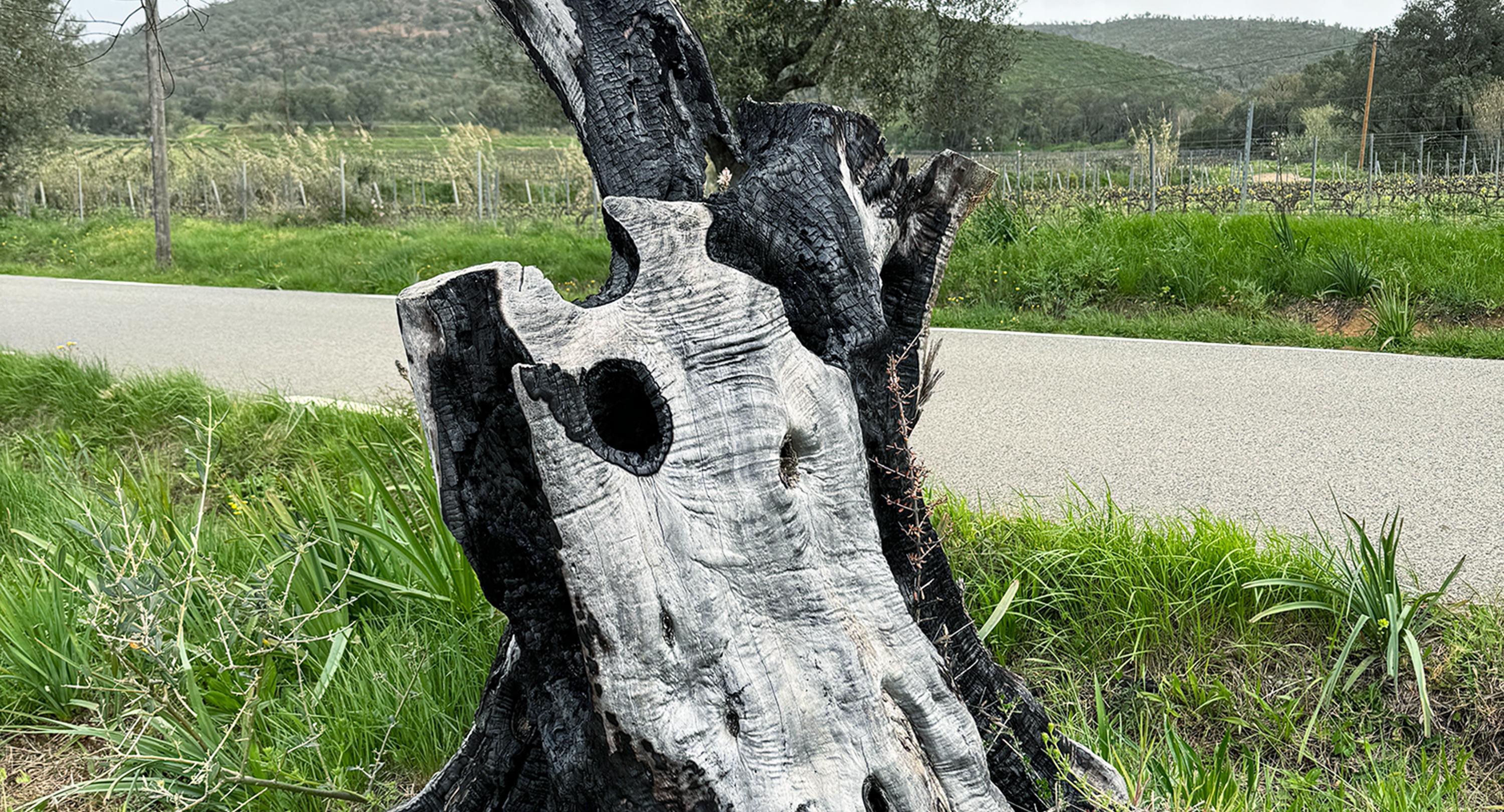
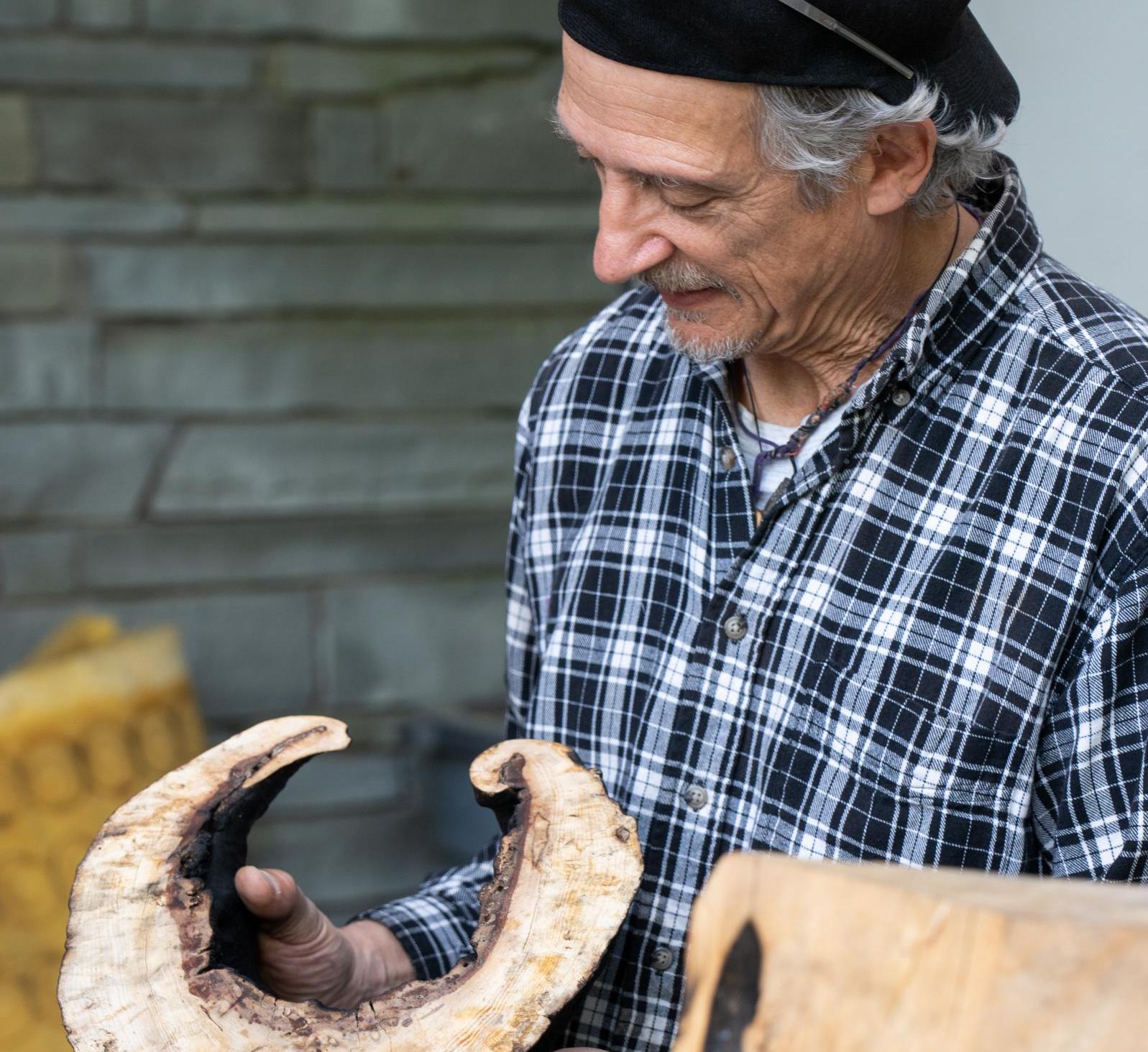
Burst olive tree following a forest fire in Provence, France. On sabbatical, Elliott traveled through the United States and Europe to study trees affected by climate‑driven weather and pests. Provided.
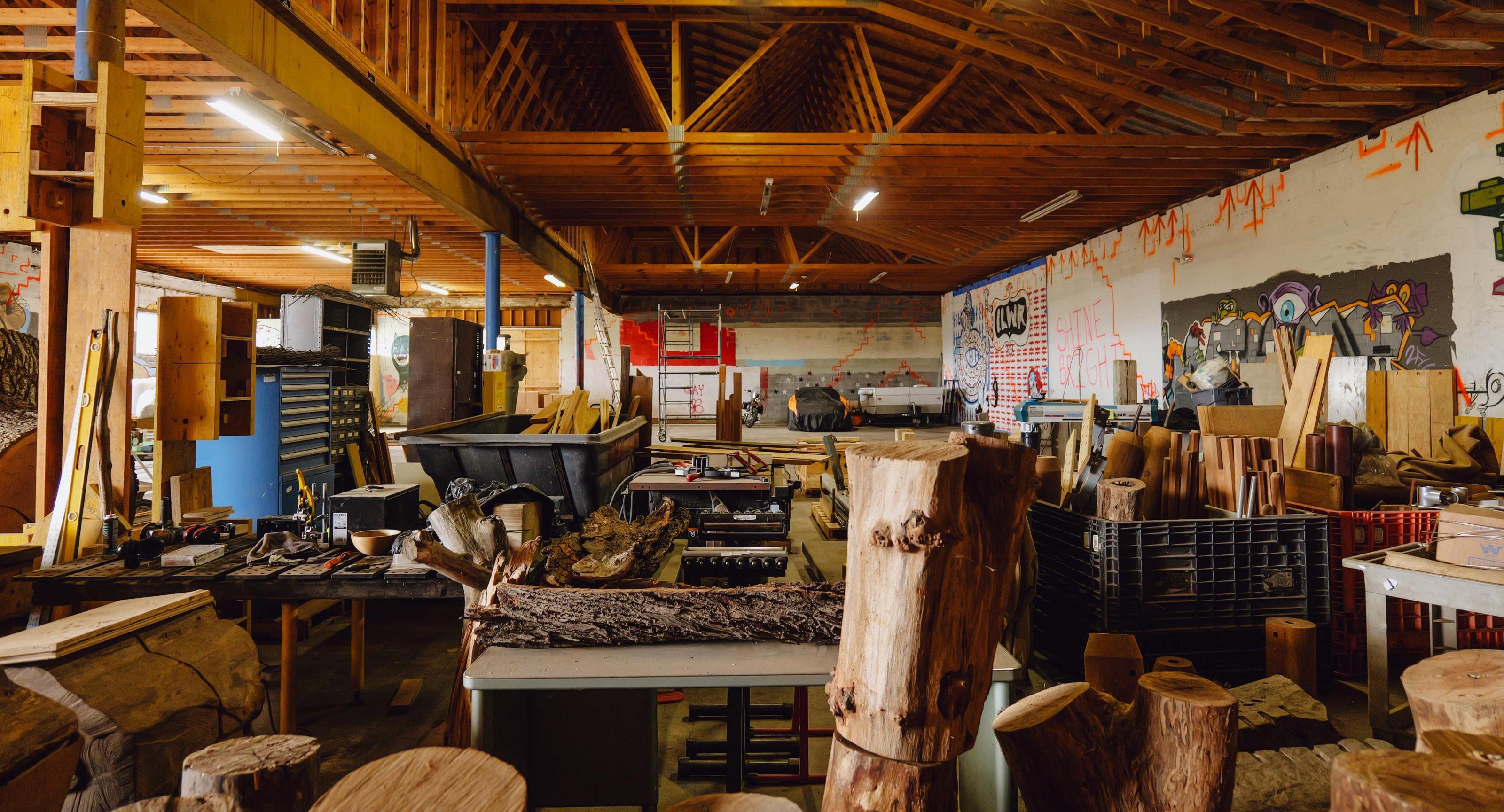
John Elliott's studio is a graffiti-covered former skate park containing tree sculptures in various stages of completion, from newly found trunks to finished pieces. Photo by Margaret Tsai.