




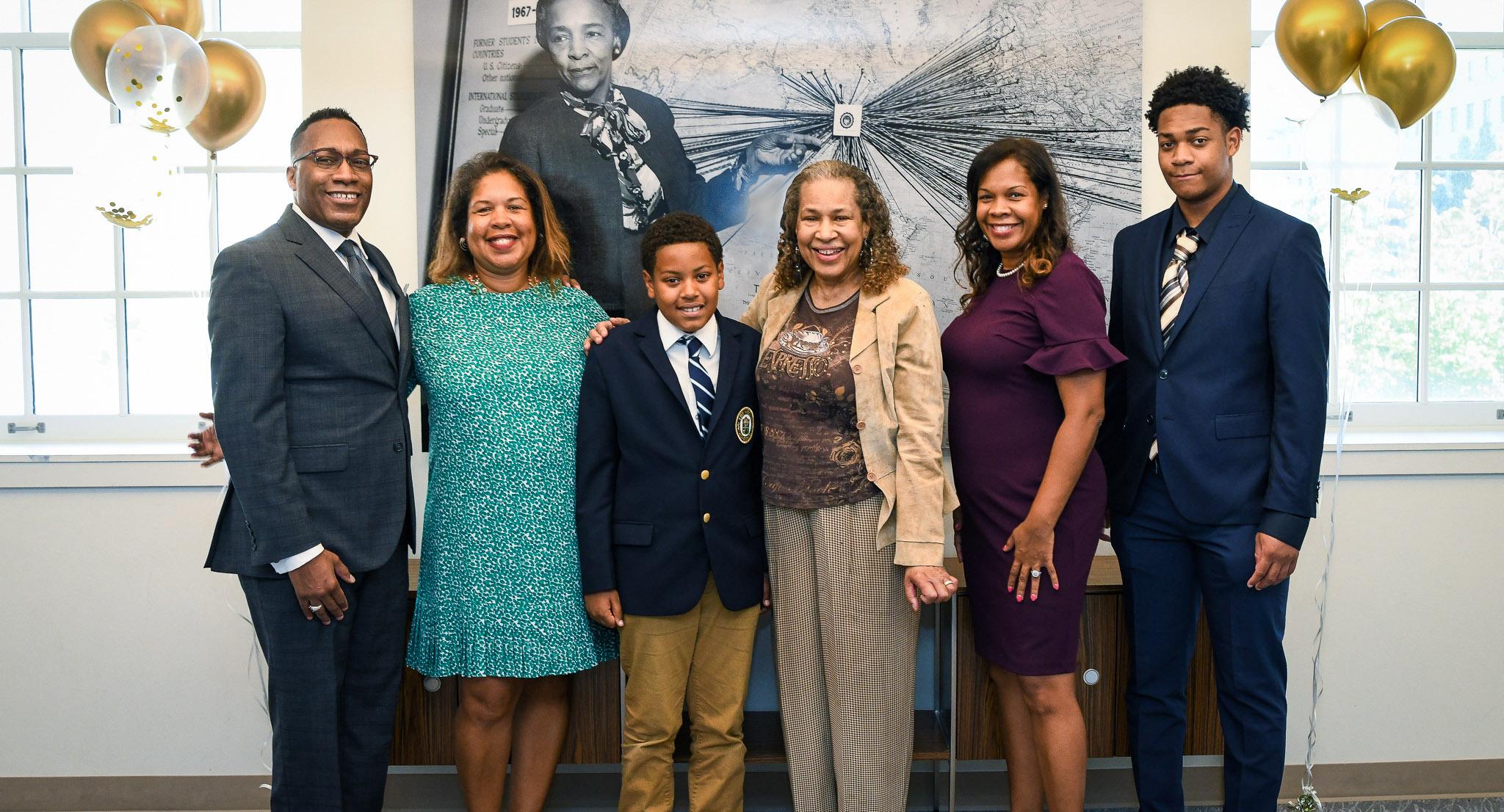
Members of the Kittrell family attended the portrait unveiling and public lecture.
Browne said that when she became president and CEO of RMH-NY, she “inherited a hotel.” But because of her experience in public health — in addition to leading AAIUH, she has master’s degrees in public policy and public health from the University of Michigan and a doctor of science degree from the Harvard T.H. Chan School of Public Health — she recognized that RMH-NY’s services aligned with social determinants of health like education access, healthcare quality, social and community, context and economic stability.
With this perspective, she expanded the RMH-NY’s partnerships with hospitals and community organizations and strengthened its presence across all of New York City with the goal of addressing the broader economic and social conditions that impact health.
“Because we have intimate knowledge based on decades of observation, Ronald McDonald House-New York is no longer just a referral, but full partner drawing on industry expertise at the nexus of hospitality and healthcare for families with critically ill children,” she said.
Browne said that to meet the challenge of health inequity, institutions need to learn from each other, work collaboratively with communities and find areas of commonality.
“Academia is by nature a font of expertise, but we must broaden our understanding of who is an expert,” she said. “Cultivating humility, curiosity and the capacity for surprise builds bonds with partners, as does the ability to sit with and reflect on discomfort.”
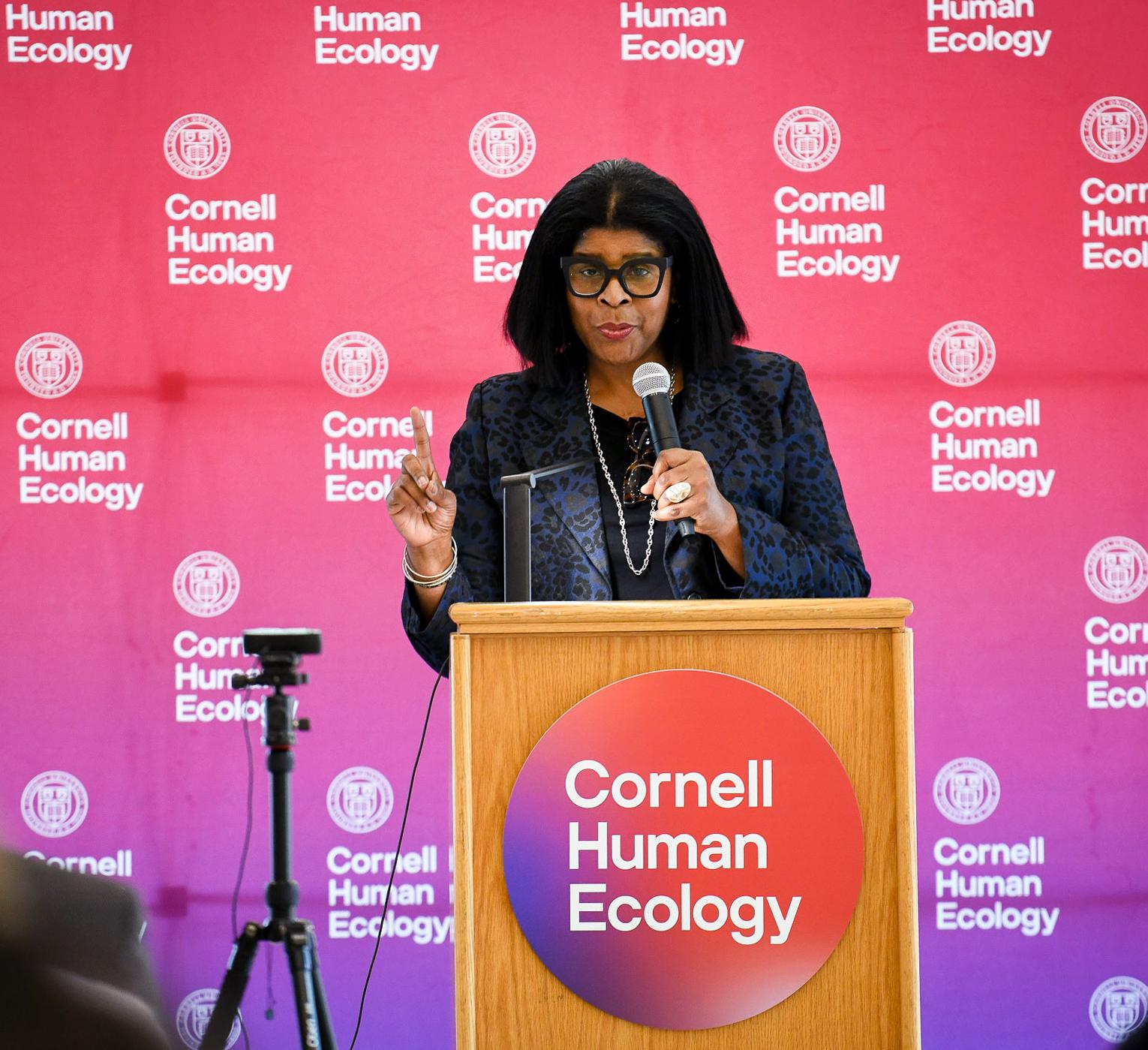
After the lecture, Sara Xayarath Hernández, associate dean for inclusion and student engagement in the Graduate School, presented Browne with the Turner Kittrell Medal of Honor, which recognizes individuals who have made significant national or international contributions to the advancement of diversity, inclusion and equity in the academy, industry or the public sector. The award is named for educators and activists Thomas Wyatt Turner, Ph.D. ’21, and Flemmie Pansy Kittrell, M.A. ’30, Ph.D. ’36, the first Black man and woman to earn doctoral degrees from Cornell.
On Friday, Browne helped a group of CHE faculty, staff and students think about how to build partnerships in their own work during her interactive workshop. She used the metaphor of a Cuban round dance called salsa rueda, in which couples form a circle and work together to dance in complex patterns, coming in and out of the circle and switching partners. Attendees discussed the tactics they could use to “enter the dance floor,” or identify and contact partners; “follow,” or prepare new partners and provide the support they need to collaborate; and “lead,” or involve partners in project planning, implementation and evaluation.
“The goal of this workshop is to develop and share tactics to identify and cultivate ‘wallflowers,’ bringing the right people to the right table at the right time,” she said.
While she was at CHE, Browne visited the Bronfenbrenner Center for Translational Research and discussed potential opportunities for collaborating with faculty, especially those working in New York City.
"Dr. Browne has been engaged with our university as a board member at the Cornell Institute for Healthy Futures for the last several years," said Mardelle Shepley, Janet and Gordon Lankton Professor in the Department of Human Centered Design and director of the institute. "She and her staff collaborated on the research of two doctoral students, engaged an undergraduate student as an intern, and participated in the review of student work in our design studios. During her recent visit, she met with several CHE faculty interested in collaborating with Ronald McDonald House on research projects."