Designing Hybrid Skins: An Exhibition by the Hybrid Body Lab
Human Ecology Building, Jill Stuart Gallery
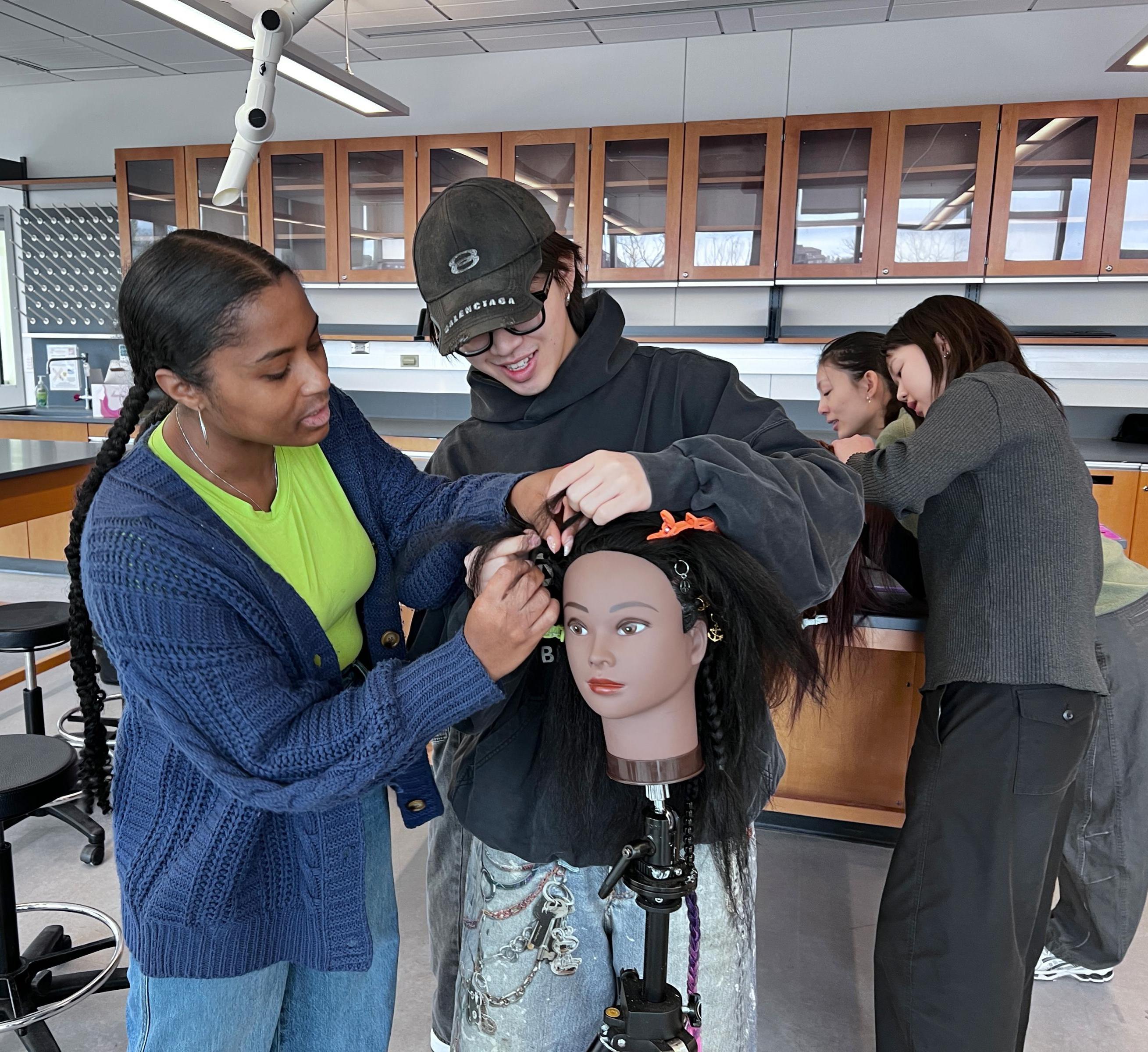
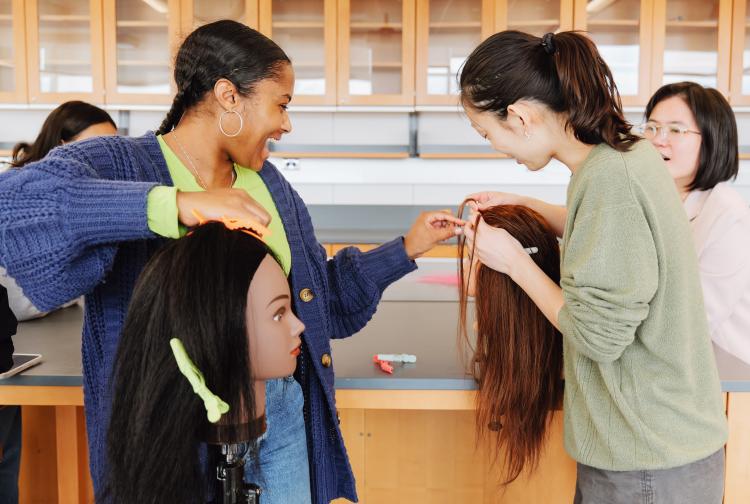
Equipped with rat tail combs, hair clips and braiding gel, Lauren Hooks begins the workshop by explaining the purpose of each tool. Then, with patient precision, she guides each student as they try to braid a mannequin’s hair.
Hooks is a hair artist based in Atlanta, Georgia. She specializes in braiding, blending historical and cultural traditions with her own creative vision to create novel, wearable art. Her designs have featured in both film and fashion. She visited Cornell for two months as the 2026 Hybrid Body Lab Artist in Residence.
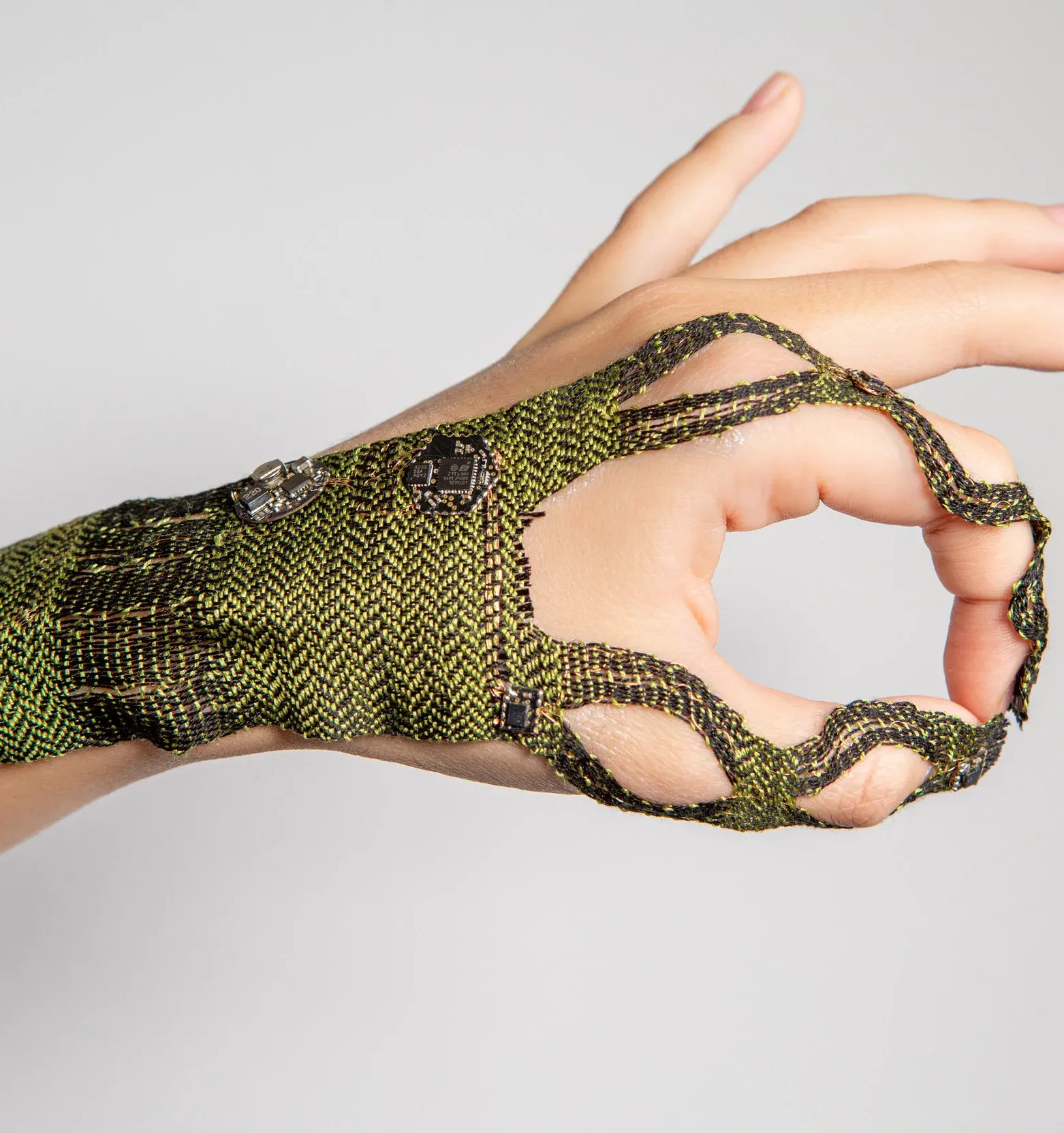
Directed by Cindy Hsin-Liu Kao, associate professor in the Department of Human Centered Design, the Hybrid Body Lab invents materials, processes and tools for crafting technology on and into the body surface. The residency enables artists and researchers to combine on-body design with emerging miniaturized technology.
“Wearable computing remains largely confined to academia,” said Kao. “It often overlooks the deep expertise of on-body artists such as hair practitioners. This residency centers those perspectives, especially around hair as a culturally significant site of personal expression.”
Hooks and Kao’s team explored how to leverage braids as a platform for wearable technology.
Hooks gave public talks and lectured in Human Centered Design classes. She demonstrated braiding basics, how to work with straight and textured hair, and how to design for the spherical geometry of the head. She also attended campus events like the Cornell Fashion Collective spring runway show and met with students in the Black Student Empowerment office.
She said she wanted to build community despite her short stay. “Hair styles, materials and care are constantly evolving and I’m excited to contribute to that growth,” she explained.
“It’s been really fulfilling learning from Lauren through her workshops and bouncing ideas off each other in the lab,” said Melody Xu ’25, a human biology, health and society major. “Lauren gave me insight into the deep history, culture and future possibilities with hair. She is innovative and passionate about how the lab technology can be integrated into her art and to benefit users.”
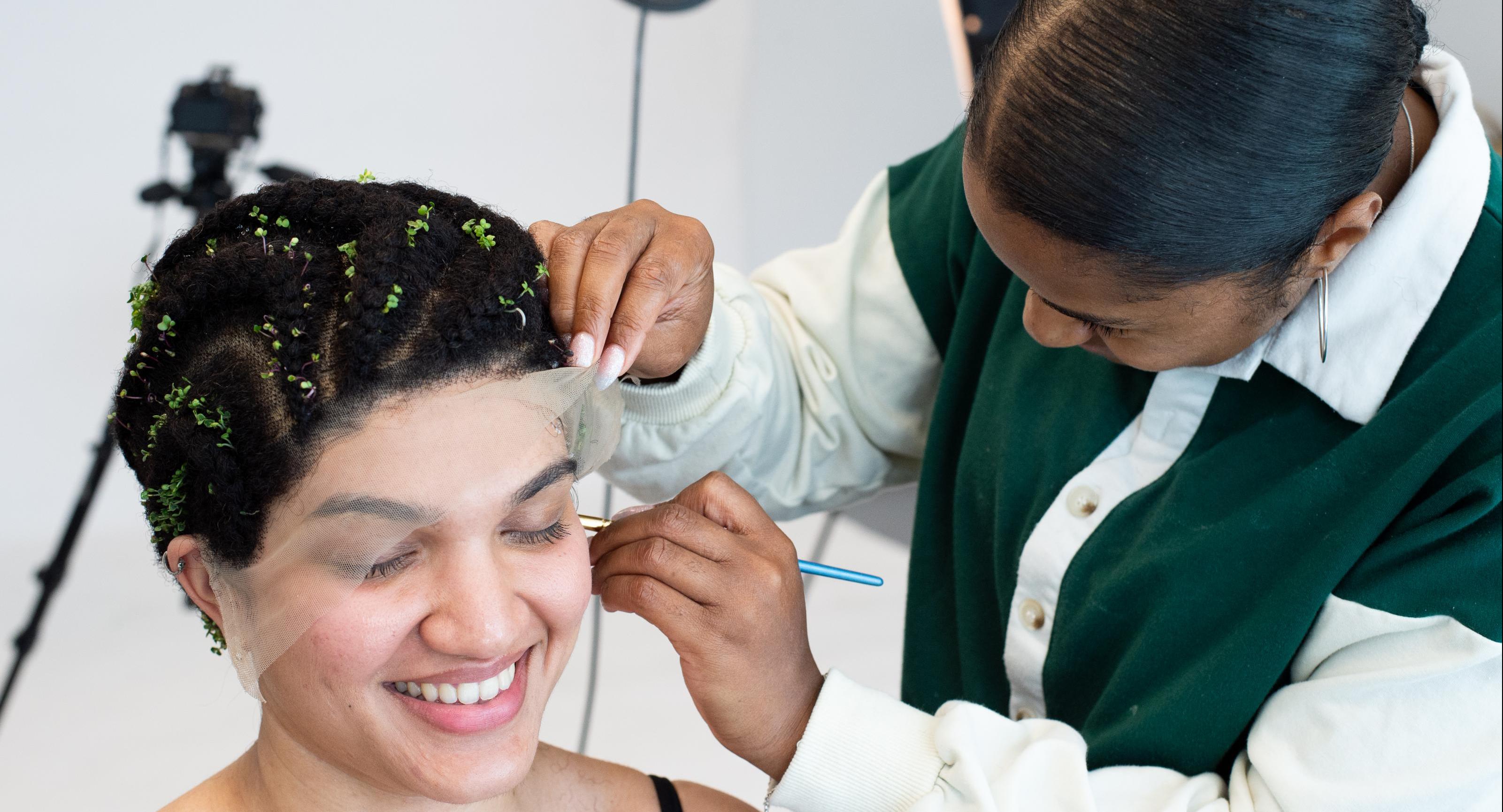
Lauren Hooks applies Garden Rows to model Ashita Singhal. The research project explores hair as a hydroponic environment and serves as an homage to Hooks’ ancestors, who braided seeds into their hair during the transatlantic slave trade. Photo by Jingwen Zhu.
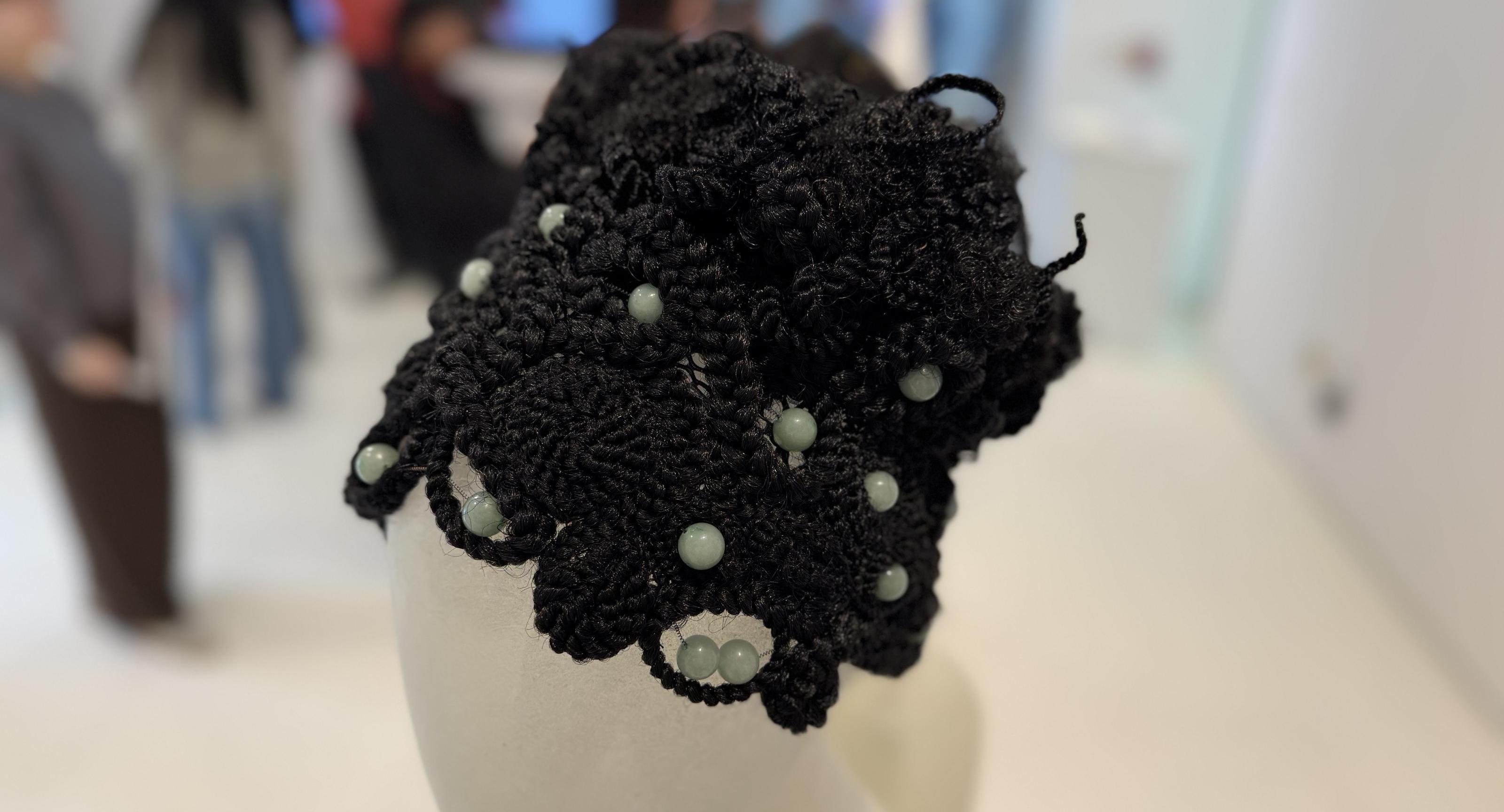
Dancing Hair on display in the Jill Stuart Gallery. This research project blends ancestral styling and therapeutic design for headache relief. Photo by Marisa LaFalce.
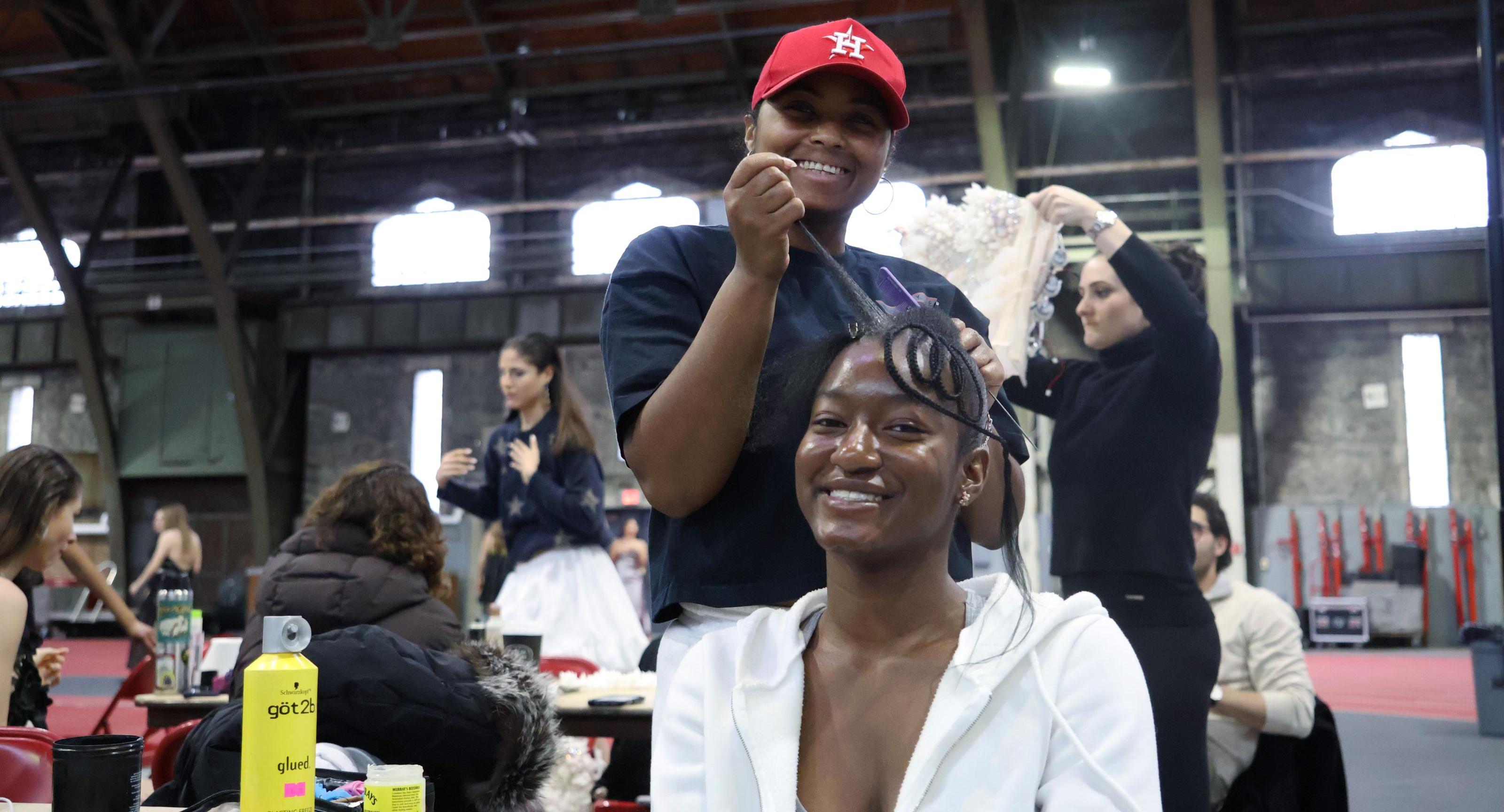
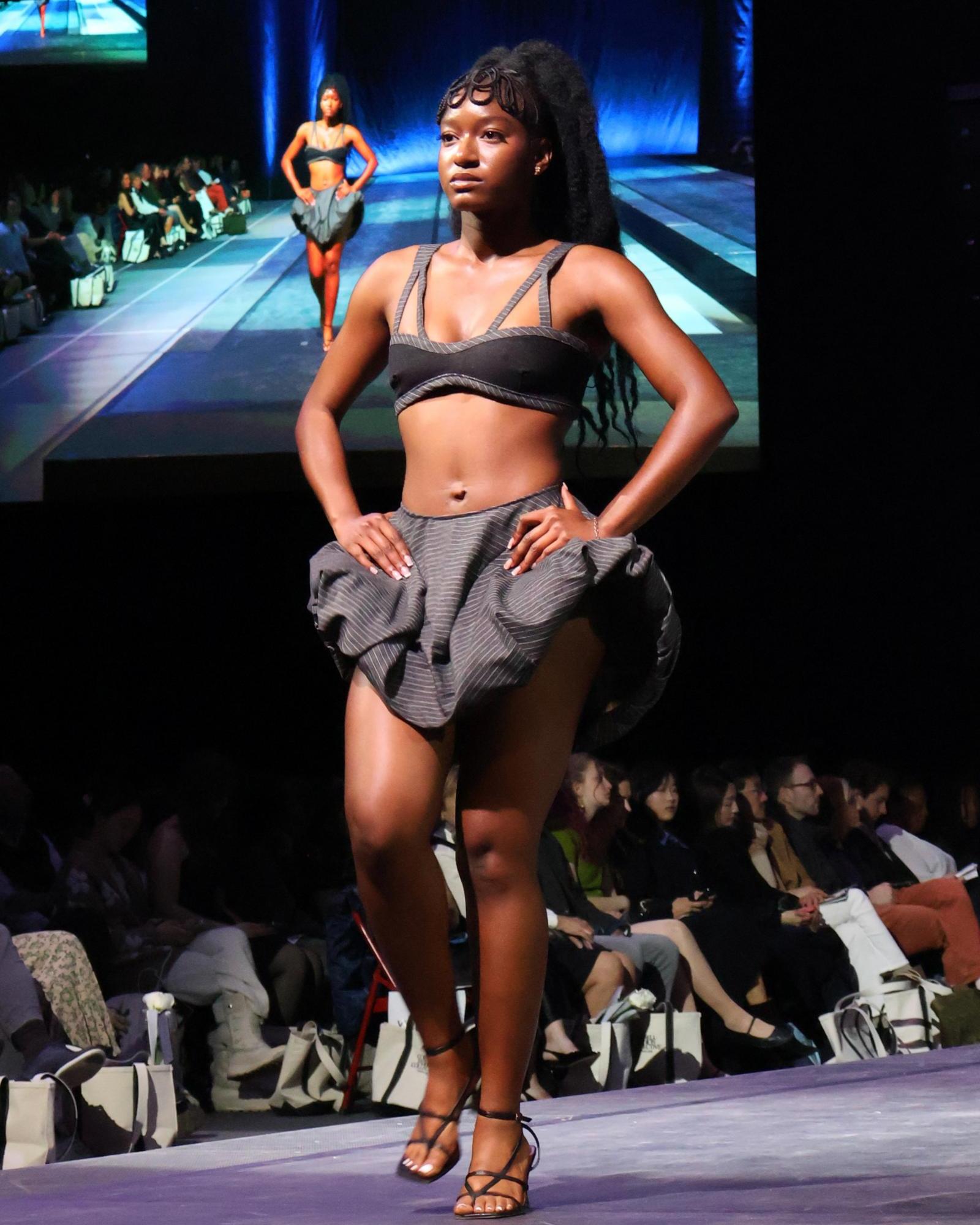
Abisola Ayoola ’28 designed two hair‑inspired looks for the CFC spring runway show. After a chance meeting in the CHE Commons, Hooks agreed to braid the models’ hair to complete the runway looks. Photo by Galib Braschler.
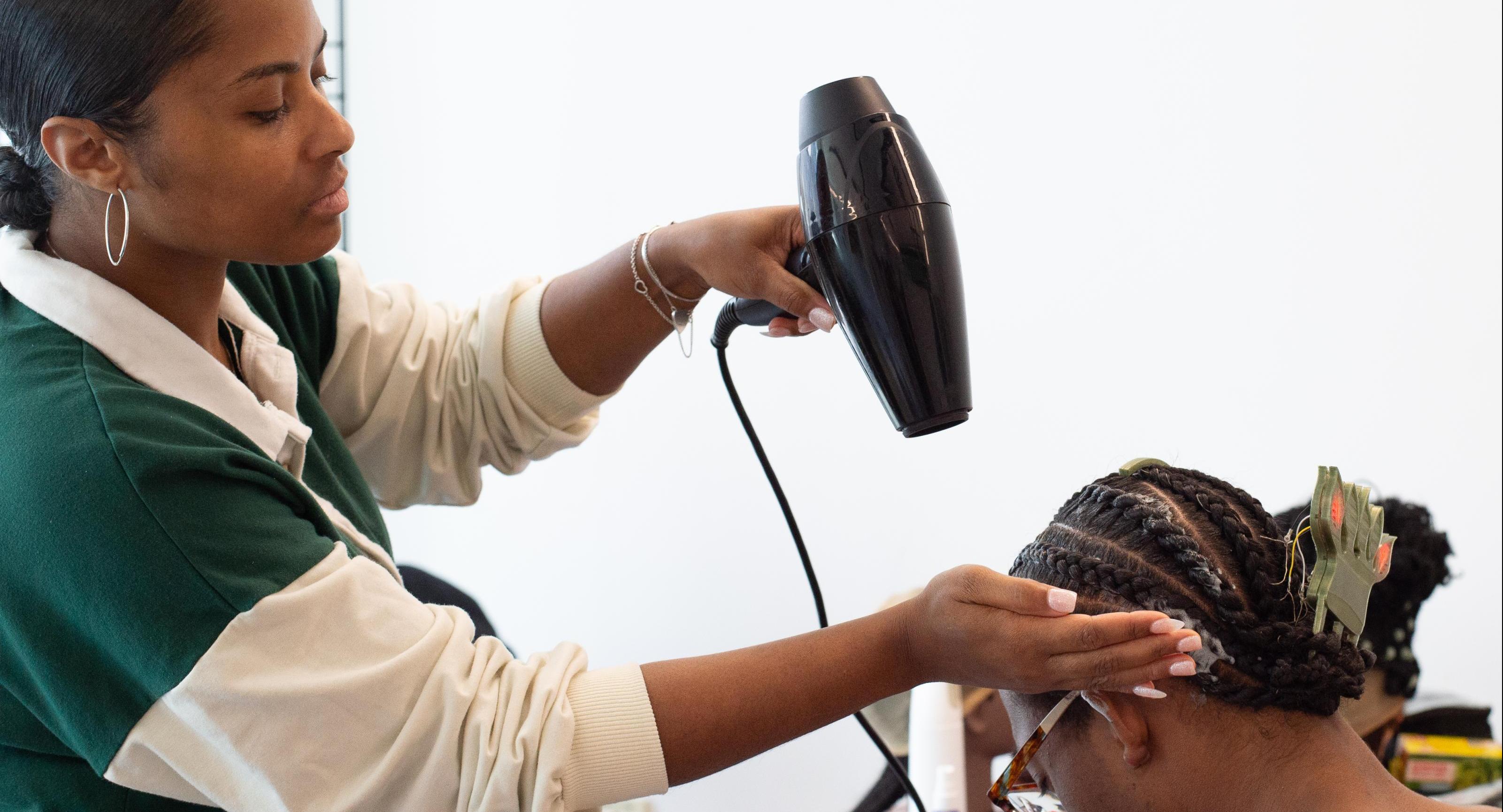
Hooks tests Crown Sense a hair sensing system modeled by Triston Edwards. Tight braids limit airflow and can create an environment that's hospitable to mildew. The hair pick features LED lights that alert the wearer to moisture changes. Photo by Jingwen Zhu.
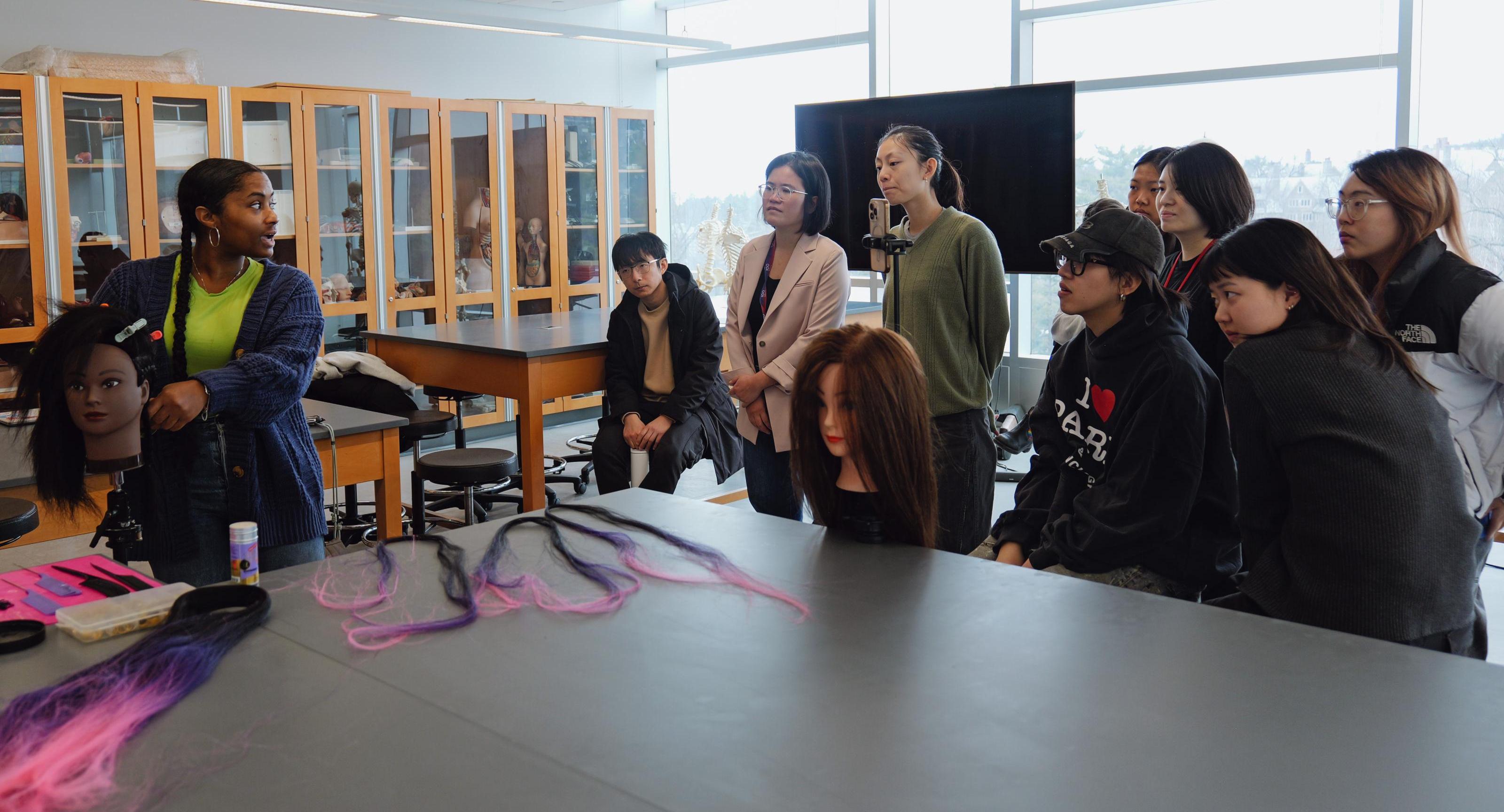
Lauren Hooks leads a skill session for the Hybrid Body Lab team. During her residency, Hooks gave public talks and lectured in Human Centered Design classes. She also participated in campus events and said she hoped to build community despite her short stay. Photo by Margaret Tsai.
Hooks developed three projects with the lab team during her residency.
Reto Chen, a student in the Design Tech master’s program, works as a research assistant in the lab. He supported Hooks, including 3D modeling and printing for the projects.
“As an artist and a designer, it was fascinating to see how Lauren entered the space, bringing her expertise and merging it with the lab’s technology,” Chen said. “Finding that sweet spot that pushes both collaborators’ work further — I’m glad that I could be a part of that.”
Delicate microgreens peek out from braided cornrows. “This project is an homage to my ancestors,” Hooks said. “During the transatlantic slave trade, they began their journey by braiding seeds into their hair. I am symbolically completing their journey by growing seeds in the hair.”
Emily Fan ’26 a fiber science major and Jingwen Zhu ’26, Ph.D. in human behavior and design, taught Hooks how to wet-spin the seeds using the process designed for LivingLoom. They coated microgreen seeds in a sodium alginate biofilm and embedded them in braided hair to sprout.
“Lauren applies her life experiences to problem solving and idea generation,” Fan said. “I love how she is building on Cornell ideas and her own inspiration.”
Black women who wear sewn-in extensions over braided foundations face a challenge. The tight braids limit airflow and can create a warm, damp environment that’s hospitable to bacteria and mold.
Hooks wove conductive threads into braids at the crown of the head. The threads detect hidden dampness and trigger color-coded LEDs on a decorative hair pick, alerting the wearer to moisture changes. Hooks drew inspiration for the comb design from African combs in the Cornell Fashion and Textile Collection.
Spiraling cornrows wrapped around green aventurine beads draw the eye across the wig. Blending ancestral styling and therapeutic design, Hooks wove shape memory alloy wire into the braids. When activated, the wire provides a scalp massage for headache relief. She was inspired by EdemaFlex, which helps patients with hand edema.
Abisola Ayoola ’28, fashion design major, is a second-year designer in the Cornell Fashion Collective. For the spring runway show, she created two looks inspired by the geometry of Black hairstyles, including cornrows, afros and parted lines.
Ayoola crossed paths with Hooks one afternoon in the CHE Commons. They struck up a conversation about Hooks’ craft, which quickly turned into a creative partnership. Hooks braided both models’ hair to complete the runway looks.
“What I love about Lauren's work is that she shows braiding is an art form — something that isn’t always recognized,” Ayoola said. “As a Black woman, my braids are one of the first things people see. They’re wearable art, a way to express yourself through color and style, and such an integral part of culture.”
Ayoola is of Nigerian descent. Since coming to Cornell, she has been exploring new hairstyles, like koroba braids, a traditional Yoruba style.
“It’s a great way to send a message about yourself without saying anything at all,” she said.
The Hybrid Body Lab artist residency is supported by the National Science Foundation.
Human Ecology Building, Jill Stuart Gallery