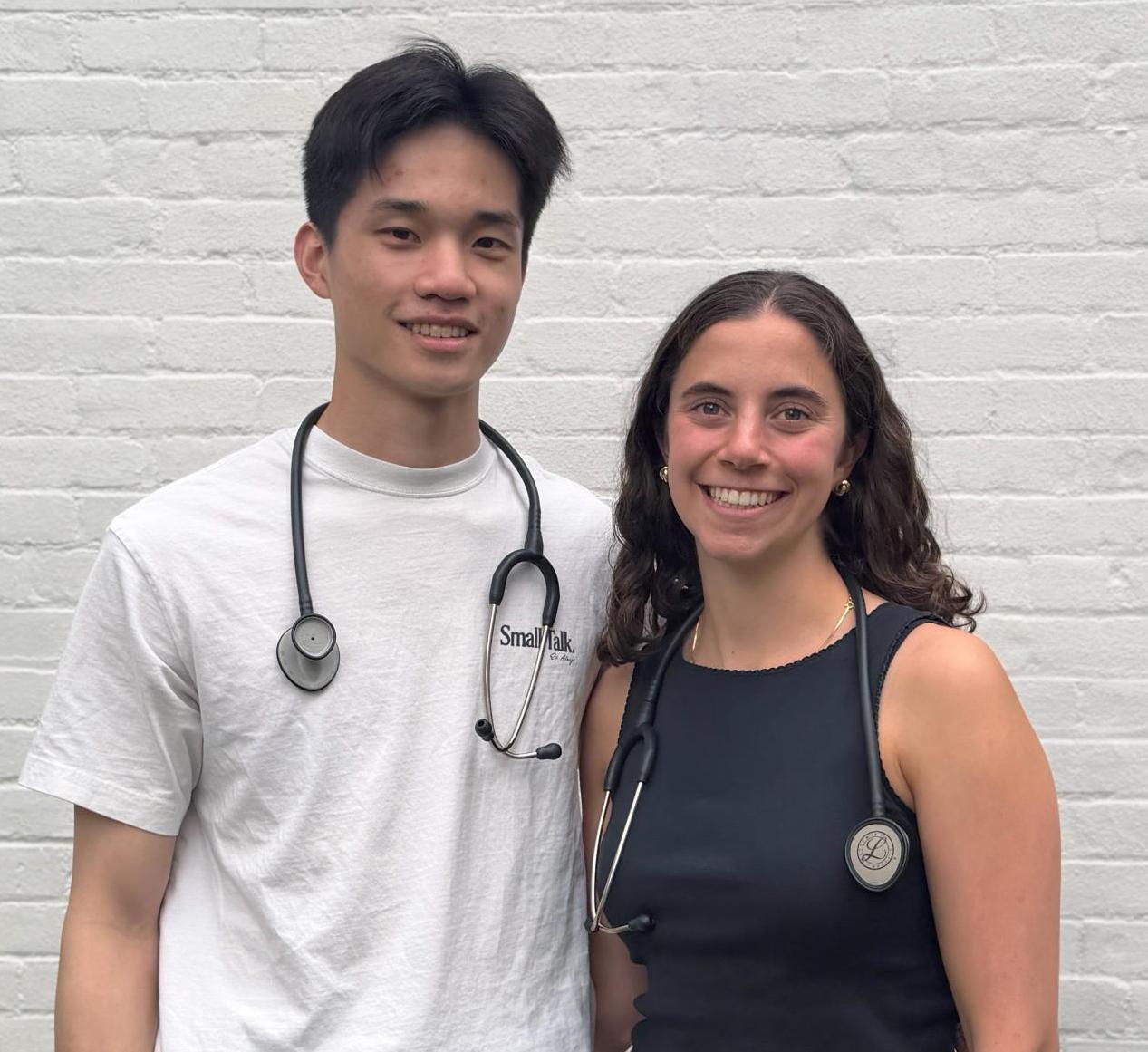
Every week, Rebecca Herzberg ’26 and Derek Liang ’27 lead a team of students providing preventative health checks at Loaves and Fishes, an Ithaca community kitchen. 

Hertzberg and Liang are certified EMTs. They train and oversee the students, who check guests’ blood pressure, vision, and blood sugar. If results are concerning, they refer guests to the Ithaca Free Clinic. Many visitors to the soup kitchen are on Medicaid or Medicare or do not have health insurance or a primary care physician.

The students are members of PATCH, the Pre-professional Association Toward Careers in Health. With 200 active members — many of whom are CHE students — the student organization offers exposure to health careers, fellowship and mentoring in a supportive environment.

“Our strength is that PATCH fosters community for everyone,” said Amanda Brandwein ’26, PATCH co-president and Human Development major. “Anyone can be involved in PATCH, and we have so many moving parts to cater to everyone's interests.”

Weekly meetings include instructional sessions such as suturing and Narcan and overdose prevention; advising and alumni networking; and service opportunities like packing period kits and making cards for St. Jude’s Children’s Research Hospital. 

“I joined PATCH my freshman year because I was looking for pre-med guidance and community,” said Liang, a Human Biology, Health and Society major. “The general body meetings are flexible, and you can attend what interests you.”
 

Posted on
04/29/2026
Author
Marisa LaFalce
Tags
Holistic Human Health, Donor, Student Life

Peer mentoring and community partnerships help students prepare for health careers
Each year, PATCH members sign up to be a mentor, mentee or both. Some mentoring relationships last only a few weeks and others evolve into friendships. For first-year and new transfer students who are adjusting both to Cornell and to the rigor of the pre-med curriculum, upper-level guidance is invaluable.

“The mentorship that I have gained from PATCH has been unmatched and I made a lot of friends in the pre-health community this way,” said Brandwein, who is headed to medical school after graduation. “When I first transferred, this was a great way for me to find community in an academic sense.”

Students who want to engage in longer-term, health-related service can join one of four subcommittees: 
•    Providing health screening at Loaves and Fishes
•    Building science kits to donate to area elementary schools
•    Visiting the Greater Ithaca Activities Center to connect with youth
•    Visiting local senior living centers to host activities and provide companionship

“Community partnership is core to PATCH and really emphasizes the Human Ecology experience beyond the classroom,” said Shaun Gendrue, CHE assistant registrar and PATCH advisor. “It also provides valuable experience for students as they seek to enter the health profession of their choice.”

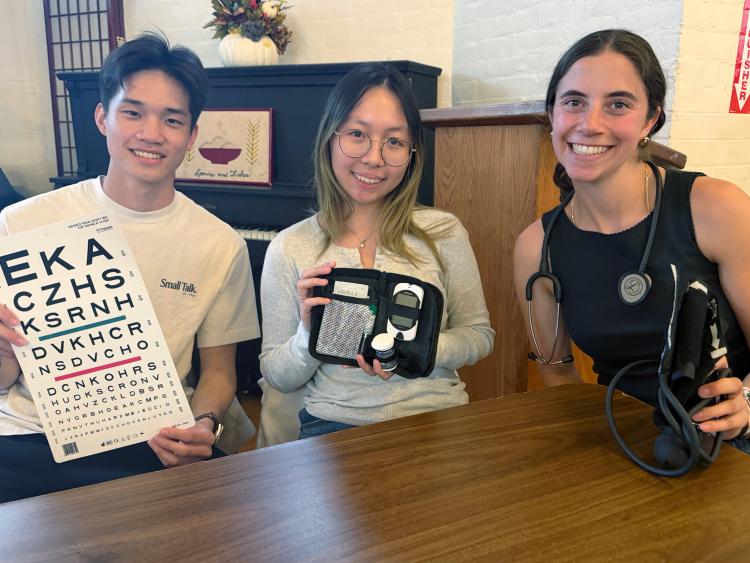
3 students at loaves and fishes hold the blood sugar, eye, and blood pressure tests
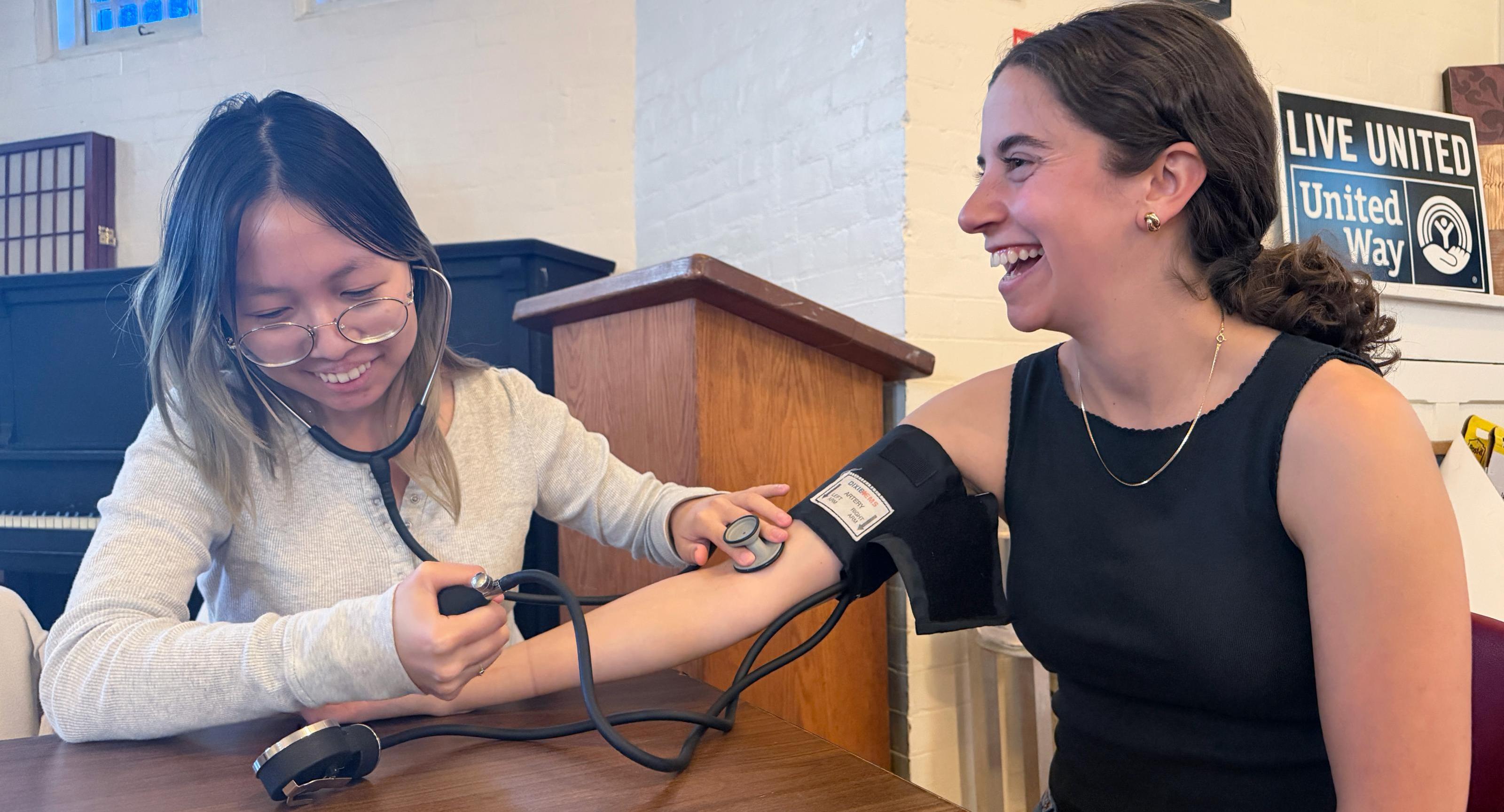
A woman takes the blood pressure of another woman

PATCH member Rachel Ng '27 takes Rebecca Herzberg's '26 blood pressure at Loaves and Fishes, an Ithaca soup kitchen.

Patient-centered care begins with connection

As inviting aromas fill the parish hall at Loaves and Fishes, the students greet and chat with guests, regardless of whether they are interested in health screening. 

“We are not serving in an official medical capacity,” said Herzberg, a Global and Public Health Sciences major who plans to pursue healthcare policy after graduation. “We conduct health checks and provide resources and referrals as a community service.” 

Liang and Herzberg consult with the free clinic for medical guidance. With clinic input, they expanded their screening services this semester to offer blood sugar testing using at-home care kits. Guests often thank students for their efforts, even if they do not participate in the screenings. 

“In my work as an EMT, our patient interaction is limited to transporting them from their house to the hospital,” Liang said. “The PATCH experience is so different because we go every week and we really foster connections. It’s cool to build relationships with people in the community.”

Last year, Herzberg checked a guest’s blood pressure. “It was really high,” she said. “We considered it a hypertensive crisis.” They connected him with the free clinic to get the help he needed. “He came back a couple weeks later and said we helped save his life.” 

The experience began an ongoing relationship. He regularly stops by their table to chat, sharing life updates and family photos.

“My best experiences are the guests who come and talk to us,” Liang said. “Not only medical issues, but to be someone to talk about their life with.”