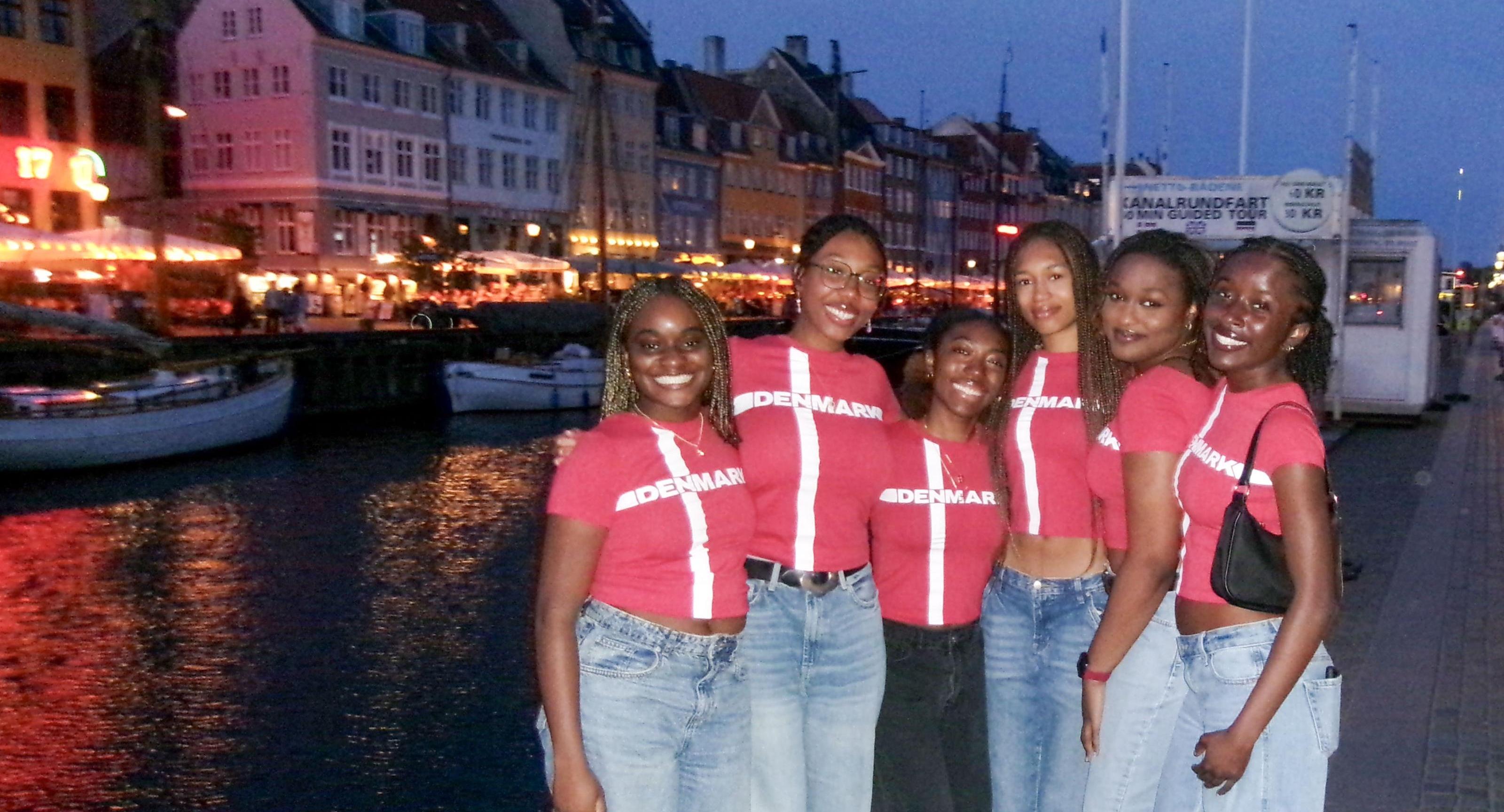
Oore Ogunyinka didn’t speak much Danish when she began working at a social psychiatry café in Copenhagen during her semester abroad. Most of the older adults there spoke little English, and many were navigating loneliness, depression or anxiety. 

Some conversations lasted only a few minutes. Other times, the room fell quiet as Ogunyinka searched for another way to connect. She remembers leaving some sessions feeling defeated. 

So she and her partner got creative. They organized activities like painting tote bags and doing puzzles and chair yoga. 
“Communication went beyond just language,” Ogunyinka said. “We had to think about what we had in common.”

This May, Ogunyinka will graduate with a degree in human development. Throughout her time at Cornell, she has explored concepts of community, belonging, and the kinds of spaces where people feel emotionally supported through research and work stretching from Ithaca to Nigeria.

Exploring how context shapes the human experience

Ogunyinka arrived at Cornell interested in how culture and identity shape the way young people understand themselves and move through the world. 

She was born in Nigeria and grew up partly in South Africa before immigrating to the United States with her family at age 12. They settled in Philadelphia, where her parents hoped to create greater educational opportunities for their children. 

Posted on
05/21/2026
Author
Galib Braschler
Tags
Community Engagement, Social Impact + Justice, Student Life
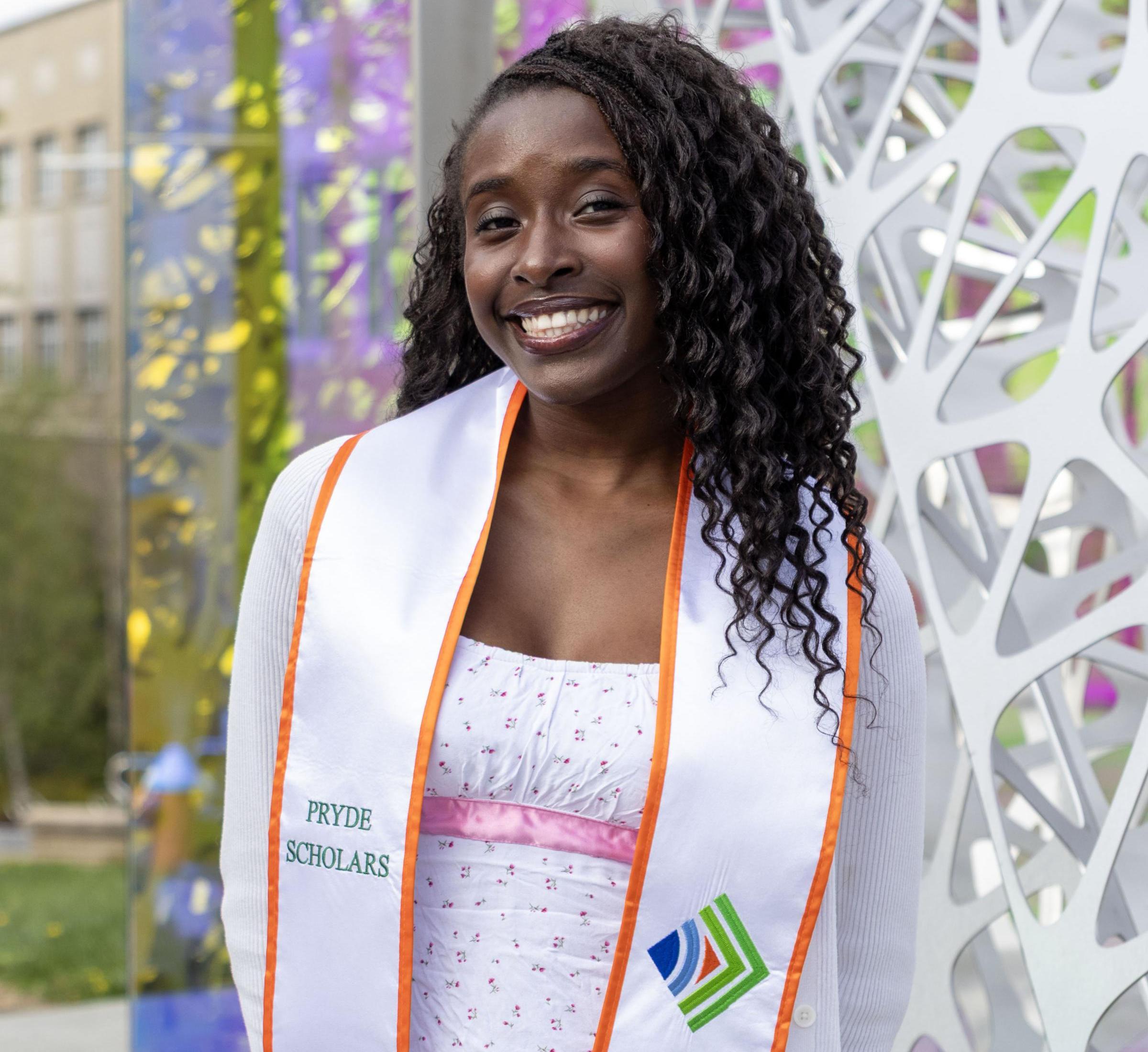
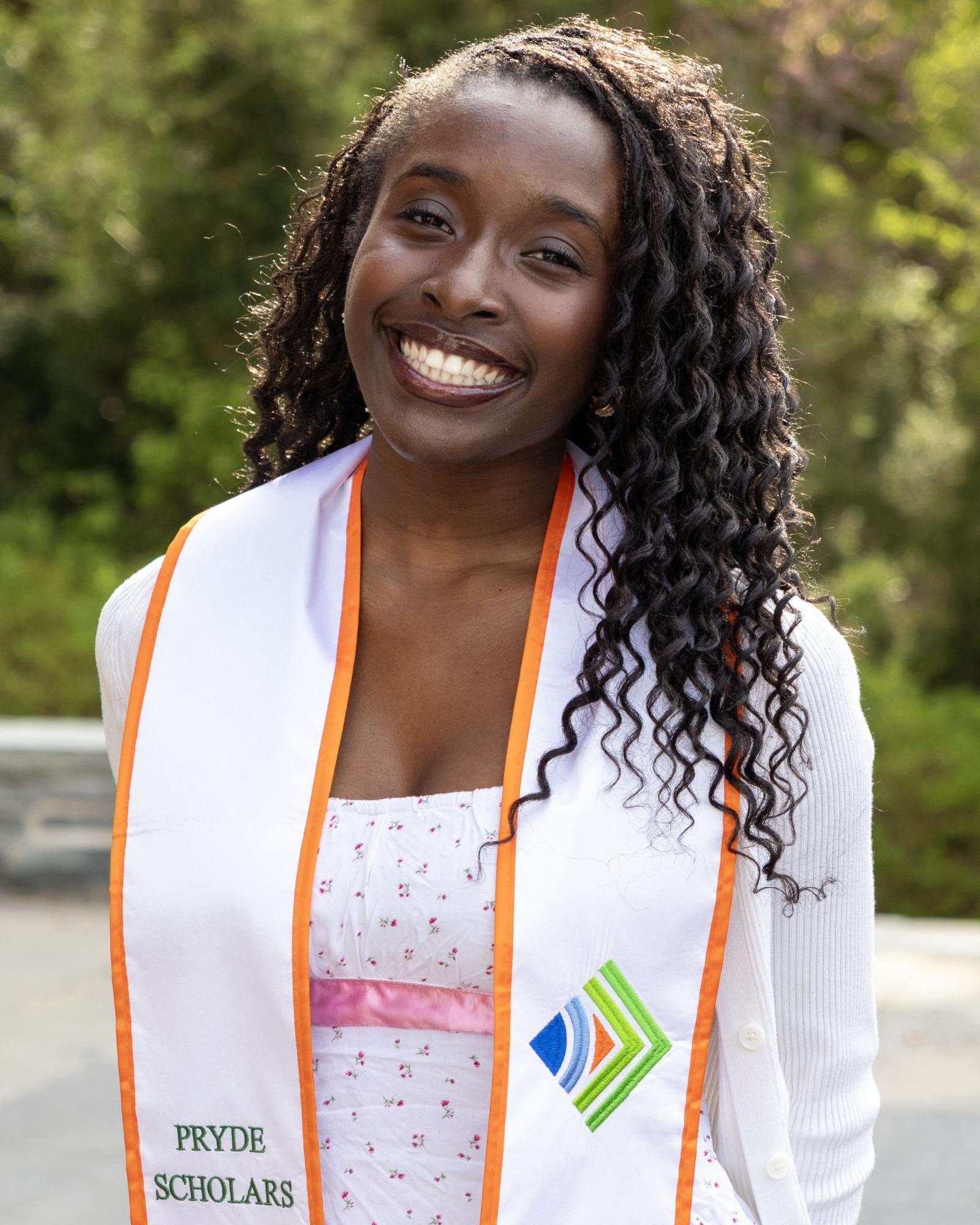
A vertical portrait of Oore Ogunyinka

Growing up in a large immigrant family, Ogunyinka noticed how concerns surrounding mental health were often left unspoken or even stigmatized.

“There aren’t always spaces where you can talk about feeling sad or feeling down,” she said. “I was grateful to have a supportive family, but I also recognized that wasn’t everyone’s experience.”

She originally planned to study psychology in college, but then she came across the human development major in Cornell Human Ecology. "I saw psychology, anthropology and courses exploring how different backgrounds influence child development,” Ogunyinka said. “I was like, ‘Oh, I really want to go here.’” 

In her sophomore year, Ogunyinka enrolled in Misha Ailsworth’s Black Girlhood Studies course. Ailsworth is an assistant professor of psychology who uses a cultural-assets perspective to examine how families, communities and schools shape Black girls’ mental health and wellness.

“I remember sitting in that class thinking, ‘This is everything I want to do,’” she said. 

But the idea of reaching out to Ailsworth felt intimidating. “I saw her as a celebrity,” she said with a laugh. “I didn’t know if I was able to work with her.”

PRYDE Scholars Program offers research and mentorship

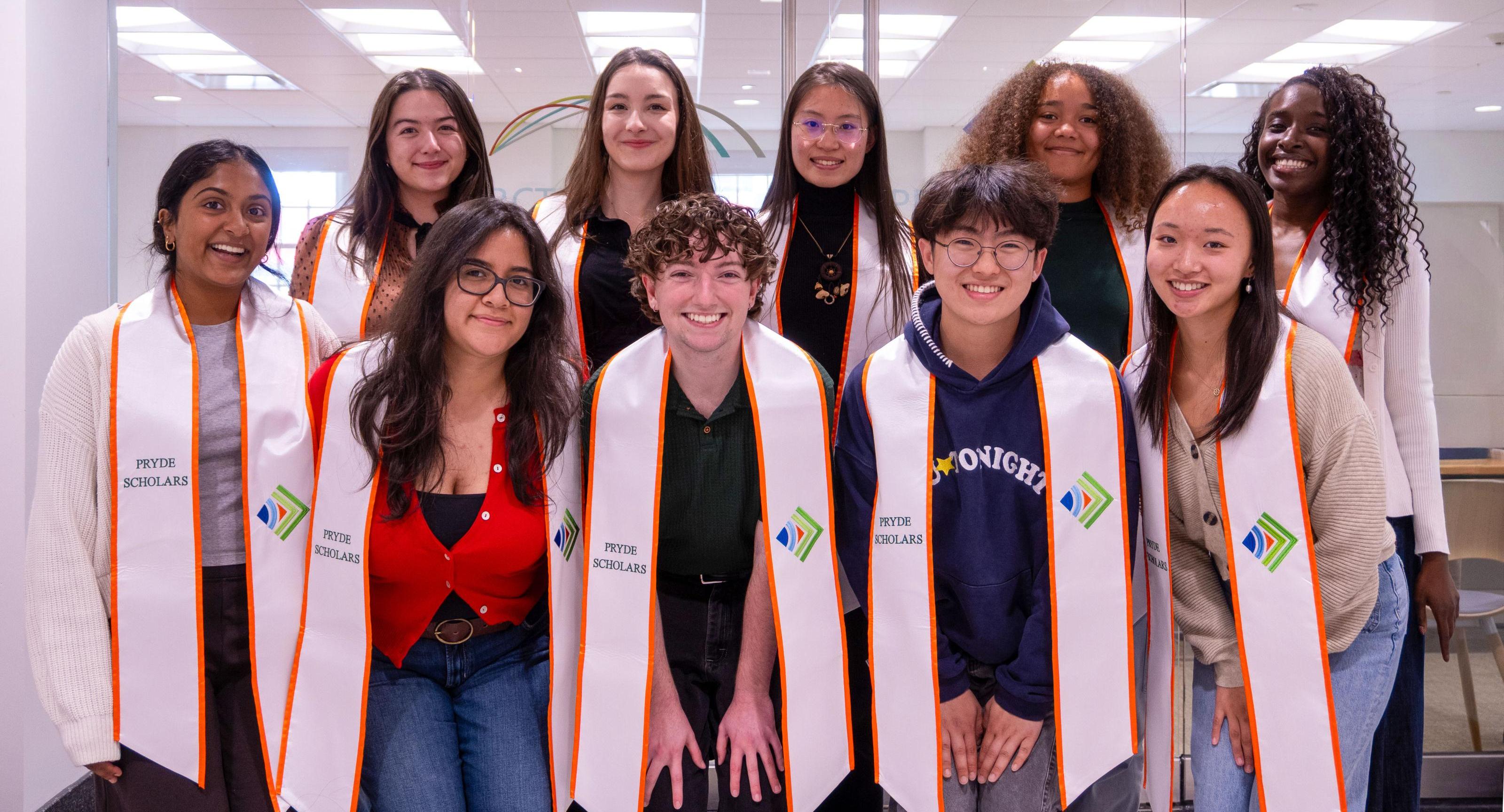
Ogunyinka eventually worked up the courage to ask about joining Ailsworth’s lab after she was accepted to the PRYDE Scholars Program. This two-year research experience connects juniors and seniors in CHE with a community-engaged and youth-focused faculty mentor to work on a research-practice partnership.

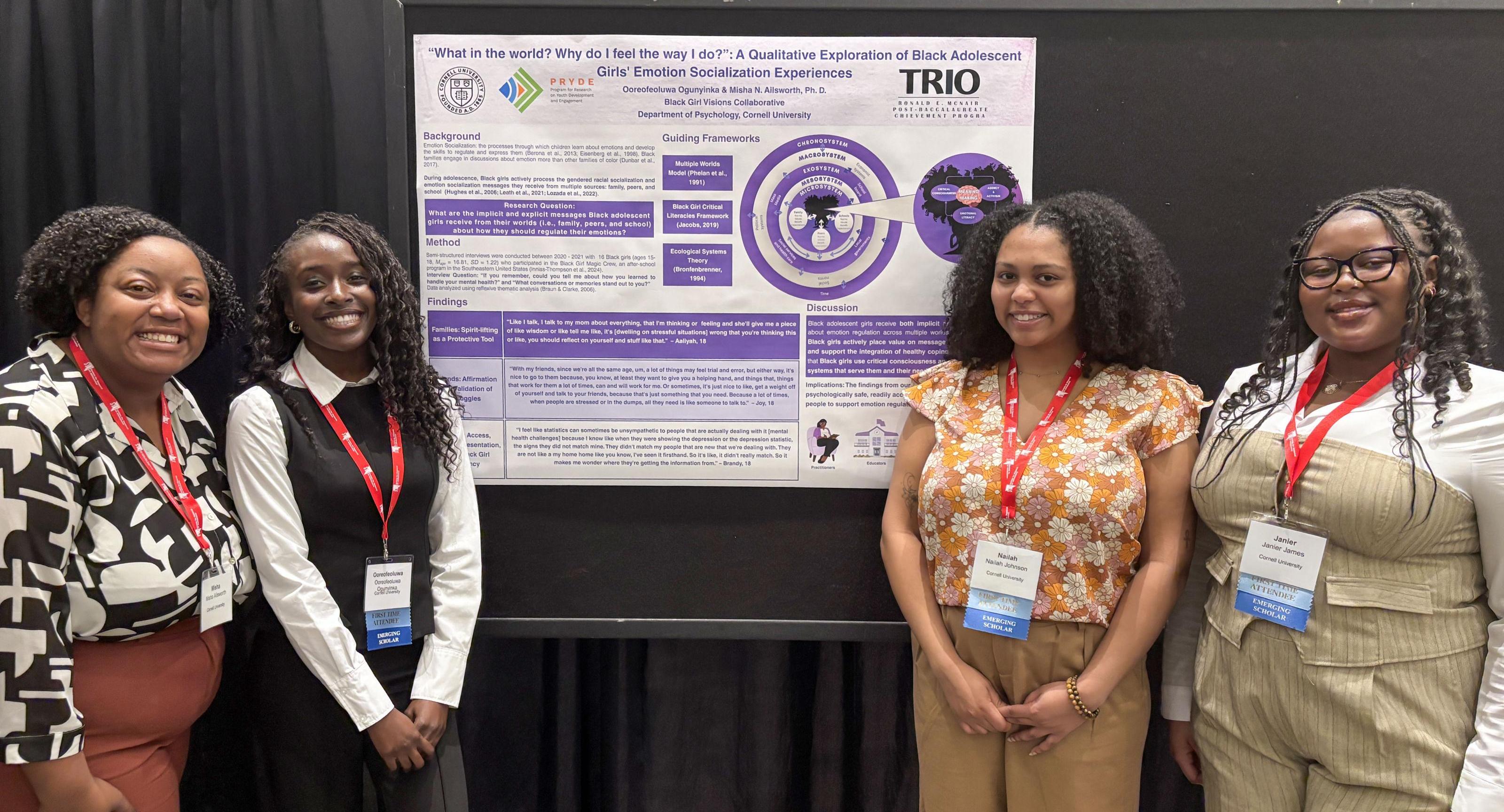
As part of Ailsworth’s Black Girl Literacies project, Ogunyinka explored how Black girls learn to regulate their emotions through the messages they receive from family, friends, school and social media. That research eventually became her honors thesis.

“Emotion regulation is one of the mechanisms that help us understand how people navigate their mental health,” Ogunyinka said.
Beyond research, she found a close-knit community of mentors and students in PRYDE who encouraged her to think deeply about youth development, translational research and community.

“There’s just so many people there who genuinely want to help you,” Ogunyinka said. “I don’t think I would have gotten this college experience anywhere else.”

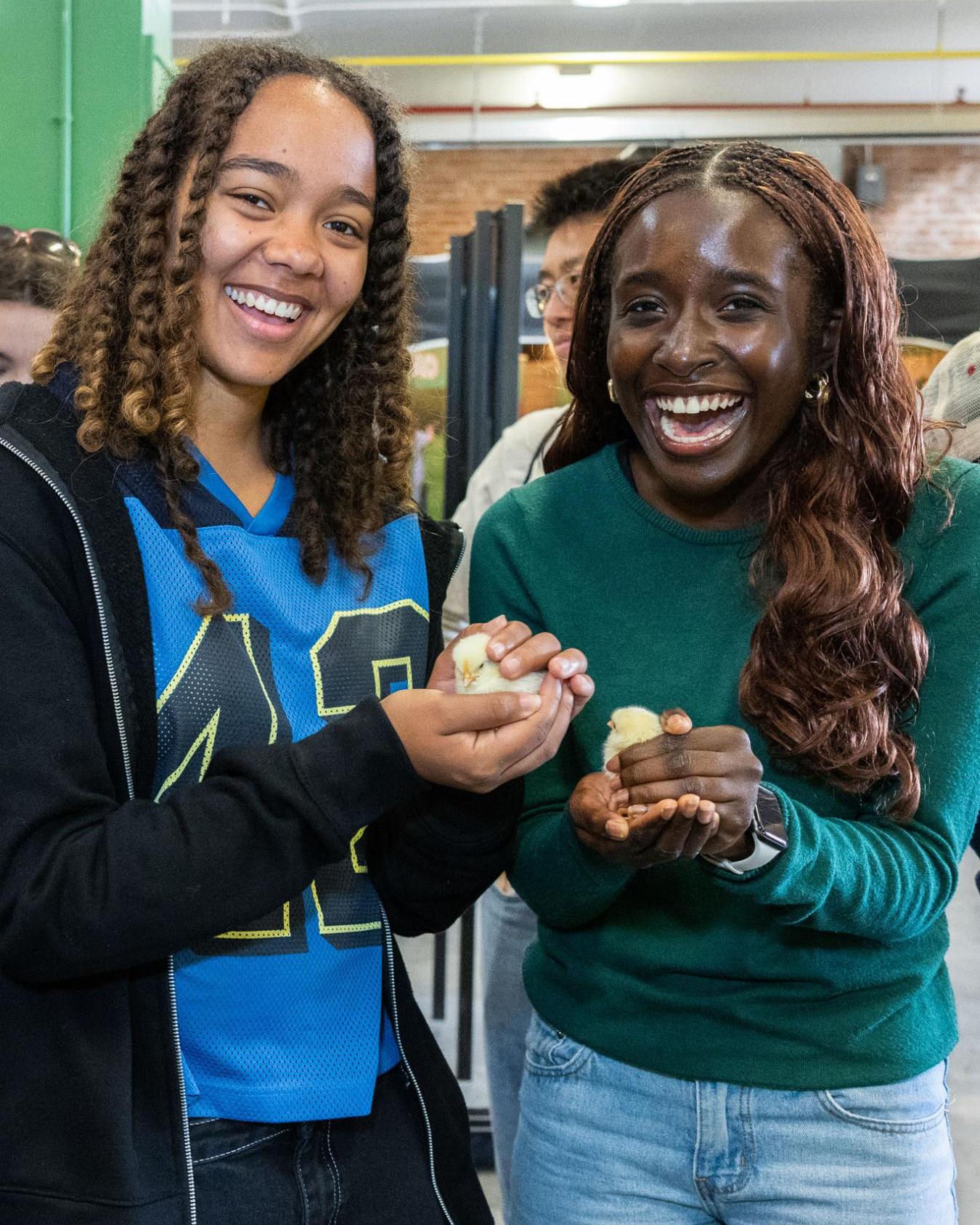
Oore and a PRYDE scholar at the State Fiar

Student club creates connections at Cornell — and beyond

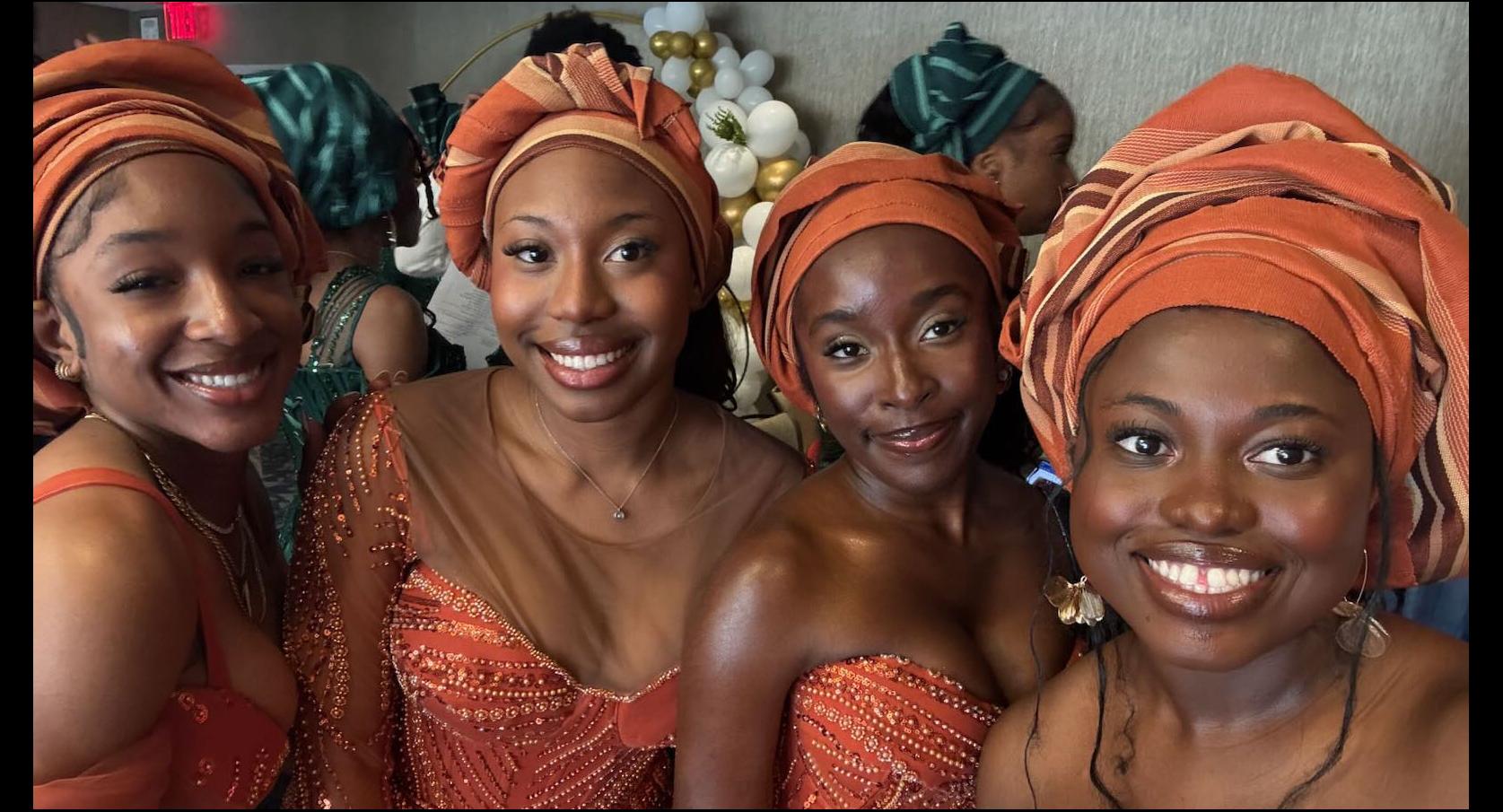
Ogunyinka found another home in the Nigerian Students Association (NSA), where she served in several leadership roles, including president.

“NSA is one space where I can just be,” she said.

Some nights, that meant cooking Nigerian food and catching up with friends after long days of classes. Other times, it meant organizing large cultural events, fundraising initiatives and conversations about supporting Nigerian women and communities back home.
Ogunyinka helped continue NSA’s fundraising partnership with the Daughters of Riches Grace Foundation, an organization in Nigeria that helps girls escape child marriage and return to school. Over the past several years, NSA has raised roughly $20,000 for the organization.

“What are we doing to impact the people we have back home?” Ogunyinka remembers asking fellow student leaders.
The work also carries personal meaning for Ogunyinka’s family, who supported one girl now attending college through the organization. “That’s something she probably wouldn’t have been able to do otherwise,” Ogunyinka said.

The questions Ogunyinka explores in research often show up in the way she thinks about community outside the classroom.
“What does it look like for Black girls to be free?” she said. “What does it look like for Nigerian women to actually breathe and be free?”
 

What does it look like for Black girls to be free? What does it look like for Nigerian women to actually breathe and be free?

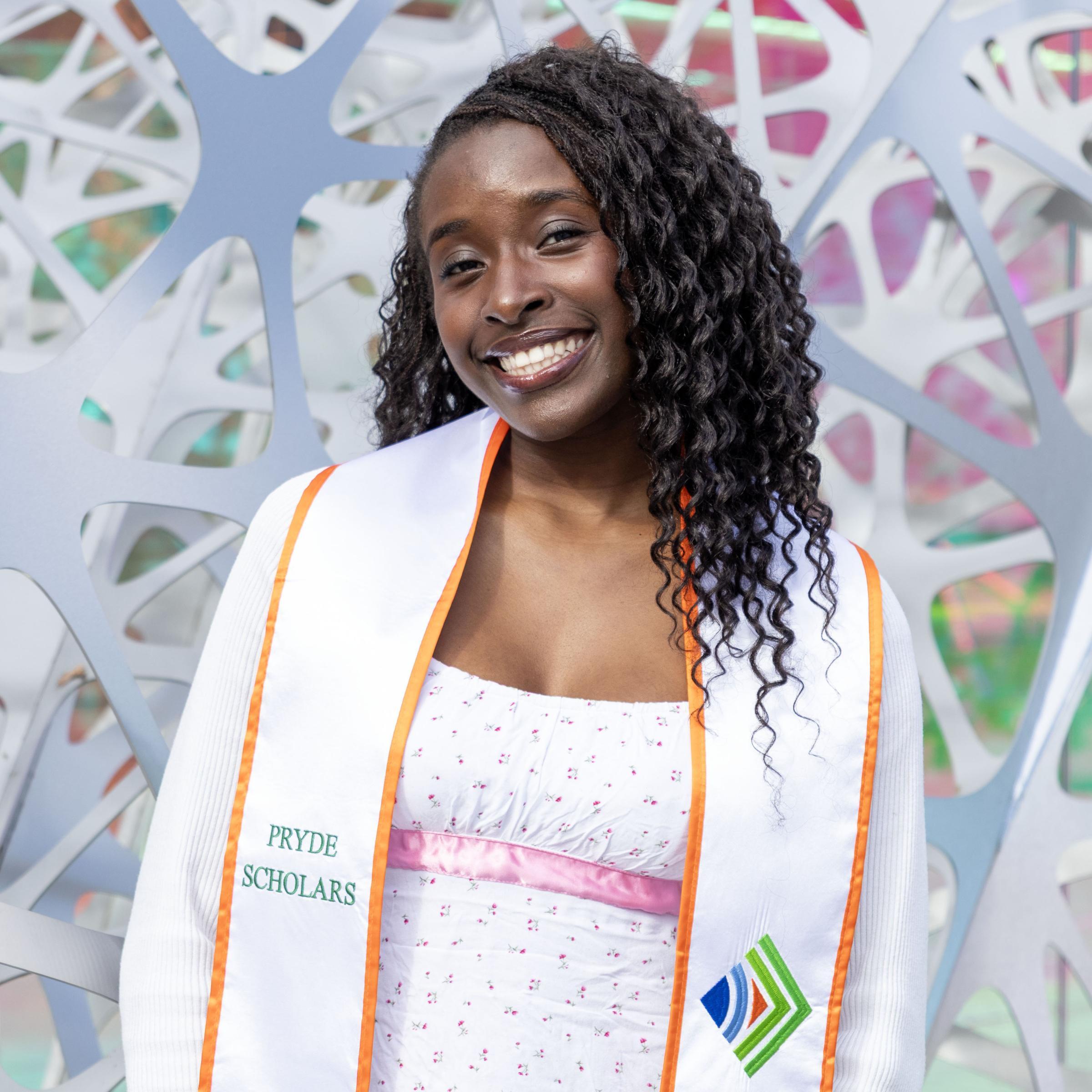
Portrait of Oore Ogunyinka
Oore Ogunyinka ’26
Human Development
Orre with members of the NSA e-board

Oore (second from right) with members of the Nigerian Student Association (NSA) executive board. Photo Provided.  

Oore with her research team in front a poster

Oore (second from left) with assistant professor Misha Ailsworth (left) and members of her research team presenting at the Society for Research on Adolescence (SRA) conference in Toronto. Image Provided. 

Oore with graduating seniors in PRYDE

Oore (top right) with graduating seniors in the PRYDE program. Photo by Juan Vazquez-Leddon.

Oore with friends in Denmark on a river

Oore (right) with study abroad friends in Denmark. Photo Provided.

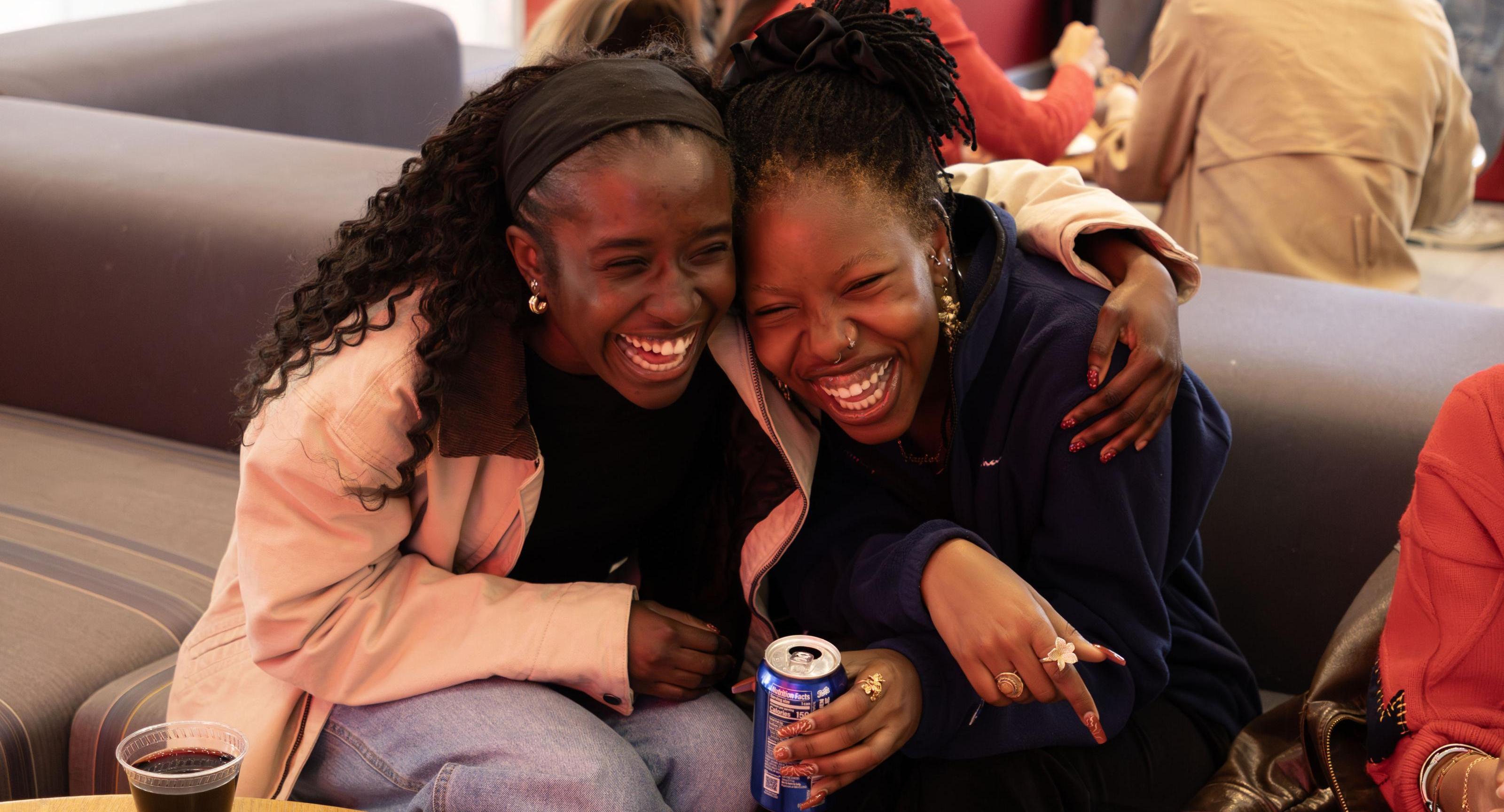
Oore embracing a friend at the CHE Senior Celebration

Oore (left) and a friend at Cornell Human Ecology’s Senior Celebration. Photo by Galib Braschler.

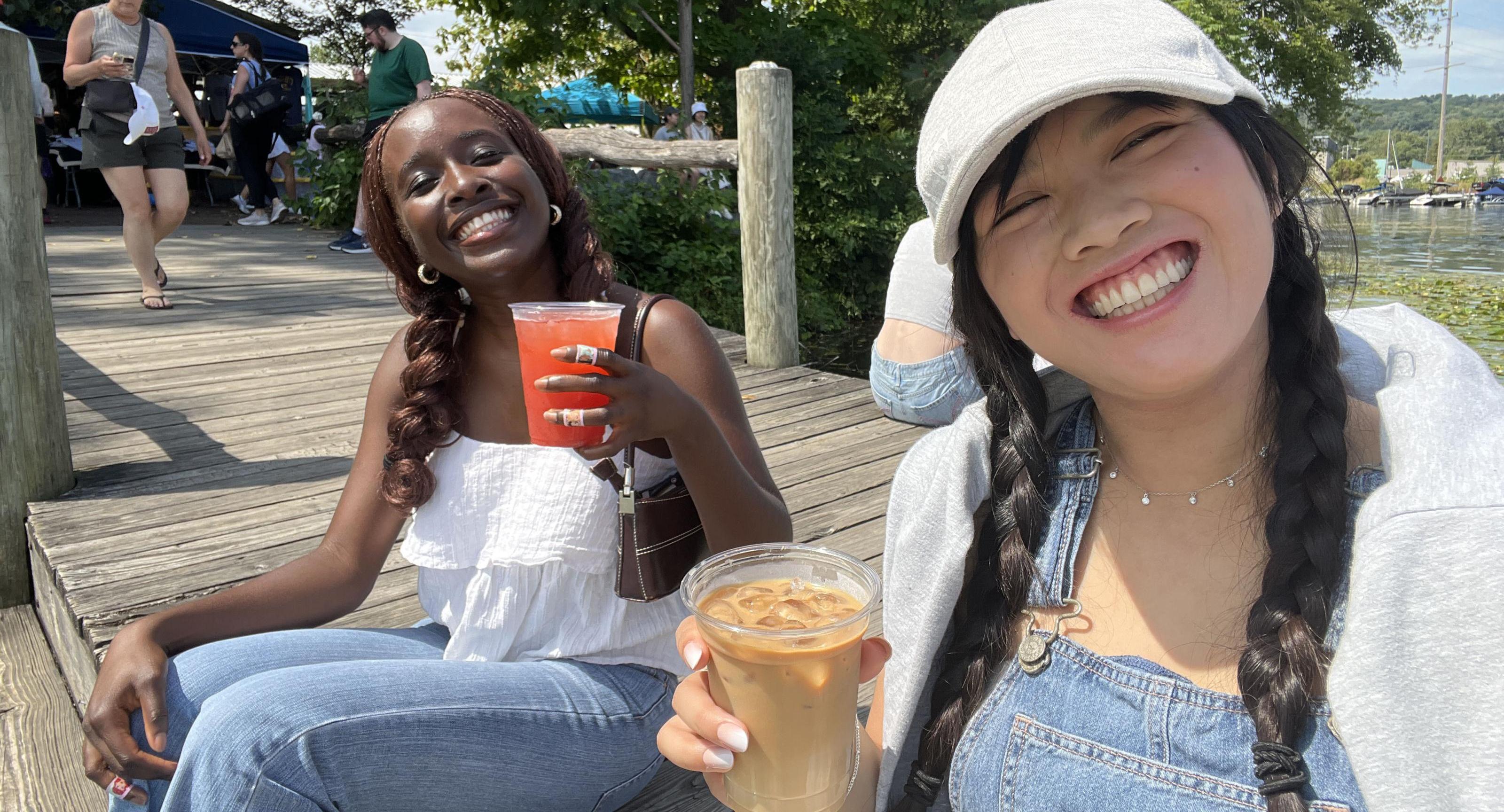
Oore with a friend sitting on a dock

Oore (left) with her first-year roommate at the Ithaca Farmers’ Market. Photo Provided.

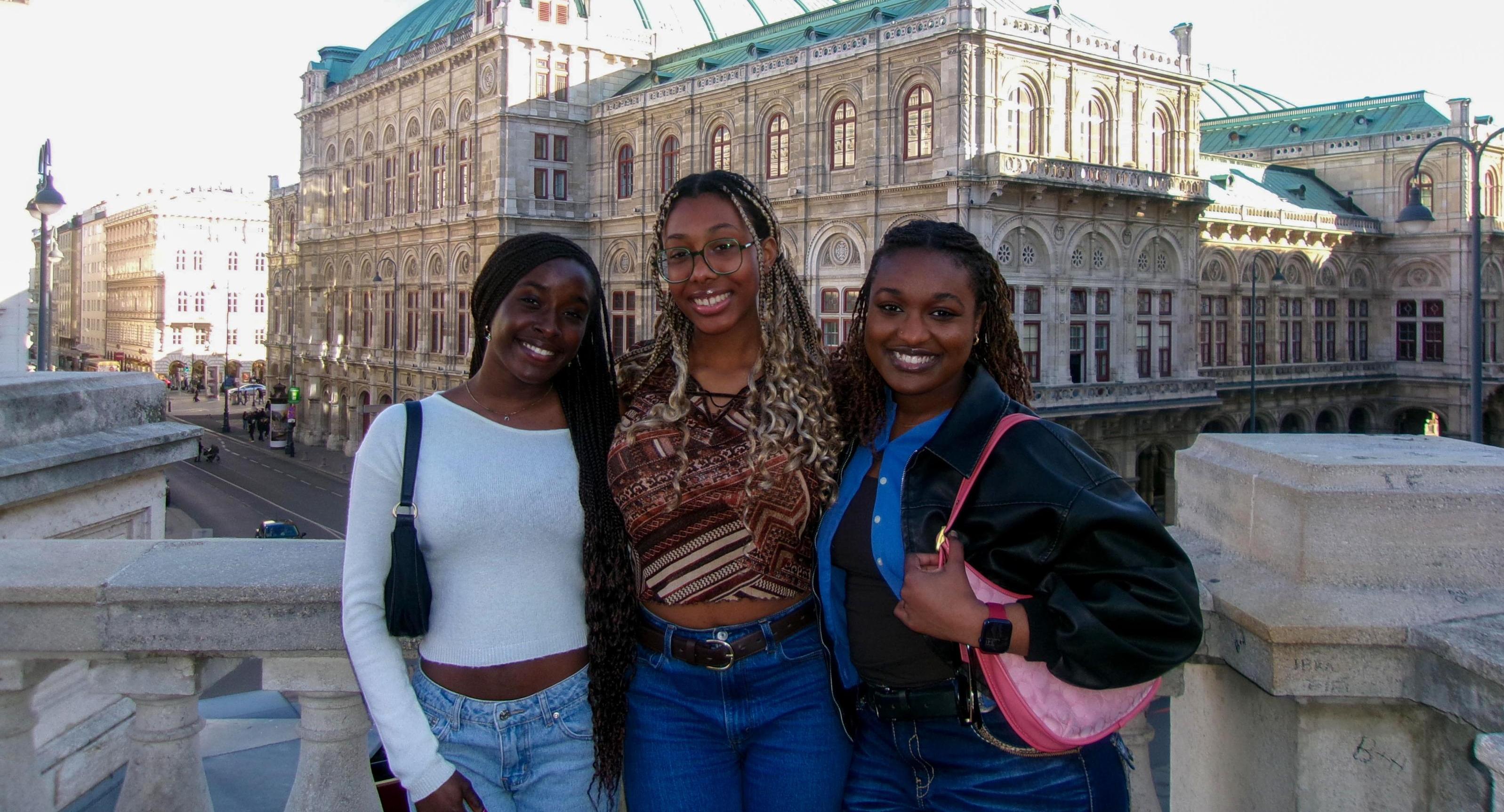
Oore with friends outside a building in Austria

Oore (left) with study abroad friends in Austria. Photo Provided. 

Growing through discomfort 

Now preparing to graduate, Ogunyinka hopes to pursue clinical research focused on Black girls with autism, a population she describes as deeply understudied. “They deserve so much love and so much care,” she said.

Looking back on her four years at Cornell, Ogunyinka said many of the experiences that shaped her most started with discomfort. Sending the email to Ailsworth. Studying abroad in Denmark. Taking on leadership roles she wasn’t initially sure she could handle.

“It’s within that discomfort that you actually grow,” she said.

Quick Questions with Oore Ogunyinka ’26

Q: What advice would you give to other CHE students? 

A: Go to your professors' office hours, ask questions, and build genuine relationships with them. CHE makes Cornell's campus feel much smaller thanks to its close-knit community of incredible professors, so take advantage of the resources available to you. And whatever you do, don't miss Martha's Café!

Q. Favorite study spot on campus? 

A: Definitely the PRYDE Room or the BGVC Research Space in MVR. Outside of MVR, Flower Room on the Third floor in Olin.

Q. Favorite outdoor place on campus? 

A: Walking around Beebe Lake. Early in the semester, Lauren Korfine encouraged me to take a walk around the lake whenever I felt overwhelmed or needed to clear my head. I am truly grateful for that recommendation, as it carried me through the writing and completion of my thesis.

Q. Campus activity you’d recommend to others? 

A: Explore Cornell’s beautiful campus, go to the Botanical Gardens, and walk around Beebe Lake, go to Hockey games, watch the sunset from the slope, go kayaking at Stewart Avenue, and attend an NSA event! Explore, explore, explore! Romanticize your Cornell and Ithaca!

Q. Three words to describe human development?

A: HD allows for a multidisciplinary approach to psychology!

Q. Why should prospective students choose CHE?

A: CHE offers an interdisciplinary approach to improving the human experience, with a diverse range of majors, there is truly something for everyone whose purpose is to make a meaningful difference in the lives of others.