


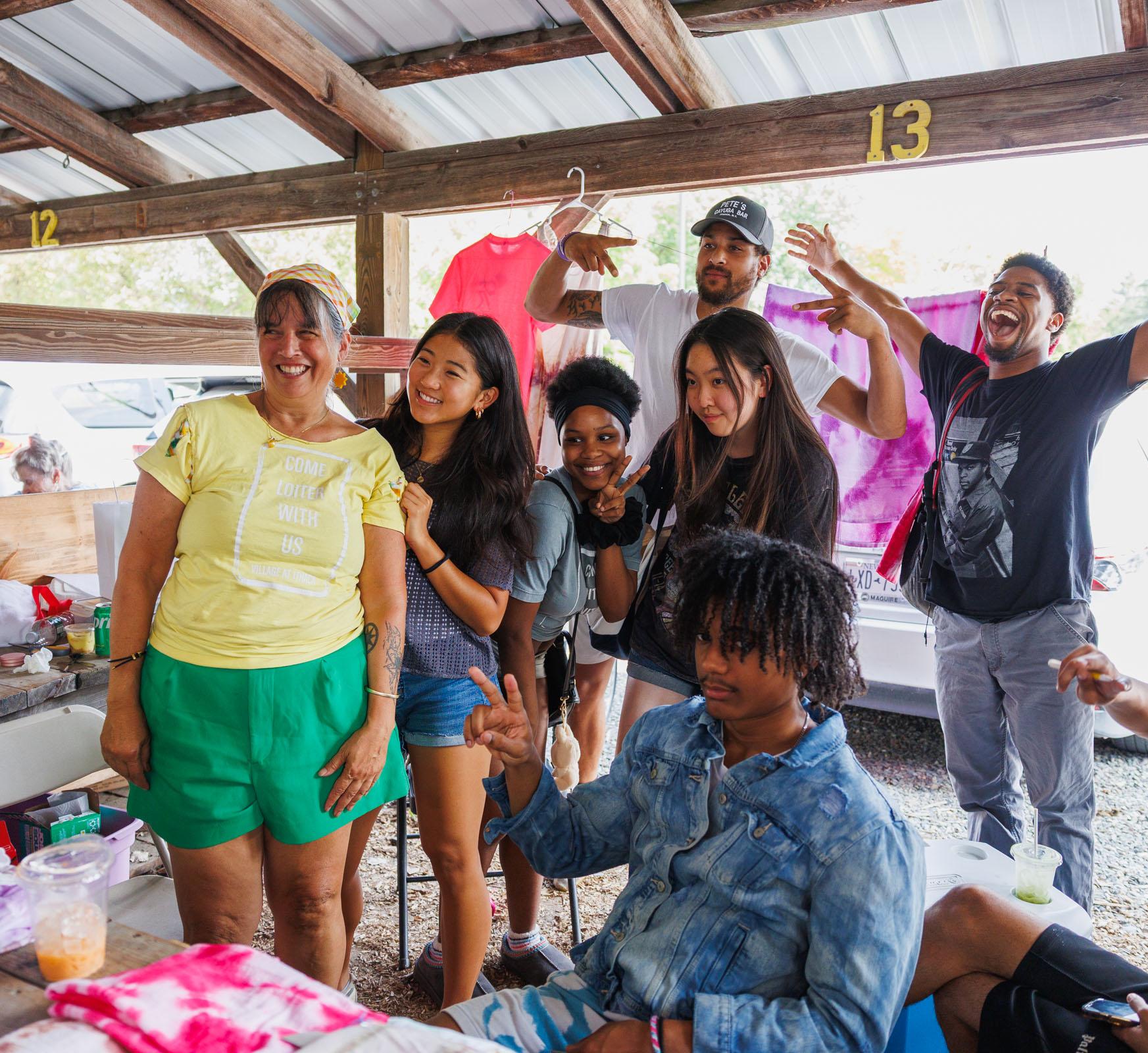
A new minor from Cornell Human Ecology and the Bronfenbrenner Center for Translational Research (BCTR) prepares students to turn research into interventions that benefit communities. The Translational Research minor is open to students from any major and any college at Cornell.
Translational research is the process of connecting what scientists discover to what happens in the real world. It is bi-directional — findings from research are applied in communities in the form of programs, practices or policies that improve people's lives, and knowledge and experience from communities are incorporated into the research process to make it more meaningful and effective. It's the driving idea behind the work done by the researchers in the BCTR.
Through the minor, students learn how to collaborate with communities to translate scientific discoveries into community-based interventions, how to evaluate existing programs and modify them for the greatest social impact, and how to assess whether policies are reaching all demographics and communities. These concepts can help students realize the social impact of their work throughout their careers, in fields including science and engineering, medicine, public health, social sciences, law and public policy.
Kristen Elmore, associate director of the BCTR, directs the minor.
“Translational research is a skill that is necessary now more than ever,” she said. “This minor will help students connect research to the real world, drawing on community member’s perspectives to do it.”
Her hope is that students will help close the gap between campus and community and use their knowledge to further well-being of the communities they’ll work in after graduation. The minor expands on the center’s programming for students, including the BCTR Scholars and the Program on Research for Youth Development and Engagement’s PRYDE Scholars.
“My experiences with translational research at Cornell helped me understand how to effectively perform needs-based assessments and use these assessments to make actionable impacts in the community,” said Patrick Crossen ’20, a former PRYDE Scholar now in his final year at the University at Buffalo’s Jacobs School of Medicine and Biomedical Sciences. “Because of these experiences, I secured my first full-time job after college working for a continuing medical education company, where I got to identify knowledge gaps amongst practicing neurologists and create educational programs to mitigate those gaps.”
The minor requires 15 credits, beginning with two core courses that explore translational research examples and approaches. Students must take one of these courses before declaring their intention to pursue the minor. In addition, students will take part in a translational research field experience to apply what they’ve learned.
“This minor provides a practical toolkit for any student looking to create social impact in their future career,” said Navika Gangrade, a lecturer in the BCTR and the faculty advisor for the minor. “Learning from leading researchers in fields like youth development, nutrition, social work, and public policy, students will learn how to apply translational research methods to their own fields of study and create work that is community-engaged, ethical, and socially impactful."
Visit the webpage to learn more about the minor in Translational Research, including requirements and elective courses. Or attend the information session on April 7, 4:30-5:30 p.m., in Martha Van Rensselaer Hall Room 1102 or on Zoom.
Posted on
03/13/2026
Author
Tags
Community Engagement
Share


