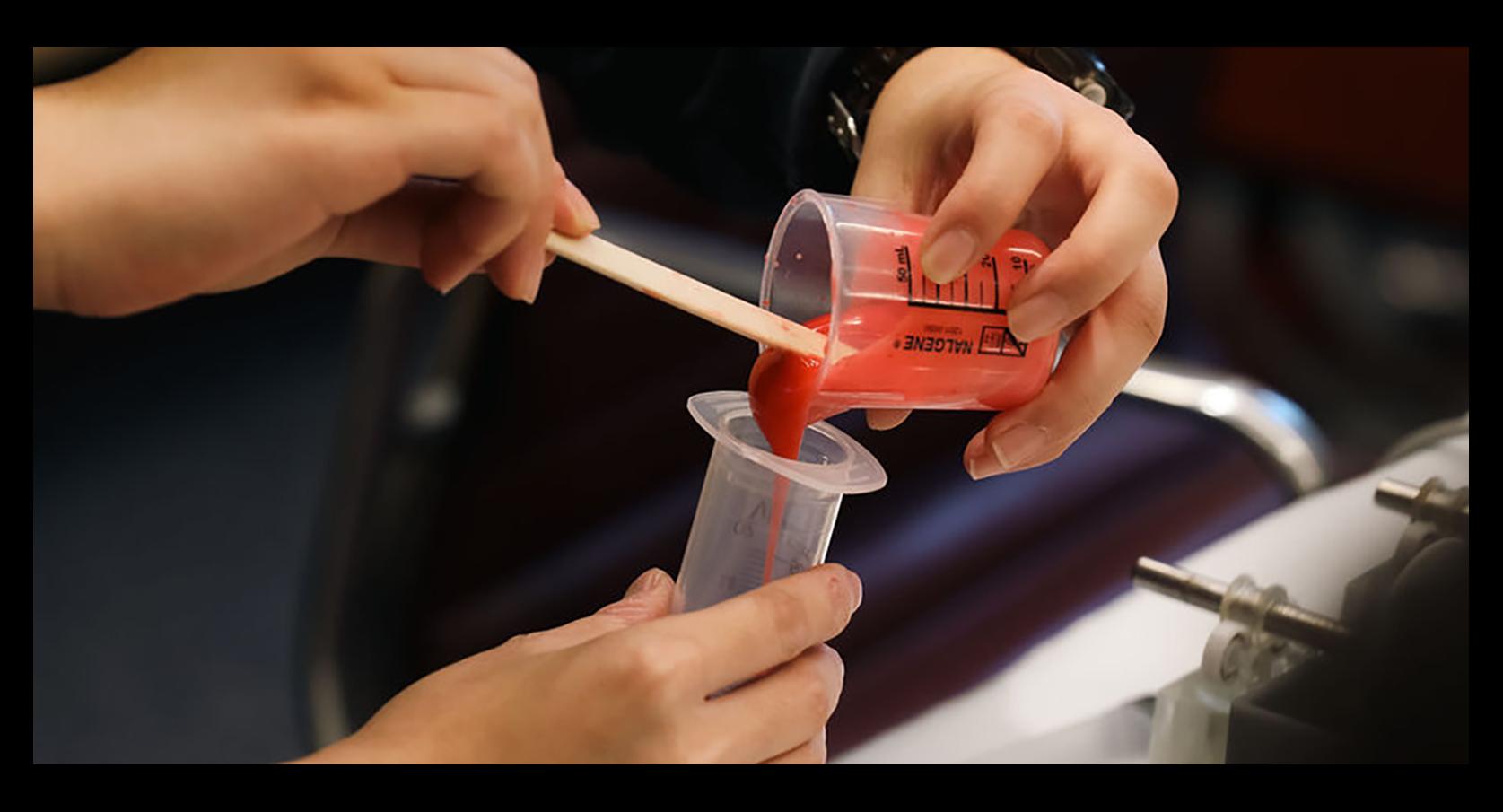
Participants manufacture thermochromic (color changing due to temperature) biodegradable threads.


Last month, as both New York Textile Month and Climate Week NYC drew to a close, the Hybrid Body Lab (HBL) led a sustainable e-textile workshop in Manhattan. The event took place at 570 Lexington Avenue, Cornell’s midtown hub for research, learning and engagement.
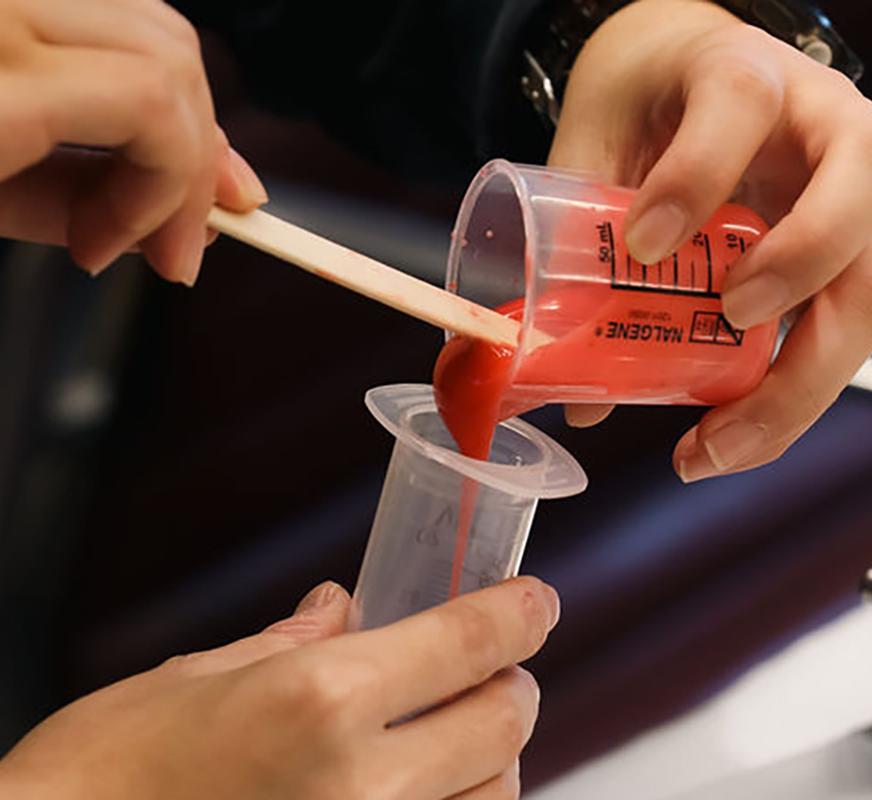
Participants learned to make EcoThreads, or biodegradable and conductive yarns, using a wet spinning process with materials sourced from the grocery store. Participants included current or retired faculty from New York City-area design schools, individual textile artists, creative technologists and multidisciplinary designers and consultants exploring textiles and materials.
“New York City has a large population of emerging e-textile practitioners,” said Cindy Hsin-Liu Kao, HBL director and assistant professor of Human Centered Design. “Given the enthusiastic response we received to this workshop, we look forward to future, further community-building efforts in which we can engage a wider range of soft interface creatives in NYC to rethink our lifecycle and approaches towards sustainable prototyping."
EcoThreads are a sustainable option for the fast-growing e-textile industry, which is expected to reach a market size of $1.3 billion in the next eight years. The biodegradable yarns can be woven, knit, crocheted or otherwise manipulated into e-textiles. EcoThreads were created by the multidisciplinary HBL team for use when e-textiles do not require a long lifespan – such as during the rapid prototyping phase.


Participants manufacture thermochromic (color changing due to temperature) biodegradable threads.