In FSAD 6900, students take a holistic approach to fashion design. The graduate-level course is taught by Heeju Park, Vincent V.C. Woo Professor of Human Centered Design, who is also affiliated with the Department of Design Tech. It emphasizes understanding human performance and environmental challenges, developing functional prototypes, and scientifically evaluating those prototypes using advanced technologies.

At the end of the class, two groups unveiled forward‑thinking projects that improve performance and comfort in women’s apparel. To create effective prototypes, both groups began by identifying the problem and conducting user interviews to determine key issues.

Reinventing the sports bra with 3D printing

One team tackled a long‑standing issue in womenswear: the molded foam bra pads commonly inserted in women’s swimsuits and bras. The inserts restrict airflow and hold heat and moisture against the skin. During high‑intensity exercise, this can lead to discomfort and chills.

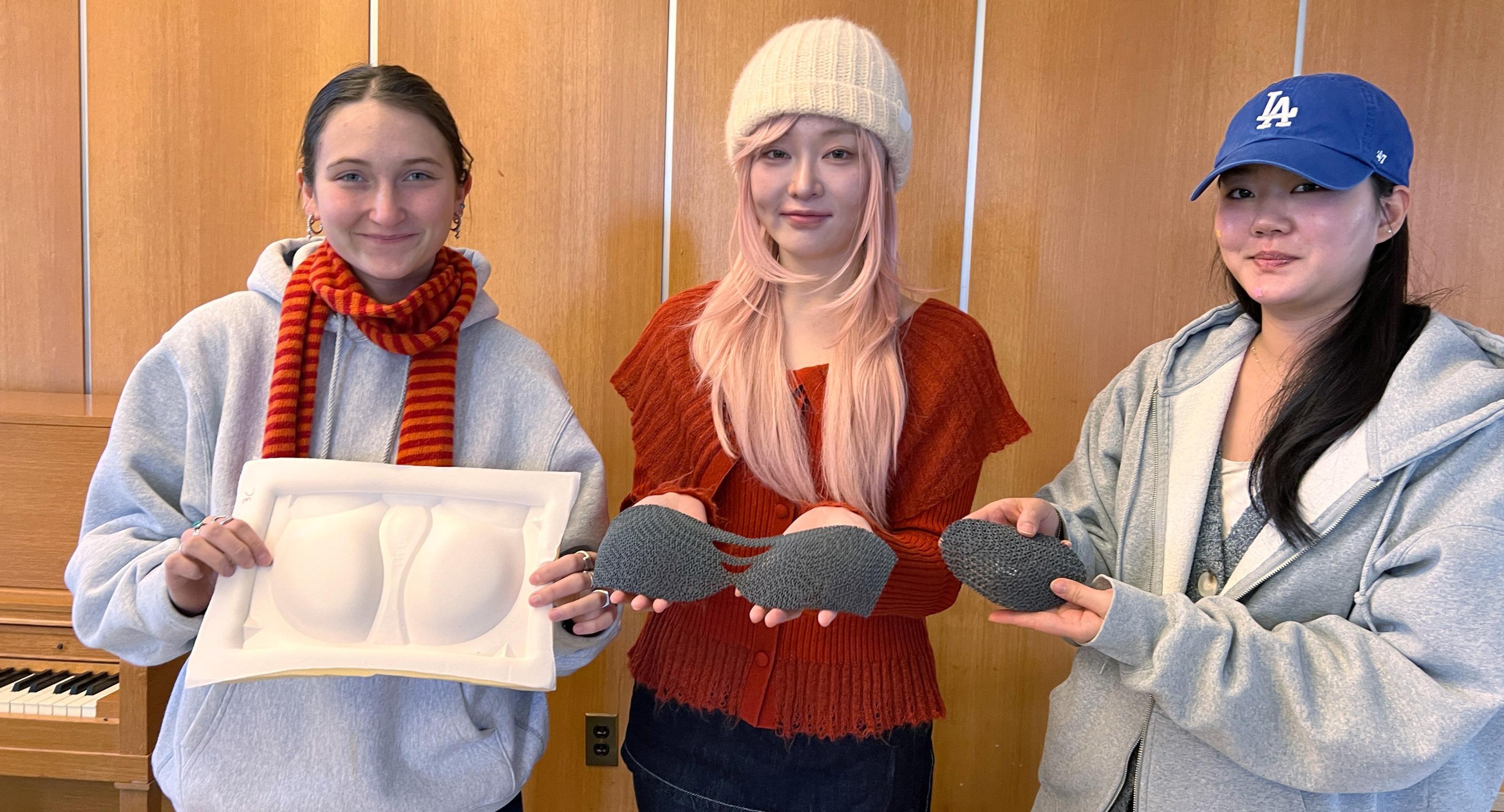
The team — Yoojin Heo, Grace Honeyman ‘25, and Summer Wu — designed a bra cup that uses advanced lattice geometries to maintain functional structure with less material. Using 3D body‑scan data, they developed a shape optimized for comfort and fit. 

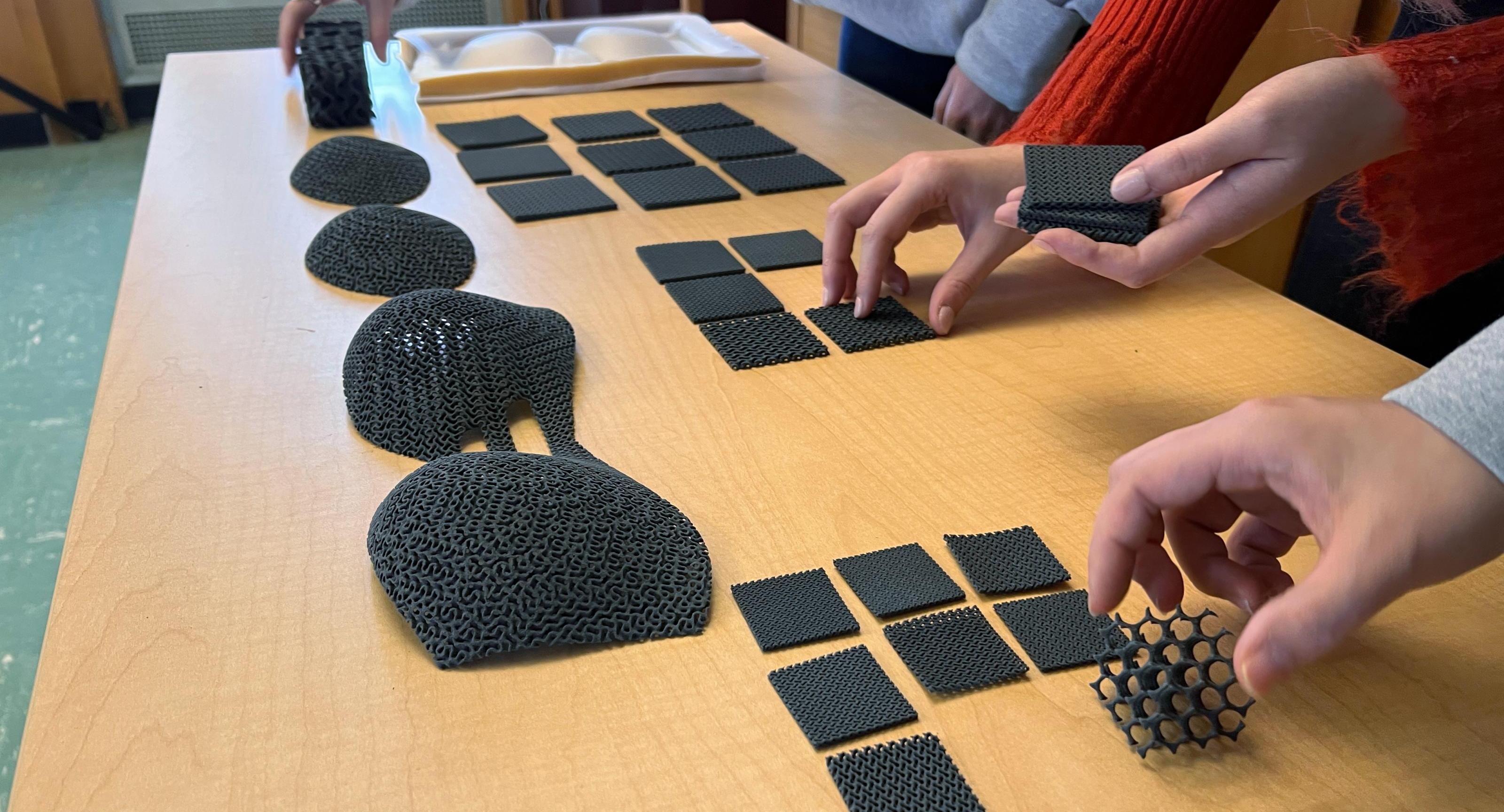
They collaborated with James Weaver, associate professor of materials science and engineering and design tech, to create a tri-ply periodic minimal surface (TPMS) structure through 3D printing. TPMS, a repeated geometry widely used in industry, retains strength without sharp edges, allowing for a stable contour that comfortably fits the breast.

After testing multiple variations, the team selected a TPMS structure that reduces moisture retention and may even accelerate cooling — resulting in a more comfortable and hygienic product. The insert is also easy to rinse, wash and reuse, offering benefits for both performance and sustainability.

“The beauty of a 3D‑printed insert is that it allows opportunities for mass customization,” Weaver noted.

The group hopes to further explore TPMS geometries for applications beyond sports bras, including protective sports gear such as helmets and shin guards.

Posted on
01/16/2026
Tags
Holistic Human Health, Social Impact + Justice, Sustainability + Society, Technology + Human Thriving
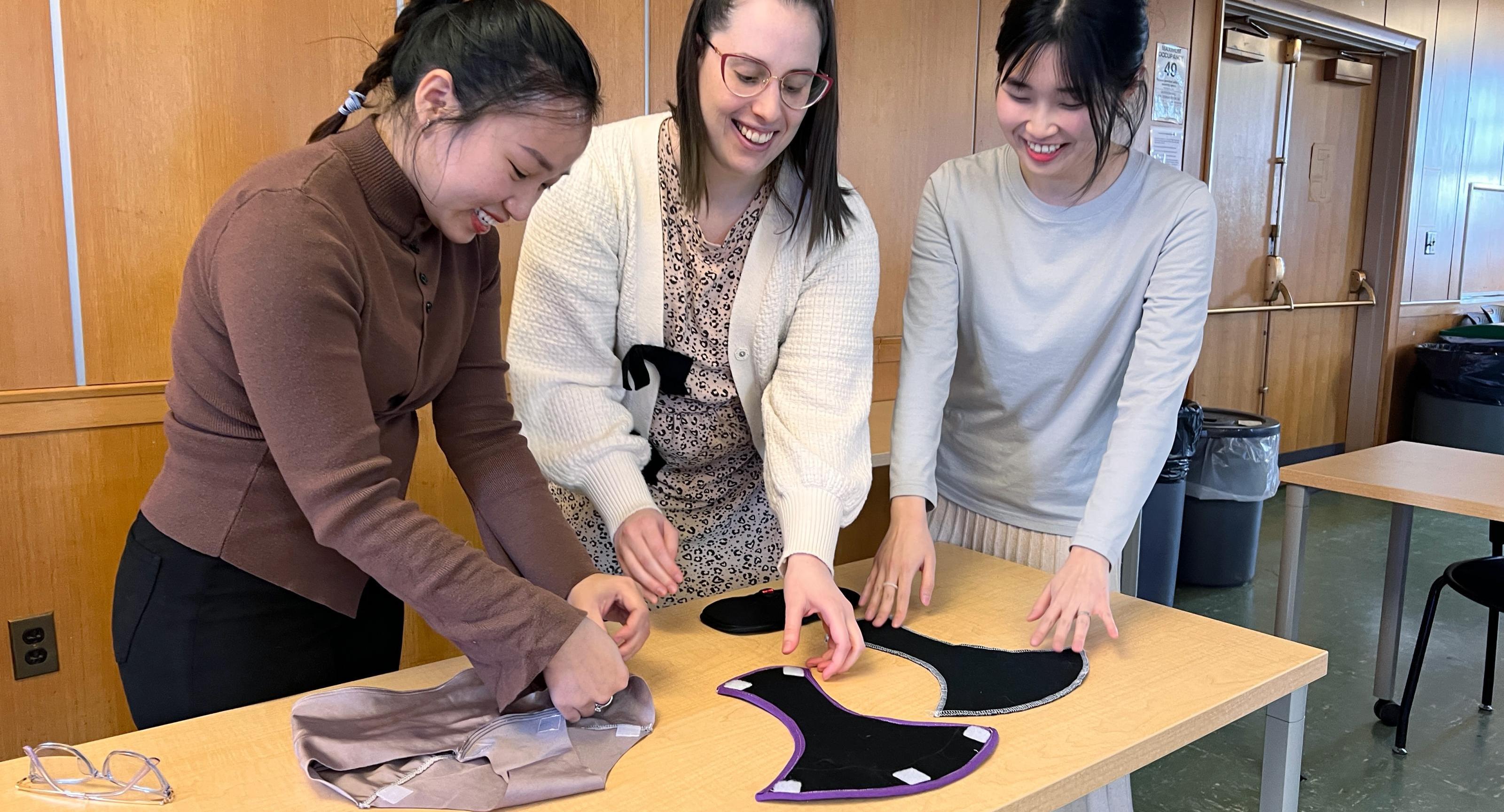
3 women work on inserting fabrics together on their prototype

Team members Kim Phung Nguyen, Samantha Alberts and Huieun Do (left to right), and Sazid Sadeque (not pictured), focused on menstrual health, aiming to create period underwear that elevates comfort, sustainability and health equity. Photo by Marisa LaFalce.

upclose of 3d printed images

The team created a tri-ply periodic minimal surface (TPMS) structure through 3D printing. After testing multiple variations, the team selected a structure that reduces moisture retention and may even accelerate cooling. Photo by Marisa LaFalce.

Three students hold up their student designs for a sports bra insert

Grace Honeyman ‘25, Summer Wu and Yoojin Heo (fromt left to right), hold up the traditional foam bra insert and their sleek 3D printed solution. Photo by Marisa LaFalce

Rethinking period underwear for comfort and equity

The second group — Samantha Alberts, Huieun Do, Kim Phung Nguyen, and Sazid Sadeque — focused on menstrual health, aiming to create period underwear that elevates comfort, sustainability and health equity. With the average person using 5,000 to 15,000 disposable menstrual products in a lifetime, the team sought a reusable solution that adapts to real‑world needs while improving on the functionality of existing period underwear.

Their design prioritized pain relief and support to enhance both physical and emotional well‑being. Key features include:

  • Adaptive fit: Using 3D body‑scan data, the team developed an initial shape optimized for comfort. Adjustable closures allow the garment to adapt not only to different body shapes but also to natural changes throughout the menstrual cycle, such as bloating or cramping. Users can increase or decrease support based on their needs.
  • High‑performance materials: The underwear incorporates high‑absorbency, antimicrobial fabrics that wick moisture away from the body to improve hygiene. The garment also accommodates interchangeable pads for different flow levels, enabling wearers to swap pads throughout the day without changing underwear.
  • Built‑in warming feature: A discreet heating element targets lower‑abdomen and lower‑back pain for added comfort.
  • Sustainable construction: The garment is dyed using natural dyes, specifically grape pomace, a byproduct of the local wine industry, and paired with nylon and spandex for breathability and support. 

“There is period underwear on the market, but we want to create a better option,” said Alberts. “Our design blends fit and adaptability to improve comfort.”