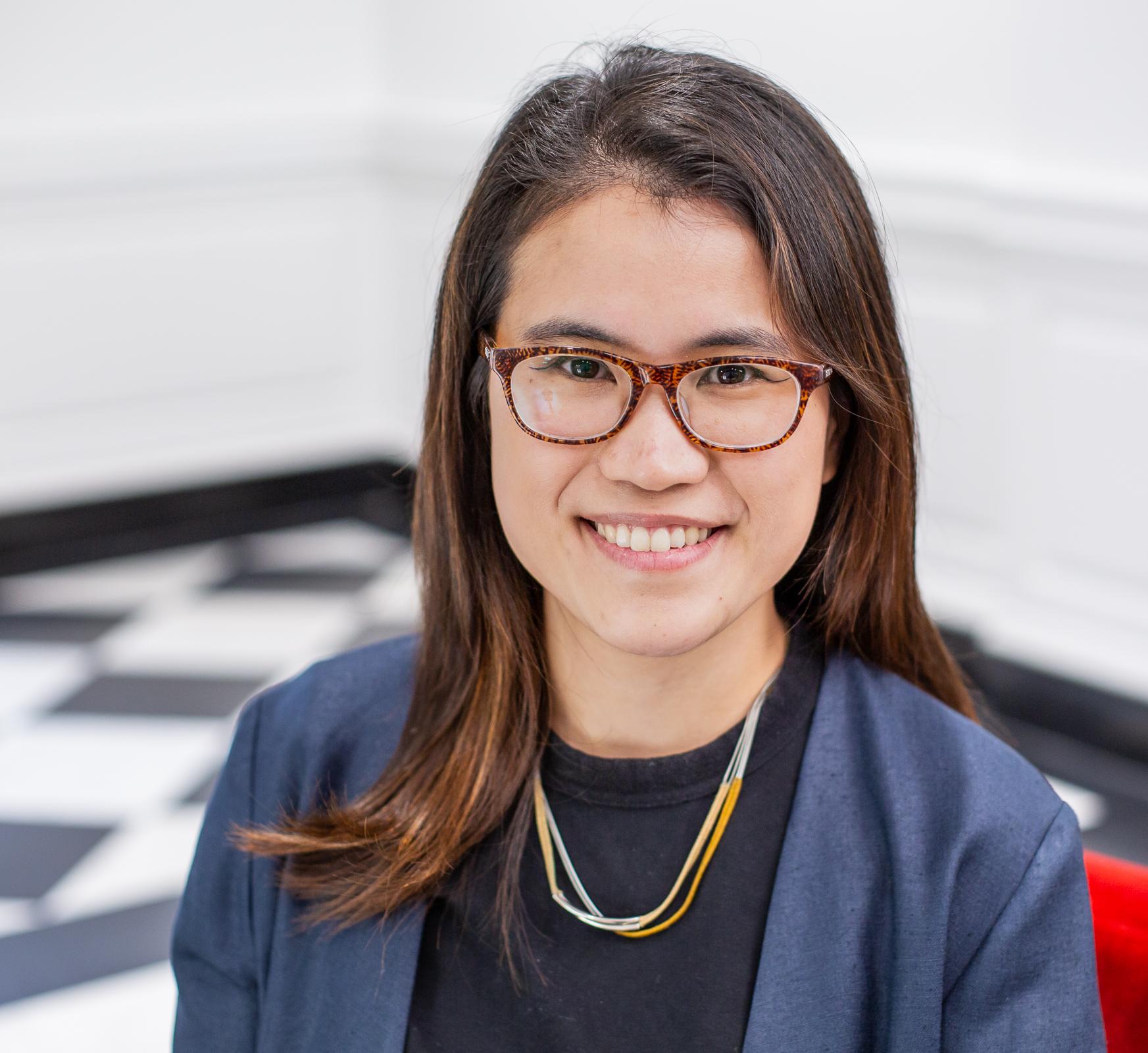
Cindy Hsin-Liu Kao, associate professor in the Department of Human Centered Design, will be the 2026-27 Carl and Lily Pforzheimer Foundation Fellow at Harvard Radcliffe Institute, one of the world’s leading centers for interdisciplinary exploration.

A yearlong Radcliffe fellowship provides the opportunity to pursue ambitious projects in the unique environment of the institute within the larger community of Harvard University. Fellows include scholars in the humanities, sciences, social sciences and arts, along with writers, journalists, playwrights and other distinguished professionals. 

Kao leads the Hybrid Body Lab, which invents culturally inspired materials, processes and tools for crafting technology on and into the body surface such as VitalWear: textile-based biofuel cells that harness human sweat to generate energy. The lab refers to these technologies as Hybrid Skins. 

At Radcliffe, Kao will develop a book on the social and cultural dimensions of these emerging technologies, proposing design interventions that empower rather than constrain how close-body wearable devices are conceived and experienced. The named fellowship she received recognizes exceptional scholars and creative practitioners.

“In the age of AI, as the relationship between humans and technology is rapidly being rewritten, the unique intellectual community at Radcliffe will allow me to deeply examine what this transformation means for emerging on-skin interfaces — technologies that have an unprecedented level of physical intimacy with the human body,” Kao said. 

Posted on
08/12/2026
Author
Marisa LaFalce
Tags
Community Engagement, Technology + Human Thriving

Sabbatical strengthens teaching, research and public engagement

Kao has been working on Hybrid Skins for more than a decade. She blends cultural and social perspectives into her research practice, with the goal of designing more inclusive and diverse on-body interfaces. Public engagement is foundational to the Hybrid Body Lab’s mission, and her research team collaborates with makers, including weavers, knitters and e-textile practitioners, on a variety of research projects. Her lab also hosts an annual two-month artist residency. This spring, Atlanta-based hair artist Lauren Hooks worked with researchers and integrated elaborate hair weaves with lab projects. Her goal for the book is to create something accessible to a general audience.

“The opportunity to work in a new environment and with different scholars can have a catalyzing effect on your creative thought and practice,” said Kao. “As an educator, a researcher, and a designer, I’m excited to be enriched by that experience and to bring that inspiration back to my teaching, research and public engagement at Cornell.”

Kao teaches two undergraduate courses, DEA 1110 Making a Difference by Design and DEA 2200 Art and Science, and a graduate-level course, DEA 6040 Future Body Craft: Fabricating On-Skin Interfaces.

“Cindy's ingenuity and drive have made her an invaluable member of our department,” said Jung-hye Shin, chair of the Department of Human Centered Design. “She has an extraordinary talent for translating bold ideas into fundable, impactful research programs. We are incredibly proud to see her creativity recognized on this national stage.”
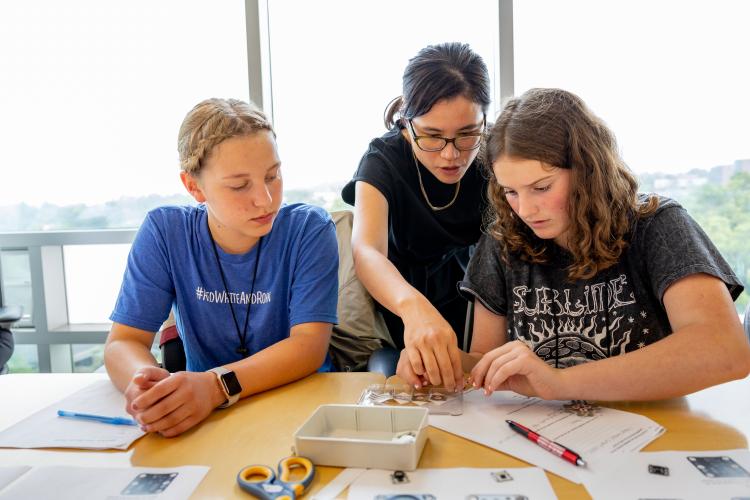
Cindy Kao helps two students during a 4-H workshop