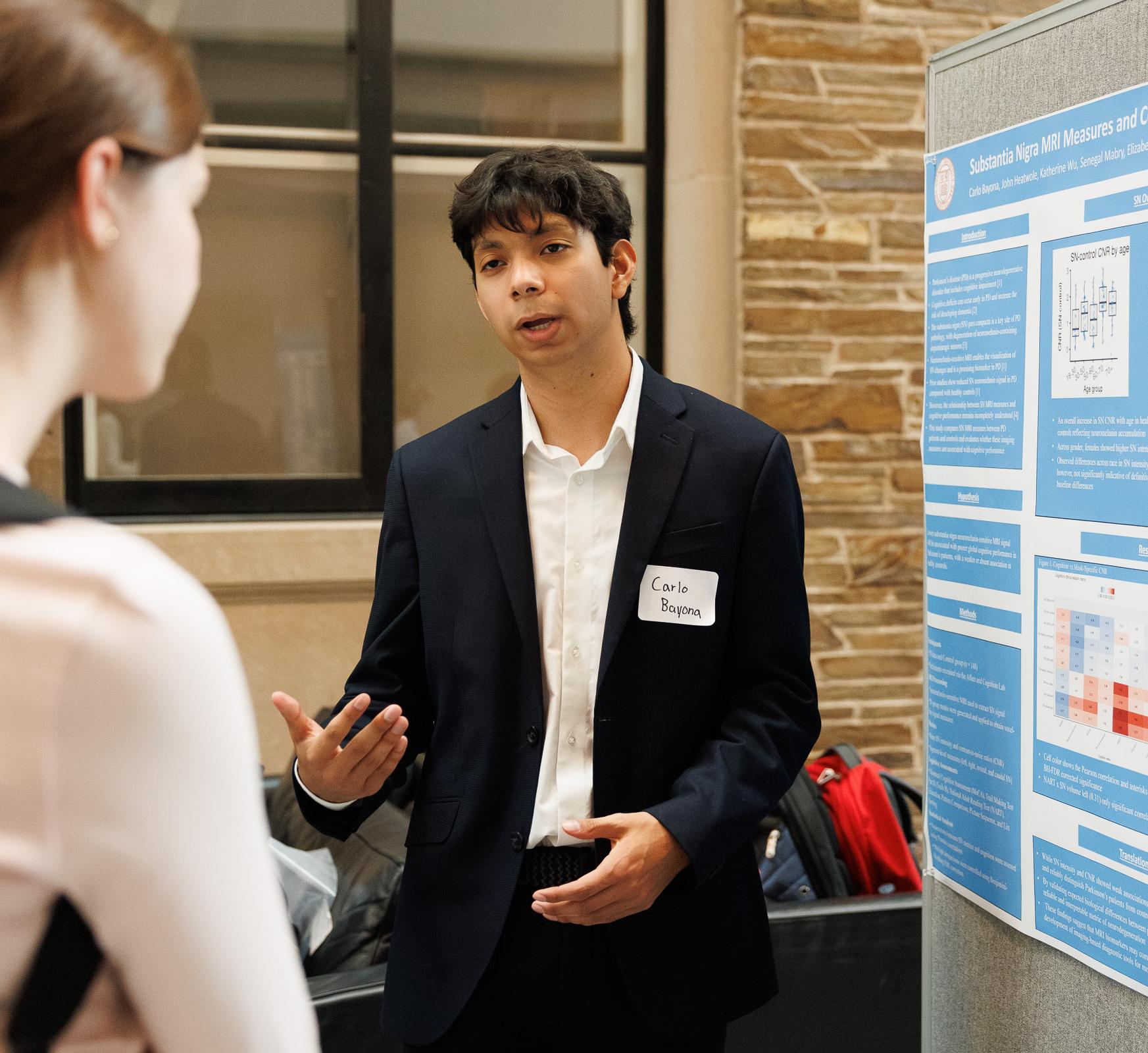
Student research from across campus was on display during the Bronfenbrenner Center for Translational Research (BCTR) Poster Symposium on April 28, 2026 in the Physical Sciences Building. The symposium included undergraduate students from Cornell Human Ecology, the College of Arts and Sciences, Cornell Duffield College of Engineering, along with graduate students.
“This event showcases the remarkable translational research work students are involved in across the campus,” said Kristen Elmore, BCTR associate director. “They’re excited to share the findings they’ve discovered while working on this research with communities, which is a hallmark of Cornell’s land-grant mission.”
The symposium featured nearly 40 interdisciplinary research presentations on topics such as adolescent health, early childhood education, aging, technology, and child development, with studies examining mental health, neurological conditions, caregiver wellbeing, healthy aging, effects of social media, and lived experiences of youth.
The symposium gave students experience in answering questions in an academic conference format, with nearly 100 people in attendance reviewing the students’ work.
This is the second symposium for Hyun Hwang ’26, who, with Jasmine Feng ’26, presented research on barriers to improving awareness and adoption of the Social Media TestDrive project. Hwang said feedback from that experience informed how they presented this year’s project.
“Presenting at the symposium also gives me the opportunity to grow as an academic communicator, pushing me to translate complex ideas into clear, concise, and accessible language for all audiences,” said Hwang.
Hopper Kendragan ’26 appreciated exploring the community impact from other students’ translational research. Kendragan and Hyun Lim ’27 presented work on the process evaluation tools used in research work done by ACT for Youth and she enjoyed posters that may not have results but show important parts of the research process.
“It’s always amazing to see all the creativity and hard work that everyone puts in, and it really showcases how diverse research can be,” said Kendragan.
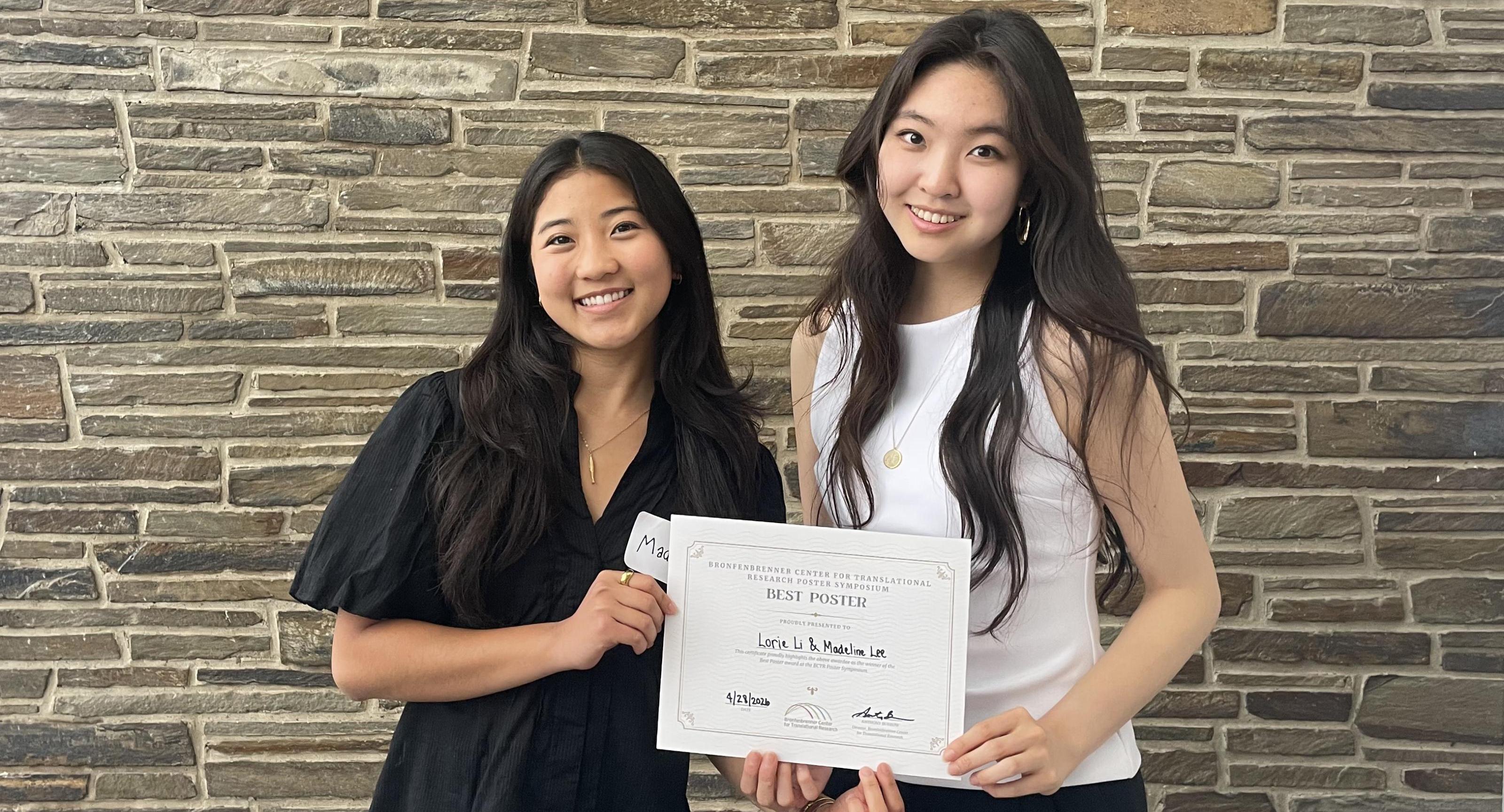
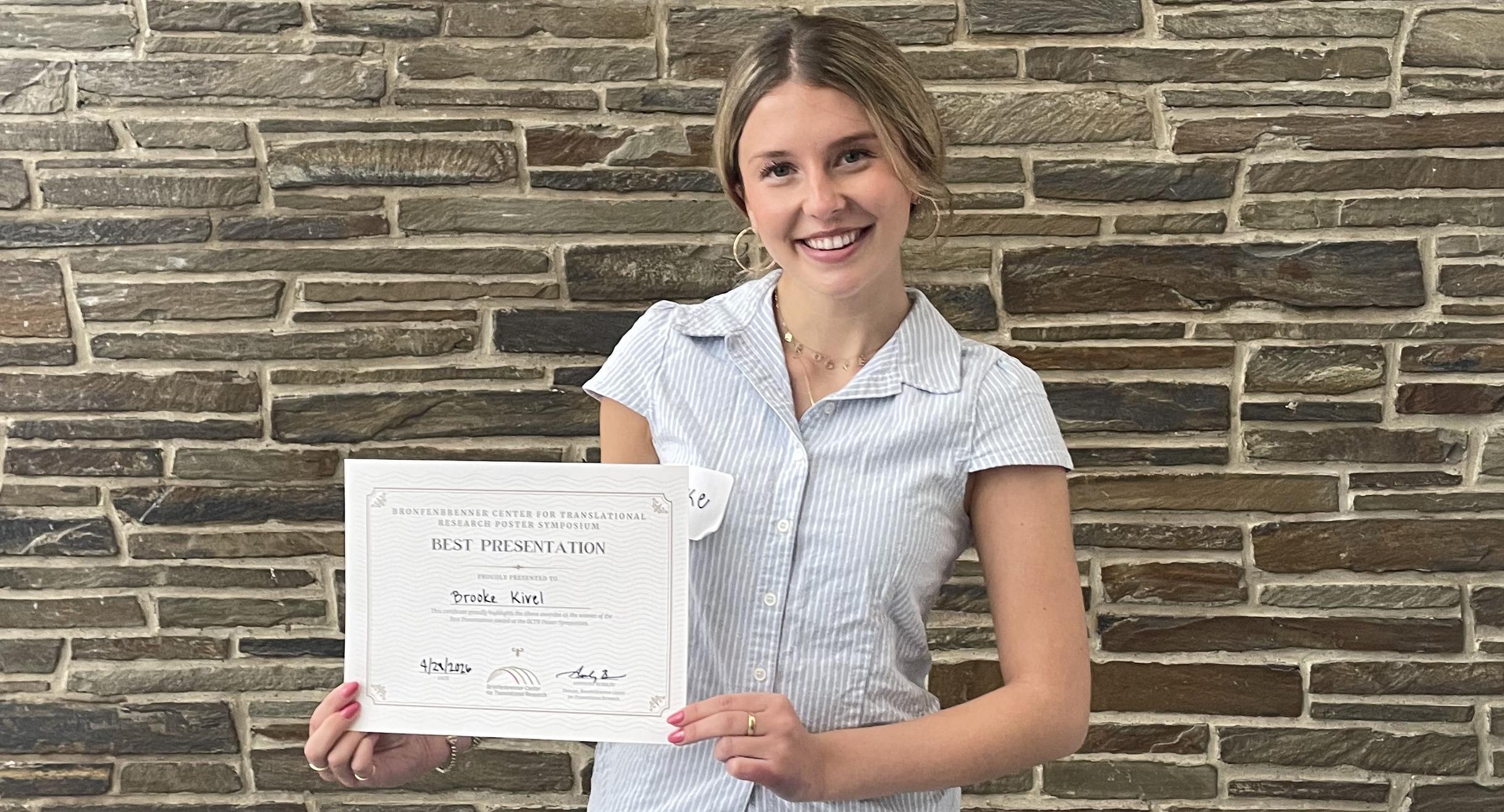
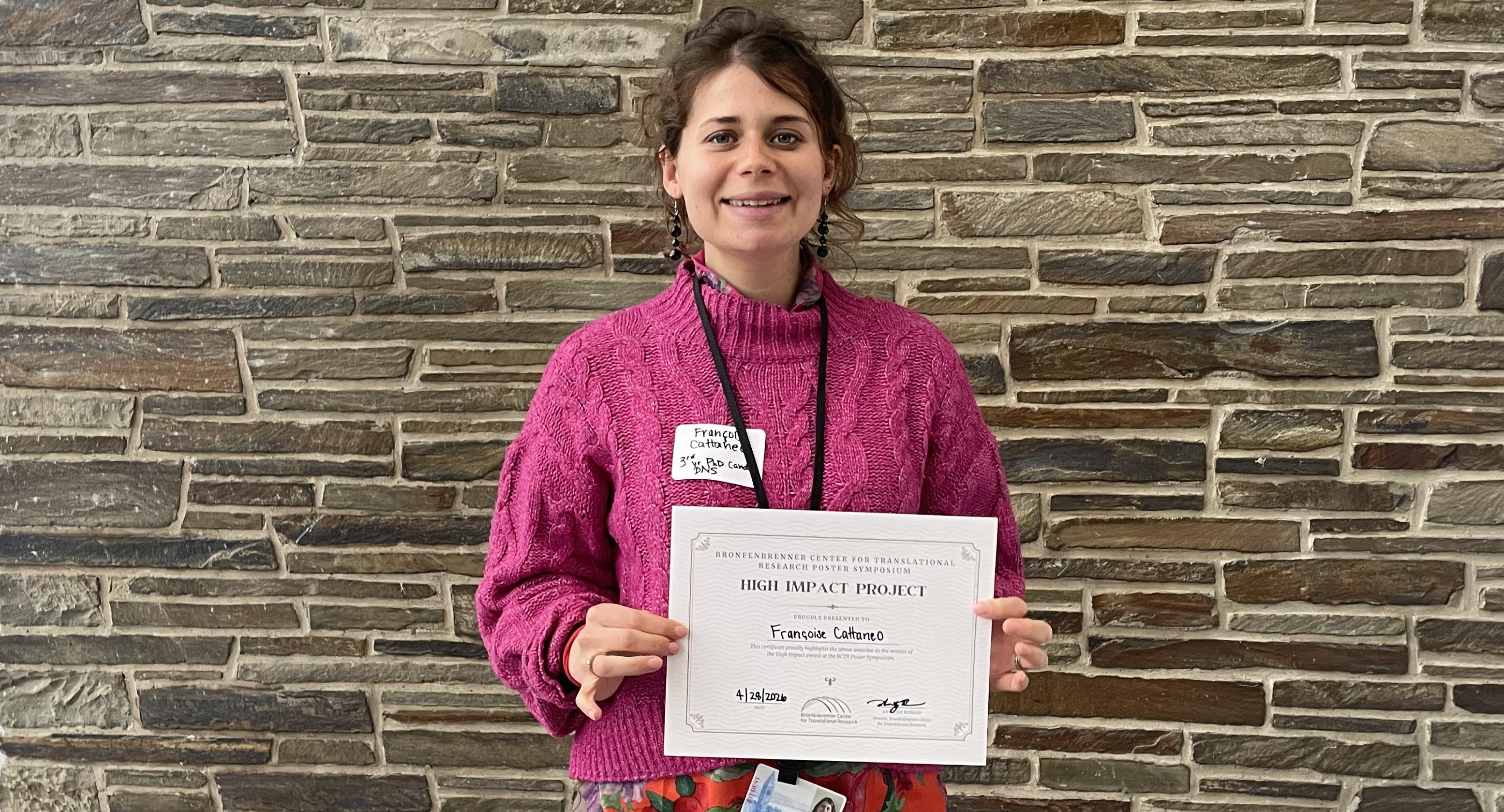
Three awards were presented for best poster, best presentation, and high-impact project. The award winners were:
Best Presentation: Brooke Kivel ’26 on research that tracked people over time to explore how the gap between wanting control and feeling in control relates to OCD symptoms.
Best Poster: Lorie Li ’28 and Madeline Lee ’28 who presented their summer internship work as BCTR Scholars with The Village at Ithaca.
High Impact Project: Françoise Cattaneo, Ph.D. candidate with research that identified distinct eating patterns among teenagers in rural Bangladesh by grouping participants based on similarities in their diets.