


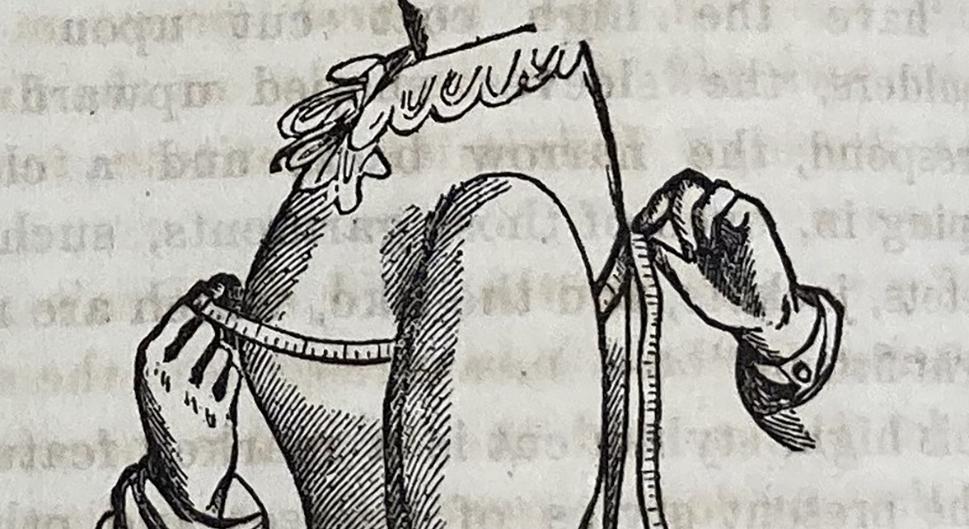
During the late nineteenth century, Ebenezer Butterick and The E. Butterick Company transformed women’s fashion by introducing mass-produced, precut sewing patterns based on a proportional grading system. While these patterns were marketed as accessible and democratic tools for amateur dressmakers, they were based on a rigid sizing framework that codified a vision of bodily “normalcy” centered on corsetry and the proportions of an idealized size “36.”
This talk shares research in progress on the origins of women’s standardized sizing systems, drawing on archival materials, surviving patterns, and Butterick’s publications. I explore how Butterick’s sizing model was shaped less by empirical anthropometric data than by nineteenth-century aesthetic, scientific, and pseudoscientific discourses—including phrenology, early statistical thought, and racialized body science, with which Butterick was directly engaged. Situating his patterns within these broader body debates reveals how assumptions about femininity, health, class, and whiteness became embedded in the technical infrastructure of fashion. By tracing these historical foundations, this project reconsiders modern sizing systems not as neutral standards, but as cultural artifacts shaped by the ideological frameworks of their origins.
Emma McClendon is a fashion historian and curator based in Washington DC. She currently serves as a lecturer in the School of Theatre, Dance, and Performance Studies at the University of Maryland. From 2011 to 2020, she was a curator at The Museum at FIT, where she organized numerous critically acclaimed exhibitions, including Denim: Fashion’s Frontier (2016) and The Body: Fashion and Physique (2019). Her recent publications include Power Mode: The Force of Fashion (Skira, 2019) and (Re)Dressing American Fashion: Wear as Witness (Yale University Press, 2025).
Dates Held
Wednesday, March 11, 2026
12:15pm
-
1:15pm
Contact Name
Location
Zoom Passcode: 843821
Share


Event Details
Event Type
Lecture
Departments
Human Centered Design