- Sep 30 ,2026
- Bronfenbrenner Center for Translational Research, Cornell Cooperative Extension
- Human Ecology Commons and MVR G151
CHE Summer Experience Symposium
Students will share their summer experiences, including research opportunities, internships and college-funded experiences like:
- the CHE in NYC summer internship
- the BCTR Scholars
- the Center for Discovery Internship
- the Cornell Cooperative Extension internship
- The Global Public Health Experiential Learning Opportunities
Learn about the variety of opportunities and get information on applying for next summer.
There will be students postering in the Commons and presentations in MVR G151.

- Dec 4 ,2025
- by Lynandrea Mejia
- Bronfenbrenner Center for Translational Research
- MVR 1102 and Zoom
What to Do When the Kids Are Not OK
This is part of the Talks at Twelve series from the Bronfenbrenner Center for Translational Research.
From the early days of online communities, many pundits envisioned a world where people could be more connected around the globe thanks to new technology. And yet, this is not the world that social media brought forth. After years of struggling with misinformation, political polarization, and rampant distrust in institutions, many have begun to wonder if social media might

- Sep 26 ,2025
- Human Centered Design
- T01 Human Ecology Building
Engineering Hybrid Nanostructures: Novel Aqueous Routes to Integrate Electrochemically Active Metal Clusters into Carbon Nanomaterial or Polymeric Matrices for Functional Energy Storage and Conversion Materials
Electronic conductivity of porous electrodes by Faradaic and non-Faradaic charge transfer processes impacts the energy and power densities and overall performance of electrochemical energy storage and conversion devices. Carbon nanomaterials constitute an ideal material composite platform for integration with other solid-state electrode materials in power devices. Self-assembly has been recognized as an effective strategy for the bottom–up synthesis of 3D macrostructures using graphene and carbon nanotube as building blocks. The need for chemical precursor vaporization

- Mar 20 ,2026
- by Karen Steffy
- Human Centered Design
- Human Ecology Building T01
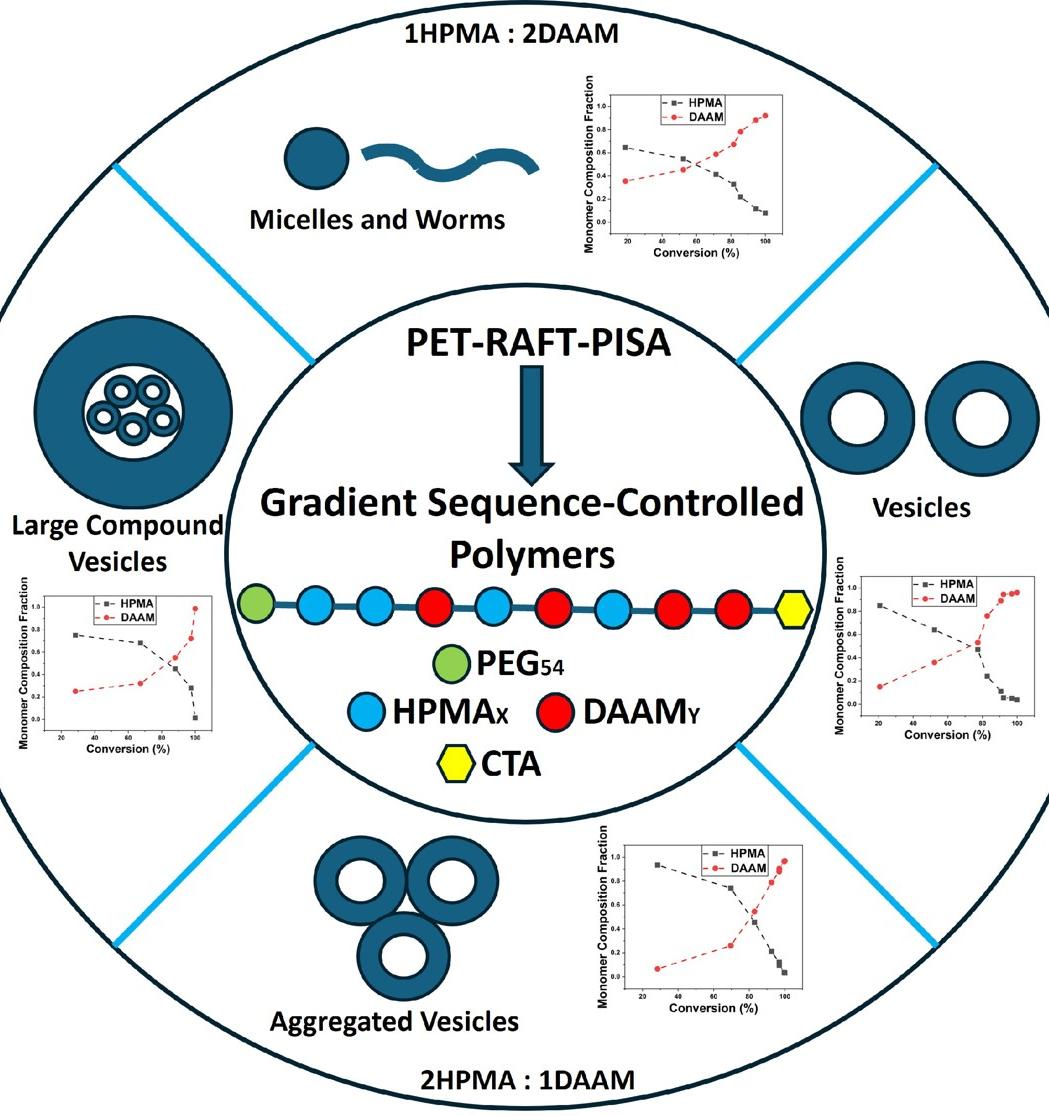
Understanding the chemical principles underpinning the fundamental features of life beyond biochemistry within the origins of life context
Investigating prebiotic chemistry and the fundamental features of life like metabolism, information, self-reproduction, natural selection and computation, is significant within the origins of life research. In this context, one of the key elements constitutes the synthesis of chemistry-based natural-life-mimicking artificial or synthetic living systems, starting from a homogeneous aqueous blend of a few strictly non-biochemical compounds, using a technique called polymerization-induced self-assembly (PISA). In one of the studies, gradient sequence-controlled polymers were generated through PET-RAFT-PISA
- Sep 4 ,2026Sep 7 ,2026Sep 8 ,2026Sep 9 ,2026Sep 10 ,2026Sep 11 ,2026Sep 14 ,2026Sep 15 ,2026Sep 16 ,2026Sep 17 ,2026
- by Denise N. Green
- Human Centered Design
- The Gold Gallery (MVR 1250)
Approaching America: Myth, Dress, and Belonging
American fashion constructs a story about who belongs in the national imagination. What is a myth, if not a story worn so often it starts to feel like fact? This exhibition asks what happens when that story confronts its own contradictions: when American myths are pressed up against the labor, land, histories, and people that make them wearable in the first place. Visitors move through the exhibition the way a newcomer might, from idyllic first

- Sep 14 — 18 ,2026
- The Human Ecology Commons
Human Ecology Unplugged
Cornell Unplugged is a new initiative to encourage students, faculty and staff to be as unplugged as possible throughout the week of Sept. 14-20. As part of this initiative, we will be hosting Human Ecology Unplugged. Review the series of events, activities, and opportunities to put down your phone, close your laptop and connect with others or yourself.
Visit the Human Ecology Unplugged table in the Commons to:
- Grab a board game, puzzle, conversation starters
- Feb 10 ,2026Feb 11 ,2026Feb 12 ,2026Feb 13 ,2026Feb 16 ,2026Feb 17 ,2026Feb 18 ,2026Feb 19 ,2026Feb 20 ,2026
- by Sang Leigh
- Human Centered Design
- Jill Stuart Gallery, Human Ecology Building
(some) shapes of intelligence in the physical world
We welcome you to the showcase of student works from DEA 6400: AI, Embodiment, and Design! These works result from a design exploration of what AI may look like when it leaves the screen—by translating LLMs into tangible objects. You will have a chance to interact with this collection of imaginative, useful, or explorative artifacts. Schedule of these demos are as follows:
Open between Feb 10 - 20 at the Jill Stuart Gallery, Human