


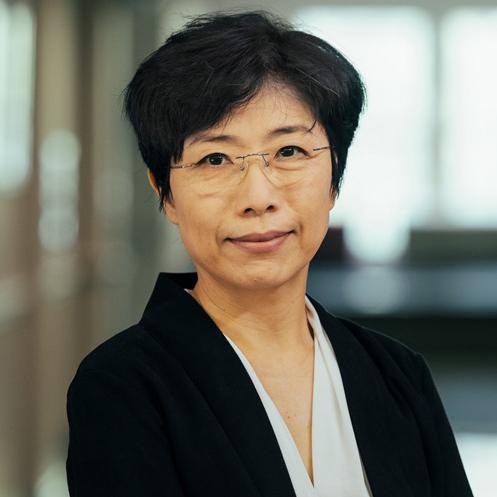
I believe in the power of how we design our homes and communities to influence our everyday well-being. The experiences we have within their designs reflect complex interactions among the physical structure, social relations, and sociocultural expectations that govern our built environment. My most recent research has focused on the role of home and communities in helping older adults age in place. I listen to their lived experiences and observe their everyday practices in hopes of reflecting their views in policy discussions and design guidelines.
My research is primarily concerned with creating positive place experiences in homes and community buildings. I broadly interpret those experiences as an outcome of complex interactions among physical structure, social relations, and social and cultural norms and expectations that govern building shapes and uses. To better understand these places experiences, I examine both practical and symbolic aspects of buildings using field-based qualitative and quantitative approaches. Within this broad theoretical framework of place experiences, I focus on two general areas of study: (1) culture and the residential environment, where I explore social and cultural norms that give forms to building shapes and how they frame place experiences of the dwellers; and (2) spatial evaluation of community buildings, such as religious and educational facilities, according to the intended use. In both areas of study, I listen to the voices of the inhabitants and observe their everyday practices within those settings. The ultimate goal is to create deep global impact on design research and practice through policy discussion and provision of design guidelines.
My teaching efforts are directed towards demonstrating the application of research to the study of buildings. I emphasize a broad range of research methodologies and their conceptual linkage to theories in the inquiry of building design. I also play a central role in introducing design foundations to incoming design students.
My research lies at the intersection of environmental gerontology, urban studies, and applied technology, focusing on the dynamic relationship between older adults and their physical and social environments. By examining how residential settings and broader urban or rural contexts influence aging in place, my work addresses critical challenges associated with global population aging. Through both classic and innovative methodologies—including ethnographic inquiries, GIS analysis, real-time tracking, and app development— my scholarship has revealed how environmental factors interact with individual characteristics to shape older adults’ health, well-being, and housing decisions. This research provides valuable insights for the design of aging-friendly housing and communities, offering practical tools and actionable strategies for designers, policymakers, urban planners, and healthcare providers to better support older adults’ autonomy and quality of life.
My exploration of diverse cultural contexts—from urban immigrant enclaves in Chicago to rapidly urbanizing regions of Northern China—has illuminated both universal and context-specific challenges that older adults face as they adapt to evolving environments. By integrating insights from developmental and social psychology with advanced spatial analysis, I have developed nuanced frameworks for understanding the co-evolution of physical and social spaces over time. These frameworks contribute to academic knowledge while equipping practitioners with evidence-based solutions for designing accessible, inclusive, and supportive environments for aging populations. Ultimately, my work bridges disciplines to address the pressing societal need for sustainable, human-centered environments that enable older adults to thrive.
Building on the foundation of my previous research, my future work will deepen and expand its focus on creating environments that support aging in place. One key direction involves advancing the integration of technology into residential and community design. By refining and scaling tools such as the home accessibility app or developing home-based interventions, I aim to bridge the gap between research and practice, empowering individuals, caregivers, and professionals to make informed decisions about home modifications and barrier-free living. Using frameworks from implementation science, I plan to test these tools in real-world settings to ensure their practical utility across diverse socioeconomic contexts. Advocating for the critical role of home accessibility in health and well-being within a U.S. funding landscape that often prioritizes medical research over housing has been a challenging journey. Our next step is to secure a medium-sized grant to conduct efficacy testing of the app—an essential milestone toward obtaining larger federal funding in the U.S.
I am also committed to continuing my cross-cultural studies to examine how global trends in urbanization and demographic shifts influence aging experiences worldwide. This work aims to enhance our understanding of how older adults navigate their environments in diverse contexts, ultimately informing global policy and design standards for equitable and inclusive spaces. This next phase of my research will include policy-level analysis of home accessibility on an international scale, contributing to the development of age-friendly environments in the U.S.
As part of this effort, I am actively building international collaborations with research institutions such as the PEACH Research Unit at Dalhousie University in Canada and the Human-Centered Interior Environment Lab at Kyunghee University in Korea. Additionally, I am examining research studies and government reports from countries like Germany and Australia, where discussions on home accessibility have been active in recent years. These collaborations and analyses hold significant potential to inform initiatives aimed at improving the lives of older adults and individuals with disabilities, both in the U.S. and globally (Research funding recently secured).
My teaching philosophy is broadly informed by Brighouse’s four goals of education: educating for self-government, economic participation, flourishing, and creating citizens. 1 I translate these goals into the context of design education as follows: raising independent thinkers by promoting critical reflection on alternative ways of living, providing vocational training, developing interdisciplinary aptitude through intellectual flourishing beyond the design field, 2 and training designers as stewards and visionaries of the public realm. While today’s design education has primarily focused on vocational training due to national accreditation requirements and demand from the professional field, I strongly believe that each of these goals is critical in design education.
The 21st-century designer will need to take a leadership role in addressing serious social and economic inequalities exacerbated by globalization and worsening ecological crises, as these social issues often underlie many of the problems in the built environment. I have developed strategies to achieve each of these goals, some of which are already incorporated into my courses. I plan to further integrate them more comprehensively, with up-to-date content in the years ahead.
At the upper undergraduate and graduate levels, I use Gerald Gaff ’s concept of “Teaching the Conflict.” 3 I regularly present opposing viewpoints to what students have proposed, and I encourage them to counter-argue my perspectives. This tactic helps me achieve my teaching goals of cultivating independent thinkers, fostering interdisciplinary aptitudes, and raising designers as stewards and visionaries of the public realm. My course on Culture and Environment has been particularly suited for this approach. The course contains strong multicultural components and focuses on social and economic inequalities within and between societies as manifested in housing and urban forms. Class discussions challenge many assumptions that students bring to the table, and students have consistently recognized and appreciated my intentional use of conflict, as evidenced by their end-of-semester evaluations. 4 My interdisciplinary research, which I integrate into class readings, has sparked many intense discussions among students from diverse fields such as design, international studies, environmental studies, and landscape architecture. As a result, these class discussions quickly evolve into an interdisciplinary, communicative, and collaborative learning experience.
The fields of architecture and interior design have long been divided into two camps: the technocratic profession and an art informed by aesthetic ideologies. 5 Adding to this tension is the recent emergence of environmental behavior studies, which examine the social dimension of buildings. 6 I strive to reconcile these divisions by helping students master technical skills and knowledge, cultivate the analytical mindset necessary to understand interdisciplinary content, and sensitize them to larger social issues that regularly manifest through building forms. For example, in my Research Methods in Design class, I not only teach technical research skills but also devote significant time to discussing competing paradigms and their philosophical backgrounds in relation to design. Through intense discussions, students gradually gain insight into why and how some paradigms are compatible with each other while others are not. At the same time, they participate in hands-on building research projects where they develop research skills, engage in discussions with building clients and designers about their values and intentions, gather field data, and analyze it with an understanding of their theoretical stance. My research has been a vital part of my teaching, and it will continue to be so.
In summary, my teaching and research have evolved in parallel into an interdisciplinary approach, a cross-cultural perspective, and an integration of theory and practice. I plan to further integrate theory and practice in my teaching by incorporating real-world research projects that address problems important to the local community. These projects will not only provide students with technical skills and knowledge but also offer them opportunities to connect with local businesses and stakeholders, learn from realworld experiences, and contribute knowledge back to the community through these interactions.
Peer Reviewed Journal Articles
Shin, J., Deniz, H. *, Shields, R. *, Tredinnick, R., Çağıltay**, B., Sprecher, B., Lee, J. **, Fields, B., Ponto, K. (2025). Breaking Barriers in Accessibility: Mobile AR Solutions for Home Assessments. International Journal of Human–Computer Interaction, 1–19. https://doi.org/10.1080/10447318.2025.2474478, * doctoral student, ** undergraduate student
Meera, B., Skrove, Z.*, Kinney, L.*, Lee, J.*, Shields, R.*, Sprecher, B., Tredinnick, R., Ponto, K., Shin, J., Fields, B. (2024).The Usability of the Augmented Reality Home Assessment Tool (ARHAT): A Survey Study. Journal of Aging and Environment, 1-16, https://doi.org/10.1080/26892618.2024.2386675
Shin, J., Shields, R.*, Lee, J.**, Skrove, Z.*, Tredinnick, R., Ponto, K., & Fields, B. (2024). Quality and Accessibility of Home Assessment mHealth Apps for Community Living: Systematic Review, JMIR Mhealth Uhealth 2024;12:e52996, doi: 10.2196/52996, PMID: 38466987, PMCID: 10980499, * doctoral student, ** undergraduate student
Fields, B., Fitzpatrick, M., Kenney, L., Lee, J., Sprecher, B., Tredinnick, R., Ponto, K., & Shin, J. (2023). Evaluating the Acceptability and Appropriateness of the Augmented Reality Home Assessment Tool (ARHAT). JMIR Aging 2023;6:e44525, doi: 10.2196/44525, PMID: 37787657, PMCID: 10547935
Shin, J., Ma, Y*., & Siu, K. (2022). Rooted in Earth, Rooted in Community: Aging in Rural Houses of Northern China. Journal of Aging Studies. *visiting doctoral student. DOI: 10.1016/j.jaging.2022.101025. MPID: 35654551
Shin, J., Her-Xiong, Y.*, Tredinnick, R., & Ponto., K. (2021). Toward Understanding Everyday Lives of older adults: A Methodological Exploration. The Gerontologist, 61(8), pp. 1241-1253. DOI: 10.1093/geront/gnab045, PMID: 33791791.* doctoral student
Shin, J., Dennis, S., & Mohammed, H*. (2021). Mental health outcome measures in environmental design research: A critical review. Heath Environments Research & Design Journal, 14 (3), p.331-357. DOI: 10.1177/1937586721999787, PMID: 33942674, * doctoral student.
Ma, Y*., Zou, G., Shin, J. (Corresponding author)., Kang, Y., Gao, S., Siu, K., Zhang, S. (2021). Locating community-based comprehensive old-age service facilities using GIS and the Nested Ecological Model of Aging in Place: A case study of Harbin, China. Journal of Urban Planning and Development. 147 (2), DOI: 10.1061/(ASCE)UP.1943-5444.0000678, *Visiting doctoral student.
Kang, H*., Shin, J., & Ponto, K. (2020). How 3D virtual reality store can shape consumer purchase decisions: The role of informativeness and playfulness. Journal of Interactive Marketing, 49, p.70-85. DOI: 10.1016/j.intmar.2019.07.002. * doctoral student
Shin, J. (2018). Listen to the Elders: Design guidelines for affordable multi-family housing for the elderly based on their experiences. Journal of Housing for the Elderly, 32 (2), p.211-240. DOI: 10.1080/02763893.2018.1431585
Shin, J. (2016). Toward a theory of environmental satisfaction and human comfort: A process oriented and contextually sensitive theoretical framework. Journal of Environmental Psychology, 45, p. 11-21. DOI: 10.1015/j.henvp.2015.11.004.
Shin, J. (2015). Declining body, institutional life, and making home; are they at odds?: The lived experiences of moving through staged care in long-term care settings. HEC Forum (HeathCare Ethics Committee Forum: An Interprofessional Journal on Healthcare Institutions’ Ethical and Legal Issues), 27(2), p. 107-125 DOI: 10.1007/s10730-015-9269-5. PMID: 25724938
Shin, J. (2014) Reconstructing Korean traditional houses: Architectural discourse on tradition, identity, and quality of life in contemporary Korea. International Journal of Constructed Environment. 4(2), p.53-72.
Shin, J., & Miller, S. (2014) Audio-visual environment and the religious experiences in green church buildings: A cross-case study. Journal of Interior Design 39(3), 1-24 DOI: 10.1111/joid.12030, [the journal of record for the discipline of interior design]
Shin, J. (2014) Living independently as an ethnic minority elder: A relational perspective on the issues of aging and ethnic minorities. American Journal of Community Psychology. 53 (3-4), p.433-446, DOI: 10.1007/s10464-014-9650-6, PMID: PMID: 24722777.
Shin, J. (2014) The residential choices of ethnic elders in affordable housing: Changing intergenerational relationships and the pursuit of residential independence, Journal of Housing for the Elderly, 28, p. 221-242, DOI: 10.1080/02763893.2014.899541.
Shin, J. (2014) Making home in the age of globalization: Spatial analysis of elderly homes in Korea and in the U.S. Journal of Environmental Psychology. 37(1), p.80-93, DOI: 10.1016/j.jenvp.2013.12.001.
Shin, J. (2013) Gendering places: Residential technology and changing gender relations in Korea. Gender, Place, and Culture, 20 (3), 382-400.
Shin, J., Castellano, D., & Miller, S. (2012). Communicating the mission of earth stewardship through green buildings: The social impact of LEED certification in religious organizations in Madison, WI. International Journal of Constructed Environment, 2(2), pp.247-268.
Shin, J. (2012) Keeping warm in a changing place: The meanings and place experiences of the Korean heated floor and house structure in the 20th century. Space and Culture. 15(3), 344-360.
Shin, J., Maxwell, L. E., & Eshelman, P. E. (2004) Hospital birthing room design: A study of mothers' perception of homeyness. Journal of Interior Design 30(2), p23-36. DOI: 10.1111/j.1939-1668.2004.tb00397.x [the journal of record for the discipline of interior design]
Conference Proceedings (Archived)
Ponto, K., Tredinnick, R., Sheilds, R., Fields, B., Shin, J. (2023). Utilizing AR as a Tool for Assessments of the Home. Poster submitted to the 29th ACM Symposium on Virtual Reality Software and Technology (VRST 2023), Christchurch, New Zealand.
Ponto, K., Denis, H., Tredinnick, R., Çağıltay, B., Sheilds, R., Sprecher, B., Fields, B., Shin, J. (2023). The benefit of Utilizing Augmented Reality as a Tool for Assessments. Poster submitted to the 22nd IEEE International Symposium on Mixed and Augmented Reality (ISMAR23 SYD), Sydney, Australia.
Kang, H.*, Shin, J., & Ponto, K. (2020). “A Comparative Analysis of 3D Interaction: How to Move Virtual Objects in Mixed Reality. Paper presented to the 27th Annual Conference on Virtual Reality and 3D User Interfaces (IEEE VR 2020), Atlanta, Georgia. * doctoral student, Nominated for best paper award
Contributions to Edited Volumes
Shin, J. (2023) Design guidelines for effective long-term care needs of older adults at home. In Kutay Guler (Ed.), Transforming Issues in Housing Design. Wiley.
Shin, J. (2012) Tradition, Identity, and Commodification of Culture: Neo-Traditionalism in the Changing Context of Building Practice in Contemporary Korea. In S. Ahrentzen, C. Despres, & B. Schermer (Eds.) Blurring Boundaries, Building Bridges: The Legacy of the Milwaukee School in Environment-Behavior Studies, UW- Milwaukee and Villes Régions Monde. p.155-174.
Shin, J. (2008). Technology and cultural transformation in Korean residences. In I. Forino, B. Peressut, G. posiglione, & F. Scullica (Eds.) Places and Themes of Interiors: Contemporary Research Worldwide. Milano, Italy: FrancoAngeli
Peer-reviewed Presentations at Academic/Professional Meetings
Pak, M.* & Shin, J. (2025). The Abstract submitted to present to the International Scientific Conference on the Built Environment in Transition. “Optimizing visual comfort during architectural design: A tool for view and window analysis.” CISBAT 2025, EPFL & Smart Living Lab, Lausanne, Switzerland.
Lee, D.*, Godfrey, B., Chang, H., & Shin, J. (2025) The Paper presented to the 2025 Annual Conference of the Interior Design Educators, “Enhancing Accessibility Education in Interior Design: the Housing Enabler” Interior Design Educators Council, Chicago, IL.
Shin, J., Lee, D.*, & Vaid, U., (2024) The 55th Annual Conference of Environmental Design Research Association, "Intergenerational Housing: Framework, Prospects, Challenges, and Future Research Directions," Environmental Design Research Association, Portland, Oregon.
Shin, J., Lee, J., Ho, J., Shields R., Tredinnick, R., Chang, H., Fields, B., and Ponto, K. (2024). "Assess and Enable Home: Augmented Reality Home Assessment Tool," The 55th Annual Conference of Environmental Design Research Association, Portland, Oregon. (June 2024).
Fitzpatrick, M.*, Kinney, L.*, Lee, J.*, Sprecher, B., Tredinnick, R., Ponto, K., Shin, J., Fields, B. (2023). Development of the Augmented Reality Home Assessment Tool (ARHAT): A Qualitative Descriptive Study. Kansas City: Annual Conference of the American Occupational Therapy Association.
Shin, J., Shields, R.*, Fitzpatrick, M.*, Kinney, L.**, Lee, J.**, Deniz, H.*, Tredinnick, R., Fields, B., Ponto, K. (2023) Usability Test of Mobile-Based Augmented Reality Tool for Assessing Building Accessibility: A Qualitative Approach. Mexico City: The 54th Annual Conference of Environmental Design Research Association. * doctoral student, ** undergraduate student
Skrove, Z., Fitzpatrick, M.*, Kinney, L., Lee, J., Sprecher, B., Tredinnick, R., Ponto, K., Shin, J., & Fields, B. (2023). Annual Conference of the American Occupational Therapy Association, Kansas City, MO: Presented paper titled Development of the Augmented Reality Home Assessment Tool (ARHAT): A Qualitative Descriptive Study. *doctoral student
Shin, J., Ponto, K., Beth, F., Tredinnick, R., & Sprecher, B. (2022). Developing a Novel Augmented Reality Tool for Home Assessments. Paper presented to the 27th Conference of International Association of People-Environment Studies (IAPS), Lisbon, Portugal
Shin, J., Ponto. K., Her-Xiong, Y.*, & Tredinnick, R. (2020). Home is where we age: Developing a research method for studying home environments using 3D scanning, wearable technology, and accessibility scores. Paper presented to the 26th Conference of International Association of People-Environment Studies (IAPS), Quebec City, Canada. *doctoral student
Ma, Y.* & Shin, J. (2019) Rooted in the Earth, rooted in the community: The meanings of rural dwellings among the older adults in Northern China. Paper presented to the 50th Annual Conference of Environmental Design Research Association, Brooklyn, NY. * doctoral student
Shin, J., Mohamed, H.*, & Dennis, S. (2019) Measuring health and wellbeing outcomes in environment-behavior studies: Critical review. Paper presented to the 50th Annual Conference of Environmental Design Research Association, Brooklyn, NY. * doctoral student
Shin, J., Dennis, S., & Kang, H.* (2019) Incorporating physiological signs in studying environmental impact on human health and wellbeing in field studies. Poster presented to the 50th Annual Conference of Environmental Design Research Association, Brooklyn, NY. * doctoral student
Shin, J. (2019) Home is Where We Age. Paper presented to the 2019 Annual Conference of the Interior Design Educators, Charlotte, NC.
Collins, M. B., Morales, A., Vargo, J., Alexander, K., Shin, J., Christens, B. (2017) Hearing Voices: Planning for Community-Engaged Design in an Evolving Community, Pre-conference intensive presented in the 48th Annual Conference of Environmental Design Research Association, Madison, WI.
Shin, J. (2016) Toward quality affordable housing for elders: A platform for life satisfaction, comfort, and aging-in-place. Paper presented in the 2016 Annual Conference of the Interior Design Educators, Portland, OR.
Shin, J. & Huntington, J. (2015) Are we achieving our goals with green school buildings?: Comfort, mental health, and pro-environmental awareness of 5th graders in green and non-green buildings. Paper presented in the 2015 Annual Conference of the Interior Design Educators, Fort Wayne, TX.
Shin, J. & Huntington, J. (2015) Green schools as a platform for students’ health and teaching environmental stewardship: Cross-case analysis of LEED and non-LEED elementary schools in the Midwest. Paper presented in the 46th Annual Conference of the Environmental Design Research Association, Los Angeles, CA.
Shin, J. (2015) Environmental Satisfaction and Human Comfort: Toward a process-oriented and contextually sensitive theoretical framework. Paper presented in the 2015 Annual Conference of the Interior Design Educators, Fort Wayne, TX.
Shin, J. (2014) Audio-visual experience in green church buildings: Objective and subjective assessments. Paper presented in the 2014 Annual Conference of the Interior Design Educators, New Orleans, LA [acceptance rate 42.02%, finalist to Best Research Presentation Award]
Shin, J. & Jorn, M. (2013) Reconstructing a sense of home in affordable housing: Residential experiences of Korean elders in the Midwest. Paper presented in the 44th Annual Conference of the Environmental Design Research Association, Providence, RI.
Jorn, M. & Shin, J. (2013) Cultural attributes and recreating home: Residential experiences of Korean elderly immigrants in affordable housing. Paper presented in the 44th Annual Conference of the Environmental Design Research Association, Providence, RI.
Shin, J. & Jorn, M. (2013) Living in affordable housing as immigrant elders: Focusing on the residential experiences of Korean immigrants in the Grater Chicago area. Paper Presented in 51th Annual Conference of Interior Design Educators Council, Indianapolis, IN. Best Design Research Award.
Shin, J., Castellano, D., & Miller, M. (2012). Green buildings as an expression of earth stewardship: User satisfaction, emotional attachment, building message, and the role of pro-environmental attitude. Paper presented at the 50th Annual Conference of Interior Design Educators Council, Baltimore, MD.
Shin, J., Castellano, D., & Miller, M. (2011) Communicating the mission of earth stewardship through green buildings: The social impact of LEED certification on religious organizations in Madison, WI. Paper presented at the International Conference on the Constructed Environment, Chicago, IL.
Shin, J. (2011, accepted) Spatial analysis of home for the aged poor in Korea and the U.S.: Making home in an institutional setting. The 64th Annual Scientific Meeting of the Gerontological Society of America, Boston, MA.
Shin, J. (2011) Making a home for the aged: Spatial analysis of age, class, and culture in Korea and the U.S. Paper presented to the 42st Annual Conference of the Environmental Design Research Association, Chicago.
Shin, J. (2009) Building houses, building tradition: Architectural discourse on tradition, identity, and sustainability in contemporary Korea. Presented at the 40th Annual Conference of the Environmental Design Research Association, Kansas City.
Shin, J. (2008) Warmness, from a basic necessity to a luxury: The technological evolution and social life of Korean heated floor. Presented at the 39th Annual Conference of the Environmental Design Research Association, Veracruz, Mexico.
Shin, J. (2007) Place: Connecting people and their environment. Accepted to the Annual Environmental Design Research Association Conferences.
Shin, J. (2005) Thermal comfort in built environment: A literature review. Accepted to the Annual Environmental Design Research Association Conferences.
Invited Presentations
Shin, J. (December 2024) Current and future directions for researching Aging in Place. Presented at the Human-Centered Building Design (HCBD) Research Symposium & Workshop, College of Architecture, Art, and Construction, Clemson University. Clemson, SC.
Shin, J. (September 21, 2022) Housing & Technology for Aging in Place: Lessons from the U.S.. Presented at the KHU BK21 AgeTech-Service, 2022 International Seminar IV, Department of Housing & Interior Design/AgeTech-Serive Convergence Major, Kyunghee University, Seoul, Korea.
Shin, J. (March 4, 2016) Designing for Aging-in-place. Presented at the Center for Aging research and Education (CARE) at the School of Nursing, UW-Madison.
Shin, J. (Feb. 8, 2012) Making home for the aged: Spatial analysis of class, culture, and modernity in Korea and in the U.S. Presented at the Center for East Asian Studies, UW-Madison, WI.
Shin, J. (April 14, 2011) Warmness, from a basic necessity to a luxury: The technological evolution and social life of Korean heated floor. Presented at the Robert F. and Jean E. Holtz Center for Science and Technology Studies, UW-Madison, WI.
Shin, J. (November 4, 2009) Building houses, building tradition: Architectural discourse on tradition, identity, and sustainability in contemporary Korea. Presented at the Center for East Asian Studies, UW-Madison, WI.
Reports of Completed Research
Shin, J., Ponto, K., Tredinnick, R., Her-Xiong, Y. (2020). Living independently at home: Effect of home modification on functional independence, acute stress response, and adaptive behaviors of persons with disabilities. Report summited to Tommy G. Thomson Center on Public Leadership.
Shin, J. (2016) Building morphology, indoor environmental quality, and pro-environmental attitude in LEED certified vs. non-LEED certified buildings in the Midwest (The final report submitted to participating schools)
Shin, J. (2011) Making home for the aged: Spatial analysis of class, culture, and modernity in Korean and in the U.S.: Final Report to Academy of Korean Studies.
Shin, J., Castellano, D., & Miller, S (2011) Communicating the mission of earth stewardship through green buildings: A cross case analysis of LEED-certified religious buildings in Madison, WI. Final Report to Holy Wisdom Monastery and First Unitarian Society of Madison.
Expert Advisory Group on Housing and Aging Research, Urban Institute (2025~)
Journal Reviews
Cities
The Gerontologist
Frontiers in Psychology
Health Environments Research & Design Journal
Journal of Aging Studies
Space and Culture
Journal of Aging and Environment
Journal of Environmental Psychology
International Journal of Biometeorology
Clinical Interventions in Aging
Journal of Architectural Education
Aging and Mental Health
Journal of Cross-Cultural Gerontology
International Journal of Environmental Research and Public Health
Social Sciences Collection
Family & Consumer Sciences Research Journal
Building & Environment
International Journal of Constructed Environment
Journal of Housing and the Built Environment
Journal of Interior Design
BMC Public Health
Graduate Program Review
Served as an external reviewer for the Department of Design graduate programs, Texas Tech University, in accordance with the Texas Higher Education Coordinating Board (THECB), Spring 2019
External examiner
Served as an external examiner for master’s thesis from Macquarie University, Sydney, Australia (2019)
External reviewer for faculty tenure evaluation from R01 institutions
(One case in 2020, two cases in 2022, one case in 2023, one case 2024 )
Conference organization
The first Co-Chair for the annual conference of Environmental Design Research Association, 48, Madison, WI, 2017.
Invited member of the Program Committee for Environmental Design Research Association, 46, Los Angeles, 2015
Lectures and Public Education
“Home: Lost & Found (in Korea)” Gallery talk in connection to Do Ho Suh exhibition, Madison Museum of Contemporary Art (MMoCA), March 9, 2017
“Classroom Environment: Subjective and Objective Assessment.” (2015) Presented to the 5th grader of Parkwood Upjohn Elementary School as part of their science class, using measurement data of their classroom. Kalamazoo, MI.
“Living Independently as Ethnic Elders” (2014), presented to the Korean American Community Services, Chicago, IL 2014 (documented in: Kim, S. (2014, August 23). “입주 노인들 만족도 높다”: 위스칸신대 신정혜 교수, 한인노인아파트 설문조사 결과 (Residentail satisfaction is high for the elderly residents: Professor Jung-hye Shin, survey result on Korean elderly housing). The Korea Times. Chicago, IL.
“Fall Prevention in Home Environment for the Older People,” presented as part of home care workers training program, Hanul Family Alliance, Chicago, IL., 2012
Chair, Human Centered Design
2007,
Ph.D.,
Architecture,
University of Wisconsin
2001,
M.Sc.,
Design and Environmental Analysis,
Cornell University
1996,
BFA,
Design,
Seoul National University