


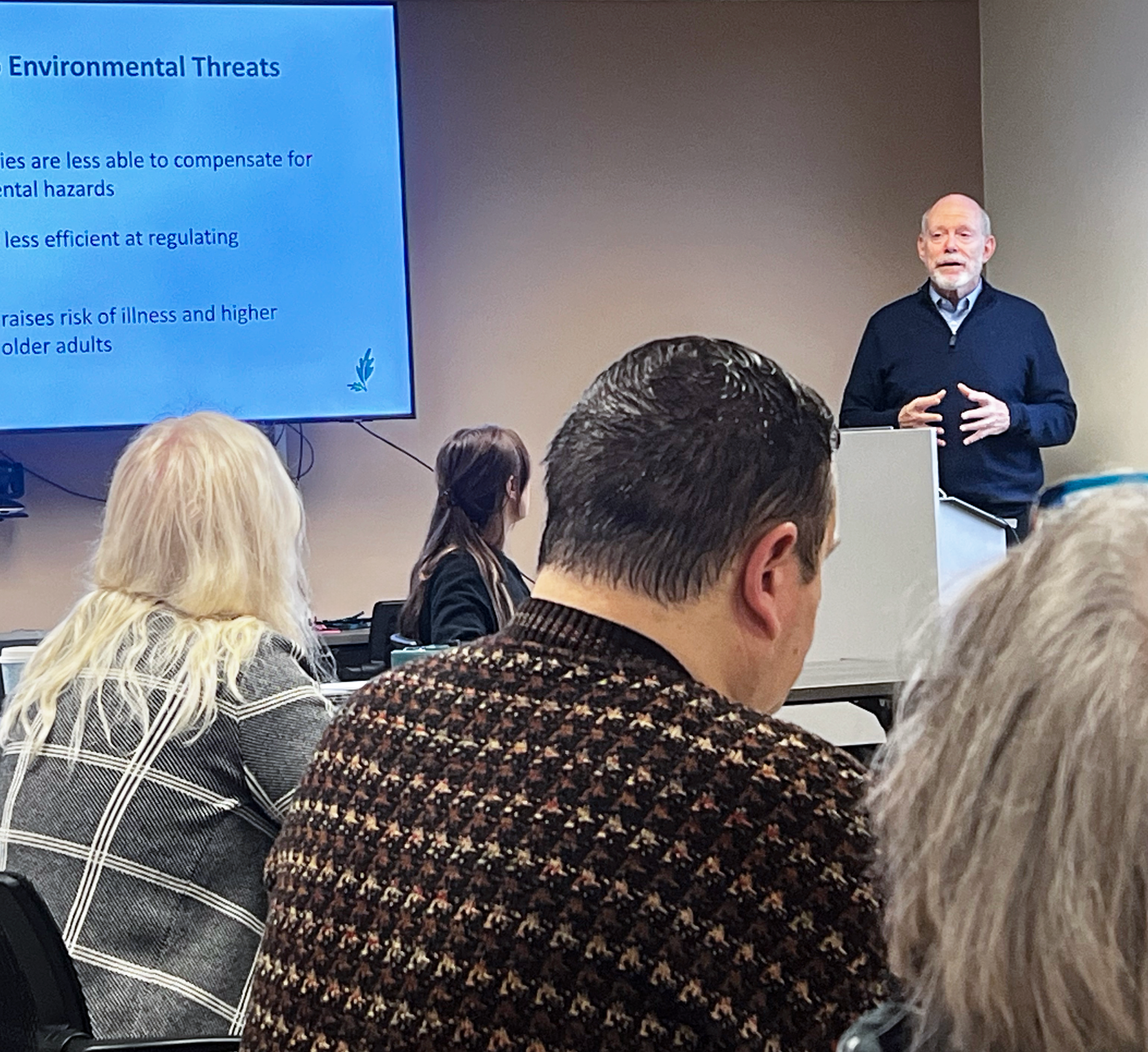
As extreme weather grows more frequent, older adults face some of the greatest risks. Chronic illness, limited mobility, and isolation leave older adults more exposed to heat, storms, and disruptions in care. At least 60% of disaster deaths are people over age 60, said Karl Pillemer, the Hazel E. Reed Professor of Human Development.
Researchers have long documented the effects of climate change on older adults. Now, those who work closely with this population say the focus should shift to protecting them, especially as these events become more frequent.
That’s the consensus from a workshop led by the New York Climate and Aging Action Network (NY-CAAN), a collaboration that includes the Cornell Institute on Research for Climate and Aging (CIRCA), which Pillemer directs; the advocacy organization LiveOn NY; and the New York Academy of Medicine. The workshop produced what the authors believe is the first research agenda on climate and aging, published in the journal Innovation in Aging in September. Pillemer is the lead author.
Pillemer and the NY-CAAN team used the Research-to-Practice Consensus Workshop model, which uses structured conversation among researchers, frontline practitioners, and policymakers to determine which research is most worth doing. The model was developed by the Cornell Institute for Translational Research on Aging, which Pillemer also leads. Both institutes are part of the Bronfenbrenner Center for Translational Research.
“The beauty of this model is that you show practitioners what researchers think, and they push back and talk it through,” Pillemer said. “Their ideas sometimes overlap with the researchers’, but they bring very different nuances.”
The workshop had two sessions, one in in New York City that drew 44 participants, and a second, virtual session to refine the results.
What climate research should focus on
The group identified 14 research priorities to address older adults’ vulnerability across multiple, and often interconnected, climate risks. The priorities fall into four categories:
- Systems and policy: prioritizing research on the economic impacts of climate change on the aging population and discovering strategies for preparing health care systems and senior living facilities to address climate risks.
- Communication and education: understanding the best methods to notify older people when an extreme weather emergency is about to happen and developing strategies to combat misinformation on climate change.
- Equity and access: identifying the barriers that keep older adults, especially those who are already marginalized, from using climate resilience programs and adapting to climate risks.
- Individual resilience and support: creating tools to identify the most vulnerable older adults, understanding how social networks and technology can support them, and studying the mental health effects of climate change.
Pillemer and co-author Chloe Shores, CIRCA associate director, note the priorities are a departure from the research normally undertaken around climate change, which tends to focus on the risk of climate change events.
“There was a really strong consensus at the workshop that researchers don't need to figure out what's happening or why it's happening,” said Shores. “We need to figure out what to do about it.”
The cost of inaction
Participants stressed that they need to understand the economic impact of climate change in order to advocate for funding the resources that help older adults during climate events, like cooling centers, communications and emergency responses. Shores said that policymakers need to see how an investment now can help reduce the costs of emergency care or recovery efforts later.
“Based on what we know, the costs of dealing with problems of older people after disasters can be much higher than if we had planned for them in advance,” Pillemer said. “If older people are warned, if there are people communicating with them, and community systems that help them either to evacuate or plan, in theory you would save lots of money.”
What comes next
While older adults didn’t attend, Shores said the network held focus groups to get their perspective on climate risks. Workshop attendees are now working on policy proposals for both New York City and New York State.
This work is already reaching rural communities. With a grant from the U.S. Department of Agriculture, CIRCA has been holding community forums in rural counties across the state, sharing research and focus group findings with local officials and service providers so they can consider preventive measures to help some of their most vulnerable residents. One idea that keeps surfacing: a registry that can help emergency managers locate isolated, vulnerable older adults.
“This is not a future event for older people,” Pillemer said. “It’s going to be much more of a problem for everyone soon, but it’s hitting older people the strongest right now.”
Posted on
11/23/2026
Author
Tags
Community Engagement,
Sustainability + Society
Share


