

Jai Khanna is a user experience researcher at Cisco. He uses mixed methods research to improve the company’s artificial intelligence and enterprise software. He helps product teams understand customer needs, behaviors and pain points and translates these insights into strategies and processes that improve products and the user experience.

Khanna earned his M.S. in Human Environment Relations from Cornell in 2023.

Q. What does your work look like day to day?

A. As a UX researcher, I ensure that product decisions are grounded in evidence and aligned with both user needs and business goals. Most of my work focuses on AI-powered products, observability platforms and developer tools. 

I partner closely with product managers, designers, engineers and data teams to answer critical business and product questions. 

As a mixed-methods researcher, I plan and conduct qualitative research (interviews, usability studies, ethnographic research and focus groups); design and analyze quantitative studies (surveys, behavioral analytics and product telemetry); and synthesize findings into actionable recommendations. 

Q. What was your master’s thesis about?

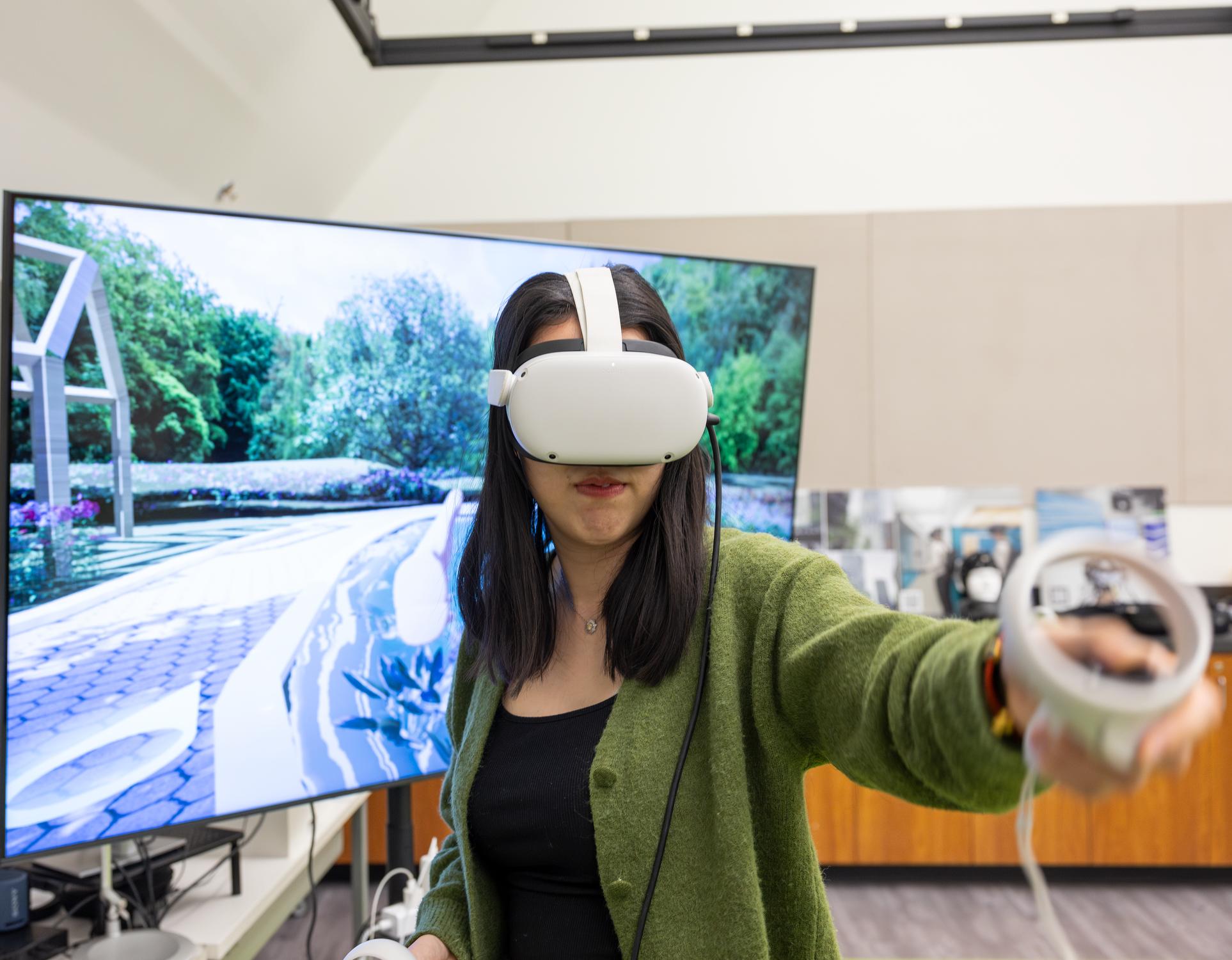
A. I explored how specific virtual reality design features influence empathy and other prosocial outcomes.

Through a systematic literature review and a 40-participant lab experiment, I developed a framework of key technological affordances — such as embodiment, immersion, interactivity and presence — and examined how those affordances mediate users' experiences and behavioral responses.

The research synthesized findings across multiple application domains, including disability awareness, environmental advocacy, and bias reduction, and translated them into practical design recommendations for researchers and extended-reality practitioners.

The work was published in Springer Nature Virtual Reality with Anne Seo-young Lee and  Saleh Kalantari, my advisor and associate professor in the Department of Human Centered Design.


Posted on
06/29/2026
Author
Marisa LaFalce
Tags
Technology + Human Thriving, Alumni

Today, I work on complex AI and enterprise products, but the core question I ask is still the same: how do we make this genuinely helpful for the people using it?

Jai Khanna, M.S. '23

Q. How does your Cornell education shape your work today?

A. My master’s education changed the way I think about technology. Before graduate school, I was fascinated by building products and solving problems. Cornell taught me to start with people first — to understand their goals, frustrations, motivations and behaviors before jumping to solutions.

One of the biggest lessons I learned was that great products aren't just technically impressive; they're useful, understandable, and fit naturally into people's lives and workflows. That mindset has stayed with me throughout my career.

Today, I work on complex AI and enterprise products, but the core question I ask is still the same: "How do we make this genuinely helpful for the people using it?"

Whether I'm interviewing customers, or helping to shape product strategy, I'm focused on understanding how people make decisions and where technology can better support them.

Cornell also exposed me to people from diverse backgrounds — researchers, designers, engineers, psychologists and business leaders. Learning to work across disciplines has been one of the most valuable skills that I've carried into my career, and it's something I rely on daily when I partner with cross-functional teams to solve challenging problems.

Q. Is there anything else you’d like to share?

A.  I regularly speak at conferences. Some recent presentations include: 

  • UX Days: Research Methods in Human AI Interaction
  • Quant UX Con: Survey Design Biases
  • UX360 North America: Survey Design Biases
     
A person uses a VR headset to navigate a virtual garden.

M.S. in Human Environment Relations 

Guide design strategies that meet the complex and varied needs of all users of a space. Examining a design challenge from a social sciences perspective — particularly environmental psychology, human factors, and ergonomics — you will uncover evidence-based design solutions that make a space work better for the people in it.

purple tinted image of a computer board