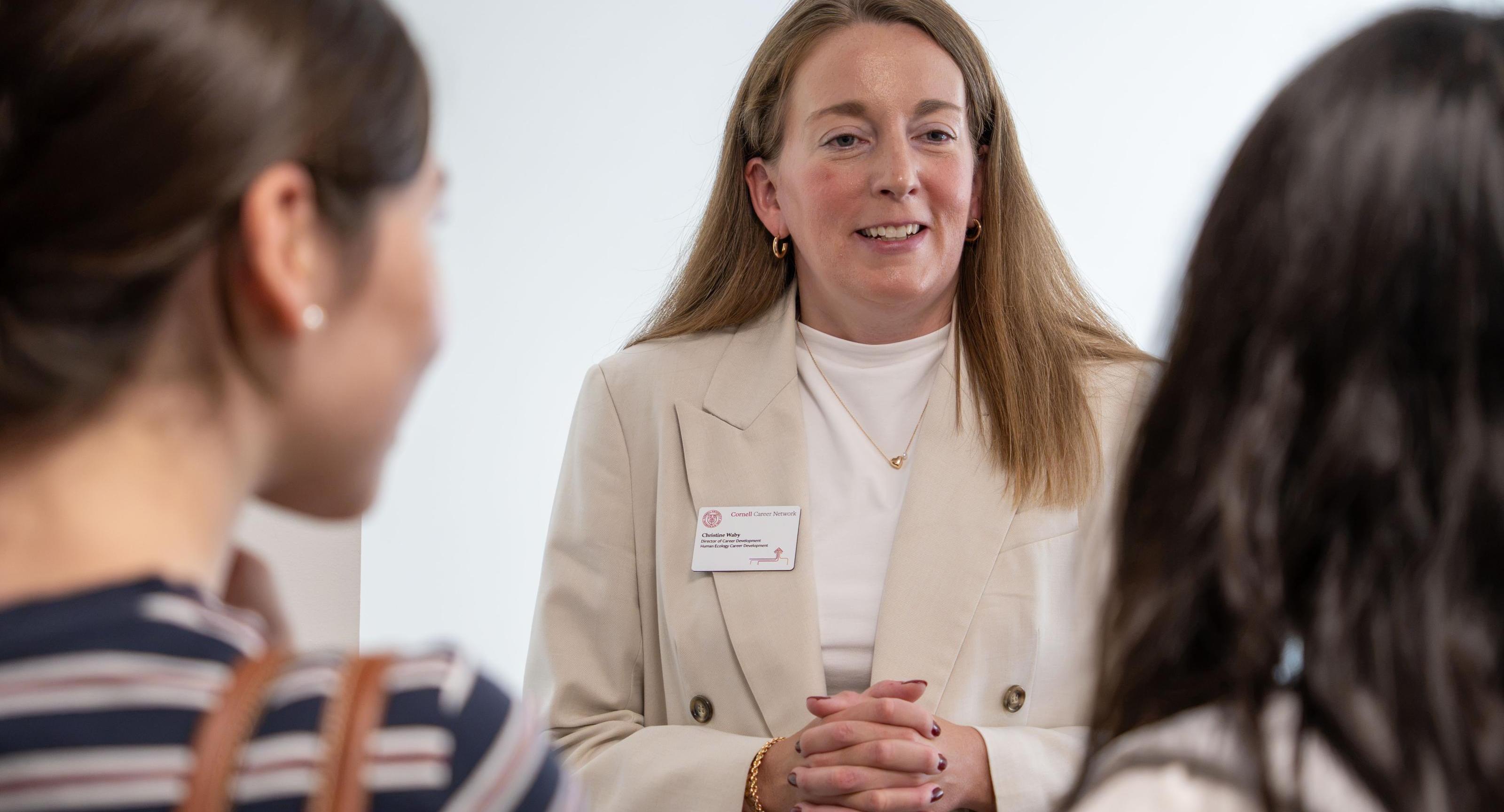
Waby talks with students at the Human Ecology Career Development Open House in August.


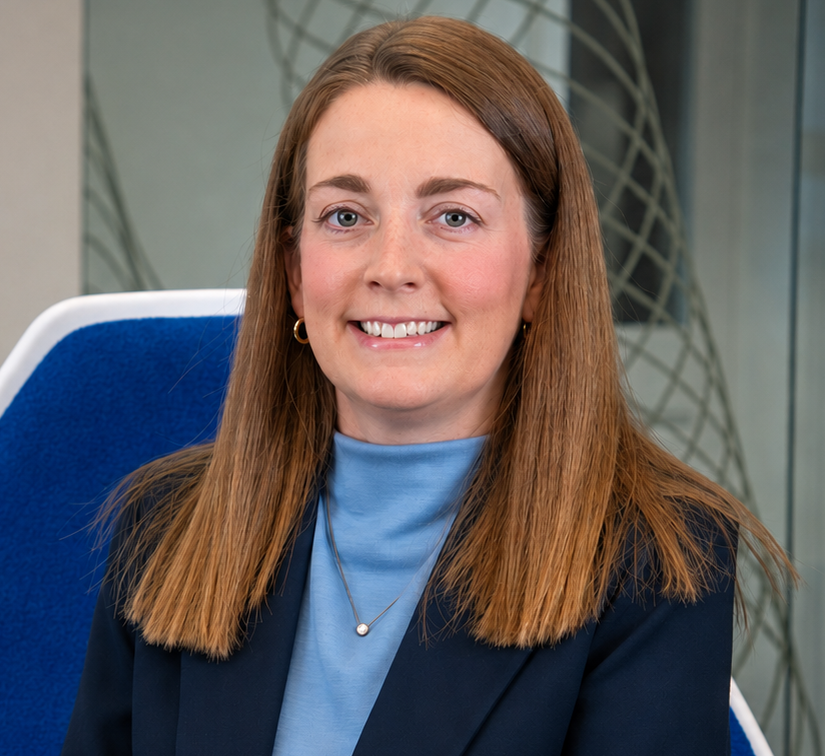
Christine Waby joined Cornell Human Ecology this summer as the college’s first director of career development, a new position created to expand career preparation and connect students with internships, employers and alumni networks.
In addition to leading the college’s career development function, Waby represents CHE in the Cornell Career Network. This reimagined career development model connects the college-based career teams and the team that supports undergraduate and graduate research students across the university. It positions career development as a continuous process woven throughout a student’s entire academic and student life experience, rather than a service they seek out for a specific task like polishing a résumé or preparing for an interview.
Waby comes to Cornell from Syracuse University’s Whitman School of Management, where she was most recently the associate director of career advising and employer relations. Before transitioning to higher education, she worked in hotel operations and in sales management. She has a bachelor’s degree in hospitality and food service management from Syracuse and an MBA from SUNY Oswego.
When I was young, I traveled a lot from Central New York to the South with my father. We stopped at hotels along the way. Sometimes we would have superior experiences, and other times we would have less-superior experiences. I studied hospitality management at Syracuse University because I wanted to make an impact on the experience that customers endured while traveling, regardless of the establishment.
I loved working in hospitality, but it wasn't sustainable for me — hotels are 24/7/365 businesses. I went back to school and attained my MBA from SUNY Oswego, and then I worked in sales in the Mid-Atlantic territory for about six years. Then I had my first child, and sales involved a lot of travel.
I was always attracted to the higher ed environment. I said, what can I do in higher ed that enables me to exercise my customer service skills, build relationships, and create a positive impact? I saw an opening at Syracuse University in career services. I’m an alum, and I did some networking. It was the only opportunity I applied for when I was looking to shift careers, which isn't necessarily the advice I give to students, but it worked out, and the rest is history.
I've always had my eyes on Cornell University. I love to set myself to high standards, and to help students achieve goals in line with that. This position is inaugural — being able to develop something from the ground up was especially attractive. The mission of this college aligns with my own values. Shaping the human experience and improving lives goes hand in hand with hospitality and sales — it's all about driving exceptional experiences. I was also excited about the opportunity to be part of the newly launched Cornell Career Network. I truly believe that our best work is done when we work together and share resources, relationships and strategies.
I’m thrilled to be launching Human Ecology's first ever “career treks” with a visit to New York City in January. Students will visit employers in the health industry. They'll talk with alumni, professionals, and recruiters and learn about various career paths in those organizations, both clinical and non-clinical, like research or corporate functions like marketing. And they’ll learn about the skills for success, what the recruiting process looks like, and how they can build a strong résumé and profile early to help align themselves for those careers. The target audience is first-year students and sophomores.
The first semester is really about building community, acclimating to college and embracing experiences like HE 1800 [the advising seminar that’s part of the college’s new integrated core curriculum]. I recommend that first-year students get involved in a club or an organization so they can begin to build a community of people. Transitioning to college is a rewarding time, but it can be scary for some.
I also recommend that they have at least one career appointment in the fall semester and one in the spring. They can get to know their career advisor and learn about important timelines and opportunities. And they’ll need a résumé so they can apply to clubs and organizations, on-campus jobs, and other opportunities. Getting that résumé built early, knowing that it's a living document that will change as they gain experiences and shift interests, will help them put their best foot forward.
I welcome alumni and employers who are interested in connecting with Human Ecology students to email me (cw2326 [at] cornell.edu). Whether they're looking for someone to intern or do research, or they’d like to come to campus and talk with students, we can set up a call. I appreciate alumni and professionals giving back to this institution in any way. Talent and time are two of the largest areas where I can help.


Waby talks with students at the Human Ecology Career Development Open House in August.