


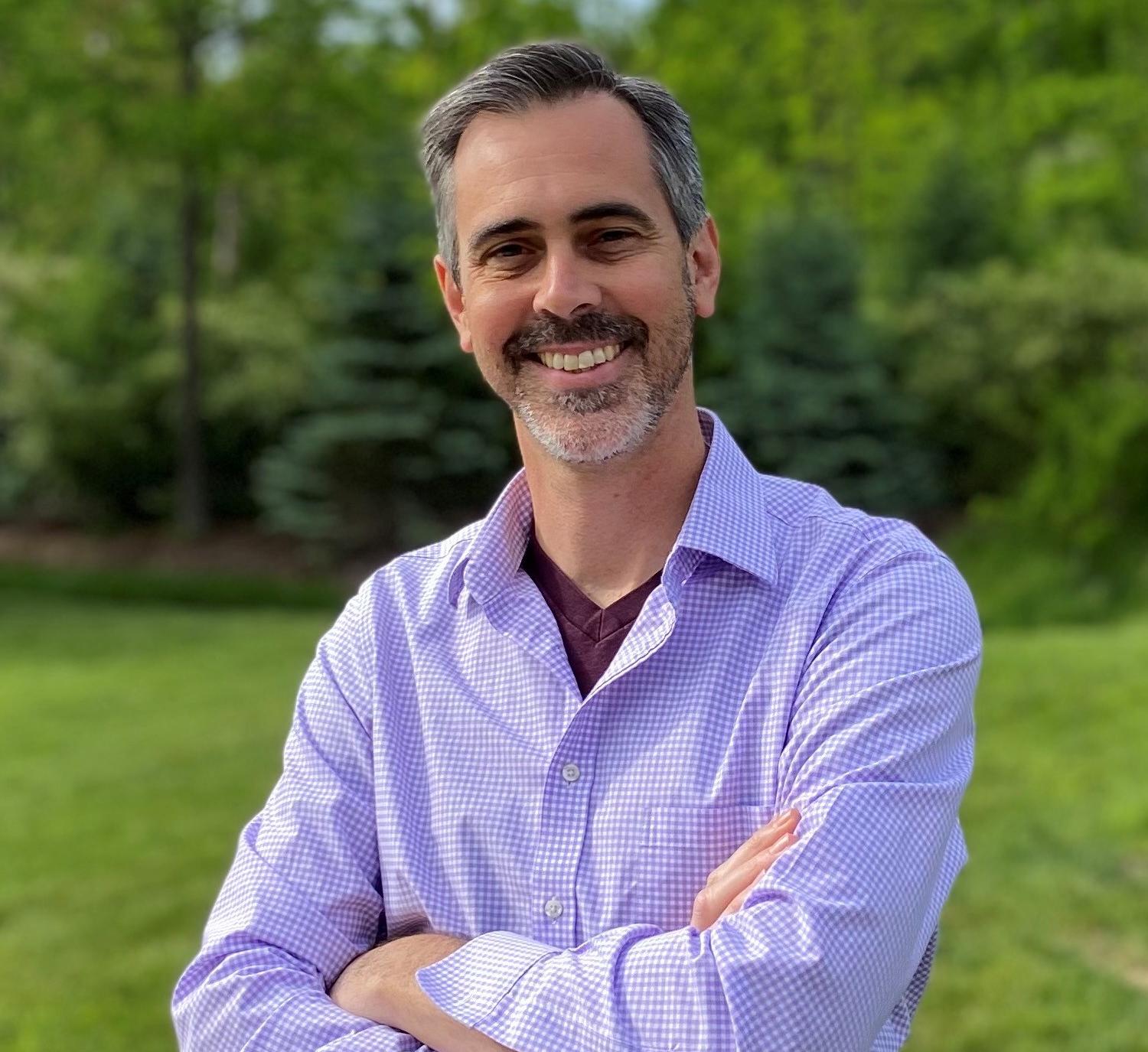
Alex Ophir, a behavioral neuroscientist and professor in the College of Arts and Sciences (A&S), has been named chair of the Department of Psychology.
Psychology is a cross-college department, formed in 2021 when the university brought together faculty from the existing A&S department and human development faculty from the College of Human Ecology.
Ophir joined Cornell in 2013. He studies behavioral neuroendocrinology — the relationships among hormones, the nervous system and behavior — in rodents. He wants to understand the proximate control of social behavior and the ultimate consequences of those behaviors, especially when it comes to reproductive decision-making.
Before coming to Cornell, Ophir was an assistant professor in zoology at Oklahoma State University. He has a Ph.D. in animal behavior from McMaster University and completed postdoctoral research at the University of Memphis and the University of Florida.
He takes over the role of chair from Felix Thoemmes, associate professor and the first chair of the combined department. He took a few minutes before the semester starts to share why he’s excited about the department’s future.
What’s your research focus?
I'm interested in the neural and genetic mechanisms that underlie social behavior. I work with non-human animals — at this point in my career, exclusively with prairie voles, a monogamous and biparental species. I'm exploring how variations in early-life experiences, like different parenting contexts, shape developmental trajectories of animals. In the long term, my lab is looking at how these early-life social experiences place animals on developmental trajectories that define or shape their decision-making in reproductive contexts.
What drew you to this position?
I think that we're at a really exciting time — well, an exciting and scary time — in academics. A lot is changing at a rapid pace, whether that's because of technology advances or issues with politics or any other number of things. But these challenges also open doors.
I think it's a really cool time to think about what we can do moving forward, where the future of psychology is going to be, and where the future of psychology at Cornell is going to be. I’d love our department to remain one of the leaders for our field — and grow, especially given the diverse range of expertise and perspectives that our faculty have.
The department is shared by the College of Arts and Sciences and the College of Human Ecology. What opportunities does this create?
My take on being at Cornell is that we are always the weirdo in the room, and that's a good thing. We are both a public and private university, and then here we are in a department that's also both public and private. We integrated one of the strongest human development programs in the nation with one of the top psychology departments. Our faculty have a degree of expertise that is unmatched. We can deliver the classic subunits of psychology, and we take an integrative, holistic view of the human experience, from birth to death. The opportunity for collaboration across disciplines is singular. If that makes us weird, I love it. That's the kind of weird I want to be.
What are you excited for?
I'll start with the easy one, which is actually my least favorite: the AI revolution. I'm not so much excited or not excited as much as I just think it's imperative that we start thinking about what AI is going to mean for us in terms of the students that we're educating, the kind of research we do, and just navigating our own jobs as researchers and educators. It’s the current challenge for our generation.
Another area we're starting to think about is building out our master's program, particularly in parallel with bolstering clinical training for our current undergrad majors and maybe bringing those two things together.
I may be a little bit biased because I am a neuroscientist, but I think neuroscience remains one of the best frontiers for understanding human health and well-being, and I think that psychology is the natural home for the study of the mind — it directly relates to understanding the brain and tying it to behavior. We have faculty members who are uncovering the basic principles of neural function, regardless of the animal, and a strong group of human neuroscientists. I'm excited to see where that combination takes us.
We've got all these other strengths, like development across the lifespan, and how that interacts with learning and memory, language, culture, and even the interface between psychology and law. I want to challenge our faculty to refine those unique areas of research focus and to expand them and find collaborations both within and outside of our departmental walls, and to codify our thumbprint as the leaders in our field.
Posted on
08/10/2026
Author
Share


